
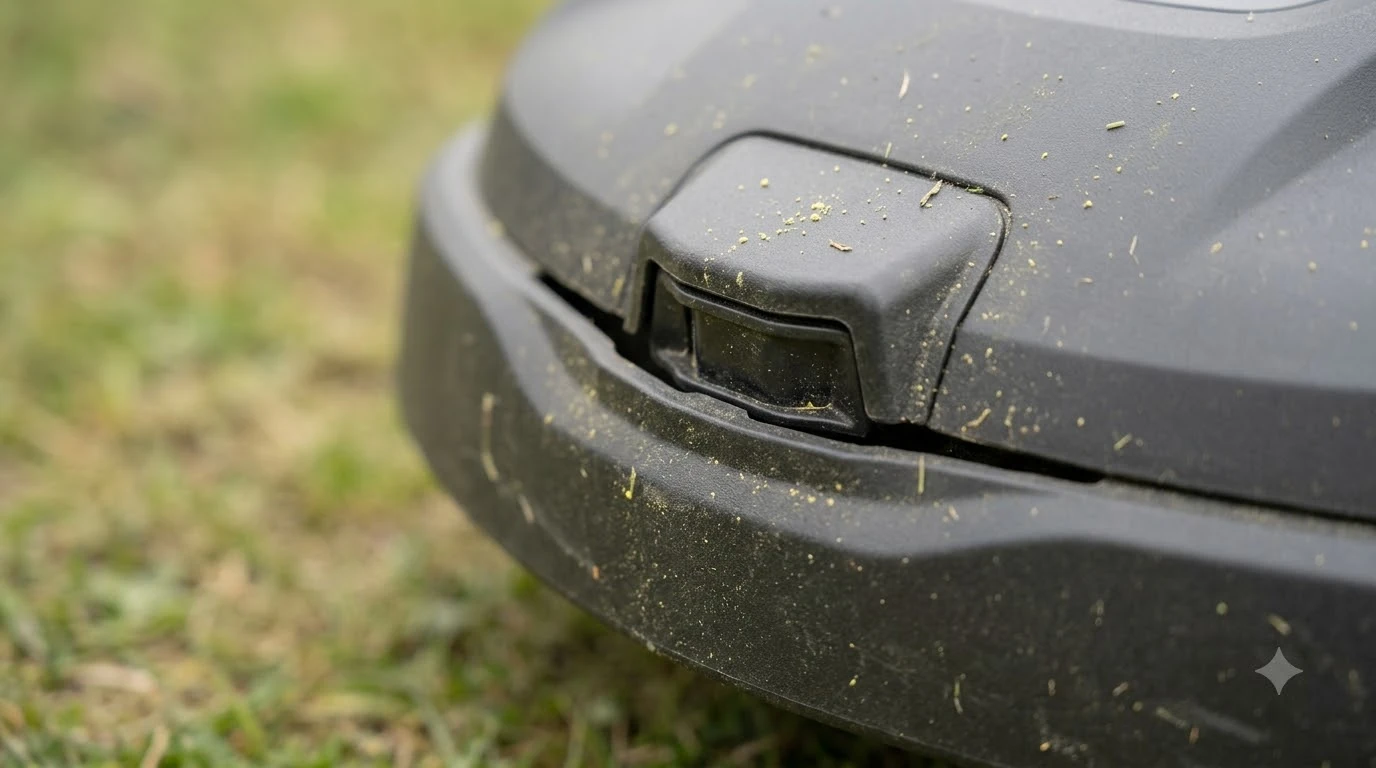

How does a robot mower handle sprinkler heads? Mostly after it touches them, so the real protection is in the setup. Its collision sensor makes it stop, reverse and turn, its lift sensor shuts the blades off, and boundary wire can be looped around a head to keep the mower out of that spot. The exact behavior depends on the model, so check the manual for yours.
The short answer
- On contact: the mower stops, reverses and goes in another direction, according to Husqvarna’s FAQ.
- When lifted: the blades shut off immediately, so a mower that rides up onto a head stops cutting.
- Pop-up heads: a head that retracts after watering sits out of the mowing path, while a head that stays up is the risk.
- Fencing: wire islands keep the mower away from a head that should not be driven over.
How does a robot mower handle sprinkler heads on contact?
A robot mower’s collision sensor is designed for exactly this kind of contact. Husqvarna’s Automower FAQ says that if the mower encounters an object, it will stop, reverse and go in another direction. That response protects the mower and the lawn from a hard hit, and it lets the mower keep working instead of jamming against the obstacle.
So how does a robot mower handle sprinkler heads in practice? A bump is not the same as protection for the head, though. The collision response happens after the mower reaches the object, so the head has already been in its path. Our reading is that a head is a small, rigid target, and a mower that keeps returning to the same spot can wear both the head and the blades over time. The sensor limits the damage but does not prevent contact by itself.
Older mowers were less forgiving. Clemson’s extension notes say that mowing around permanent sprinklers was once a chore, and that a certain high-vacuum mower would pull up quite forcefully on the sprinkler lid, sometimes drawing heads up and damaging them. Modern robot mowers are a different machine, but the lesson holds: a head that sticks up is the part to check.
Why pop-up heads are the main hardware risk
Pop-up heads were designed partly to solve the mowing problem. Clemson says the pop-up sprinkler was developed to alleviate the problem of mowing around permanent heads, and that a pop-up impact sprinkler rises about 4 inches above the landscape when pressurized. When the water stops, the spring pulls the head back down, so the head sits out of the way.
Bob Vila’s sprinkler guide describes the same cycle: the heads pop up, water the lawn, then drop back into the ground, where they are out of the way of foot traffic and lawn mower blades. The risk comes from a head that does not fully retract, a head that is damaged and stays up, or a riser that was set above the grass on purpose. Those heads are in the path of the mower, and the mower will meet them on its normal run.
Fencing sprinkler heads with boundary wire
How does a robot mower handle sprinkler heads it should never touch? Boundary wire is the most reliable way to keep it away from a fixed object. Husqvarna’s FAQ says the wire goes around any obstacles the mower should avoid, and that the layout is customizable so the mower reaches only the lawn it is meant to cut. For a head that should not be driven over, a wire island is the standard approach. Our guide to laying boundary wire around obstacles shows the routing, and the same logic applies to mowing around flower beds.
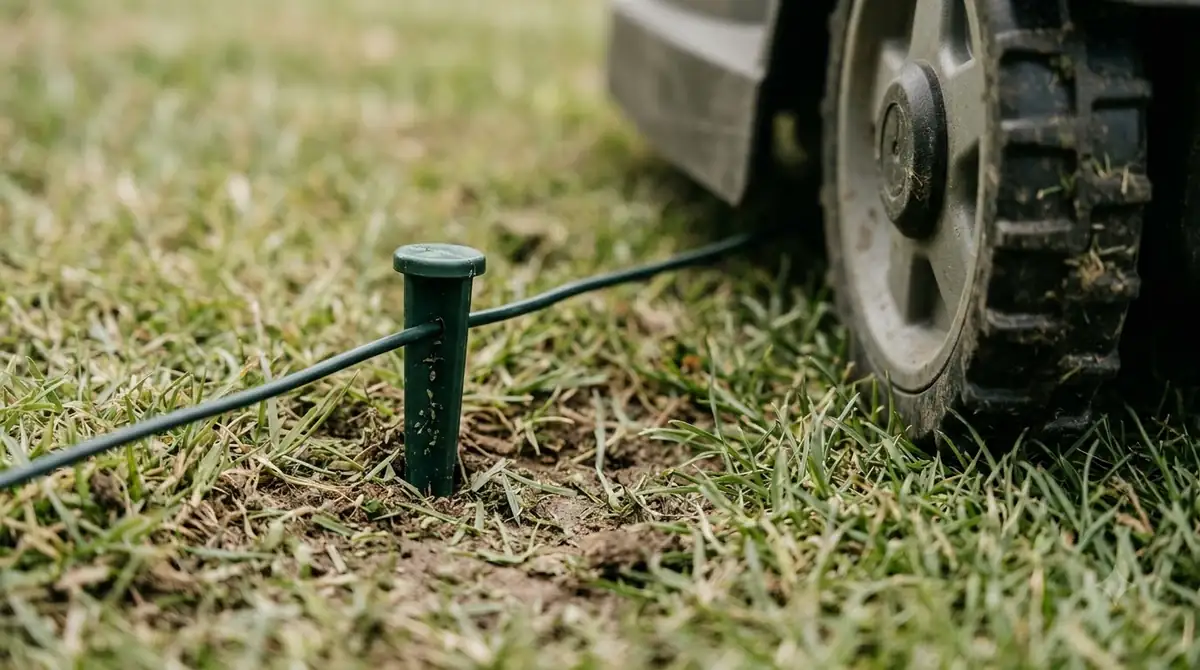
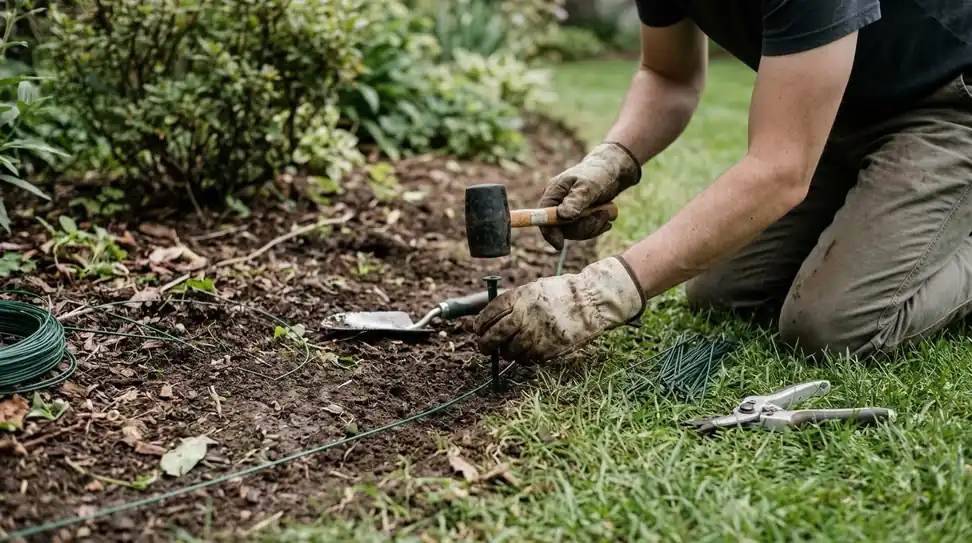
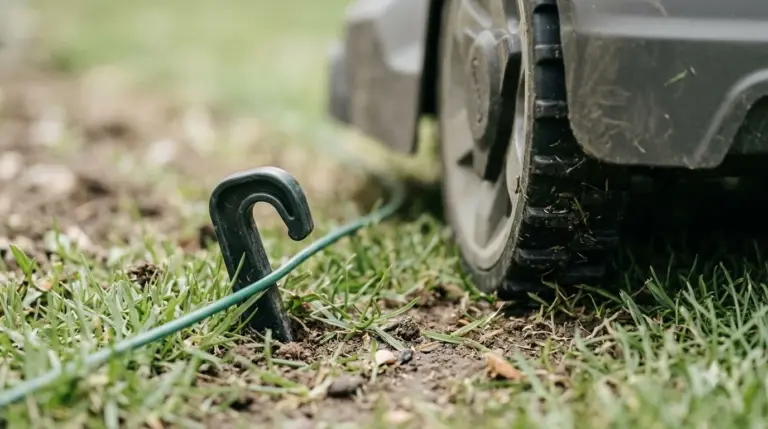
Husqvarna’s island guidance says to create islands for areas you do not want the mower to enter, such as flower beds or rockeries. The wire runs from the border to the obstacle, around it and back to the border, and pegging or burying the boundary wire holds it in place. The two return legs should lie close together, which cancels the signal so the mower can cross them. If the wires cross, the mower will not recognize the island and will stop.
Our reading is that a sprinkler head is a better candidate for an island than for a bump. The bump response works for an object the mower can push past, but a head can be damaged by repeated contact. Husqvarna’s page does not name sprinkler heads, so treat that as our judgment rather than a manufacturer statement.
If the layout changes after installation, the mower can still be adjusted. Husqvarna’s FAQ says you can add an island later by cutting the boundary wire, laying wire around the new area and joining the ends with a coupler. The charging station must be disconnected from power before you work on the wire.
Checking your sprinkler heads before the mower runs
A quick walk of the lawn catches most head problems before the mower does. Start with the heads that sit near the mow path (our guide to preparing your yard for a robot mower has the wider checklist), then decide whether each one needs to be lowered, marked or fenced. The steps below are our reading of how to apply the manufacturer and extension guidance, not a checklist from any single source.
- Walk the lawn and look for raised heads. Any head that stands above the grass is a candidate for fencing or adjustment.
- Check for heads that did not retract. Run one watering cycle by hand and see which heads stay up after the water stops.
- Lower or replace the damaged ones. A cracked or stuck head should be repaired before the mower runs near it.
- Fence the heads you cannot lower. Plan a boundary wire island around each one that the mower would otherwise drive into.
- Clear the path around heads. Remove hoses, toys and loose stakes near the heads, since those objects can also snag the mower.
After the check, walk the mow path once more to confirm the heads sit where the wire expects them. A head that moves after a repair can leave the island in the wrong place, so recheck the layout after any sprinkler work.
Sensors and setup by feature
Several parts of the mower and the yard work together around a sprinkler head. The table below sets out what each one does, with the source for each row. Other brands use different sensors and layouts, and this guide did not verify sensor specifications for every model, so check the manual for the mower you own.
| Feature | What it does with a sprinkler head | Source |
|---|---|---|
| Collision sensor | Stops, reverses and turns after contact with an object | Husqvarna Automower FAQ |
| Lift sensor | Shuts the blades off when the mower is lifted | Husqvarna Automower FAQ |
| Boundary wire island | Keeps the mower out of a fenced zone around an obstacle | Husqvarna island guidance |
| Retracting pop-up head | Drops back below the grass after watering, out of the mow path | Bob Vila sprinkler guide |
The table shows how a robot mower can handle sprinkler heads through three layers of defense, and the division of work. The mower’s sensors respond to contact and lifting, the wire defines where the mower may go, and the head’s own design decides whether it sits in the path at all. Our reading is that the wire does the most useful job for heads that stay up, since it prevents contact instead of responding to it.
Common mistakes with sprinkler heads and robot mowers
Most problems with sprinkler heads come from assuming the mower will avoid them without setup. Each of the mistakes below has a simple fix that takes a few minutes.
- Trusting the bump response alone. The sensor reacts after contact, so the head is still in the path.
- Leaving a head up after a repair. A head that does not retract is an obstacle, even if it looked fine when installed.
- Running wire across the island legs. Crossed wires stop the island from working, and the mower will stop.
- Skipping the layout check after sprinkler work. A moved head can end up outside the island you planned around.
- Leaving hoses and stakes in the mow path. Loose objects can snag the mower near heads and wear the blades.
Frequently asked questions
How does a robot mower handle sprinkler heads it bumps into?
The collision sensor makes the mower stop, reverse and turn after contact, which limits the impact. A head that stays above the grass can still be damaged if the mower keeps meeting it, and fencing the head with boundary wire prevents the contact in the first place.
Do sprinkler heads need boundary wire around them?
Heads that stay raised, or that the mower could damage, are the ones to fence. Husqvarna’s island guidance says to create islands around areas the mower should not enter, such as flower beds. Our reading is that a head that sits flush with the lawn is less likely to need fencing.
Can I add a wire island after the mower is installed?
Yes, according to Husqvarna’s FAQ. You cut the boundary wire, lay wire around the new area, and join the ends with a coupler. Disconnect the charging station from power before you work on the wire.
Should sprinkler heads sit flush with the lawn?
The Clemson source does not say whether heads should be installed flush. It does describe retracted heads sitting out of the way of mowers. Our reading is that a head at turf level is less likely to be hit, so check the installation height when you repair or replace a head.
Sources
- Landscape Irrigation Equipment Part 1: Sprinklers and Spray Heads (Clemson HGIC): pop-up design developed for mowing, about 4 inches of rise when pressurized, mower damage to heads.
- Husqvarna Automower Frequently Asked Questions (Husqvarna): collision response, blade shut-off on lift, boundary wire around obstacles, adding islands later.
- How to create islands in a boundary wire Automower installation (Husqvarna): islands for flower beds and similar areas, wire routing, wires must not cross.
- The Best Sprinkler Heads for Your Lawn Irrigation System (Bob Vila): pop-up heads retract below ground after watering, out of the way of mower blades.
 Up next8 min readBy YardHow Does a Robot Mower Handle a Pond?Updated Nov 11, 2026
 9 min readBy YardHow Does a Robot Mower Handle a Playset?Updated Nov 11, 2026
 8 min readBy YardHow Does a Robot Mower Handle a Trampoline?Updated Nov 11, 2026
 9 min readBy YardHow Does a Robot Mower Handle Garden Furniture?Updated Nov 11, 2026
 7 min readBy YardHow Does a Robot Mower Handle Fallen Branches?Updated Nov 11, 2026
 8 min readBy YardHow Does a Robot Mower Handle Trees?Updated Nov 11, 2026