


The best robot mower with mulching blades is the one whose cutting design, schedule and blade care fit your grass. A mulching design cuts clippings into very fine pieces that fall back into the turf, so the word “mulching” alone tells you little about performance. Check the blade design, the wet-grass limits and the maintenance load before you compare models.
The short answer
- What mulching means: the blades cut clippings small enough to drop into the lawn instead of staying on top of the grass.
- Cutting pattern: Husqvarna describes robot cutting as “micro-mulching,” taking off just a few millimeters at a time.
- Height rule: Clemson HGIC advises removing no more than one-third of grass height at one mowing.
- Weak spot: mulching can clump when grass is soaking wet, according to a mower maker’s guidance.
- Maintenance: dull blades bruise grass, and Husqvarna recommends replacing robot mower blades every 1 to 2 months.
What mulching blades do on a robot mower
Mulching blades cut grass into very small pieces that settle between the remaining blades and break down in the soil. Clemson HGIC describes mulching mowers as a modified rotary type that cuts blades into very small pieces, which fall into the lawn rather than remain on top. A robot mower applies the same idea on a schedule rather than in a single weekly pass. If you only want the basics first, our explainer on whether robot mowers mulch grass covers the starting point.
Husqvarna’s robotic mower guidance says the machine cuts a little at a time, and it uses the term “micro-mulching” for cutting “just a few millimeters at a time.” The result is a lawn that looks freshly cut without a pile of clippings to rake. Note that this is the manufacturer’s description of its own system, so treat the wording as a design claim rather than an independent measurement.
Clippings from mulching do not disappear instantly. Oregon State University Extension notes that chopped clippings decompose in just a few weeks, which is why mulching returns nutrients to the soil instead of sending them to a bin.
How to tell whether a robot mower mulches
Many robot mowers are designed to mulch, but the feature shows up differently across brands. Before you pick the best robot mower with mulching blades, read the product literature for mulching language, then confirm the deck has no collection path. Clemson’s description of mulching mowers points to a missing discharge chute as the physical sign.
| What to check | What to look for | Why it matters |
|---|---|---|
| Clipping path | No bag or chute on the deck | Clippings stay in the lawn and break down |
| Cutting schedule | Frequent short runs that cut a little at a time | Each pass removes less grass, which keeps clippings small |
| Blade type | Sharp, replaceable cutting edges | Dull blades tear grass instead of slicing it |
| Collection option | Whether the maker describes any way to collect clippings | Mammotion advises collecting clippings from diseased lawns, so check what your model supports |
Mulching and collecting are not opposites you must pick between for every job. Our reading: a mulching design suits routine upkeep, while collecting is the safer choice when the grass is diseased, as the Mammotion guidance below explains.
How the blade design affects the cut
Blade design sets how fine the clippings are, so when you shortlist the best robot mower with mulching blades, compare the cutting edges and blade material rather than the word “mulching” alone. Clemson HGIC notes that mulched pieces decompose more quickly than clippings cut to traditional size, which means the blade geometry changes the result you see on the lawn.
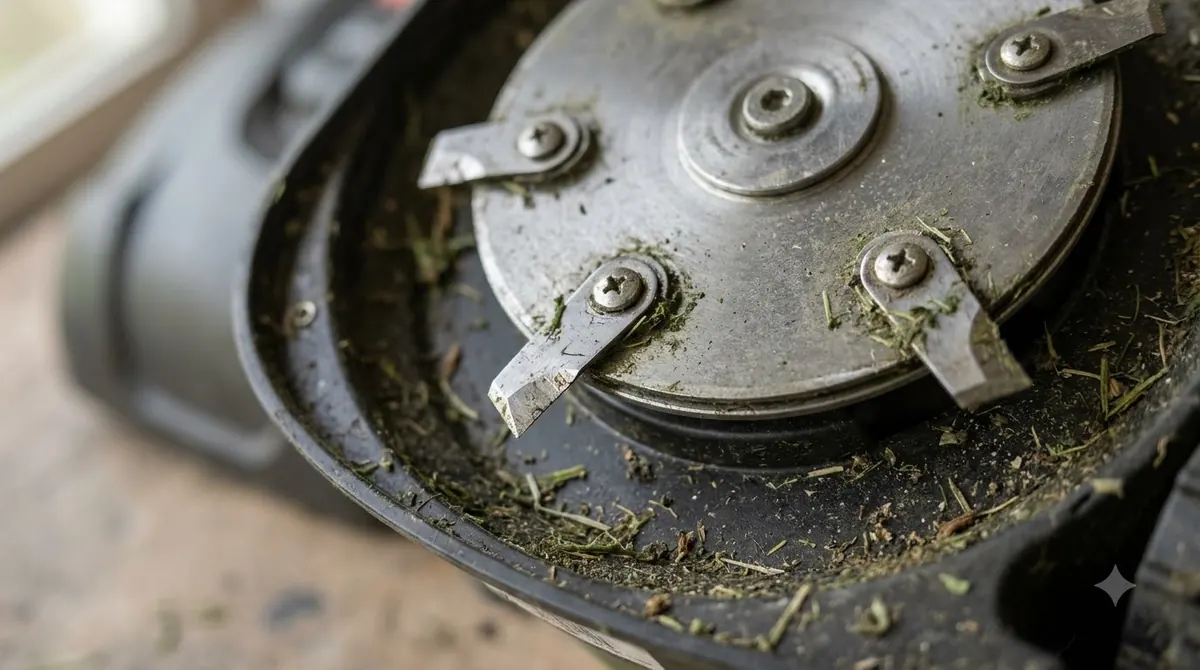
When you compare models, look for these points:
- Cutting edges: check the manufacturer’s listed edge design and count for the exact model, since the sources read here do not rank one layout over another.
- Blade material: check the listed material and hardness, because blades that dull quickly mean more frequent swaps.
- Deck design: a deck that keeps clippings moving under the blades helps them shred, and a deck with a discharge port sends them out instead.
- Blade replacement: check how easily you can reach and swap the blades, since you will do it regularly.
The one-third rule still applies
Remove no more than one-third of the grass height at any single mowing, and a mulching robot mower works best when it follows the same rule. Clemson HGIC gives this as its rule of thumb, and it notes that cutting off more than one-third at once can stop roots from growing.
A robot mower that runs often takes off only a sliver at a time, so the rule is usually met without extra effort. The rule matters most after a long dry spell or a rainy week when grass grows fast and the mower falls behind. Our reading: in that case, raise the cutting height first, then lower it gradually to the target height. Our guide to the best mowing height for a robot-mowed lawn covers target heights.
When mulching struggles: wet and tall grass
Mulching mowers can clump when grass is soaking wet, and a mulching robot mower is no exception. Mammotion’s guidance on mulching states that if the grass is soaking wet, mulching mowers can struggle, which leads to clumping on the lawn.
- Soaking wet grass: wet clippings stick together and sit on top instead of breaking down.
- Long, wet grass: the same source says it does not shred finely and forms mats that block sunlight.
- Wet weather schedule: Husqvarna’s Weather Timer runs more during wet, fast-growing periods and less during dry or cold spells, so check that the schedule suits your rainfall.
Check the manufacturer’s rain rating for any model you are considering, since the weather behavior described above depends on the model and its settings. Our page on whether robot lawn mowers can mow in the rain goes deeper, and a wet-weather plan matters as much as the blade spec when you shortlist the best robot mower with mulching blades.
Keep the blades sharp so mulching works
Dull blades undermine mulching because they tear and bruise grass instead of cutting it cleanly. Clemson HGIC says a dull blade turns the leaf tip brown at the point of impact, which gives the lawn a general brown cast over time.
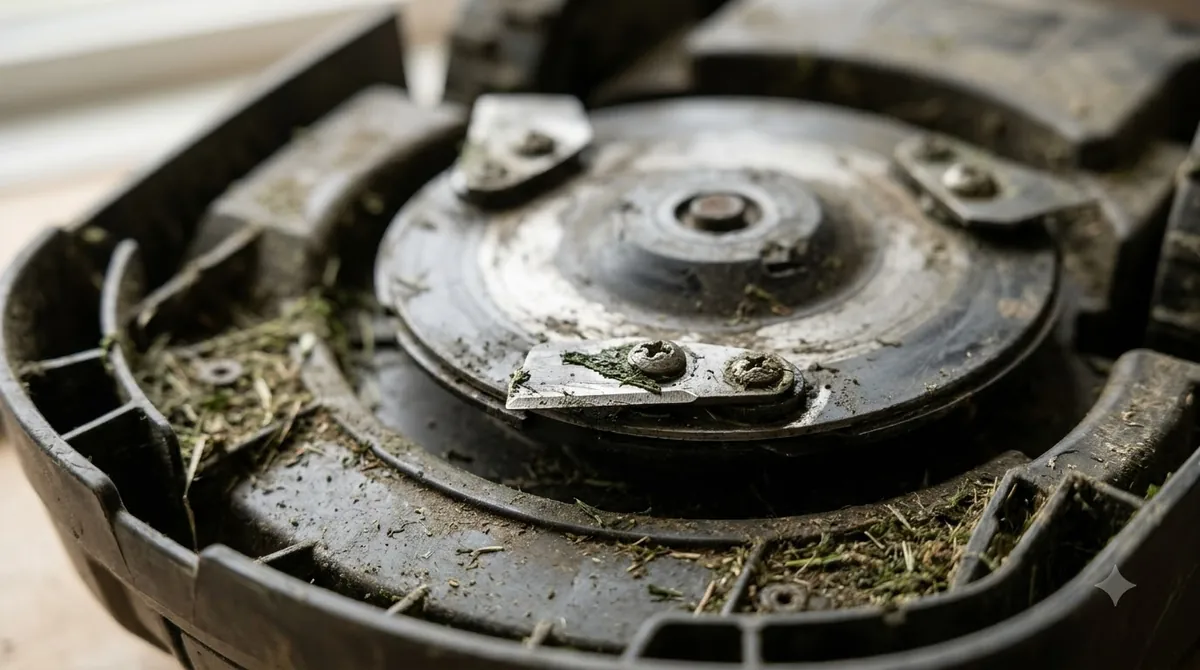
Husqvarna recommends replacing robot mower blades every 1 to 2 months, depending on lawn size and grass type. Use that interval as a starting point and adjust it to your lawn. For what to look for, see these signs of dull robot mower blades, and for the decision itself, sharpening or replacing robot mower blades.
- Check the edge every few weeks. Look for brown tips or ragged cuts on the lawn.
- Turn off and disconnect the mower. Follow the manual before you touch the blades.
- Replace the blades as the manual directs. Use the replacement part numbers listed for your exact model.
- Keep spares on hand. A spare set lets you swap blades at the right time instead of running dull ones.
How to choose the best robot mower with mulching blades
Choose the best robot mower with mulching blades for your yard by its blade design, cutting schedule, slope and passage limits, and blade access, rather than by a single “best” label. Use this checklist with the manufacturer’s specification sheet for each model.
- Mulching design: confirm there is no discharge chute and that the deck is built to recycle clippings.
- Blade specs: compare the listed cutting edges, blade material and replacement part numbers.
- Slope limits: Husqvarna lists 20% to 40% for standard models and up to 70% for its AWD models, so match the figure to your yard.
- Passage width: Husqvarna notes that guide wires can help navigate passages as narrow as 24 inches, which matters for side yards.
- Wet-weather plan: decide how you will handle soaking wet days, such as pausing the schedule.
Our reading is that mulching performance depends more on blade sharpness, mowing frequency and weather than on a single model feature. No independent test data is cited here, so rely on the specification sheets and extension guidance above.
Frequently asked questions
Do robot mowers mulch by default?
Many robot mowers are designed to mulch rather than collect. Husqvarna describes its clippings as falling into the soil, where they mulch and act as natural fertilizer. Confirm the design in the model’s specifications.
Is mulching better than collecting clippings?
It depends on the lawn. Mulching returns nutrients and suits routine upkeep. Collecting can help when grass is diseased or very long, since Mammotion advises collecting diseased grass to avoid spreading spores back into the soil.
Can a mulching robot mower handle wet grass?
Mulching mowers can struggle when grass is soaking wet and may clump. Mammotion’s guidance says to wait for a drier spell or to keep blades sharp. Use the manufacturer’s rain rating and weather settings to plan around wet weeks.
How often should robot mower blades be replaced?
Husqvarna recommends replacing robot mower blades every 1 to 2 months, depending on lawn size and grass type. Check the blades regularly for brown tips or ragged cuts, which signal that they need changing sooner.
Sources
- Husqvarna Automower how it works (manufacturer): micro-mulching, blade replacement interval, slope and passage figures.
- Clemson HGIC mowing lawns factsheet (university extension): one-third rule, mulching mower description, dull blade effects, clipping nutrients.
- Mammotion, what is mulching (manufacturer guidance): wet grass limits and collection advice.
- Oregon State University Extension, leave grass clippings (university extension): decomposition speed of clippings.
 Up next9 min readBest Robot MowersBest Robot Lawn Mower for Townhouses: What to Check Before You BuyUpdated Nov 11, 2026
 10 min readBest Robot MowersBest Robot Lawn Mower for Elderly Parents: What to Check Before You BuyUpdated Nov 11, 2026
 8 min readBest Robot MowersBest Robot Mower With Ultrasonic Sensors: 5 Checks Before You BuyUpdated Nov 11, 2026
 8 min readBest Robot MowersBest Robot Mower That Works in the Rain: What to Check Before You BuyUpdated Nov 11, 2026
 10 min readBest Robot MowersBest Robot Lawn Mower for Busy Families: What to Check Before You BuyUpdated Nov 11, 2026
 8 min readBest Robot MowersBest Robot Lawn Mower for 5 Acres: What to Check Before You BuyUpdated Nov 11, 2026