
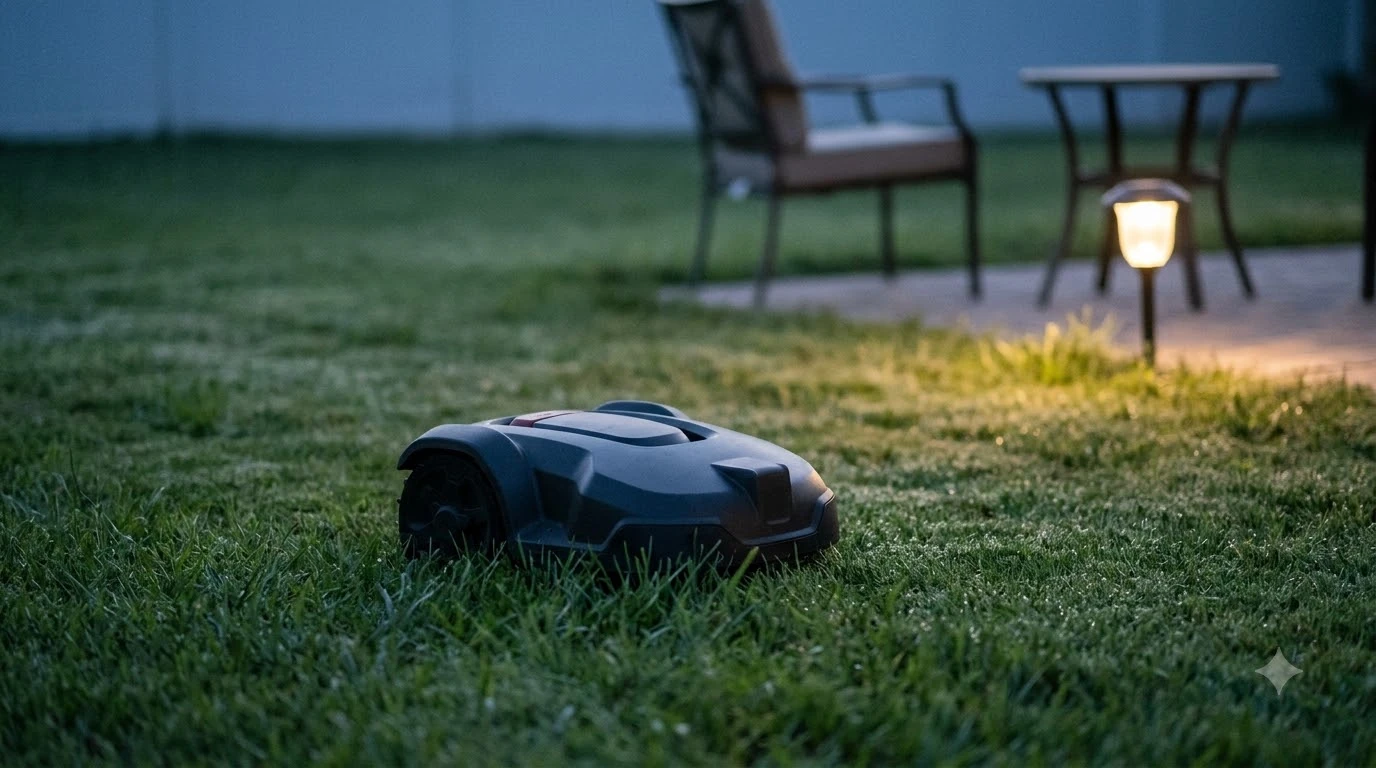

The Mammotion Yuka mini pros and cons depend on which model you mean, because the Yuka mini name covers robots with different coverage and navigation. Mammotion’s own buying guide lists the Yuka Mini 600 at up to 0.15 acre with vision navigation and no boundary wire, and the mini 2 1000H at 0.25 acre. The figures below are sorted by source and stated as of Nov 2026.
The short answer
- Pros: the Mini 600 uses UltraSense AI Vision with no boundary wire, and the larger YUKA 1500 and 2000 list IPX6 for the mower and dock.
- Cons: Mammotion caps the Mini 600 at up to 0.15 acre and says it may not perform well on very uneven terrain.
- Slope: a product card gives up to 45% (24 degrees), while the 1500 and 2000 support sheet gives 28 degrees without the sweeper.
- Sweeper: the optional sweeper lowers the rated slope to 18% (10 degrees) and adds noise.
- Cost: the iNavi navigation service was free until the end of 2025, and its 2026 price had not been announced in the sources we read.
Mammotion Yuka mini pros and cons at a glance
The table sorts each point by whether it helps or hurts the buyer, using only the figure the source gives. Read the model column first, because the Mini 600 and the YUKA 1500 and 2000 are separate spec sheets with different numbers.
| Point | Verdict | What the source states |
|---|---|---|
| Navigation, Mini 600 | Pro | UltraSense AI Vision, no boundary wire (Mammotion buying guide) |
| Coverage, Mini 600 | Con | Up to 0.15 acre (Mammotion buying guide) |
| Coverage, mini 2 1000H | Pro | 0.25 acre with 360° LiDAR and AI Vision (Mammotion buying guide) |
| Weather rating, 1500 and 2000 | Pro | IPX6 mower and dock; IPX7 RTK station (Mammotion support sheet) |
| Slope | Mixed | 45% (24 degrees) on a product card; 28 degrees without sweeper on the 1500 and 2000 sheet |
| Sweeper | Mixed | Rated slope drops to 18% (10 degrees); a reviewer found it collected most leaves and clippings |
| Noise with sweeper | Con | Almost 70 dB in a reviewer’s test (Notebookcheck) |
| Uneven ground, Mini 600 | Con | May not perform well on very uneven terrains (Mammotion buying guide) |
Our reading is that the coverage ceiling and the slope rating are the two numbers to settle before you read anything else about the mower. A pro on navigation means little if the lawn is bigger than the model’s rated area.
Pros: wire-free navigation and weather ratings
Among the Mammotion Yuka mini pros and cons, the clearest pro is the Mini 600’s navigation. Mammotion describes it as using UltraSense AI Vision and working without a boundary wire, which removes the step of burying or pegging a wire around the lawn. The mini 2 1000H is described with 360° LiDAR and AI Vision, so the two Mini-named models use different sensing hardware.
The second pro is the weather rating on the larger YUKA 1500 and 2000. Mammotion’s support sheet lists IPX6 for the mower and charging dock and IPX7 for the RTK station. Those ratings describe protection against water jets and temporary immersion. They do not mean the mower is built for year-round outdoor storage, so check the manual for the storage advice that applies to your climate.
The support sheet also lists 4G, Wi-Fi and Bluetooth connectivity, with Alexa and Google Assistant voice control, on the 1500 and 2000. The mini pages we read do not list the same connectivity, so do not assume it carries over to the smaller models.
Cons: the Mini 600 coverage ceiling and uneven ground
The main con on the Mammotion Yuka mini pros and cons list is size. Mammotion’s buying guide gives the Yuka Mini 600 coverage as up to 0.15 acre, which is smaller than the 0.25 acre listed for the mini 2 1000H and the 0.37 acre and 0.5 acre listed for the YUKA 1500 and 2000. A yard close to the upper limit leaves little margin for narrow sections or obstacles.
Mammotion’s own cons list for the Mini 600 says it may not perform well on very uneven terrains. That caveat matters more than the slope figure on a product card, because a steep lawn and a bumpy lawn are different problems. Our reading is that a yard with ruts, dips or exposed roots should be treated as a reason to look at a larger model or to read the manual’s terrain guidance before you buy.
Heads up
The Mini 600 coverage and terrain caveats come from the same Mammotion buying guide, which also contains general statements about budget mowers that do not apply to the YUKA models by name.
Slope: 28 degrees, 45 percent, and the sweeper
Slope is where the sources disagree most. A Mammotion product card for the YUKA Mini states “handles slopes up to 45% (24°)”, but the page does not tie that card to the Mini 600 or the mini 2 1000H. The support sheet for the YUKA 1500 and 2000 gives 28 degrees without the sweeper and does not give a percentage. Because 28 degrees is steeper than 24 degrees, the two figures cannot both describe the same rating for the same model without a further explanation, and the sources we read do not supply one.
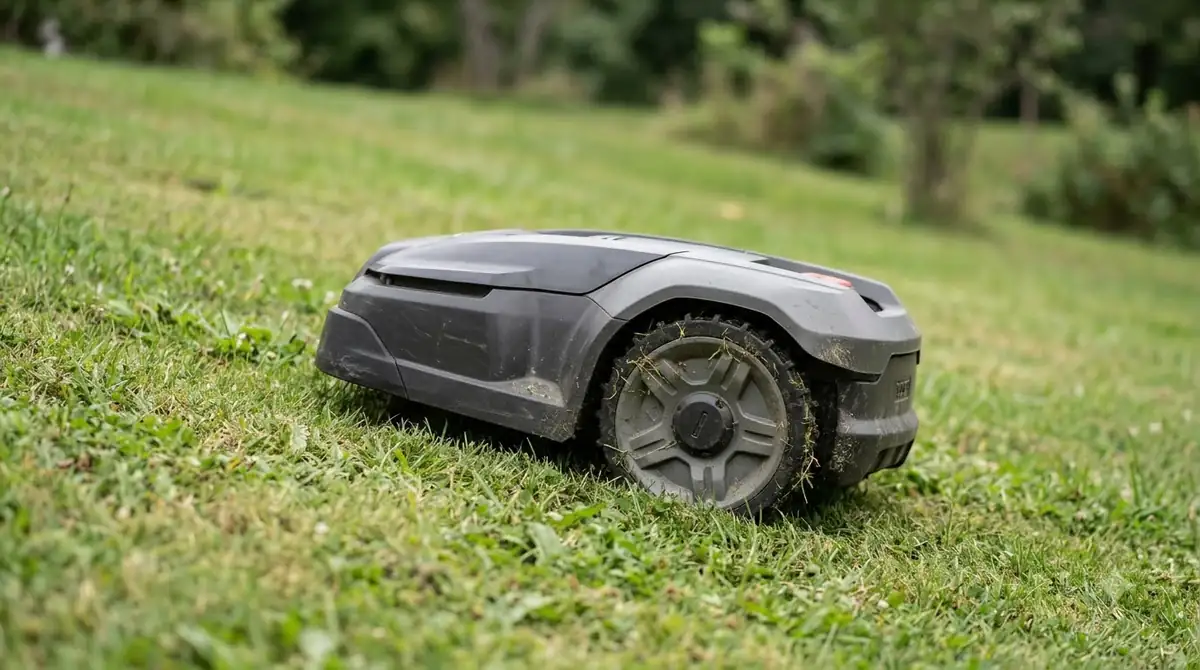
A Notebookcheck reviewer tested the YUKA 1000 on a ramp and recorded a maximum gradient of 45% (24 degrees). That is an independent check on the number, but it covers a different model from the 1500 and 2000 sheet. For background on the numbers, see how robot mower slope ratings work. With the sweeper fitted, Mammotion’s sheet lists 18% (10 degrees).
Our reading is that a lawn above 18% should be planned around the sweeper decision, not the headline figure. Check the slope on your own lawn with a level or a phone app before you assume any rating is safe.
Sweeper: leaf pickup against noise and slope
The optional sweeper changes three things at once. It adds a sweeper attachment that moves leaves and debris into a catcher, it lowers the rated slope to 18% (10 degrees), and it raises the battery to 9 Ah from 4.5 Ah on the 1500 and 2000 sheet.
The reviewer found the sweeper did its job: most leaves, grass clippings and other debris ended up in the catcher. The same review says the deposit points set in the app must be placed well away from the lawn edge, and that the mower got stuck on a swing while carrying the catcher. Noise is the other cost. The reviewer measured almost 70 dB with the sweeper running, which is loud enough to matter in a small yard next to a house.
Our reading is that the sweeper is a pro only for owners who collect leaves on the lawn and have a yard flat enough to stay under the lower slope rating. For a clean lawn with little debris, the extra noise and the slope limit usually outweigh the benefit.
Navigation and iNavi: what it costs to add
Navigation is where the Yuka mini line is most different from the wire-based robots many buyers compare it with. The Mini 600 relies on vision alone, and the YUKA 1500 and 2000 pair 3D vision with RTK. The review also describes an optional iNavi service that combines NetRTK with vision over Wi-Fi or 4G, which lets a model run without a separate RTK antenna in the yard. The reviewer called it an almost equivalent alternative that needs good Wi-Fi or 4G reception and was less accurate than the antenna in the test garden. For more on the correction service behind it, see what NTRIP is for robot mowers, and for the bigger picture, RTK versus vision navigation.
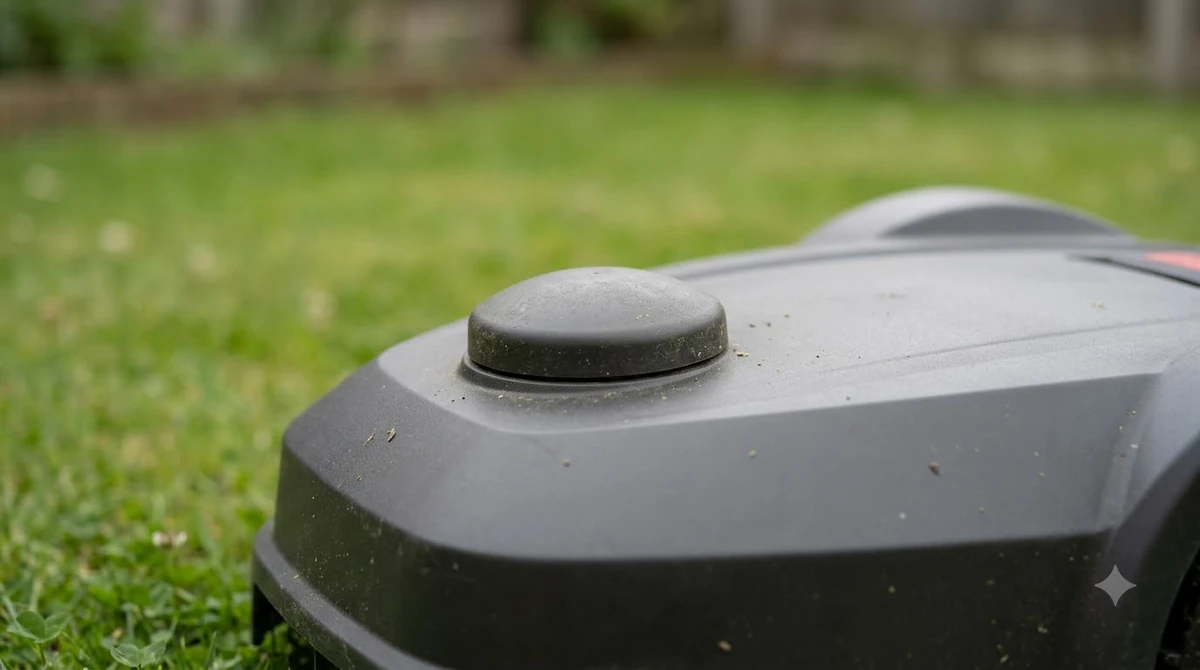
The reviewer’s runtime figure for the YUKA 1000 was about 230 m² per charge, just under two hours, without the sweeper and with standard settings. The same review says passage width is at least 100 cm and edge clearance is at least 10 cm, or 11 cm on high edges. Those figures matter when you judge whether a narrow side yard is workable.
The iNavi service was free to use until the end of 2025. Its price from 2026 had not been announced in the source we read, so treat any running fee as unknown until you check the current terms. Our reading is that a recurring fee changes the total cost of ownership more than the purchase price difference between models.
Who the Yuka mini suits (our reading)
The Mammotion Yuka mini pros and cons above point to a short list of buyers. A small, reasonably level yard with no need for leaf collection fits the Mini 600 well, provided the terrain is not very uneven and the lawn stays comfortably under 0.15 acre. A larger lawn, a sloped or rough yard, or a lot of leaves points toward the YUKA 1500 or 2000, with the sweeper decision made on the slope figures you can confirm.
Before you buy, confirm the model number, the regional spec sheet, your lawn’s area and slope, and the current iNavi terms. Those four checks settle most of the disagreement between sources in this comparison. If you are still deciding, Mammotion Yuka mini versus Eufy E15 compares a direct rival, and owner-reported faults are covered in Mammotion Yuka mini problems and complaints.
Frequently asked questions
What are the Mammotion Yuka mini pros and cons?
The main pro is wire-free navigation: Mammotion describes the Yuka Mini 600 as using UltraSense AI Vision with no boundary wire. The main cons are the 0.15 acre coverage limit on the Mini 600, Mammotion’s warning about very uneven terrain, and slope figures that do not agree across the sources.
What is the maximum slope of the Yuka mini?
A Mammotion product card says up to 45% (24°), but the card does not name the model. The YUKA 1500 and 2000 support sheet gives 28 degrees without the sweeper and 18% (10 degrees) with it. Check the figure for your exact model before you buy.
Does the Yuka mini need the sweeper?
Only if you need leaf and debris pickup. The sweeper lowers the rated slope, adds noise, and needs space for the catcher. A reviewer found it collected most debris, so it is a pro for leaf-heavy yards.
Does Mammotion charge for iNavi?
iNavi was free to use until the end of 2025. The cost from 2026 had not been announced in the source we read, so check Mammotion’s current terms before you buy.
Sources
- Mammotion YUKA specs support page (manufacturer): coverage, cutting width and height, slope with and without sweeper, IP ratings, battery.
- Mammotion robot lawn mower buying guide (manufacturer): Yuka Mini 600 coverage, navigation, and terrain caveat; mini 2 1000H coverage and sensing.
- Notebookcheck review of the Mammotion Yuka (2025) (independent publisher): reviewer ramp, noise, runtime, passage width and sweeper results for the YUKA 1000.
 Up next8 min readReviews & CompareMammotion LUBA 2 AWD Pros and Cons: What the Specs SupportUpdated Nov 11, 2026
 8 min readReviews & CompareMammotion YUKA Mini vs eufy E15: Specs, Slope and Lawn SizeUpdated Nov 11, 2026
 8 min readReviews & CompareMammotion Yuka Mini Problems and Complaints: What Owners ReportUpdated Nov 11, 2026
 7 min readReviews & CompareDreame A1 Pro Review: Specs, Pros and ConsUpdated Nov 11, 2026
 7 min readReviews & CompareMammotion YUKA vs Segway Navimow i110N: Specs ComparedUpdated Nov 11, 2026
 7 min readReviews & CompareMammotion LUBA 3 AWD vs Mammotion YUKA: Specs ComparedUpdated Nov 11, 2026