
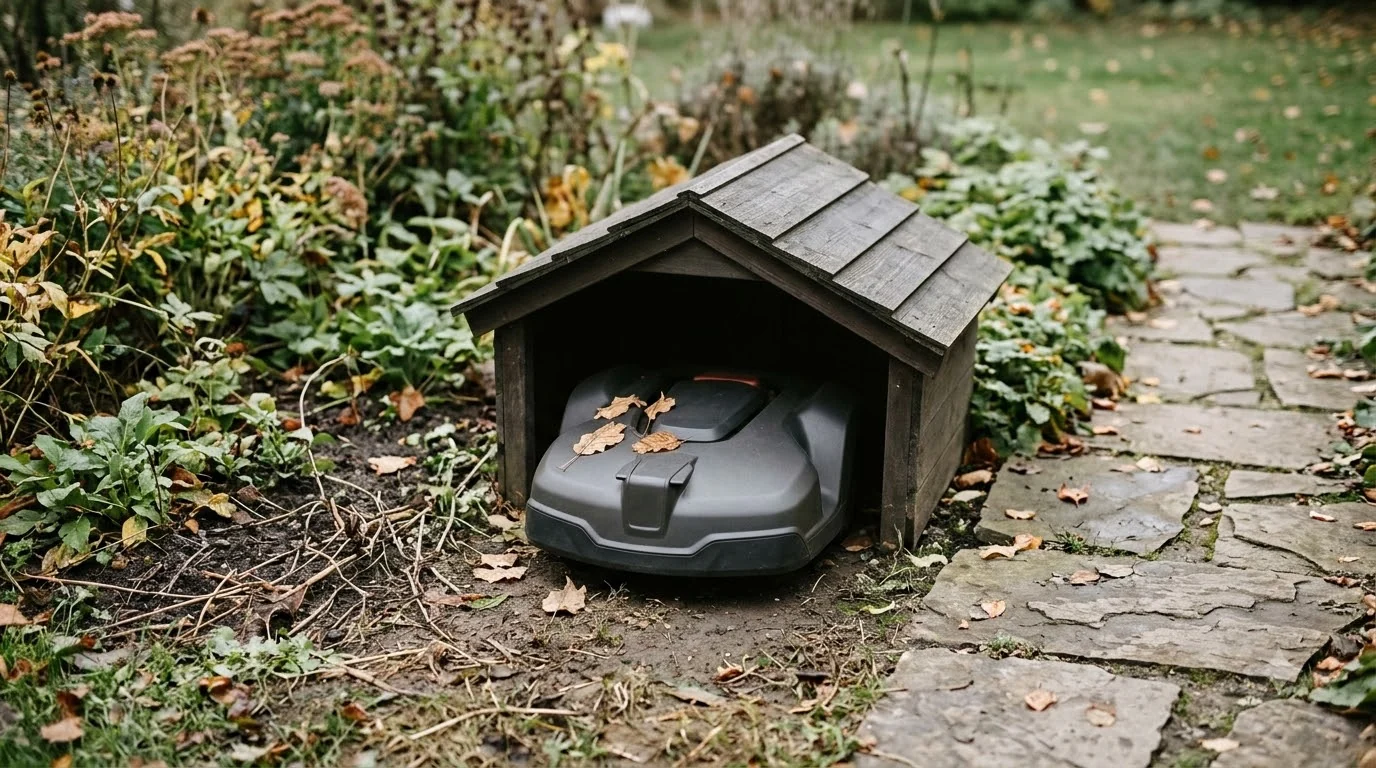

The best wooden robot mower garage is one that keeps the charging station clear, ventilated and anchored, not one that just looks good. Wood insulates well and blends into a garden, but it needs pressure-treated lumber and regular upkeep. Because the right size depends on your model’s dock, measure against the manual before you buy. For most buyers, the best wooden robot mower garage is simply the one that fits their model and survives their weather.
The short answer
- Size: Mammotion’s DIY guide uses machine width plus 20 cm and machine length plus charging station length plus 10 cm, but your model’s manual comes first.
- Ventilation: leave a gap at the top of a side wall or at the back so air can move and the battery can cool while charging.
- Anchoring: wooden shelters are not pegged, and Robomow says they are not necessarily stable in heavy storms.
- Upkeep: use pressure-treated lumber and plan on regular staining or painting to prevent rot and mold.
What makes the best wooden robot mower garage?
Wood can work well. Mammotion’s guide on DIY robot mower garages lists natural insulation that keeps the interior cool and a look that blends into the garden as its main strengths. The same guide is clear about the trade-off: wood requires pressure-treated lumber and regular staining or painting to prevent rot and mold.
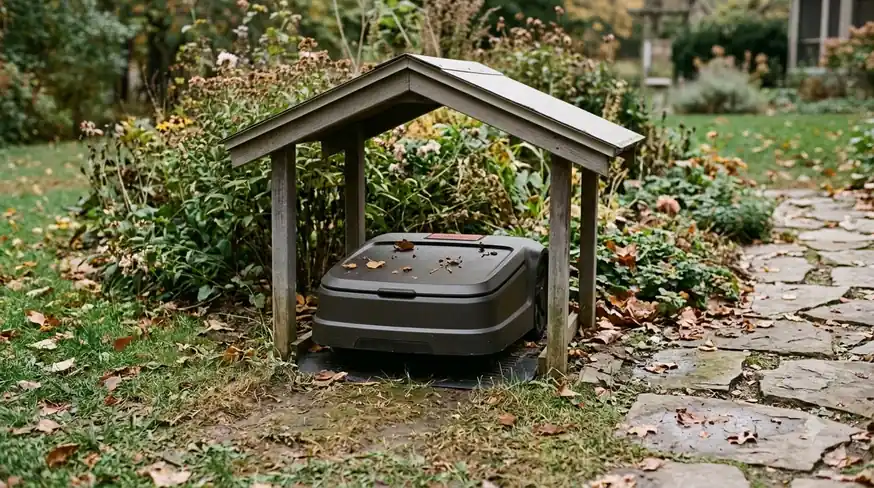
Wood also has a structural limit. Robomow points out that a wooden shelter stands on the ground without being fixed, while manufacturer garages are usually attached with ground pegs. That difference matters more than the material itself, so a wooden garage should be judged on how it is anchored and maintained, not only on how it is built.
How much clearance does a wooden garage need?
When you compare options, start with the dock. Mammotion’s guide gives a simple sizing rule for a DIY garage. The interior width should equal the machine width plus 20 cm (about 8 in), which leaves 10 cm (about 4 in) on each side so the robot does not hit the side walls while docking. The length should equal the machine length plus the charging station length plus a 10 cm margin. The guide treats these figures as a reference and says you can add extra space as needed, so treat them as a starting point.
| Dimension | Rule from Mammotion’s guide | What to measure |
|---|---|---|
| Width | Machine width + 20 cm (about 8 in; 10 cm each side) | Mower body at its widest point |
| Length | Machine length + charging station length + 10 cm (about 4 in) | Mower plus dock, end to end |
| Height | Roof high enough to open the display hatch | Hatch opening with the lid raised |
Robomow adds a fit warning. Wooden garages are not perfectly matched in size to a given mower model, and they can be customized, though weatherizing a custom build is extra work. Our reading is that a ready-made wooden garage should be compared with your model’s dimensions, not picked by its outside look. A listing for a wooden garage that never mentions your model’s dimensions is missing the most important number.
Why ventilation matters inside a wooden garage
Mammotion recommends leaving a small gap at the top of the side walls or at the back. It says the airflow prevents moisture buildup inside and helps cool the battery during charging, including on hot summer days. Moisture matters in a wood build, where rot and mold are the main risks.
Mammotion lists natural insulation that keeps the interior cool as a strength of wood, but it still recommends the vent gap. Our reading is to check that the gap stays clear after assembly and again each season, and our guide on robot mowers in hot weather covers the heat side.
Will a wooden garage stay in place in wind and storms?
Usually, but not reliably in a heavy storm. Robomow notes that wooden shelters are not necessarily stable in heavy storms. Their comparatively high dead weight does help keep them steady in everyday use, and the same source points out that manufacturer garages are typically attached with ground pegs.
Anchoring is the first thing to check on any wooden robot mower garage you consider. Our reading is that a wooden garage on open lawn needs a fixing plan before the first storm season. Before you rely on it, check these points:
- Confirm the garage sits level so the mower can dock cleanly; our note on a robot mower charging station base plate covers the dock surface.
- Decide how the structure will be anchored or weighted, since the wood itself is not pegged; charging station anchor screws are one related option.
- Inspect the garage after strong wind and tighten any loose screws, and see weatherproof outlet box for a robot mower if the power supply sits near the garage.
How much upkeep does wood need?
Wood needs more care than plastic or metal, and upkeep decides whether a wooden garage still looks and works well in its third year. Plan the upkeep before you buy, so the garage does not decay early.
- Start with treated timber. Mammotion’s guide says wood requires pressure-treated lumber to resist rot.
- Stain or paint on a schedule. The guide recommends regular staining or painting to prevent rot and mold.
- Check the screws. Mammotion says to tighten them periodically and to use stainless steel or galvanized screws to prevent rust.
- Look at the vent gap and the base. Keep the ventilation gap clear and check that the base has not taken on damp.
Wood vs metal vs acrylic at a glance
Each material trades one weakness for another. Metal resists rain and rust well, but Mammotion’s guide warns it can heat up quickly in direct sunlight. Acrylic is lightweight, affordable and easy to install, but it gives less shade and can become brittle or fade after long UV exposure. In our reading, wood sits between them, with good insulation and a need for upkeep. Weighing those trade-offs is the core of choosing the best wooden robot mower garage for your yard, not a single winner.
| Material | Main strength | Main weakness | Upkeep |
|---|---|---|---|
| Wood | Natural insulation, blends into the garden | Rot and mold without treatment; not pegged | Regular staining or painting, screw checks |
| Metal | Rain and rust resistance | Heats quickly in direct sunlight; harder to customize as a DIY project | Not covered in the sources read |
| Acrylic | Lightweight, affordable, easy to install | Less shade; brittle or fades under UV | Not covered in the sources read |
What to check before buying the best wooden robot mower garage
A wooden garage is rarely a perfect fit, so check the details before you pay for any best wooden robot mower garage candidate. Use this list as a pre-purchase checklist.
- Compare the interior with your model. Use the width and length rules above and your manual’s dock dimensions.
- Confirm hatch access. The roof must be high enough to open the display hatch for settings without moving the mower.
- Look for a vent gap. A top or back gap is needed for airflow and battery cooling.
- Plan anchoring. Wood is not pegged, so decide how it will stay put in wind.
- Test the dock after placing it. Run a docking test to confirm the mower enters and the charging light works.
Frequently asked questions
Is a wooden robot mower garage safe for the mower?
It can be, if the garage has enough clearance, a vent gap and treated timber. Robomow notes that wooden shelters are not pegged and are not necessarily stable in heavy storms, so anchoring is the main safety check.
Does a wooden garage protect the mower from frost?
Not reliably. Robomow says garages do not provide adequate protection against frost, so store the mower indoors when temperatures drop below zero (0 C, or 32 F). Our how to winterize a robot mower guide has the steps.
Do I need to treat a wooden garage?
Yes. Mammotion’s guide recommends pressure-treated lumber and regular staining or painting to prevent rot and mold, plus periodic checks of the screws.
How do I know a wooden garage fits my mower?
Compare the garage interior with your model’s dock and mower dimensions, and check that the roof allows the display hatch to open. Then run a docking test after placement to confirm the fit.
Sources
- Mammotion DIY robot mower garage guide (manufacturer): used for wood upkeep, clearance rules, ventilation and material trade-offs.
- Robomow garage selection guide (manufacturer): used for anchoring, stability in storms, model fit and frost protection.
 Up next8 min readGearBest Garage for Dreame Robot Mowers: 5 Checks Before You BuyUpdated Nov 11, 2026
 9 min readGearRTK Antenna Wall Mount Bracket: What to Check Before You BuyUpdated Nov 11, 2026
 8 min readGearBest Weatherproof Enclosure for RTK Base Station: 6 Checks Before You BuyUpdated Nov 11, 2026
 8 min readGearBest Metal Robot Mower Shelter: What to Check Before You BuyUpdated Nov 11, 2026
 7 min readGearBest Outdoor Surge Protector for Robot Mower: What to Check Before You BuyUpdated Nov 11, 2026
 8 min readGearBest GFCI Outlet Cover for Robot Mower: What to Check Before You BuyUpdated Nov 11, 2026