
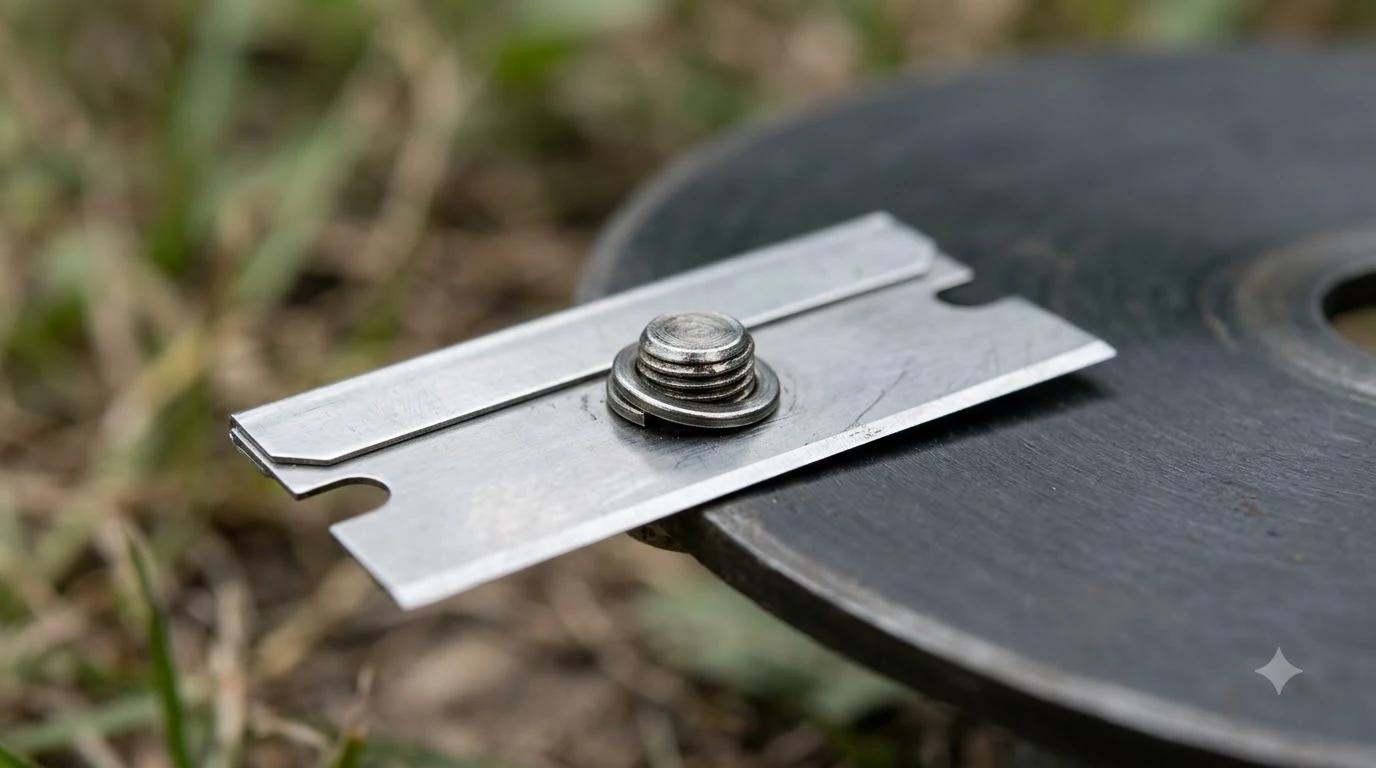

The best stainless steel robot mower blades depend on your model, and the longer life that makers claim for hardened stainless is not backed by independent tests. As of 2026-11-10, the manufacturer pages we read give roughly 3 to 6 weeks for standard disc blades, with longer-life versions claimed to last up to three times as long.
The short answer
- Material: Ecovacs says robot mower blades are usually stainless steel, and some add a titanium coating.
- Hardened stainless: Worx sells “hardened stainless steel” blades for its Landroid models and claims they last 3X longer than standard blades.
- Typical life: Husqvarna says main disc blades last 3 to 6 weeks under normal conditions.
- Sharpening: Ecovacs advises against sharpening robot blades, and Mammotion says small robot blades are meant to be replaced.
- Before you buy: check the mounting hole count, blade length, and whether the maker names your exact model.
What makes the best stainless steel robot mower blades?
Ecovacs says robot mower blades are usually made of stainless steel, so the real question is whether a hardened or longer-life stainless blade lasts longer than the standard one. Worx is the clearest case we found. Its long-life blade page lists “hardened stainless steel replacement blades” (see changing Worx Landroid blades for the swap itself), with a pack of 6 blades and 6 screws, and says the blades “last 3X longer than standard blades.”
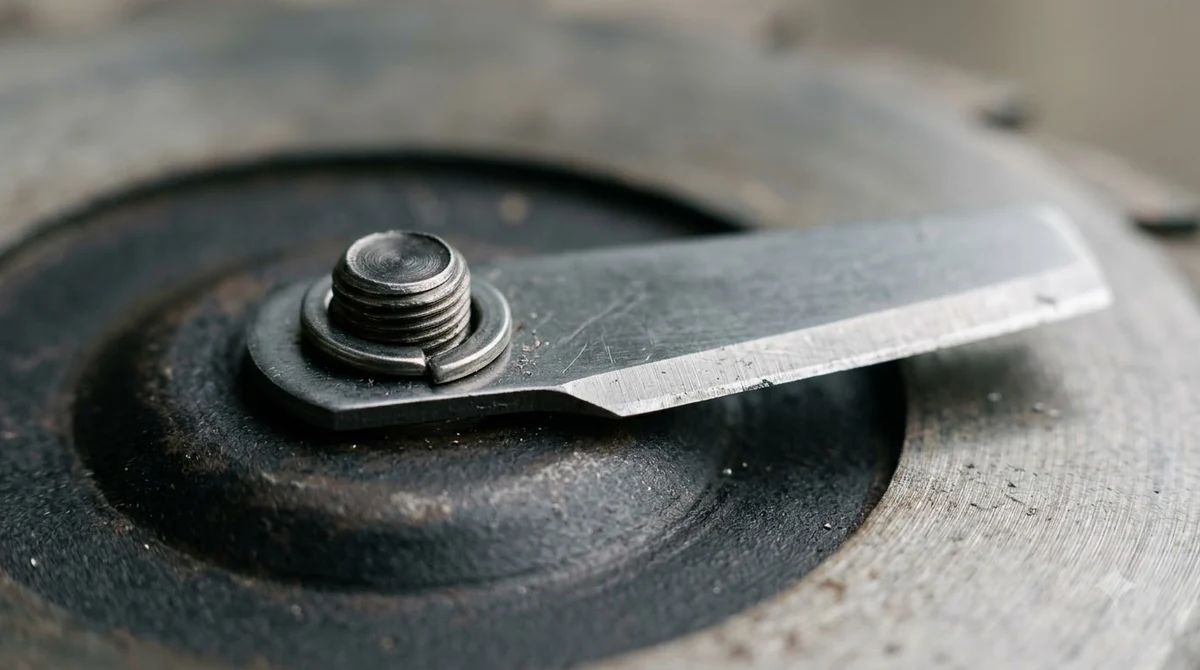
The same Worx page makes a second claim that does not quite match the first. Its FAQ says the two-hole design gives “double the life.” Worx’s cutting blade wiki describes its hardened stainless option as lasting “up to three times longer” and as “resistant to corrosion,” but it does not explain how those figures were measured. For a buyer, the practical reading is that the maker expects a longer service life from hardened stainless, but the size of the gain is a claim, not a result we could check.
Not every maker names the material. The Mammotion blog we read discusses blade size, shape, material, and mounting method as factors in maintenance needs, but it does not say whether its blades are steel or stainless. So if a listing says “stainless” without naming a hardened grade or a coating, you have less to go on.
How long stainless steel blades last
Blade life for the best stainless steel robot mower blades depends on the mower model, the grass, and the ground, so makers give ranges rather than a single number. The ranges we read are not the same, and they should be compared model by model.
| Source | What it says about blade life | Type of claim |
|---|---|---|
| Husqvarna support | Main disc blades 3 to 6 weeks under normal conditions; EdgeCut disc blades 9 to 12 weeks | Maker guidance |
| Ecovacs blog | Robot mower blades generally last 4 to 6 weeks | Maker guidance |
| Mammotion blog | Several weeks to several months; a fixed 6 to 8 week rule does not apply to every mower | Maker guidance |
| Worx (long-life blades) | 3X longer than standard; replace every 3 to 4 months | Maker claim |
The gaps between these sources are useful. Husqvarna and Ecovacs both give a few weeks for standard disc blades, while Worx suggests a replacement schedule measured in months for its long-life blade. Mammotion warns against treating any single week count as universal. Our reading is that a stainless blade should be judged against the standard blade for your own model, using the same lawn and the same mowing schedule, rather than against a number from a brochure.
Heads up
None of the sources we read compares stainless steel with plastic or polymer blades on lifespan. If a listing claims a plastic blade lasts longer than steel, we found no published evidence either way.
Why sharpening is usually not the answer
Many people sharpen push-mower blades, but robot blades are a different case. Ecovacs says sharpening “is not recommended for robot models because the blades are small and difficult to access.” Mammotion makes a similar point, saying many small, replaceable robot blades are “intended to be replaced rather than repeatedly sharpened,” and that blades should be sharpened only if the manufacturer permits it.
That advice applies to stainless blades too, which Worx sells as a pack of 6 blades with 6 screws. If you are weighing the two options, our page on sharpening or replacing robot mower blades goes further. Sharpness still matters, though. Purdue Extension’s AY-8 publication says a dull blade injures the leaf tips, and that a sharp blade “results in a cleaner and healthier cut.” That guidance covers turf mowers rather than robots, so treat it as background on why blade condition matters, not as a robot-specific rule. Replace a blade when the cut looks ragged rather than waiting for a set date.
What wears blades out faster
Even the best stainless steel robot mower blades wear out. The Ecovacs blog says thicker or coarser grasses need more cutting force, which can dull blades faster and make the motor work harder. Mammotion lists dense grass, frequent mowing, debris, and rough terrain as factors that increase the workload on the cutting system.
Hard objects are the most immediate threat. Mammotion says sticks, stones, and pine cones “can dull, bend, chip, or otherwise damage a blade,” and it calls hard objects a more immediate concern than normal grass cutting. Clearing the lawn before a run, and removing branches and toys, follows from that. Ecovacs also advises cleaning blades and discs with a soft brush so clippings and mud do not stop them from spinning freely.
Husqvarna’s signs of wear are a practical checklist. It says to watch for “frayed or whitened grass tips after mowing” and for any visible wear or damage on the blades. A whitened lawn is a sign the blades are no longer cutting cleanly, whatever their material. Our list of signs of dull robot mower blades adds more cues.
What to check before buying stainless blades
When you compare stainless steel robot mower blades, the first check is fit. Worx says its long-life blades are “compatible with all Landroid models,” but a brand-wide claim is not the same as a fit for your exact model. Ecovacs says to use only blades made by ECOVACS along with new screws. Compare the blade length, the mounting hole count (Worx says its long-life blade has two holes, while the standard blade has one), and the screw type against your owner’s manual before you order. Our guide to which replacement blades fit your model covers fit by brand, and the notes on replacing blade screws cover the fasteners.
The second check is the material claim itself. When you compare the best stainless steel robot mower blades, look for a specific grade or treatment, such as “hardened stainless steel,” rather than the word “stainless” alone. Ask whether the maker publishes a replacement interval for that blade. A blade with no stated interval gives you no basis for comparing it with the standard blade.
The third check is the replacement schedule you will actually follow. A longer-life blade only saves money if it is still cutting well when you reach its interval. Inspect the blades at the same time you clean the deck, and replace any blade that is bent, chipped, or no longer leaves a clean cut.
Frequently asked questions
Are the best stainless steel robot mower blades worth it?
The sources we read do not prove that stainless steel is better across the board. Worx claims its hardened stainless blades last 3X longer than standard blades, and Ecovacs says robot blades are usually stainless steel. The gain depends on your model, grass, and ground, so compare the price per replacement interval for your own mower.
How often should I replace stainless robot mower blades?
Husqvarna says main disc blades last 3 to 6 weeks under normal conditions, and Ecovacs says robot blades generally last 4 to 6 weeks. Mammotion warns that a fixed week count is not a universal rule. Replace blades sooner if the grass tips look frayed or whitened, or if a blade is bent or chipped.
Can I sharpen stainless robot mower blades?
Ecovacs says sharpening is not recommended for robot models because the blades are small and hard to access. Mammotion says blades should be sharpened only if the manufacturer permits it. For most small robot blades, replacement is the path the makers describe.
Do hardened stainless blades fit every robot mower?
Not necessarily. Worx says its long-life blades are compatible with all Landroid models, but fit still depends on blade length, mounting holes, and screws. Check your owner’s manual and the exact part number before ordering any replacement blade.
Sources
- How and when to change the blades on your Automower (Husqvarna, UK support site): main disc and EdgeCut replacement intervals, wear signs.
- What’s the Lifespan of a Robot Lawn Mower? (Ecovacs): stainless and titanium-coated blades, 4 to 6 week interval, sharpening advice, replacement parts.
- How Long Do Robot Mower Blades Last? (Mammotion): lifespan range, factors that shorten life, replace-versus-sharpen advice.
- Landroid Long-Life Replacement Blades (Worx): hardened stainless material, pack contents, two-hole design, 3X claim, compatibility.
- Cutting Blades (Worx wiki): hardened stainless option and corrosion resistance claim.
- AY-8: Mowing, Dethatching, Aerifying and Rolling Turf (Purdue Extension and University of Illinois Extension): effects of dull blades on leaf tips.
 Up next9 min readGearRobot Mower Blade Screws Replacement: When to Change ThemUpdated Nov 11, 2026
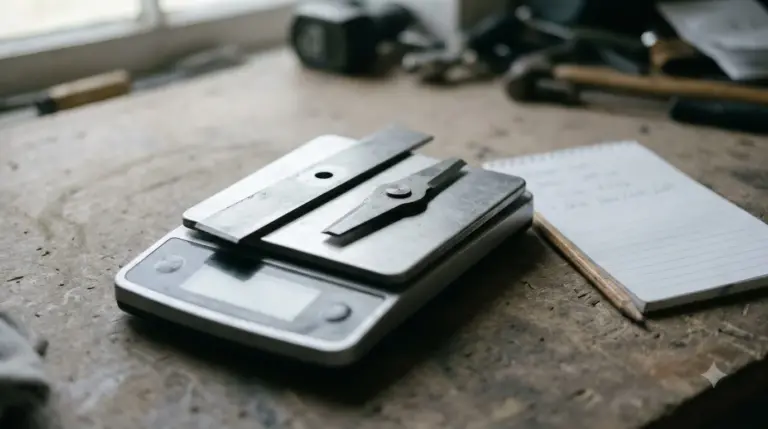 7 min readGearRobot Mower Blade Sharpening or Replace: What the Makers SayUpdated Nov 11, 2026
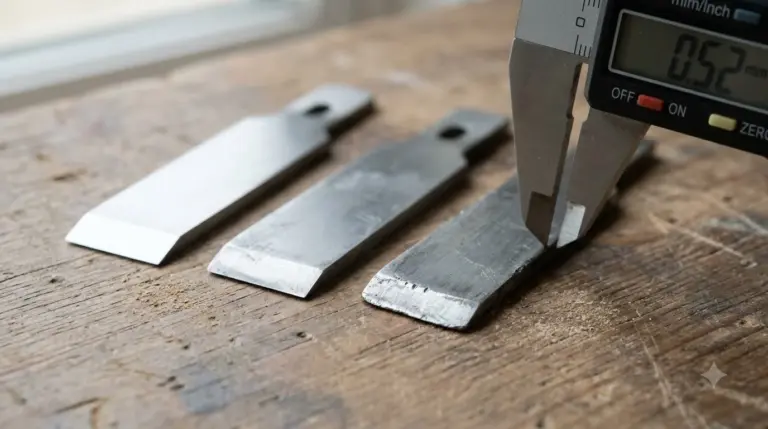 8 min readGearDull Robot Mower Blades Signs: What to Check and When to ReplaceUpdated Nov 11, 2026
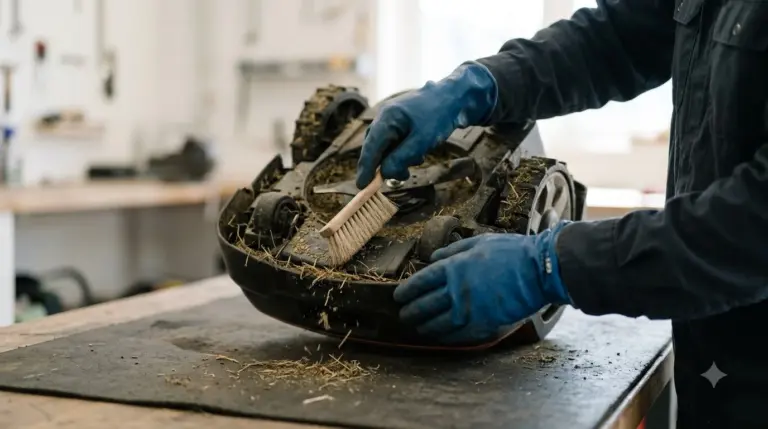 7 min readGearBest Cut Resistant Gloves for Changing Robot Mower Blades: What to CheckUpdated Nov 11, 2026
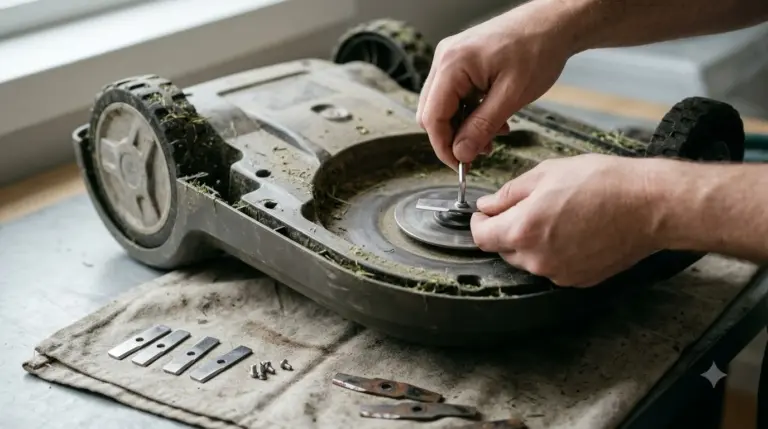 7 min readGearHow to Change Robot Mower Blades (Step by Step)Updated Nov 11, 2026
 8 min readGearUniversal Robot Mower Blades: What Fits and What to CheckUpdated Nov 11, 2026