
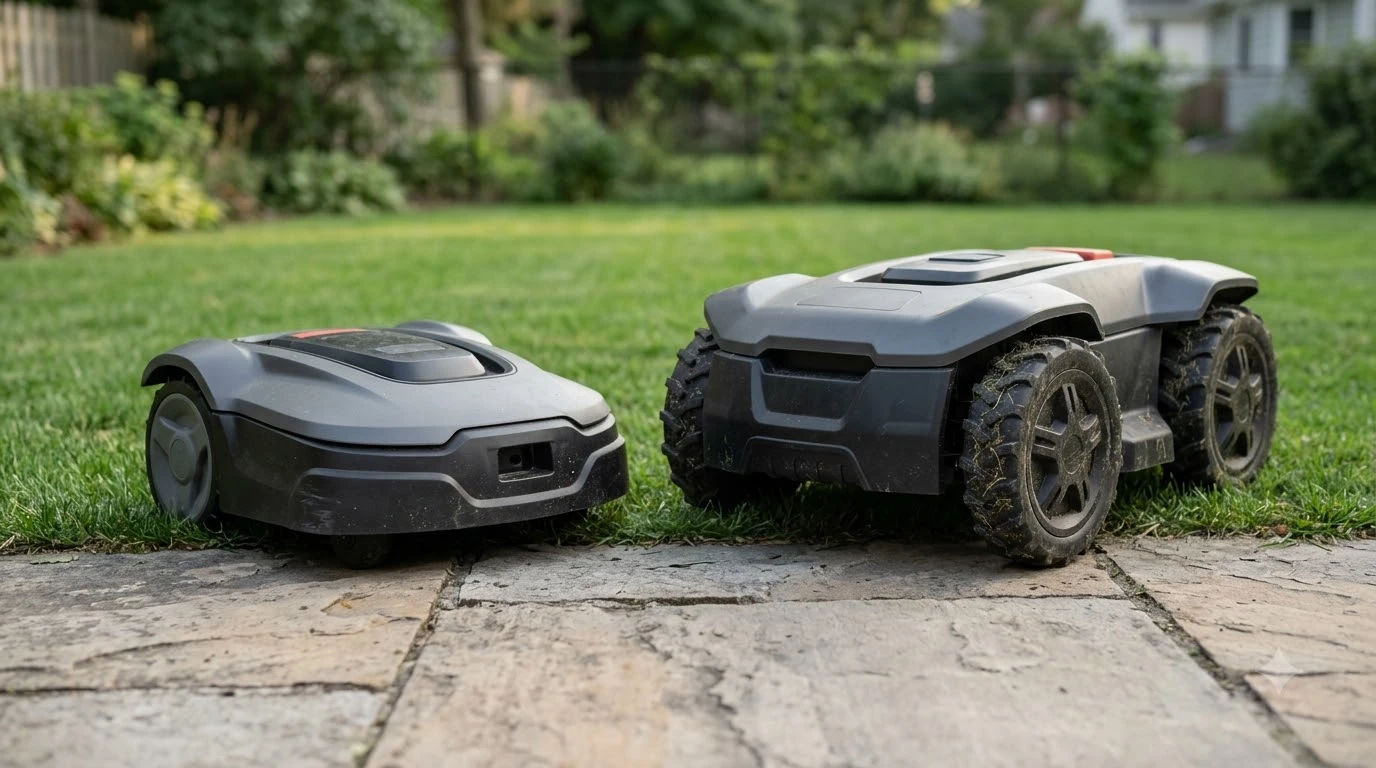

Robot lawn mower installation cost is about $50 to $150 for a DIY boundary-wire setup and $200 to $800 when a professional installs it. Those are US ranges from a 2024 vendor guide, and they were still the best public figures we found as of 2026-11-09. Installation is a one-time job, and the final bill depends mostly on yard size, layout, and whether the wire is buried.
The short answer
- DIY boundary wire: about $50 to $150 in materials and tools.
- Professional robot lawn mower installation cost: about $200 to $800, higher for large or complex yards.
- Time: Robomow describes the owner install as a few hours.
- Wire-free models: no boundary wire to lay, but app setup and a clear sky view still matter.
How much does robot lawn mower installation cost?
As of 2026-11-09, robot lawn mower installation cost for a do-it-yourself boundary-wire setup is roughly $50 to $150, and a professional installation runs roughly $200 to $800, according to Mowrator’s cost comparison. That guide is a vendor blog dated August 2024, so treat the figures as a starting point and get a local quote before you budget. The same article ties the upper end of the range to larger and more complicated yards. Two other vendor guides point the same way: Eufy says professional installation for boundary-wire models can add up to $800, and Dreame says up to $600. For the mower itself, see how much a robot lawn mower costs.
The gap in robot lawn mower installation cost is mainly labor. Robomow lists garden size, above- or below-ground wire, and travel as the factors behind a professional quote, so two lawns of the same size can still cost different amounts to set up.
What does robot mower installation involve?
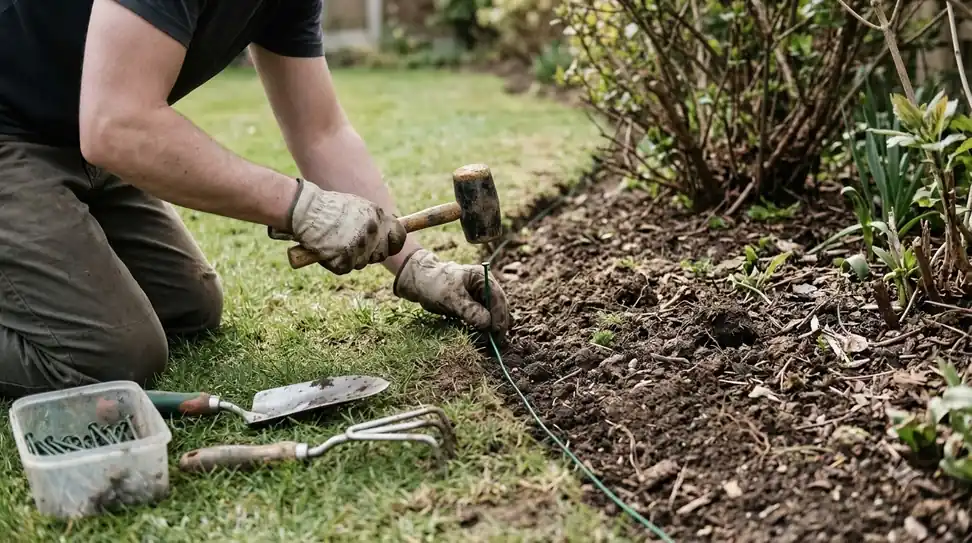
Robot lawn mower installation cost depends on which steps you hand off, and the steps themselves are clear. Robomow’s owner guide describes the job as placing the charging station, laying the boundary wire around the mowing area, and adding a guide wire that runs straight out from the station. The wire is held down with lawn hooks, which Robomow says should be spaced about every 50 cm (about 20 inches) above ground.
- Plan the wire loop. Map the mowing area and keep wire away from beds and obstacles you want the mower to avoid.
- Place the charging station. Set it on level ground with the clearances covered in the next section.
- Lay and connect the wire. Run the boundary wire, then join the guide wire to it with the supplied connector.
- Pair and program. Set the cutting schedule and height in the app, then run a test cycle.
A professional installer usually covers the same steps. Robomow’s page lists a visit to the home, installing the charging station, laying the boundary and guide wire, assembling and programming the mower, and a test run with an operating briefing. It also says the cost depends on garden size, whether the wire goes above or below ground, and possible travel expenses.
DIY or professional: which should you choose?
DIY is the cheaper route for robot lawn mower installation on a small, level, simple yard. Professional help makes more sense when the yard is large, sloped, or split into several areas, or when you want someone else to be responsible for the wire run. Robomow’s installation page says a DIY install is cheaper but does not give a dollar figure, so the saving depends on the labor you would otherwise pay.
| Situation | Usually a better fit | Why |
|---|---|---|
| Small, flat, simple lawn | DIY | Short wire run and no trenching to manage |
| Large lawn or several zones | Professional | More wire, more layout decisions, and more to test |
| Steep or uneven ground | Professional | Placement and guide-wire routing matter more on slopes |
| Buried wire through hard ground | Professional | Robomow says burial and garden size change the professional quote |
| Wire-free model | DIY or dealer setup | No wire to lay; mainly app mapping |
Our reading is that the lowest robot lawn mower installation cost is not always the right choice. If a wire break or a badly placed station costs you a season of poor mowing, the professional fee can be easier to justify.

Where the charging station must go
Placement rules are the step that most often adds to robot lawn mower installation cost after the fact, and our guide to where to put a robot mower charging station covers the yard side of the decision. Husqvarna’s placement guide for boundary-wire stations asks for at least 3 m (10 ft) of clear space in front, at least 150 cm (60 in) on each side of the station’s centre, and at least 60 cm (2 ft) behind it. The station must sit on level ground, and its baseplate must not be bent.
- Power: place it near an outlet. Robomow gives a maximum of 15 m (about 50 ft) from the outlet.
- Sun and rain: Husqvarna recommends shelter from direct sun, such as its Automower House. Husqvarna says alternative covers, such as DIY roofs or canopies, are not tested or verified and could interfere with the mower.
- Metal: keep rebar, metal edging, and coils of low-voltage cable away from the station and wires.
Those rules are easy to miss when you build the layout first and place the station last, and fixing them later adds to robot lawn mower installation cost. Decide the station location before you cut the wire loop.
Does a wire-free robot mower need installation?
Wire-free mowers skip the buried or pegged boundary wire, so the hardest part of installation goes away (see wire free vs boundary wire robot mowers). Mowrator says wire-free setup requires no wire and that the mower navigates with GPS, cameras, or sensors, although these models cost more upfront. The job becomes app-based mapping and station placement.
Wire-free does not mean no setup, and the robot lawn mower installation cost still includes app mapping. Husqvarna’s EPOS installations need at least 6 m (20 ft) of free space in front of the station, and the point where the mower connects to satellites needs an open view of the sky.
What makes installation cost more?
Four things drive up robot lawn mower installation cost: yard size, buried wire, slopes, and wire length. Robomow notes that angled lawns may need more wire than the amount supplied, and its guide says the mower can handle grades of up to 45%, provided the station sits on level ground. Mowrator links cost to yard size, listing entry models for lawns up to 0.125 acres and higher-tier models for lawns of 0.75 to 1.25 acres and more.
- Yard size: more area means more wire and more time.
- Buried wire: burial is a separate factor in the quote, so it raises robot lawn mower installation cost when it is needed (compare bury or peg robot mower boundary wire).
- Slopes: the station needs level ground, so the layout can need extra work.
- Extra wire: plan for spare wire on angled or irregular lawns, and see how much boundary wire you need.
Common installation mistakes that add cost
Most extra robot lawn mower installation cost comes from avoidable errors. Buying too little wire is easy to prevent, since Robomow warns that angled lawns can need more than the supplied amount. Placing the station before checking the clearances can mean moving it and rerunning the loop.
- Skipping the clearance check. A station without 3 m in front may not let the mower line up cleanly.
- Using too few hooks. Robomow’s spacing of about 50 cm keeps wire from shifting above ground.
- Leaving metal nearby. Rebar and metal edging can interfere with the wire and station.
- Not testing before you leave. A test run confirms the wire and station work together.
Before you budget, get at least two written quotes for the wire run, and check whether the price includes the charging station, the wire, and a test run. Robot lawn mower installation cost is easier to compare when every quote covers the same scope. If your yard is simple and level, DIY with careful placement is often the better value.

Frequently asked questions
Can I install a robot lawn mower myself?
Yes, for many boundary-wire models. Robomow says the owner installation takes a few hours and is a one-time task. Check your model’s manual for wire spacing, and follow the charging station clearances before you lay the loop.
Is professional installation worth the cost?
It can be, for large, sloped, or complex yards. For robot lawn mower installation cost, professional work in the US was quoted at $200 to $800 as of 2026-11-09. A professional also handles the wire run, station placement, and a test cycle, which can prevent costly reruns.
How long does robot lawn mower installation take?
Robomow describes the owner installation as a few hours. A professional visit covers the same steps and a test run, so the time depends on yard size and how much wire is buried.
Do wire-free robot mowers cost less to install?
The wire line item disappears from robot lawn mower installation cost, but Mowrator says wire-free models cost more upfront. Setup is app-based mapping instead of wire laying, and EPOS installs still need 6 m of clear space in front of the station.
Sources
- Can I install my robotic lawnmower myself? (Robomow): DIY time, wire hook spacing, charging station outlet distance, pro installation scope, grade limit.
- Optimal placement and installation of the Automower charging station (Husqvarna): front, side, and rear clearances, level ground, EPOS clearance.
- Budget Guide 101: How Much Is a Robot Lawn Mower in 2026? (Eufy, updated January 26, 2026): installation can add up to $800 for boundary-wire models.
- Robot Lawn Mower Price Guide: What You’ll Pay in 2026 (Dreame, May 25, 2026): professional installation up to $600.
- Robot Lawn Mower Cost Comparison: Cheap vs. Expensive (Mowrator, dated August 2024): DIY and professional installation ranges, yard size tiers, wire-free setup.
 Up next8 min readBest Robot MowersRobot Mower vs Lawn Service Cost: An Honest 2026 BreakdownUpdated Nov 11, 2026
 9 min readBest Robot MowersHow Much Does a Robot Lawn Mower Cost?Updated Nov 11, 2026
 9 min readBest Robot MowersHow Many Hours a Day Does a Robot Mower Run?Updated Nov 11, 2026
 8 min readBest Robot MowersCan You Use a Robot Mower With Sprinklers? Timing TipsUpdated Nov 11, 2026
 9 min readBest Robot MowersHow to Spot a Real Robot Mower Deal Before You BuyUpdated Nov 11, 2026
 7 min readBest Robot MowersRobot Mower Mowing Patterns: Random vs Striped ExplainedUpdated Nov 11, 2026