
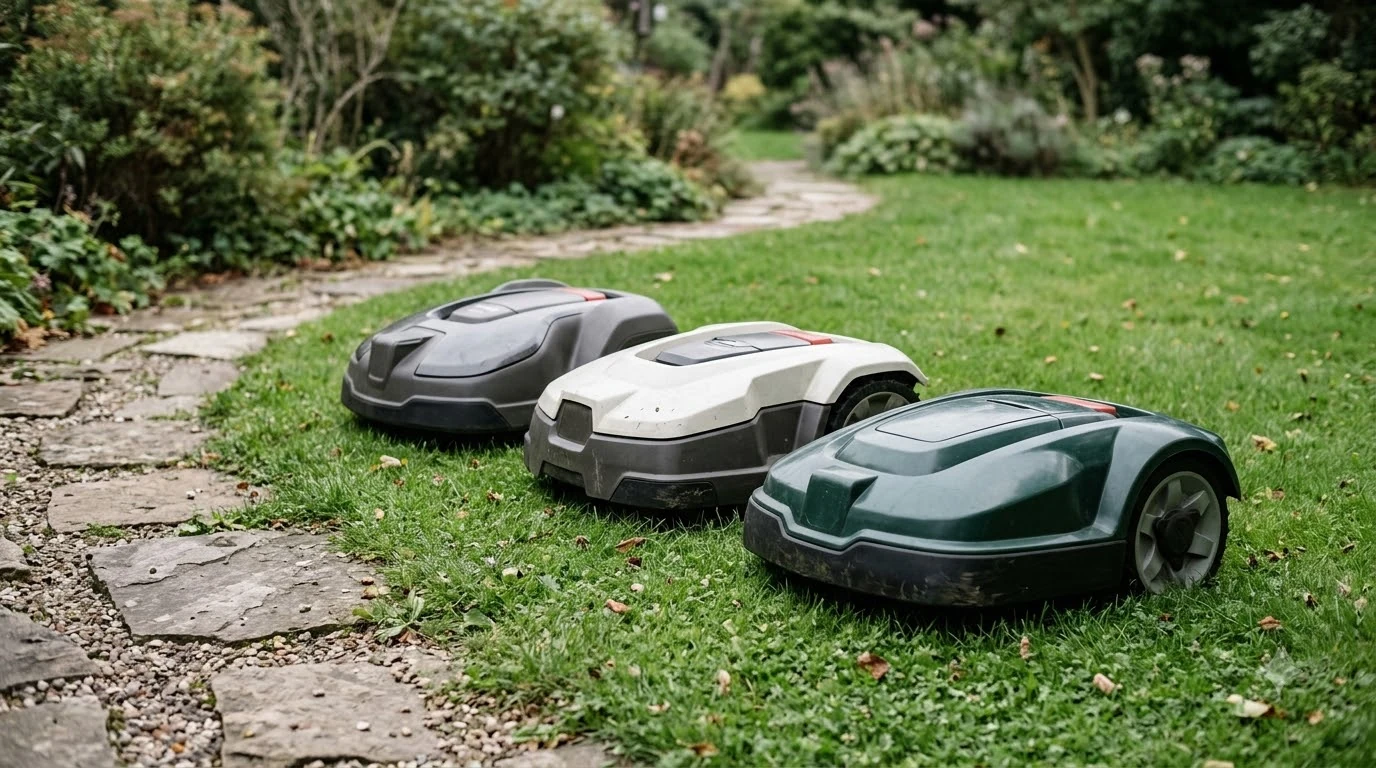

A robot mower for tall fescue lawns can work, but its maximum cutting height decides whether it fits. NC State and Clemson extension guides put tall fescue at roughly 2.5 to 3.5 inches for most of the year. UF/IFAS notes that most autonomous mowers were designed for cool-season grass cut below 2.5 inches, so the gap between those two numbers is the thing to check before you buy.
The short answer
- Usual tall fescue height: 2.5 to 3.5 inches, depending on the season.
- Summer target: 3.5 inches, according to both NC State and Clemson.
- Typical robot mower limit: most were designed for grass cut below 2.5 inches, per UF/IFAS.
- Frequency rule: remove no more than one-third of the blade height in one cut.
- Research: a 2025 UConn trial was preliminary and tested only 1.25, 2.25 and 3.25 inches.
Can a robot mower cut tall fescue at its usual height?
Often only at the low end of the range. UF/IFAS says most autonomous mowers were designed for cool-season grasses, which are typically mowed below 2.5 inches, while tall fescue is usually kept between 2.5 and 3.5 inches. A mower built for shorter grass can still run on taller turf, but it may not be able to set the height you want for summer.
The same UF/IFAS publication, Autonomous or Robotic Mower Use on Florida Lawns, also warns that autonomous mowers can cut lower than is favorable for some grasses. For a robot mower for tall fescue lawns, the practical risk is the opposite: a maximum setting that stops short of 3.5 inches leaves no room for the summer target. The same publication lists “lawns requiring higher mowing heights” among the situations where autonomous mowers are less suitable.
Our reading: compare the mower’s maximum cutting height with the highest setting you will need, not only with its lowest setting. A spec sheet that lists a wide range on paper still needs a check against your own grass height, and the guide to how to read a robot mower spec sheet shows where to look.
What mowing height does tall fescue need in each season?
Tall fescue needs about 2.5 to 3.5 inches through most of the year, and both extension guides set 3.5 inches as the summer target. NC State Extension says the grass does not tolerate close mowing, which is why the summer setting goes up rather than down.
| Season | NC State Extension | Clemson HGIC |
|---|---|---|
| Spring (March to May) | 2.5 to 3.5 inches | 3 inches |
| Summer (June to August) | 3.5 inches, and before the grass gets taller than 5 inches | Raise to 3.5 inches |
| Fall (September to November) | 2.5 to 3 inches | 2.5 to 3.5 inches |
| Winter (December to February) | Not stated on the page we read | 3 inches, and keep clear of leaves |
Our reading: for a robot mower for tall fescue lawns, a setting of 3 inches falls inside the spring and fall ranges of both sources, so it is a sensible year-round default. Summer is the exception, and that is where a robot mower with a low maximum height will struggle. Illinois Extension lists tall fescue at 2.5 to 3.5 inches, and the NC State handbook says tall fescue performs best at 3.5 inches and should never be mowed shorter than 2.5 inches. Those statements agree with the calendar figures above. Tall fescue is a cool-season grass, so the guide to whether a robot mower can cut cool-season grass gives the wider picture.
Robot mower for tall fescue lawns: what the research shows
The most direct recent study is a 2025 trial at the University of Connecticut. According to UConn Today’s report on the work, tall fescue and Kentucky bluegrass were cut at 1.25, 2.25 and 3.25 inches, and both grasses performed best at 2.25 inches. The article calls the results preliminary, so treat them as a starting point rather than a final answer.
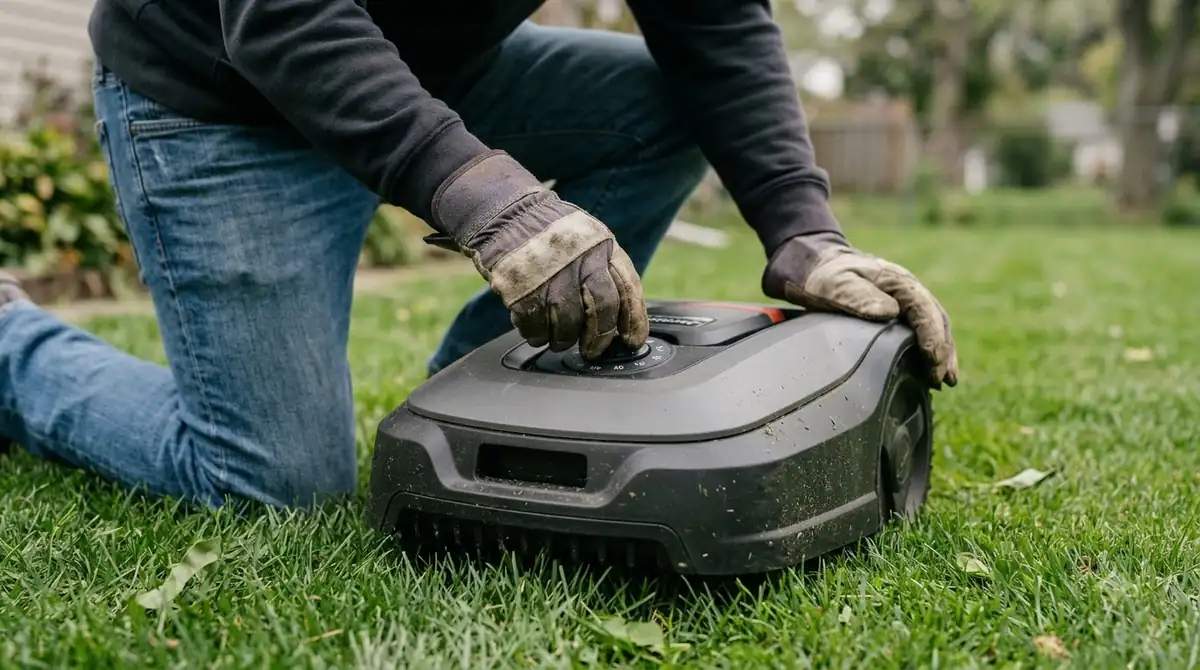
The same report says tall fescue that was fertilized in May stayed green into July or August under autonomous mowing, a pattern it did not see with conventional mowing. The article gives no percentages or sample sizes, so the size of that effect is unknown.
UF/IFAS also cites earlier work on tall fescue, including a 2018 comparison titled Autonomous Mower vs. Rotary Mower: Effects on Turf Quality and Weed Control in Tall Fescue Lawn and a 2021 study titled Robotic Mowing of Tall Fescue at 90 mm Cutting Height. Ninety millimeters is about 3.5 inches. This article cites those papers by title only.
UF/IFAS summarizes the wider picture in its key takeaways: robotic mowers can keep turf quality comparable to traditional mowing, reduce labor, noise and emissions, and frequent mowing improves turf density. Those points describe the overall approach rather than a specific height.
Our reading: a trial at 2.25 inches does not show what your mower will do at 3.5 inches. Match the research height to your own target, then look for a mower whose range covers that target.
Does your lawn fit a robot mower?
Before you buy a robot mower for tall fescue lawns, check the lawn itself. A robot mower suits small to medium lawns with simple layouts and few obstacles, according to UF/IFAS. Obstacles and layout matter as much as the height range, so check both before you settle on a model.
- Check the maximum cutting height. It should reach your summer target of 3.5 inches, not only the lowest setting.
- Measure the lawn. UF/IFAS describes autonomous mowers as best for small and medium lawns, so a large or multi-zone yard needs a closer look.
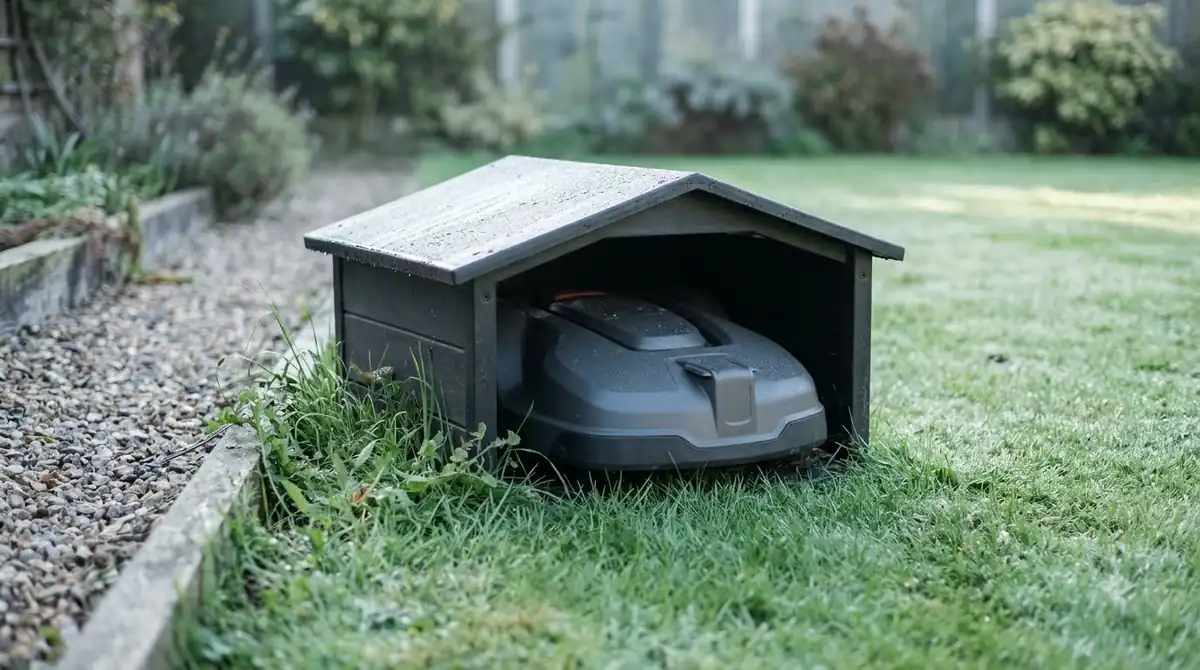
- Map the obstacles. Raised beds and borders can block the mower and leave taller grass along the edge that needs string trimming. UF/IFAS suggests lowering those edges so the mower can reach them.
- Look for irrigation heads. UF/IFAS warns that sprinkler heads can make the mower unstable, which can stop it or damage it. See using a robot mower with sprinklers for more.
Mowing frequency, blades and clippings
For a robot mower for tall fescue lawns, the one-third rule is the main guide: remove no more than one-third of the grass height in a single cut, as the one-third rule for mowing grass explains. NC State says mowing may need to happen every five to seven days in late spring. Our reading is that a robot mower can follow the same principle with shorter, more frequent runs during fast spring growth.
The NC State handbook gives a concrete example of the rule: mow tall fescue back to 3 inches once it reaches 4.5 inches. Illinois Extension says that in spring, mowing will likely mean more than once a week, and that for most home lawns the easiest strategy is to set the mowing height and leave it there.
Blades need attention too. UF/IFAS recommends replacing robot mower blades every six to eight weeks during the growing season to keep the cut clean, which the guide on how often to replace robot mower blades covers in more detail. Clemson also recommends grasscycling, leaving clippings on the lawn, and notes that in fall clippings can supply a significant share of the lawn’s fertilizer needs.
Our reading: set the robot’s schedule by the season, not the calendar. Run it more often in late spring, and less in winter when the grass is dormant.
Frequently asked questions
Can a robot mower cut tall fescue?
Yes. A robot mower for tall fescue lawns works if its maximum cutting height reaches the height you want to keep. UF/IFAS notes that most autonomous mowers were designed for cool-season grass typically cut below 2.5 inches, so check the spec sheet before you buy.
What height should tall fescue be mowed in summer?
Both NC State Extension and Clemson HGIC recommend 3.5 inches in summer. NC State also advises not letting the grass grow taller than 5 inches before you mow it.
How often should robot mower blades be replaced?
UF/IFAS recommends replacing blades every six to eight weeks during the growing season. Blade sharpness declines with use, and dull blades reduce cut quality.
Does the UConn trial prove which height is best?
No. UConn Today describes the results as preliminary, and the trial tested only three cut heights. Use the trial as one data point next to the extension height ranges.
Sources
- Autonomous or Robotic Mower Use on Florida Lawns (ENH1402) (UF/IFAS Extension): mower design, height limits, lawn fit, blade interval, and cited studies.
- Tall Fescue Lawn Maintenance Calendar (NC State Extension): seasonal mowing heights, the one-third rule, and late-spring mowing frequency.
- Tall Fescue Maintenance Calendar (Clemson HGIC 1219): seasonal mowing heights and grasscycling.
- Extension Gardener Handbook: Lawns (NC State Extension): tall fescue height range and the one-third rule.
- Mowing Your Lawn (Illinois Extension): tall fescue height range, spring mowing frequency and the one-third rule.
- UConn Research Shows Autonomous Mowers Make the Cut (UConn Today, July 2025): cut heights tested and the preliminary fertilizer result.
 Up next8 min readBy YardBest Mowing Height for Fescue: Tall vs Fine Fescue GuideUpdated Nov 11, 2026
 7 min readBy YardCan a Robot Mower Cut Fine Fescue? Heights and What to CheckUpdated Nov 11, 2026
 9 min readBy YardCan a Robot Mower Cut Zoysia? Height and LimitsUpdated Nov 11, 2026
 8 min readBy YardCan a Robot Mower Cut Centipede Grass? Heights and LimitsUpdated Nov 11, 2026
 8 min readBy YardOne Third Rule for Mowing Grass: How It Works and Why It MattersUpdated Nov 11, 2026
 8 min readBy YardRobot Mower That Works Under Trees Without RTK: What to Look ForUpdated Nov 11, 2026