

When to mow new sod is once the grass reaches about 3 to 4 inches and the roots have knitted into the soil. That usually takes one to two weeks after installation, though the exact timing depends on the grass type and how well the sod was watered. Extension guides tie the first cut to rooting and height rather than to a fixed date, so check both before you start the mower.
The short answer
- Height: wait until the grass is about 3 to 4 inches tall, as Illinois Extension and Rutgers both advise.
- Rooting: the sod should hold when you tug a corner gently. Most grasses are well rooted within 10 to 14 days when watered properly.
- First cut: set the mower high, about 2.5 to 3 inches for cool-season sod, and never remove more than one third of the blade.
- Robot mower: our reading is to wait until the roots hold, because none of the manufacturer guides we read gives a day count for sod.
When to mow new sod for the first time
When to mow new sod for the first time depends on height first, then rooting. Illinois Extension says to mow once the grass reaches 3 to 4 inches tall, and Rutgers says to begin mowing when topgrowth reaches the same height.
Both guides treat the height as the trigger, so when to mow new sod is a height question first, and a lawn that is still short after two weeks should wait a few more days even if the roots look firm.
When to mow new sod changes with the grass type, because warm-season and cool-season sod follow different rooting rules. NC State Extension says warm-season sod does not produce roots unless the soil temperature exceeds 55°F for several weeks, so a warm-season lawn laid in cool weather may need longer before the first cut. For cool-season sod, NC State says it can be laid anytime in the cooler part of the growing season when the ground is not frozen, and its general rule for a new lawn is to begin mowing once the grass is 50 percent higher than the height you want to keep.
Our reading is that the calendar is only a rough guide for when to mow new sod. A lawn that was laid in a hot spell, or that was watered unevenly, may root later than the two-week average. The height and the rooting test are the signals to trust.
How to check whether sod has rooted
Knowing when to mow new sod comes down to one check: sod has rooted when a corner resists a gentle tug. Illinois Extension recommends this test directly: tug on the rolls to know when they are rooted, and it expects the sod to begin rooting within about 14 days. Rutgers describes the same process as knitting, saying roots usually show signs of knitting to the soil within a week, and it recommends lifting corners of sod pieces occasionally to check moisture.
The tug test is only a sign, not a schedule for when to mow new sod. University of Arkansas Extension says most grasses are fairly well rooted within 10 to 14 days if watered properly, and it advises irrigating daily until the sod is well rooted, usually about 10 days. Our reading is that, for when to mow new sod, a corner that lifts cleanly off the soil means the roots have not formed yet, so wait a few more days and keep watering rather than forcing the cut.
What height to set for the first cuts
For the first cut, use the higher end of the range your extension service lists for your grass. UC IPM advises that homeowners cut on the higher end of the recommended range when mowing a new lawn for the first time, which also helps the turf tolerate drought, heat and traffic later. Setting the height is part of the first mow, not a separate step.
The table below shows both the UC IPM mower setting and the NC State Extension height range, so you can see where the two sources differ.
| Grass type | UC IPM: set mower to | NC State: height range (Table 9-1) |
|---|---|---|
| Bermudagrass (hybrid) | 1/2 to 1 inch | 0.75 to 2 inches (shared with zoysia) |
| Zoysiagrass | 1/2 to 1 inch | 0.75 to 2 inches (shared with bermudagrass) |
| St. Augustinegrass | 1 to 2 inches | 2 to 4 inches (shared with bahiagrass) |
| Centipedegrass | Not listed | 1 to 1.5 inches |
| Tall fescue | Not listed | 2.5 to 3.5 inches |
| Kentucky bluegrass | Not listed | 1.5 to 2.5 inches |
Choosing that height is part of preparing for the first cut. The two sources disagree on St. Augustinegrass, with UC IPM at 1 to 2 inches and NC State at 2 to 4 inches (see the best mowing height for St. Augustine grass for established lawns). Do not mix the two columns for one lawn. Pick one source, and if your region has its own extension office, check its guidance for your grass. For cool-season sod, Illinois Extension suggests a first cut of 2.5 to 3 inches, and Rutgers suggests 2.5 to 3.5 inches while never cutting closer than 2 inches.
Sod compared with grass grown from seed
When to mow new sod and when to mow new seed follow different figures. Grass grown from seed has its own first-cut numbers, and they are not the same as the sod numbers. Iowa State Extension says to mow a newly seeded lawn when it is about 3 inches tall, and to cut it to 2 to 2.5 inches for the first mow.
Those numbers come from a seeding guide, so do not use them to decide when to mow new sod. The Illinois and Rutgers sod guides start the first mow at 3 to 4 inches and suggest a first cut of about 2.5 to 3 inches. The Iowa State FAQ does not mention sod or the one-third rule, which is one more reason to read the guide that matches how your lawn was established.
Watering and foot traffic before the first mow
Keep sod moist while it roots, since root growth decides when the first cut can happen. University of Arkansas Extension advises moistening the soil to a depth of 6 inches and irrigating daily until the sod becomes well rooted, usually about 10 days. After that, it recommends decreasing how often you water while increasing the amount each time, so the roots grow deeper.
Rutgers adds a timing rule for the first day. On hot days, it says to water thoroughly within 30 minutes after a sizable area is sodded. Once the sod has knitted, Rutgers recommends deep watering to 6 inches once every 5 to 10 days during drought, and says sandier soils may need watering every 3 to 5 days.
Our reading is to keep foot traffic and heavy equipment off new sod until it roots, which is the same test for when to mow new sod, and to avoid mowing soft or wet soil, which is also why robot mowing on wet grass is best skipped. Arkansas advises using a sharp mower so the blades do not tear and pull the grass, which is easier to avoid when the ground is firm and dry.
The one-third rule and mower sharpness
Once you know when to mow new sod, follow the one-third rule for mowing grass and never remove more than one third of the grass height in a single mowing. Illinois Extension, NC State Extension and UC IPM all state this rule, and Rutgers sets a stricter limit of never cutting more than half the blade, with one third as the preferred target.
- Mow more often rather than cutting lower. Frequent light cuts keep each removal within one third when you mow new sod.
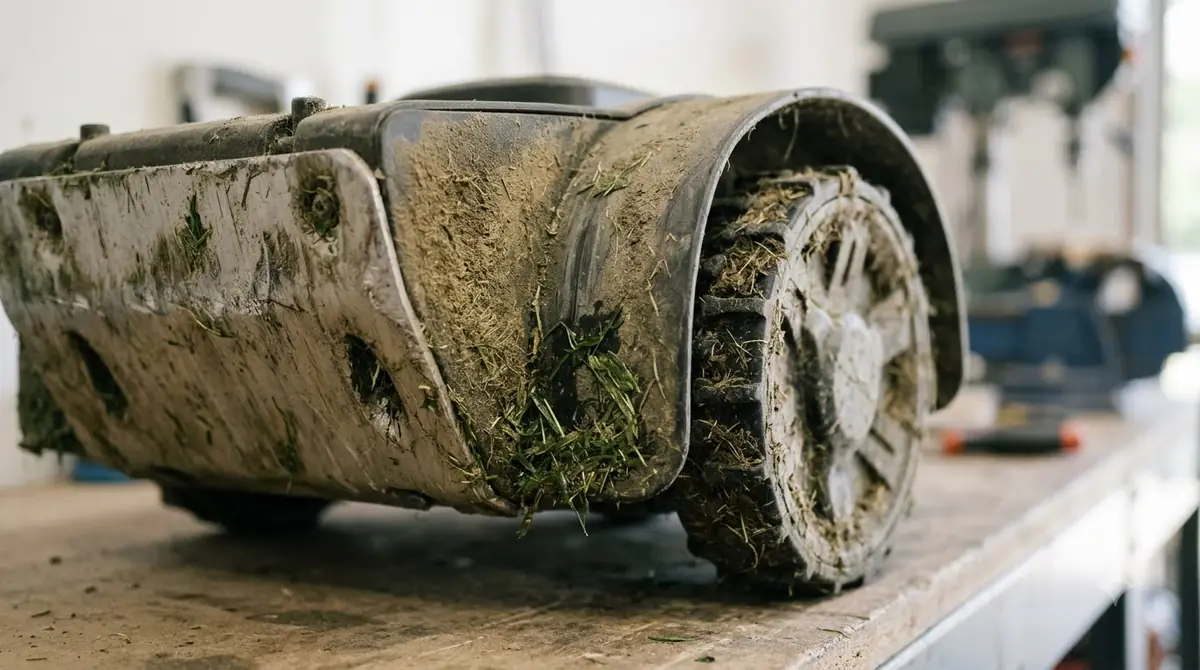
- Keep the blade sharp. Arkansas Extension says a sharp mower avoids tearing and pulling the grass.
- Measure before you cut. Knowing when to mow new sod means checking height first, at several spots, because uneven sod can look taller in one corner.
When to run a robot mower on new sod
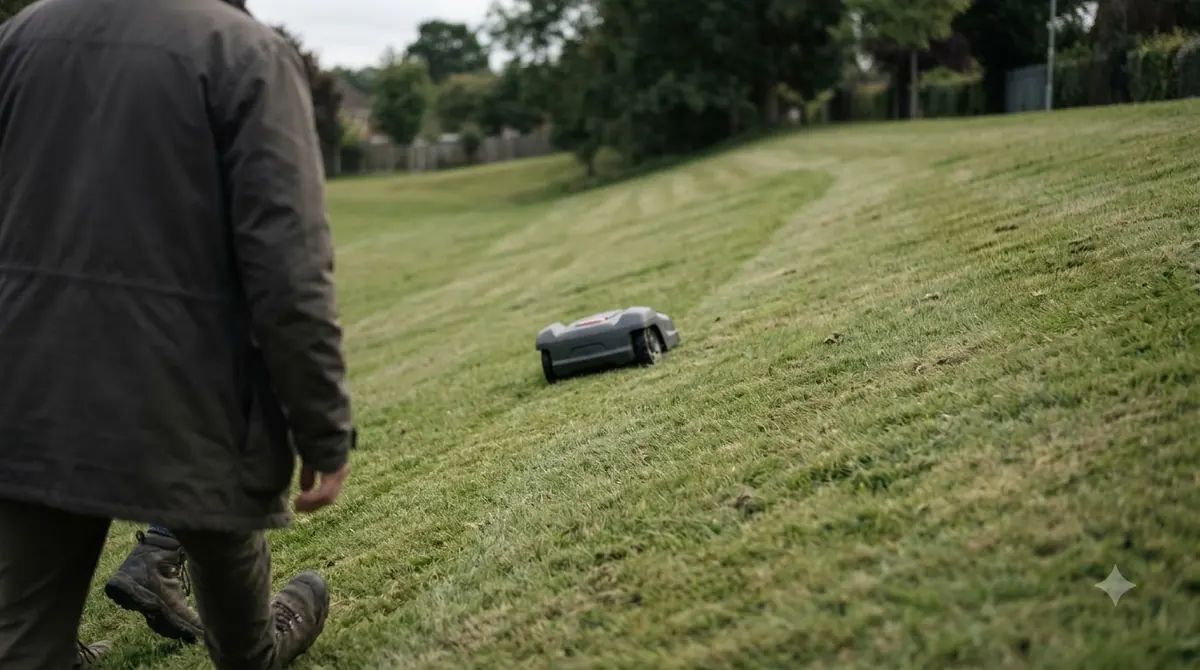
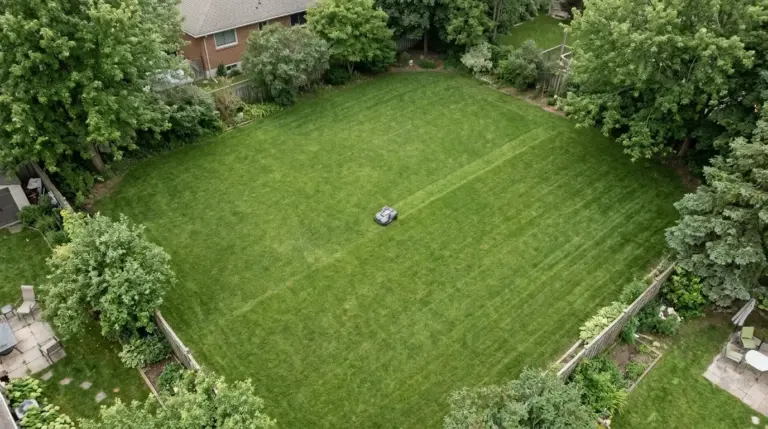
Our reading is that a robot mower should answer the same question, when to mow new sod, with the same test: wait until the sod has rooted. That test applies to a walk-behind mower too. We read the Segway Navimow and Ecovacs guides on running robot mowers, but neither covers new sod, and no manufacturer page we read gives a fixed number of days for it.
When you do start, our reading is to follow the extension advice on height. UC IPM says to cut on the higher end of the range for a new lawn, and Arkansas Extension says to start at a slightly higher height than you ultimately want. Set the robot mower to the top of its height range for the first weeks and lower it gradually, using the best mowing height for a robot-mowed lawn as the long-term target. Also check your mower’s manual for a sod establishment interval, since that is the figure the maker has tested for its own product.
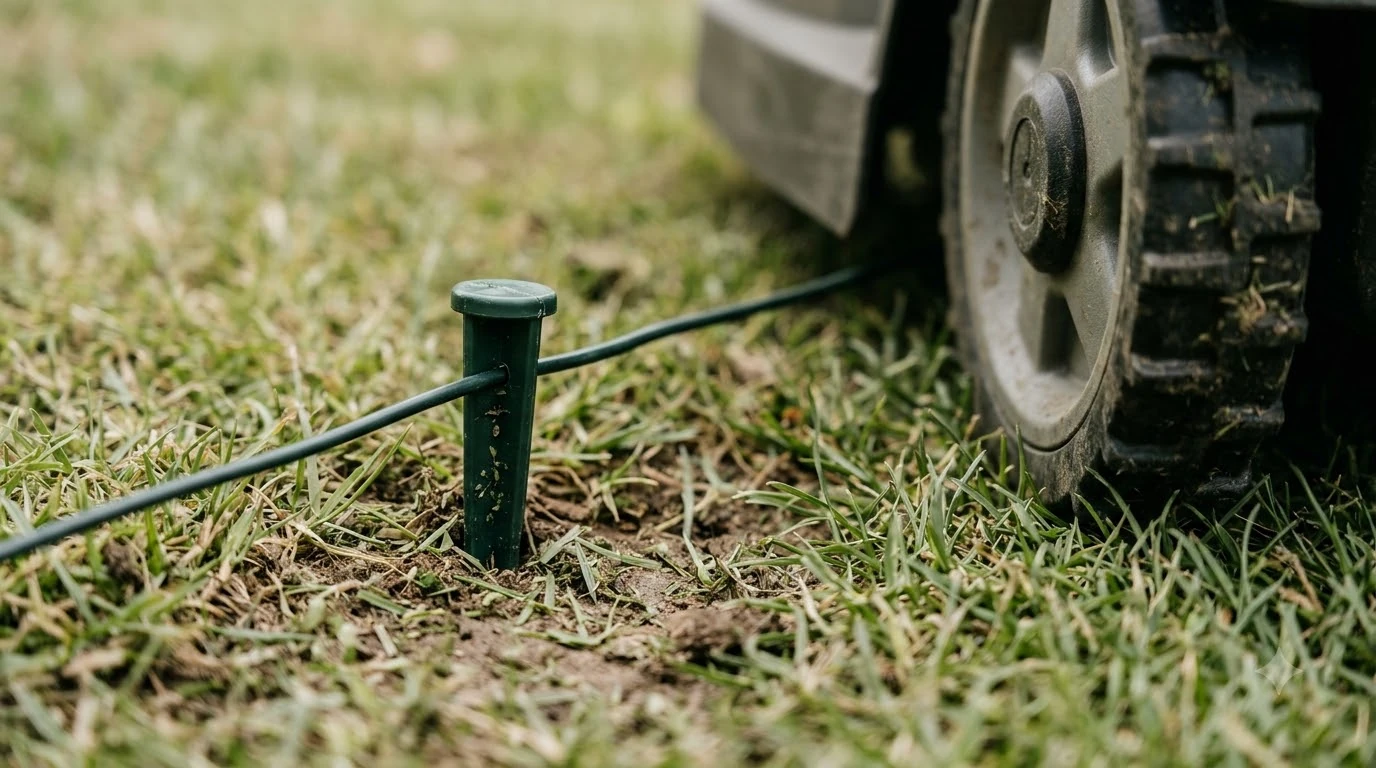
Our reading is to stake or lay boundary wire after the sod has rooted, which is when to mow new sod with a robot in practice, because pegs pushed into loose new sod can lift it. This is a practical caution, not a manufacturer requirement, so confirm it against your mower’s setup guide, and read how to install a robot mower boundary wire for the general steps.
Frequently asked questions
Can I mow new sod in its first week?
Usually not. Illinois Extension says sod should begin to root within about 14 days, so when to mow new sod depends on height as well as time. Wait for both the tug test and the height before the first cut.
How short should the first cut be?
Deciding when to mow new sod and how high to cut it go together. For cool-season sod, Illinois Extension suggests 2.5 to 3 inches. Rutgers suggests 2.5 to 3.5 inches and says never cut closer than 2 inches. For warm-season sod, use the higher end of the UC IPM range for a new lawn.
Does a robot mower work on new sod?
Our reading is that when to mow new sod with a robot follows the roots, not a timer. It should wait until the roots hold. The guides we read do not give a day count for sod, so check your mower’s manual for its establishment interval before the first run.
Is the rule the same for grass grown from seed?
No. The rule for when to mow new sod does not carry over to seed. Iowa State Extension says to mow new seed when it is about 3 inches tall and to cut it to 2 to 2.5 inches. Use the sod figures only for lawns laid as sod.
Sources
- Planting a New Lawn (University of Illinois Extension): sod mowing height of 3 to 4 inches, the one-third rule, the tug test, and 14 days to root.
- FS104: Sodding, Steps to an Instant Lawn (Rutgers NJAES): first mow at 3 to 4 inches, cutting height, the half-blade limit, and watering schedules.
- Lawns (NC State Extension Gardener Handbook): warm-season rooting at 55°F, cool-season sod timing, and the mowing height table.
- Mowing warm-season grasses (UC IPM): mower settings and the higher end of the range for a new lawn.
- Establishing a Lawn from Sod (University of Arkansas Extension): watering schedule, rooting in 10 to 14 days, and a sharp mower.
- When should I start mowing a newly seeded lawn? (Iowa State Extension): seeded lawn figures, used only as a comparison.
 Up next9 min readBy YardWhen to First Mow New Grass Seed (Height, Not Calendar)Updated Nov 11, 2026
 7 min readBy YardRobot Mower Wet Grass: Can You Cut It and When to WaitUpdated Nov 11, 2026
 9 min readBy YardCan a Robot Mower Cut Zoysia? Height and LimitsUpdated Nov 11, 2026
 7 min readBy YardCan a Robot Mower Cut Fine Fescue? Heights and What to CheckUpdated Nov 11, 2026
 8 min readBy YardCan a Robot Mower Cut Centipede Grass? Heights and LimitsUpdated Nov 11, 2026
 8 min readBy YardHow Often to Mow Buffalo Grass (Schedule and Height)Updated Nov 11, 2026