
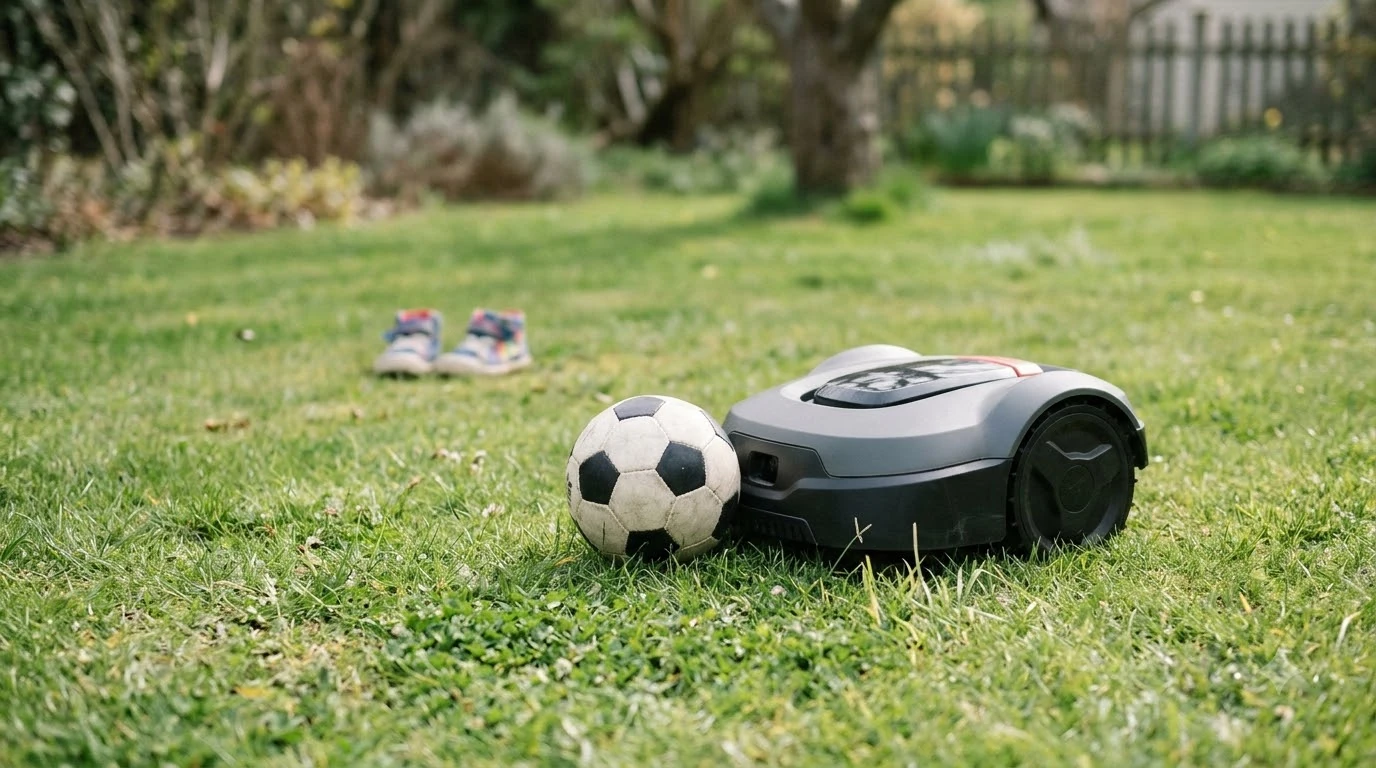

A robot mower and dog poop do not mix well, so clear the lawn before every run. Most robot mowers cannot reliably tell soft waste from grass, and running over it smears the mess across the yard.
The risk is highest with fresh droppings, which can carry bacteria and parasites that are infectious right away. Older waste is more likely to hold parasite eggs that persist in soil for years.
The short answer
- Detection: most standard robot mowers do not reliably avoid small, soft piles on grass.
- Damage control: running over waste usually smears it across the lawn and onto the mower deck.
- Health: fresh droppings can carry Salmonella, Campylobacter and Giardia, according to WSU Extension.
- Before each run: walk the lawn and remove visible waste, then schedule the mower after that check.
- If it happens: switch off, remove the battery, scrape, rinse away from electrical parts, disinfect and dry.
Can a robot mower detect dog poop?
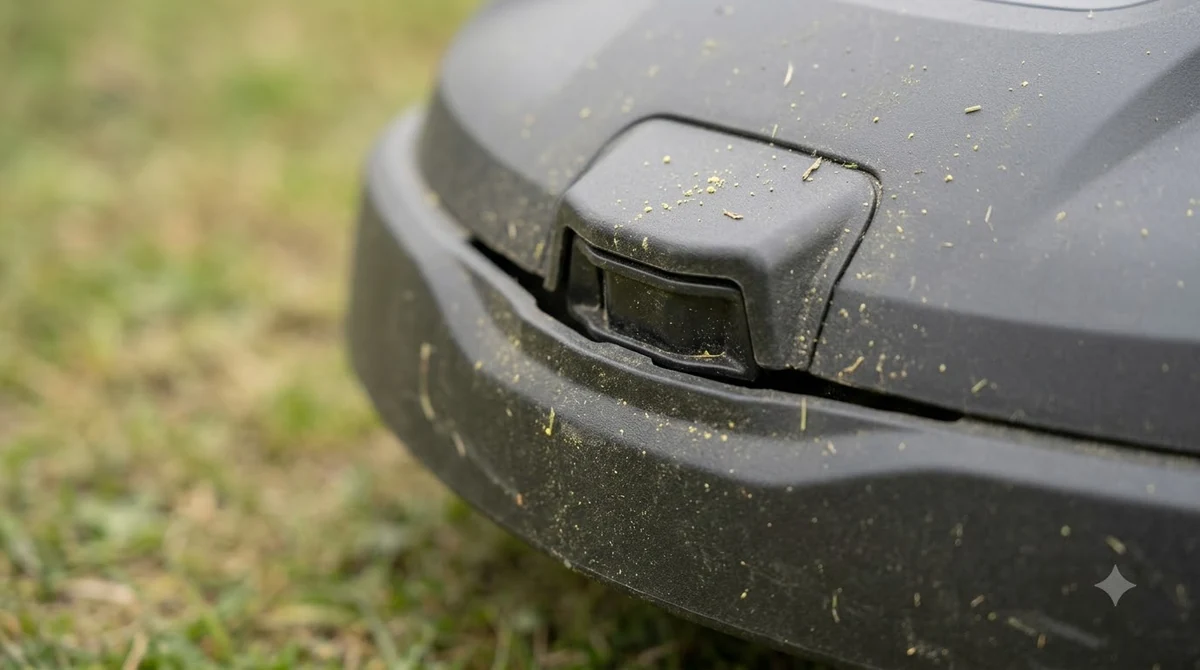
Most standard robot mowers do not reliably avoid soft, small piles, because their sensors are built around larger, harder obstacles. Anker, a robot mower manufacturer, says detection is “sometimes, but not always.” Newer camera-based models may spot some objects about the size of dog waste, but most mainstream models handle large, obvious obstacles better than small piles sitting on grass.
Some makers now make bolder claims. MOVA says its LiDAR models can recognize more than 300 obstacle types. The same MOVA guidance still states that its mowers are not intended to mow over pet waste, and it tells owners to sweep the yard first. A product claim about sensors is not the same as a guarantee for every run, so read the manufacturer’s obstacle list before you trust a model with a yard that has a dog. Our guide on how robot mowers avoid obstacles explains what the sensors can and cannot see.
Our reading is that a robot mower should be treated as blind to dog waste unless the spec sheet names it. Obstacle sensors are generally built to stop a mower from hitting furniture and other solid objects. A soft, low pile is easier to miss, and the mower gives no warning before it rolls across the spot.
Robot mower and dog poop: what happens when it runs over waste
When a mower rolls over dog poop, the usual result is a smear. Anker warns that a mower can spread waste across the lawn, which creates a hygiene problem and can leave a smell behind. The mess does not stay on one patch, so a single pass can turn a small pile into a wider area that needs cleaning.
The mower itself also takes residue. MOVA’s guidance says wet waste can clog the discharge area and dried waste can jam the cutting mechanism. These are manufacturer statements rather than independent test results, but they match what most owners would expect. Any residue left under the deck is also a place where grass and dirt collect, so the cleanup matters even when the mower keeps running.
Because a smear covers more ground than the original pile, the safest plan for a robot mower and dog poop is routine, not luck. Clearing waste before each run is far easier than cleaning a spread across the whole lawn.
Why fresh and old dog waste carry different risks
Dog waste is not one risk. According to WSU Extension, freshly deposited droppings can carry Salmonella, Campylobacter or Giardia cysts that are immediately infectious to people. Older, dried-out waste is more likely to carry parasite eggs, which take time to become infectious but last much longer.
| Waste state | Risk noted by WSU Extension |
|---|---|
| Fresh droppings | Salmonella, Campylobacter and Giardia cysts, immediately infectious |
| Hookworm | Takes 6 to 12 days to become infectious and may survive up to 3 to 4 weeks in the environment |
| Roundworm eggs | Must age a week or more in dog stool before they become infectious |
| Waste washed into soil | Parasite eggs can remain viable for years, causing long-term soil contamination |
Children are at particular risk. WSU Extension notes that most human illnesses from pet waste come from tiny, often invisible amounts of fecal matter that enter the body through the mouth, and that children play on the ground and often put their hands in their mouths. Storm water also carries pet waste pathogens, bacteria and nutrients into streams, lakes and coastal waters, so waste left on a lawn can end up in waterways after rain.
How to clear the lawn before each robot mower run
Keeping a robot mower and dog poop apart starts with a walk across the lawn before every scheduled run, since the mower will not reliably do that job for you. The routine takes only a few minutes for most yards.
- Walk the lawn first. Focus on the spots your dog uses most, plus tall grass, fence lines and the area under bushes, where waste is easy to miss.
- Scoop it and bag it. WSU Extension advises scooping, bagging and putting waste in the trash. Biodegradable bags are not necessary, since plastic may not decompose even if the bag is labeled that way.
- Schedule runs after the check. Our reading is that the mower should start after the morning sweep, not on a fixed timer that runs before anyone has looked at the grass.
- Set no-go zones around toilet areas. Anker recommends app-based no-go zones around dog runs, feeding areas and the spots where your pet tends to toilet, so the mower never reaches the most likely pile. Our guide to keeping a robot mower out of flower beds shows how island wires and stay-out zones work.
- Check every few days at minimum. Anker advises picking up waste every few days and doing a quick visual check before each mow. Our reading is that wet weather and heavy dog use call for more frequent checks.
Short, regular runs help too. Anker suggests keeping mowing sessions short and regular so waste has less time to build up between runs. If children also play on the lawn, see our guide to robot mower safety around kids and pets.
If a robot mower already ran over dog poop
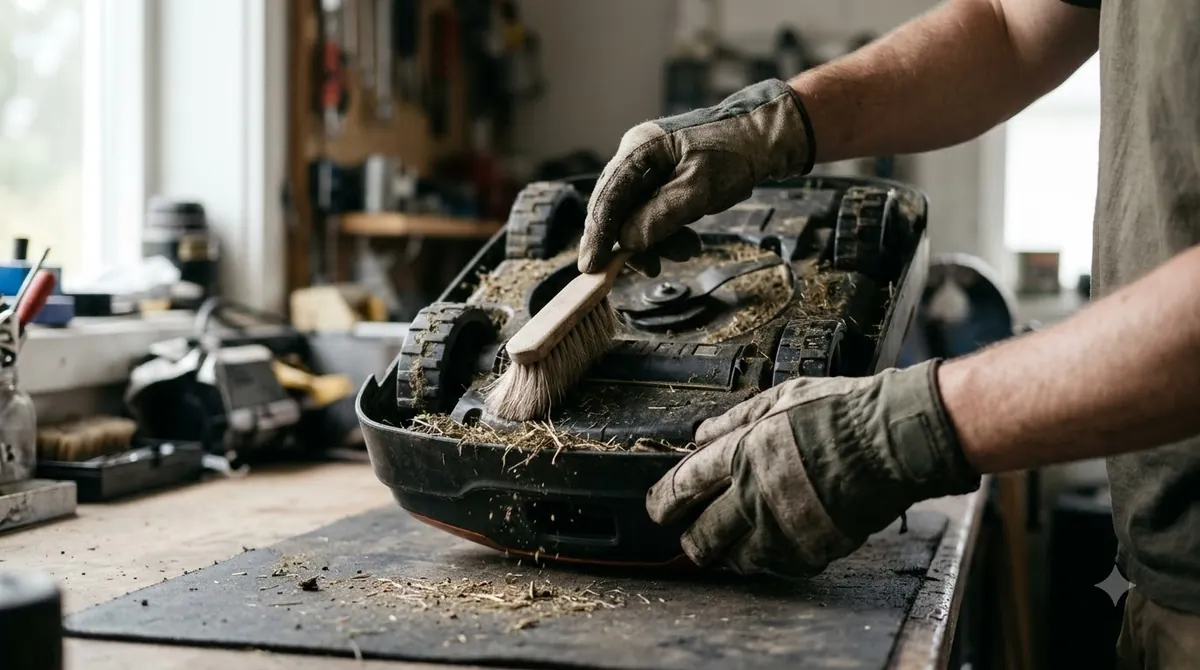
Turn the mower off, remove the battery, scrape off visible waste, then rinse, disinfect and dry the parts that touched it, according to MOVA’s cleanup guidance. Do this promptly after any robot mower and dog poop contact, because dried waste is harder to scrape off the deck and blades.
- Cut the power. For a robot mower, remove the battery or turn off the main safety switch before you touch the blades or deck.
- Scrape it off. MOVA names a stick, putty knife or stiff brush for the blades and deck, and Anker adds the wheels and underside. For a fuller routine, see how to clean a robot mower.
- Rinse the undercarriage. Use a hose, and keep water away from the electrical housing and motor.
- Disinfect and dry. MOVA suggests a pet-safe product or diluted bleach, then air drying in the sun.
- Watch the lawn for a few days. MOVA suggests checking the spot for brown patches, odor and pest activity such as flies, and watering the spot deeply right after the accident to dilute leftover residue.
Heads up
Wear gloves for the whole cleanup. Anker advises washing removable parts with warm soapy water, checking the blades and housing for residue, and letting everything dry fully. If your model collects grass, empty and wash the collection box first.
Where dog waste should go instead of the lawn or compost
Bag dog waste and put it in the trash, which keeps the robot mower and dog poop problem off the lawn entirely, because WSU Extension says waste washed into the soil can leave parasite eggs viable for years. Biodegradable bags are not needed for that job. WSU Extension describes scooping, bagging and trashing as an easy way to protect people, pets and the environment.
Vetstreet, a pet-health publisher, advises keeping dog waste out of compost used for vegetables, since roundworm eggs last for years. It also says removing waste promptly is the surest way to reduce its impact. Vetstreet also says the heap has to exceed 165 degrees Fahrenheit to sterilize the waste, a temperature most backyard systems struggle to reach, so composting it is a poor shortcut. If wildlife rather than pets is the worry, see whether robot mowers stop for animals.
Frequently asked questions
Can a robot mower run over dog poop without damage?
The sources reviewed for this guide do not document lasting damage from one pass. The documented concerns are mess, odor and hygiene, so clean the deck and undercarriage after any run-over and check the blades.
Will a robot mower spread dog poop across the lawn?
It can. Anker’s guidance says a mower can smear waste across the lawn, which creates a hygiene problem. Picking up waste before each run is the simplest way to stop the spread.
Is dog poop bad for grass?
The sources reviewed do not give a verified figure for grass damage. Removing waste promptly is the surest way to reduce its impact, according to Vetstreet, so clear it before it sits on the turf.
How long do dog parasites survive in soil?
According to WSU Extension, parasite eggs that wash into soil can remain viable for years. Hookworms may survive up to 3 to 4 weeks in the environment, and roundworm eggs must age a week or more before they become infectious.
For most households, a robot mower and dog poop can share the same yard safely when the lawn is checked first and the mower stays out of toilet areas. Treat the walk and the schedule as one routine, so the mower only runs once the grass is clear.
Sources
- Dog Waste fact sheet (WSU Extension, Clallam County, 2018): infection timing, soil and runoff risks, disposal steps.
- Robot Lawn Mower Dog Poop Explained (Anker, manufacturer): detection limits, smearing, prevention and cleaning.
- Should You Mow Over Dog Poop on Your Lawn? (MOVA, manufacturer): obstacle claims, pre-mow and cleanup steps.
- Proper Pet Waste Disposal (Vetstreet, pet-health publisher): compost advice and prompt removal.
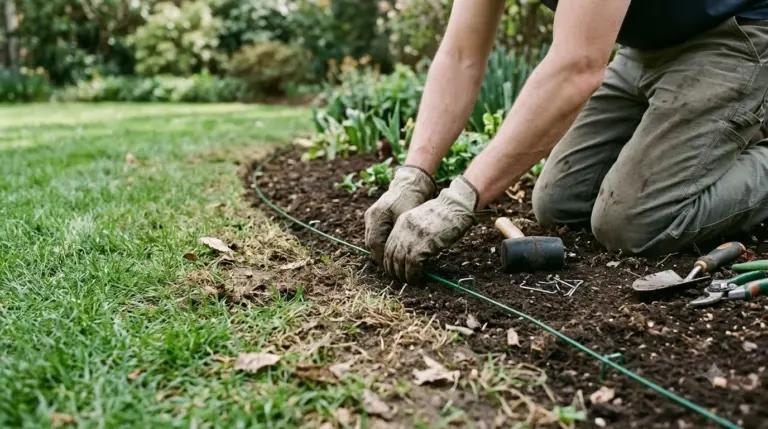 Up next8 min readBy YardShould You Bury or Peg Robot Mower Boundary Wire?Updated Nov 11, 2026
 7 min readBy YardDo Robot Mowers Tip Over on Hills?Updated Nov 11, 2026
 9 min readBy YardHow Long Does a Robot Mower Take to Mow an Acre?Updated Nov 11, 2026
 10 min readBy YardWhen to Mow New Sod: First Cut Height and Root TestUpdated Nov 11, 2026
 9 min readBy YardWhen to First Mow New Grass Seed (Height, Not Calendar)Updated Nov 11, 2026
 7 min readBy YardCan a Robot Mower Mow Multiple Separate Lawns?Updated Nov 11, 2026