
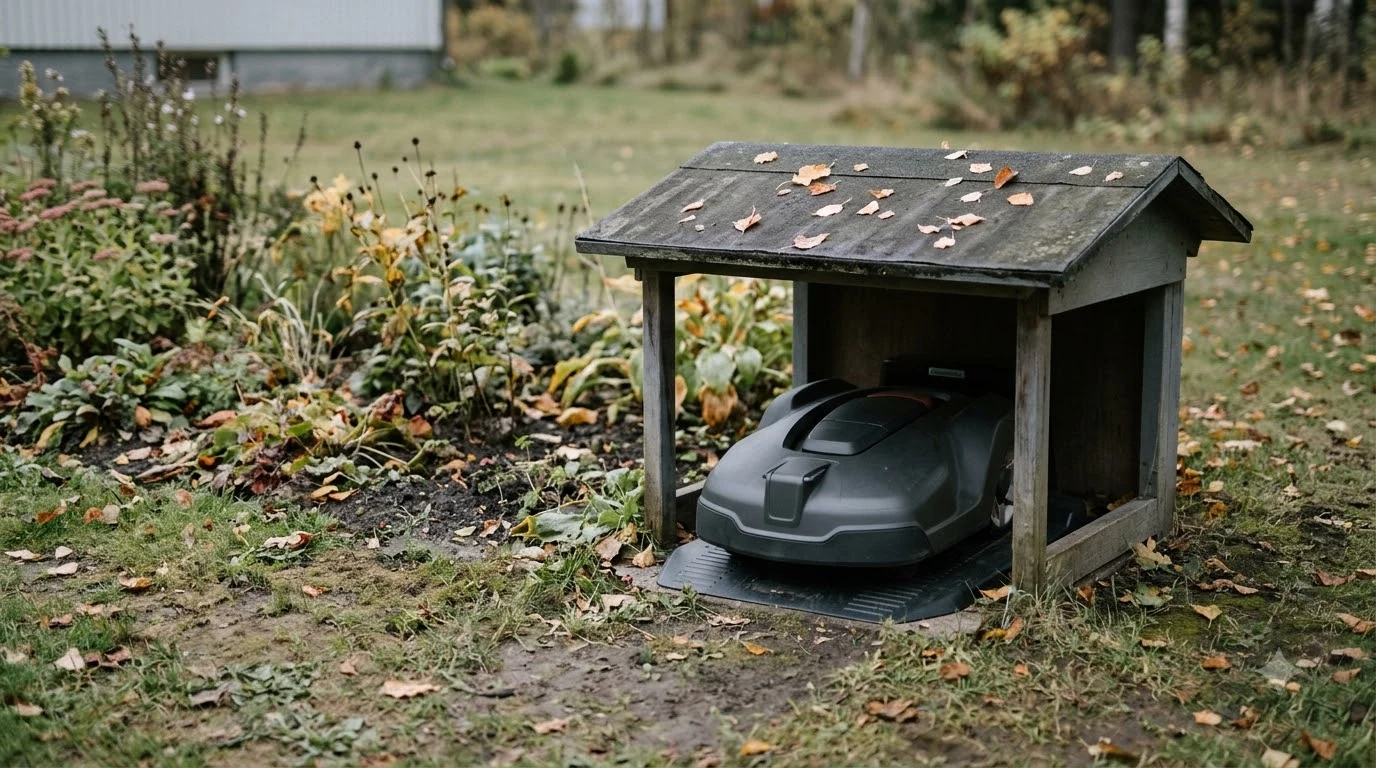

The Ecovacs GOAT A1600 RTK and the Dreame A1 Pro are both wire-free robot mowers, but they navigate differently, so the ecovacs goat a1600 rtk vs dreame a1 pro choice depends mostly on your yard. The A1600 combines satellite RTK with LiDAR, while the A1 Pro relies on LiDAR alone. The specs below come from each brand or from an independent review, and they are not measured on the same basis.
The short answer
- Navigation: the A1600 uses LiDAR-enhanced RTK; the A1 Pro uses LiDAR without RTK or GPS.
- Slope: Ecovacs rates the A1600 at 50% (27 degrees); the review’s data sheet lists the A1 Pro at 45% (24 degrees).
- Cutting height: 3 to 9 cm on the A1600; 3 to 7 cm on the A1 Pro.
- US availability: the A1 Pro was reported as not sold in the US, and our search found no US listing as of Nov 2026.
Ecovacs GOAT A1600 RTK vs Dreame A1 Pro specs side by side
The two mowers publish different sets of numbers, so the table below lists what each source states. Where a spec is missing from the official page, we say so rather than fill it in.
| Spec | Ecovacs GOAT A1600 RTK | Dreame A1 Pro |
|---|---|---|
| Navigation | LiDAR-enhanced RTK, 2 cm positioning precision | OmniSense 3D LiDAR, no RTK, no GPS |
| Boundary wire | Not needed | Not needed |
| Cutting height | 3 to 9 cm, 1 cm steps | 3 to 7 cm, 5 mm steps |
| Cutting width | Not stated | 22 cm |
| Slope | 50% (27 degrees) | 45% (24 degrees) |
| Coverage rating | Up to 500 m2 per charge | Designed for lawns up to 2,000 m2 |
| Runtime per charge | Not stated as a runtime | About 150 m2 in standard mode |
| Battery | 32 V platform, capacity not stated | 5 Ah |
| Charging | 45 minutes with a 180 W charger | Just over 1 hour, about 80 Wh, max 78 W |
| Weather rating | IPX6 | IPX6 |
| Noise | Not stated | 50 to 55 dB at 1 m |
| Weight | Not stated | 12.6 kg |
For the ecovacs goat a1600 rtk vs dreame a1 pro comparison, the biggest gap is coverage. Ecovacs gives 500 m2 per charge with a footnote that the mower can cover 400 m2 per hour under real-world conditions. The Dreame figure of 2,000 m2 is a size rating, while its roughly 150 m2 per charge comes from a reviewer’s runtime test. Neither number is a direct substitute for the other, so compare them against the size of your own lawn.
How each one finds its way without a boundary wire
Both mowers avoid a buried boundary wire, but they use different positioning. The A1600 combines RTK satellite positioning with LiDAR, and Ecovacs states a 2 cm positioning precision on its official page. RTK depends on a base station, and Ecovacs advises setting that base up in an open, unobstructed area.
The Dreame A1 Pro relies on OmniSense 3D LiDAR alone. The review we read says it dispenses with an RTK antenna and with GPS, and that it has no camera. Ecovacs’s own LiDAR vs RTK explainer makes the trade-off visible: RTK accuracy may drop under tree cover or between buildings, while LiDAR does not need a base station. The same explainer notes that fog and heavy rain can scatter and absorb laser beams, which affects LiDAR. Our guides to how LiDAR robot mowers work and RTK vs LiDAR vs vision cover the basics.
Obstacles and small objects
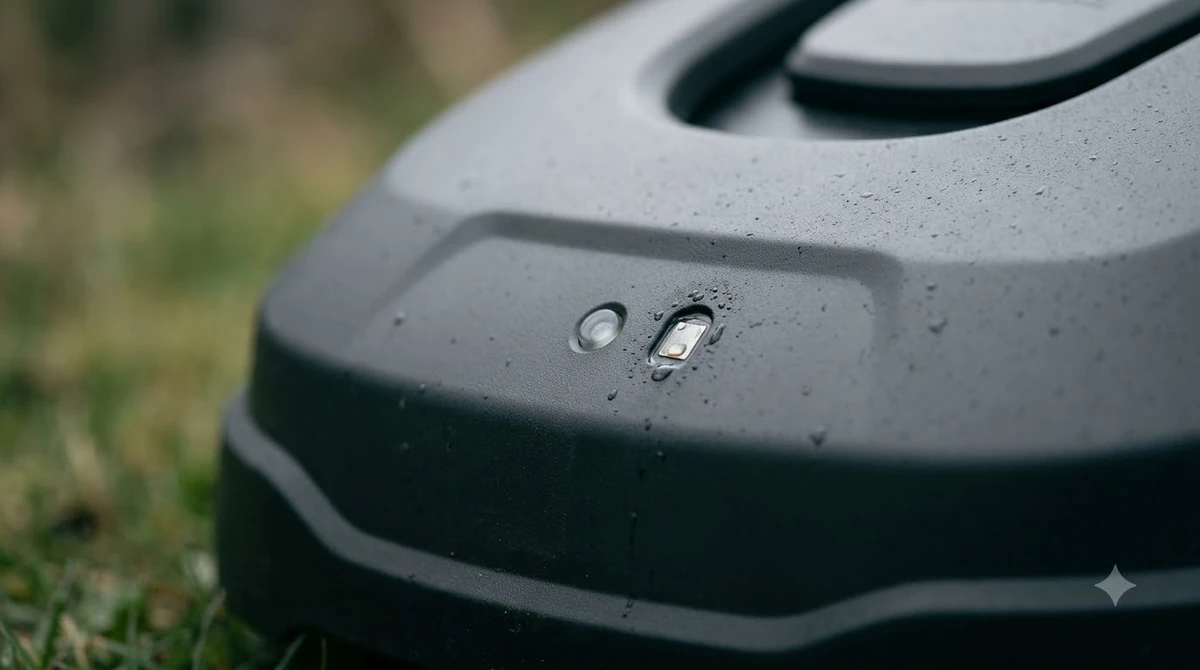
Obstacle handling is where the two sets of sources differ most. Ecovacs describes the A1600 as using AIVI 3D obstacle avoidance and 3D ToF cameras, and it lists more than 200 obstacles on its official page. Those are manufacturer claims, and we could not check them against an independent test.
The independent review of the A1 Pro reports specific misses:
- A tennis ball and a piece of hose lying on the lawn were not detected.
- A large and a small soccer ball, plus a hedgehog dummy, were detected in about half of the attempts.
- At least 12 cm along ground-level edges stays unmown, because the mower cannot drive over the edge.
If your yard has garden hoses, toys, or small debris, that review is the closest thing to a field check available for the A1 Pro. Our Dreame A1 Pro review covers the model on its own. No equivalent independent test was found for the A1600 in this research.
Runtime, charging and coverage ratings
Charging times are close. The A1600 charges in 45 minutes on its 180 W charger, and the A1 Pro took just over an hour in the review, drawing about 78 W at most. The A1 Pro’s battery is listed as 5 Ah, while Ecovacs does not state a capacity in Ah for the A1600.
Runtime is harder to compare. The review measured the A1 Pro at about 150 m2 on one charge in standard mode, going from 100% to 15%, and noted that the result depends on conditions. Ecovacs gives 500 m2 per charge with a footnote, so it is not clear whether the two figures use the same test. Read both as brand or reviewer numbers, not as a like-for-like result.
Can you buy the Dreame A1 Pro in the US?
The review we read says the Dreame A1 Pro is not available in the United States at the moment, though it can be bought in many other countries. That review was published on 2025-07-07 and updated on 2026-10-05. Our search on 2026-11-11 turned up European, UK, and Australian retail listings, but no US retail listing and no US price.
Before you plan around this model, check Dreame’s US site or a US retailer. The A1600 official page shows no price either, so price comparisons need a current check at a store you can buy from.
Who each option suits (our reading)
Our reading of the ecovacs goat a1600 rtk vs dreame a1 pro matchup is that the A1600 may suit yards where tree cover or nearby buildings are a concern, because Ecovacs pairs RTK with LiDAR, which the brand presents as a response to RTK’s open-sky limits. Its 50% slope rating is also higher than the A1 Pro’s 45%.
The A1 Pro fits buyers in markets where it is sold who accept LiDAR-only navigation, need no base station, and do not mind the small-object limits in the review. Its listed weight is 12.6 kg, though weight is not stated for the A1600. If you are still choosing a brand, our guide to which Dreame robot mower to buy lists the Dreame range.
What to check before you buy
Use this list for the ecovacs goat a1600 rtk vs dreame a1 pro decision before you spend money.
- Confirm regional availability. Before you compare further, check whether either model is sold where you live. Look for a local warranty too.
- Measure your slope. Compare your steepest section with the 50% and 45% ratings.
- Look at your trees and walls. Ecovacs notes that RTK can lose accuracy under tree cover, so a yard with heavy canopy should be checked against that limit.
- Check the cutting height you need. The A1600 goes to 9 cm, the A1 Pro to 7 cm.
- Check the warranty and price locally. Neither official page we could read states a warranty term or a price, so the ecovacs goat a1600 rtk vs dreame a1 pro price gap is unknown here.
Frequently asked questions
Does the Ecovacs GOAT A1600 RTK need a boundary wire?
No. Ecovacs’s official page says the A1600 uses a wire-free setup that does not require physical boundaries, with the setup taking about 15 minutes. It relies on LiDAR-enhanced RTK positioning instead of a wire.
Is the Dreame A1 Pro sold in the United States?
The review we read says it is not available in the US at the moment. Our search on 2026-11-11 found no US retail listing, so check Dreame’s US site or a US retailer before buying.
Which mower handles steeper slopes?
According to the published figures, the Ecovacs GOAT A1600 RTK handles 50% (27 degrees) per Ecovacs, while the Dreame A1 Pro is rated at 45% (24 degrees) in the Notebookcheck data sheet. Check your steepest section before deciding.
Does the Dreame A1 Pro need RTK or GPS?
No. The review we read says the A1 Pro navigates with OmniSense 3D LiDAR and does not use RTK, GPS, or a boundary wire. It also has no camera, so it works without satellite signals.
Sources
- Ecovacs GOAT A1600 RTK product page (Ecovacs): official specs for navigation, height, slope, coverage, charging and IPX6.
- Ecovacs LiDAR vs RTK explainer (Ecovacs): base station needs and tree-cover and fog limits.
- Notebookcheck review of the Dreame A1 Pro (Notebookcheck): specs, runtime, obstacle tests and US availability at review time.
 Up next8 min readReviews & CompareEcovacs GOAT O1000 RTK vs Ecovacs GOAT A1600 RTK: What the Specs ShowUpdated Nov 11, 2026
 12 min readReviews & CompareIs the Ecovacs GOAT A1600 RTK Worth It? Specs, Limits and Trade-offsUpdated Nov 11, 2026
 7 min readReviews & CompareEcovacs GOAT A1600 RTK Review: Published Specs and GapsUpdated Nov 17, 2026
 9 min readReviews & CompareMammotion Luba 3 AWD vs Ecovacs GOAT A1600 RTK: Which Fits Your Lawn?Updated Nov 11, 2026
 9 min readReviews & CompareEcovacs GOAT A1600 RTK Problems and Complaints: Known Issues and GapsUpdated Nov 14, 2026
 8 min readReviews & CompareSegway Navimow i110n vs Ecovacs GOAT O1000 RTK: What the Specs SayUpdated Nov 13, 2026