
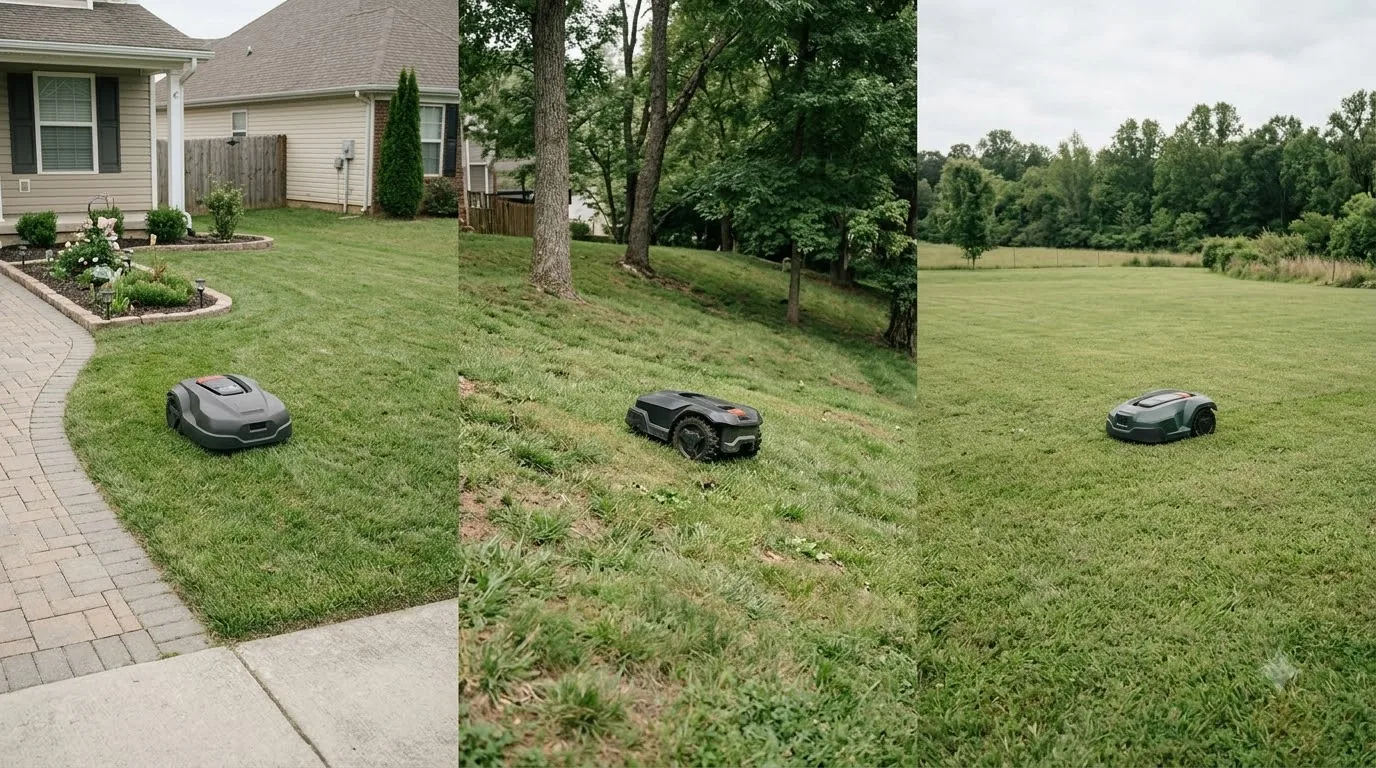

A robot mower for clover lawn is a workable match, because white clover tolerates low, regular mowing. Clover does not stop a robot from cutting. The real questions are how tall the clover grows, how much foot traffic the lawn gets, and whether you want the clover at all.
The short answer
- Mowing: white clover tolerates low mowing and stays lower when it is mowed regularly.
- Height: University of Maine Extension treats 4 to 8 inches as a reliable maximum for clover.
- Traffic: clover handles some foot traffic but is a poor choice for heavy use.
- Control: complete removal is not practical, so most extension advice is to tolerate clover or limit its spread.
- Our reading: run the mower on a steady schedule at a height the grass can take. No source we read tested robot mowers on clover.
Why white clover handles a robot mower
White clover tolerates low mowing and stays under one foot tall when it is mowed regularly, according to University of Maryland Extension. That makes it a plant a mower keeps in check rather than one that grows out of control.
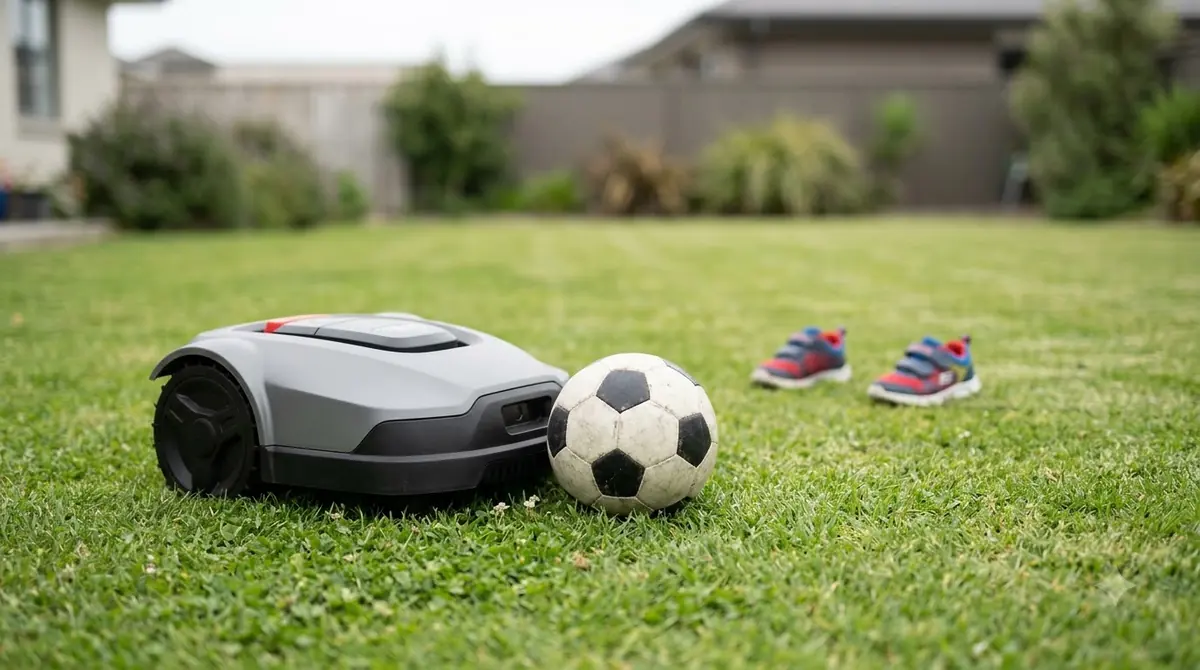
NC State Extension also notes that white clover “may be found under close mowing conditions.” So clover can persist in a lawn kept short, which is exactly the lawn a robot mower produces.
White clover also prefers full sun, according to University of Maryland Extension, so the sunniest parts of a lawn are where it is most likely to thrive. The same page describes it as a low, sprawling perennial that spreads by stolons and seed, with three-leaflet leaves and white, round flower clusters, and says it tolerates clay soil, a range of pH levels and infertile soil.
Our reading is that a robot mower for clover lawn use works in the clover’s favor. Frequent short runs remove a small amount each time, which matches the gentle cutting that clover tolerates. The sources do not test this directly, so treat it as a sensible expectation rather than a measured result.
What clover does for the lawn
White clover adds nitrogen to the soil, which can reduce how much fertilizer the lawn needs, according to University of Maryland Extension. The plant is a nitrogen-fixing legume, and the bacteria in its roots convert nitrogen from the air.
NC State Extension describes the same root nodules as fixing atmospheric nitrogen for the plant, which is why clover can grow on a lawn with little added fertilizer.
Clover is not a fertilizer plan on its own. NC State advises keeping soil phosphorus at a medium level and nitrogen at the proper level for the grass you want, because that balance reduces the competitive ability of white clover in turf. In other words, the same feeding that supports your grass also works against clover.
Heads up
The nitrogen from clover does not replace a fertilizer schedule for the grass. Before you change how much you feed the lawn, check the guidance from your county extension office for your grass type.
How tall clover grows and where it struggles
White clover stays under one foot when it is mowed regularly, and University of Maine Extension gives 4 to 8 inches as a reliable maximum height.
Clover forms low, dense patches in turfgrass, according to LSU AgCenter, and those patches are hard to control through low mowing. That fact and the tolerance above fit together: mowing keeps clover low, but it does not clear it. Our reading is that clover will still be there after a season of robot mowing.
Clover can also be a little weedy. UMaine notes that it readily self-sows, so any patch the mower misses can set seed and spread. University of Maryland Extension adds that established patches can widen by a foot or more each year, and that thin or struggling turf and low-nitrogen soil give clover room to take over.
Foot traffic is the other limit. UMaine says clover will tolerate some foot traffic, but the author is hesitant to recommend it for heavy-traffic areas. UMaine also says clover tends to be quite slippery when wet and crushes more easily under prolonged impact. Play zones and well-used paths are a poor fit for a clover lawn.
One more point for robot mower owners: UMaine says mowing at the low end keeps clover neater but may reduce the flowering that attracts bees. Our reading is that a mower set low and run often will cut most blooms before bees can use them, so the pollinator benefit is smaller on a robot-mowed lawn.
| Trait | What the sources say | What it means for a robot mower (our reading) |
|---|---|---|
| Mowing tolerance | Tolerant of low mowing (University of Maryland Extension) | Regular cuts should not harm clover |
| Height | Under 1 foot when mowed regularly; 4 to 8 inches maximum (Maryland, Maine) | Set the cutting height so clover stays in this range |
| Foot traffic | Some tolerance; poor for heavy use (Maine) | Keep clover out of play and path zones |
| Spread | Forms low, dense patches; readily self-sows (LSU, Maine) | Mowing alone will not clear it |
| Nitrogen | Fixes nitrogen and can reduce fertilizer needs (Maryland, NC State) | Plan fertilizer for the grass, not only for the clover |
Setting up a robot mower for clover lawn
Our reading is that the grass should set the cutting height, not the clover. Clover tolerates low mowing, so the robot can run at the height your turf needs, as covered in our guide to the best mowing height for a robot-mowed lawn. The steps below apply general extension guidance to a robot mower for clover lawn use. No source we read covers robot mowers on clover directly.
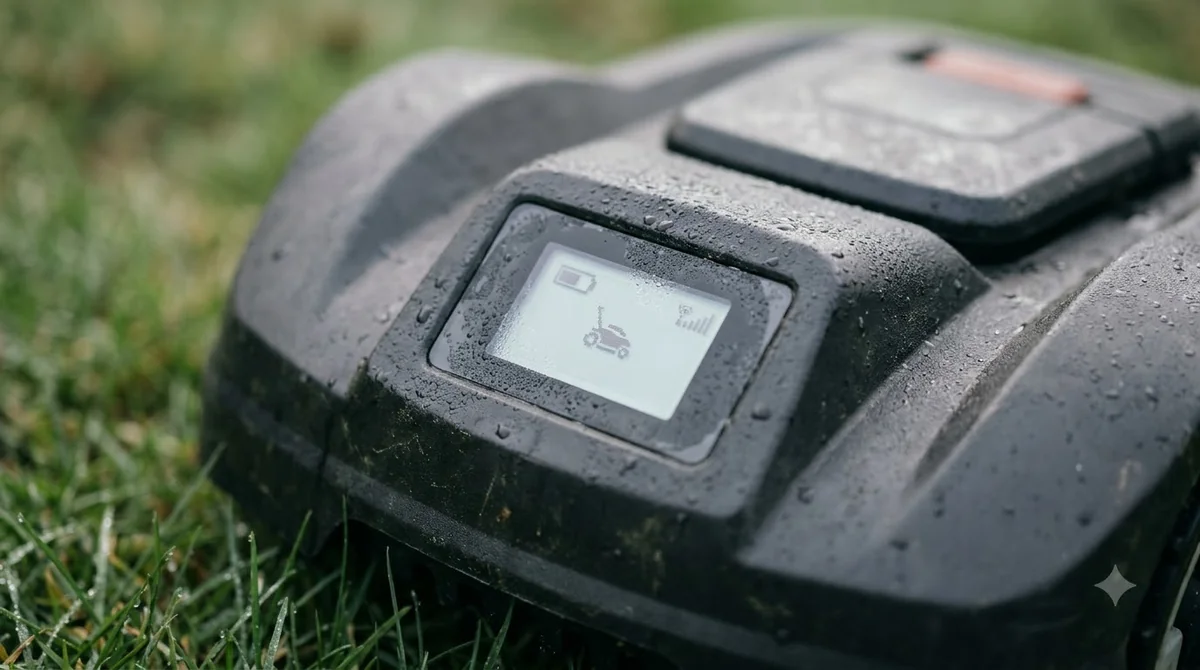
- Pick the height the grass needs. Clover tolerates low cutting, so set the robot for the turf first.
- Run it on a steady schedule. Frequent short runs remove little at a time, which suits a plant that tolerates regular cutting. See how long robot mowers run per day for how to plan it.
- Mark out heavy-use areas. UMaine advises against clover in heavy-traffic zones, so use the robot’s no-go zones or boundary wire to keep the mower off paths and play areas, as in laying boundary wire around obstacles.
- Check the lawn after a full season. If low, dense clover patches form, expect mowing alone to leave them in place.
Should you keep or remove clover?
Complete removal of white clover is not practical, so the common extension advice is to tolerate it or limit its spread, according to University of Maryland Extension. That publication also says herbicide should always be a last resort. Its cultural controls aim to keep turf dense: fertilize as recommended, mow high, overseed cool-season lawns each autumn and aerate. Mowing high is the opposite of cutting grass too short, which thins turf and gives clover room. Hand pulling works best when the soil is moist and the patches are small, and for a deliberate clover lawn the page suggests dwarf microclover varieties, which compete less with grass.
LSU AgCenter notes that manual removal may be necessary and that herbicide control often takes several applications. If you want clover gone, plan on hand removal before any chemical treatment, and expect the work to be ongoing rather than a single job.
If you keep clover, a robot mower for clover lawn use can run as usual. UMaine calls clover a favorite pollinator plant for bees, though it warns that bees can be a hazard for bare feet or sandals. Clover also adds nitrogen, so see whether robot mowers make lawns healthier for the wider picture. Whether the trade-off fits your yard is your choice.
What the sources do not settle
No source we read tested a robot mower for clover lawn use, so every robot-specific point in this guide is our reading of general extension guidance. We did not rely on the mowing-interval and bee studies that we saw only in search snippets.
Extension guidance on clover is written for turf in several states and climates. Check your county extension office for the cutting height and fertilizer schedule that suit your grass before you change the robot’s settings.
Frequently asked questions
Will a robot mower for clover lawn kill white clover?
No source we read says a robot mower kills white clover. University of Maryland Extension says clover tolerates low mowing, and LSU AgCenter says low mowing alone is hard to use for control.
Does clover in a lawn mean less fertilizer?
It can. University of Maryland Extension says the nitrogen clover fixes reduces the need for supplemental fertilizer. NC State adds that balanced nitrogen and phosphorus limit clover’s competitive ability, so the grass still needs a feeding plan.
How tall does white clover get?
University of Maryland Extension says white clover matures to less than one foot tall, especially when it is mowed regularly. University of Maine Extension gives 4 to 8 inches as a reliable maximum height.
Is clover good for bees?
University of Maine Extension calls clover a favorite pollinator plant for bees. Whether to keep it depends on how much clover you want and how much traffic the area gets.
Sources
- White Clover: Identification and Management (University of Maryland Extension): mowing tolerance, height, nitrogen fixation, control.
- White clover (LSU AgCenter): low dense patches, manual removal, herbicide notes.
- Is white clover suitable for lawns? (University of Maine Cooperative Extension): height expectation, self-sowing, traffic, pollinators.
- White Clover (NC State Extension): close mowing, nitrogen nodules, phosphorus and nitrogen balance.
 Up next8 min readBy YardBahia Grass Mowing Height and Schedule: What Extension Sources SayUpdated Nov 11, 2026
 7 min readBy YardBest Mowing Height for Shade Grass: What Extension Sources RecommendUpdated Nov 11, 2026
 8 min readBy YardBest Mowing Height for Buffalo Grass (What Extension Guides Say)Updated Nov 11, 2026
 7 min readBy YardCan a Robot Mower Cut Perennial Ryegrass? What the Sources SayUpdated Nov 11, 2026
 8 min readBy YardHow Small Can a Yard Be for a Robot Mower?Updated Nov 11, 2026
 8 min readBy YardRobot Mower Around Flower Beds: How to Keep It OutUpdated Nov 11, 2026