

Robot mower wheel ruts and brown patches usually come from three causes: wet or soft soil, repeated wheel traffic over the same ground, and a lawn that is stressed by drought or cut too low. Each cause leaves a different mark, so this guide explains how to tell them apart and what to fix first.
The short answer
- Ruts: usually wet soil. Let the spot dry before the mower runs there again.
- Brown patches: may be dormant grass, a lawn disease, or wheel damage. Test before you reseed.
- Fill and firm: low spots need soil, not just grass seed, so the wheels stop sinking in.
- Reseed bare soil: loosen the top 2 to 3 inches first, then keep the seed moist.
- Prevent it: mow when the ground is dry, keep the lawn watered, and keep the drive wheels clean.
What causes robot mower wheel ruts and brown patches
Ruts form when a wheel sinks into soft ground and the drive wheels lose their grip. Wet soil is the main trigger, because it has less strength to hold a moving mower, which is why running a robot mower on wet grass is the first habit to review. Eufy’s guide to stuck robot mowers lists soft soil after summer rain as a common cause of getting stuck, and notes that clay soil and worn turf can turn soft after a summer storm or regular sprinkler use. If your clay soil stays wet, our guide to robot mowers on clay soil that stays wet covers what to expect.
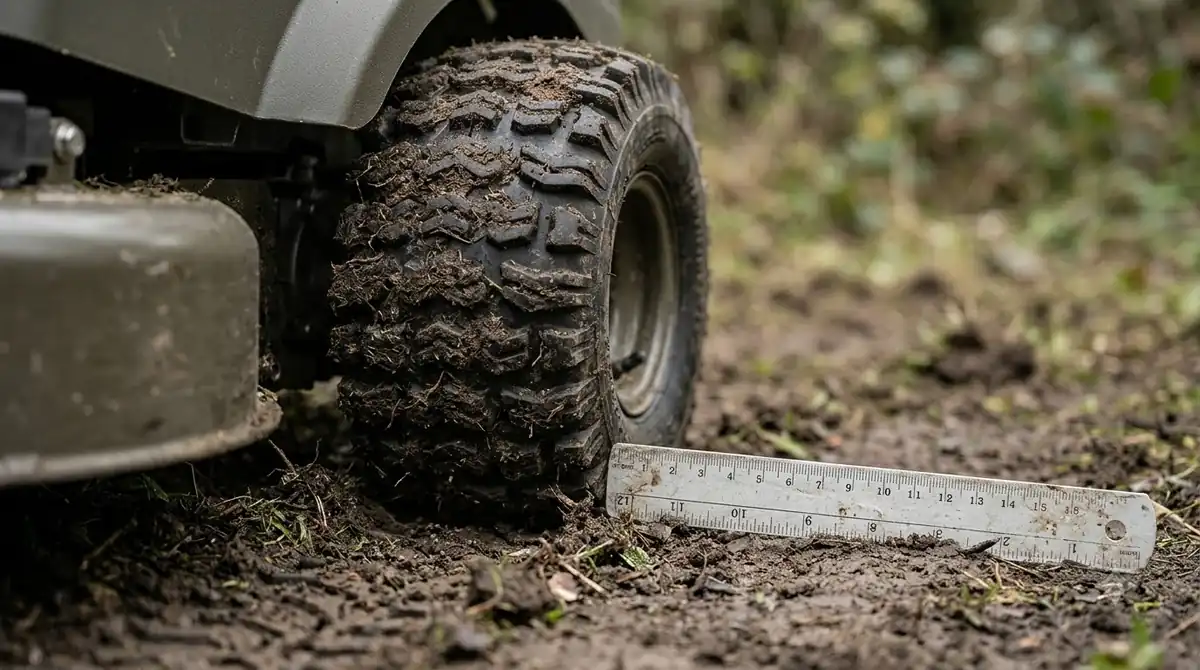
Dirty wheels make the problem worse. Worx advises checking that the wheels are clean and free of mud so they have the maximum grip possible. A film of mud and grass on the treads reduces traction, so the wheels spin and dig in more than they should.
Lawn condition matters too. A thin or weak lawn has less root and leaf cover to protect the soil under the wheels. Our reading is that a rut on dry, healthy turf is less likely than the same mower running over the same spot on a wet, thin lawn.
Brown patches: dormancy, disease or wheel wear
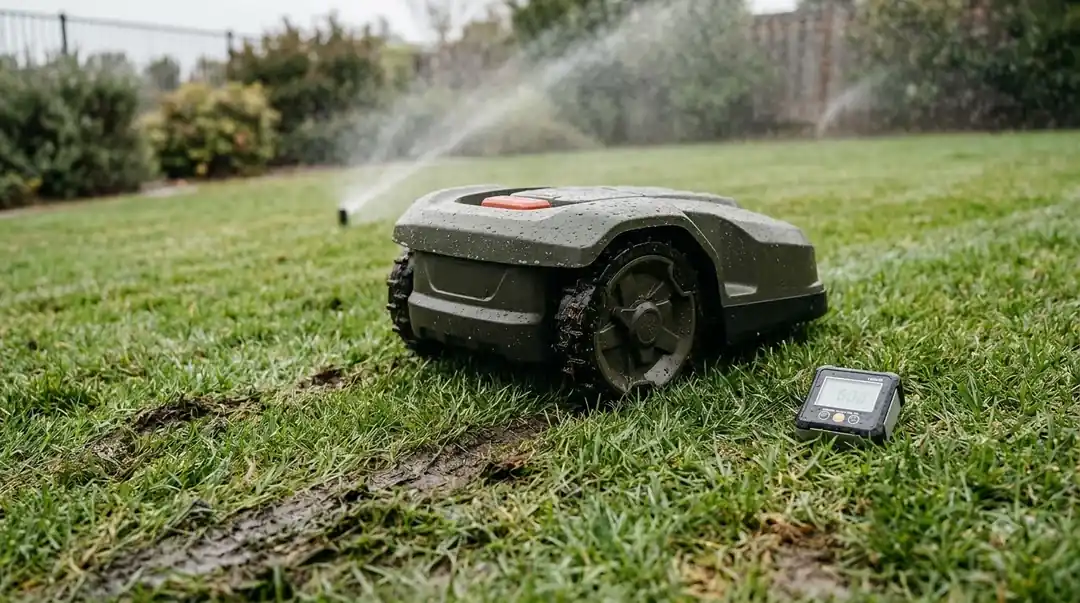
Robot mower wheel ruts and brown patches can look alike, but a brown patch under a robot mower can be three different problems, and the fix depends on which one you have. Dormant grass is a normal seasonal response, while brown patch disease and wheel wear need different action.
| Cause | What it looks like | What to check |
|---|---|---|
| Dormant grass | Turf turns brown in fall, and bermudagrass is a known example. UC IPM notes that bermudagrass goes dormant and turns brown in the fall. | Brown color with regular watering and no disease signs. Dormant turf often recovers once growth resumes. |
| Brown patch disease | Thinned, roughly circular patches of light brown grass, from a few inches to several feet across. Clemson notes that patches can merge. | On cool-season grass, look for small tan leaf spots with dark-brown borders. Gently tug the discolored leaves: if they pull free, large patch is likely. |
| Wheel wear | Brown or bare lines that follow the mower’s route, usually where it turns or passes often. | Compare the brown area with the path the robot takes. Our reading is that wheel damage follows the route, while disease follows weather and moisture. |
Disease needs wet conditions to spread. Clemson states that brown patch can spread fast when free moisture is present, especially with more than 10 hours of continuous leaf wetness. If the spots appeared after a long wet spell, check the leaves for the tan spots with dark borders before you blame the wheels.
Heads up
A dormant lawn can look dead. Give it regular water and time before you decide it is damaged, since turf can recover when growth resumes.
Where robot mower ruts form most often
Robot mower wheel ruts and brown patches cluster at the spots where the mower loses grip or drives over the same ground many times. Eufy notes that muddy patches near downpipes and irrigation outlets need repair, which points to the ground that stays wet longest.
- Downpipes and irrigation outlets: water runs here, so the soil stays soft.
- Turns and reversing spots: the wheels scrub the grass when they change direction.
- Gates and frequently used spots: Eufy lists spots near frequently used gates among the usual trouble areas.
- Uneven edges: Eufy notes that an exposed root can lift one side of the mower so the opposite wheel loses grip, and that uneven pavers and steel edging can catch the chassis.
Our reading is that the robot’s route back to its charging station is another common place for ruts, because the mower returns along the same line every day. Check that route first if the damage runs in a straight line.
How to fix a robot mower rut
Fix a rut by letting the spot dry, filling the low point with soil, and firming it before the mower runs there again. Eufy advises letting the area dry and repairing the surface before the next run, since a rut in wet soil will only get deeper.
- Stop the mower from entering the spot. Add a No-Go Zone around the rut so the robot keeps off the soft ground until it is repaired.
- Wait for the soil to dry. Working on wet soil packs it down and makes the next rut worse.
- Fill the depression. Add soil to fill the shallow hole, then level it with the surrounding lawn.
- Firm the surface. Eufy advises firming loose soil so the wheels have a stable base.
- Let it settle, then check. Watch the first few runs after the repair to confirm the wheels no longer sink in.
If the same spot keeps forming ruts after repair, or the mower keeps getting stuck in the same spot, the ground needs more than soil. Our reading is that drainage, aeration, or a change in the mower’s route is the next step.
How to repair a brown patch from wheel damage
To repair a brown patch, loosen the top 2 to 3 inches of soil, improve the soil if needed, seed, and keep the seed moist until it comes up. Sunseeker’s repair guide lists these steps, and the timing depends on whether your grass is cool-season or warm-season.
Loosen the soil first with a rake, hand cultivator, or garden fork, and break up clumps and remove stones. For heavy or poor soil, Sunseeker suggests mixing in screened compost about 1/4 to 1/2 inch deep. Avoid burying the patch under a thick layer of compost or topsoil.
Spread seed evenly over the loosened soil, then rake it into the top 1/8 inch and press it down with your foot, a board, or a lawn roller. Water lightly once or twice a day during dry weather so the top layer stays damp. After germination, water less often but more deeply.
Timing matters. Sunseeker says cool-season lawns repair best in early fall or spring, and warm-season lawns repair best in late spring or early summer. It advises avoiding seeding during extreme heat, drought, heavy rain, or right before a hard frost.
Keep the robot off the new seedlings. Sunseeker advises keeping people, pets, and mower wheels off the area while the seedlings are small, and mowing for the first time at about 3 to 4 inches tall, removing no more than one-third of the blade height. See when to first mow new grass seed for the timing. Sunseeker also says that renovation is usually needed when more than half the lawn is bare.
Mowing and watering habits that reduce damage
Good habits prevent most robot mower wheel ruts and brown patches. Mow when the ground is dry, keep the lawn watered, and set the cutting height for your grass type rather than cutting too low.
- Mow dry ground: Eufy’s advice is to let wet areas dry before the next run.
- Set the height correctly: Clemson advises mowing fescue between 2.5 and 3.5 inches, not shorter (see our fescue mowing height guide).
- Water about 1 inch a week: Clemson recommends watering to a depth of 4 to 6 inches and not letting the lawn drought-stress.
- Clean the wheels: remove mud and grass from the treads so the drive keeps its grip.
- Mow diseased areas last: Clemson advises this to limit spread, and to remove clippings in warm, moist weather.
- Aerate compacted areas: Clemson notes that core aeration helps with compaction and drainage.
UC IPM’s bermudagrass guidance says the grass tolerates some drought but grows best when irrigated, which is a useful reminder that a dry lawn is more vulnerable to wheel damage than a well-watered one.
Test before you reseed. Dormant grass and disease can look like robot mower wheel ruts and brown patches, so confirm the cause first, then repair only the spots that are truly bare or damaged.
Frequently asked questions
Can a robot mower run on wet grass without leaving ruts?
Usually no. Wet soil lets the wheels sink in and makes ruts deeper. Eufy advises letting the area dry before the mower runs there again, and repairing the surface first if a rut has formed.
Are robot mower brown patches always dead grass?
No. Dormant bermudagrass turns brown in the fall, and brown patch disease makes roughly circular patches with leaf spots. Check the cause before reseeding, because a brown area is not always dead turf.
Should I reseed a brown patch made by a robot mower?
Reseed after the cause is fixed and the soil is loosened. Sunseeker advises loosening the top 2 to 3 inches, raking the seed into the top 1/8 inch, and keeping the surface damp until the seedlings are established.
Does aeration help with ruts from wheel traffic?
It can. Clemson notes that core aeration helps with compaction and drainage. Aeration does not fill a rut on its own, so fill and firm the low spot first, then aerate the surrounding compacted lawn.
Sources
- Brown Patch and Large Patch Diseases of Lawns (Clemson Cooperative Extension): disease appearance, leaf-wetness threshold, mowing height, watering, and aeration.
- UC IPM bermudagrass guidance (University of California): fall dormancy and drought tolerance.
- How to Fix Lawn Problems (Sunseeker): loosening, compost, seeding depth, watering, and first mowing height.
- Robot lawn mower stuck: causes and fixes (Eufy): wet soil, ruts, muddy patches, filling and firming, and No-Go Zones.
- Landroid slips out of its working area (Worx support): clean wheels for maximum grip.
 Up next8 min readBy YardHalf Acre Lawn Size and Mowing Time for Robot MowersUpdated Nov 11, 2026
 9 min readBy YardHow to Lay Boundary Wire Around Trees and ObstaclesUpdated Nov 11, 2026
 8 min readBy YardQuarter Acre Lawn Size in Square FeetUpdated Nov 11, 2026
 8 min readBy YardRobot Mower Around Flower Beds: How to Keep It OutUpdated Nov 11, 2026
 9 min readBy YardHow Long Does a Robot Mower Take to Mow an Acre?Updated Nov 11, 2026
 8 min readBy YardHow Small Can a Yard Be for a Robot Mower?Updated Nov 11, 2026