
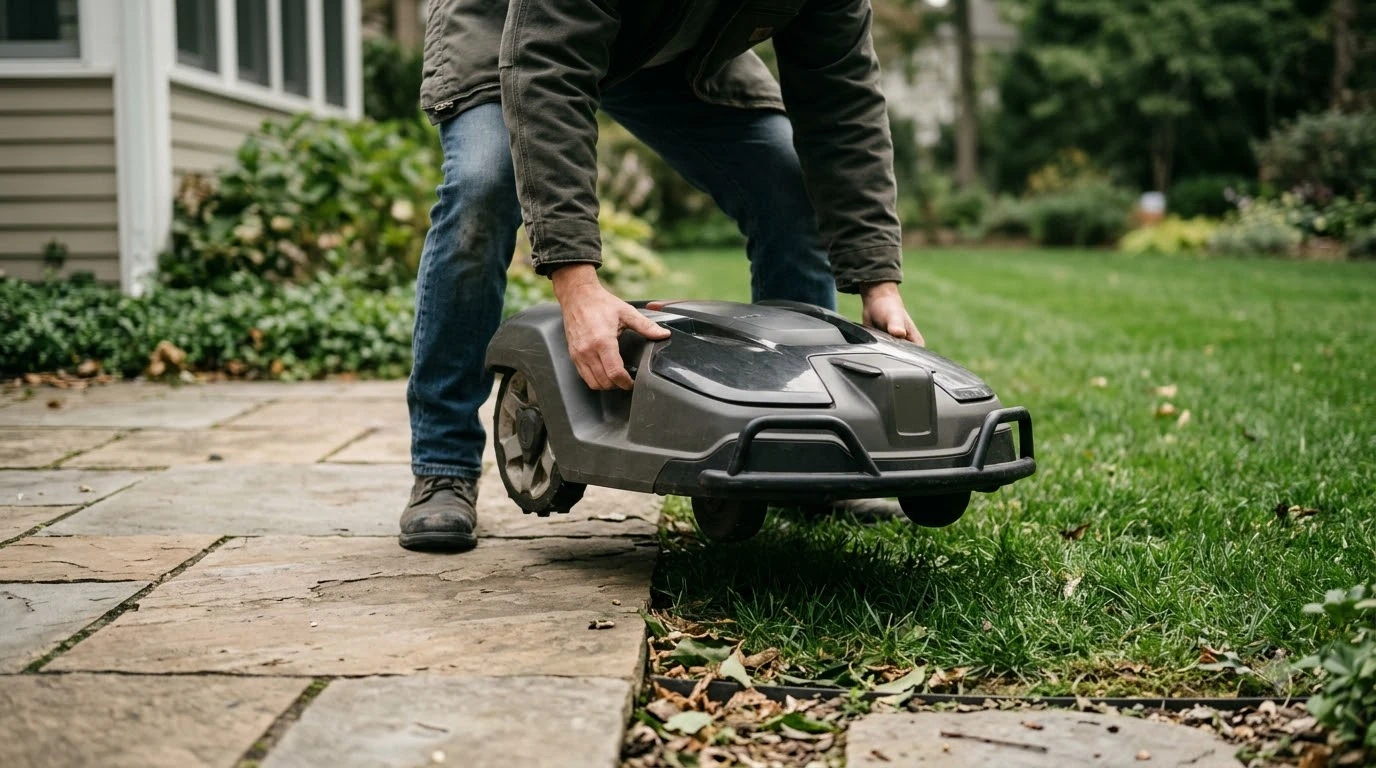

The best mowing height for shade grass is 3 to 3.5 inches for a cool-season lawn, and Iowa State University Extension advises never going below 3 inches in shade. Shade cuts the light a lawn receives, so the blades need more surface to make food, and taller grass has that surface. Warm-season grasses follow their own species ranges, with the top of each range as the target in shade.
The short answer
- Cool-season shaded lawn: 3 to 3.5 inches, and not below 3 inches.
- Warm-season shaded lawn: the top of the species range, such as 4 inches for St. Augustinegrass (2.5 to 4 inches).
- Frequency: never remove more than one-third of the blade in a single mowing.
- Partial shade: one source suggests adding 1/2 inch, but it is not an extension recommendation.
Why shade grass needs a higher cut
Shade is the reason the best mowing height for shade grass is higher than the setting for a sunny lawn. Ohio State University Extension says light limitation means the grass needs enhanced leaf area for photosynthesis, so it advises considering higher mowing heights for turf maintained under shade. In plain terms, a blade cut short has less surface to catch the light that does reach it.
Clemson Cooperative Extension applies the same logic to all stress. Its mowing guidance says to mow turfgrass under stress, such as heat, drought or shade, at a higher level of cut. That makes shade a stress condition, not a special case.
Best mowing height for shade grass in cool-season lawns
Iowa State gives the clearest number for shade. Its guidance for shady turf is 3 to 3.5 inches, and it warns, “Do not mow shady areas less than 3 inches in height.” The same page says a 3 to 3.5 inch height is also fine for sunny areas, so shaded and sunny cool-season lawns can share one setting.
Clemson’s species table gives the ranges for common cool-season grasses. Tall fescue is 2 to 3 inches in winter and 3 to 3.5 inches in summer. Fine fescue is 1.5 to 2.5 inches in winter and 2.5 to 3 inches in summer, and ryegrass is 1 to 2.5 inches in winter. Several of those ranges sit below Iowa State’s shade number, so for a shaded lawn it is safer to use the top of the range and not the bottom.
| Grass | Source | Height in inches |
|---|---|---|
| Shady turf (general) | Iowa State Extension | 3 to 3.5, not below 3 |
| Tall fescue | Clemson HGIC | 2 to 3 winter, 3 to 3.5 summer |
| Fine fescue | Clemson HGIC | 1.5 to 2.5 winter, 2.5 to 3 summer |
| Ryegrass | Clemson HGIC | 1 to 2.5 winter |
Our reading is that a shaded fescue or ryegrass lawn should sit near the top of these ranges during the seasons when the grass is most active, because the shade makes the lower end harder to sustain.
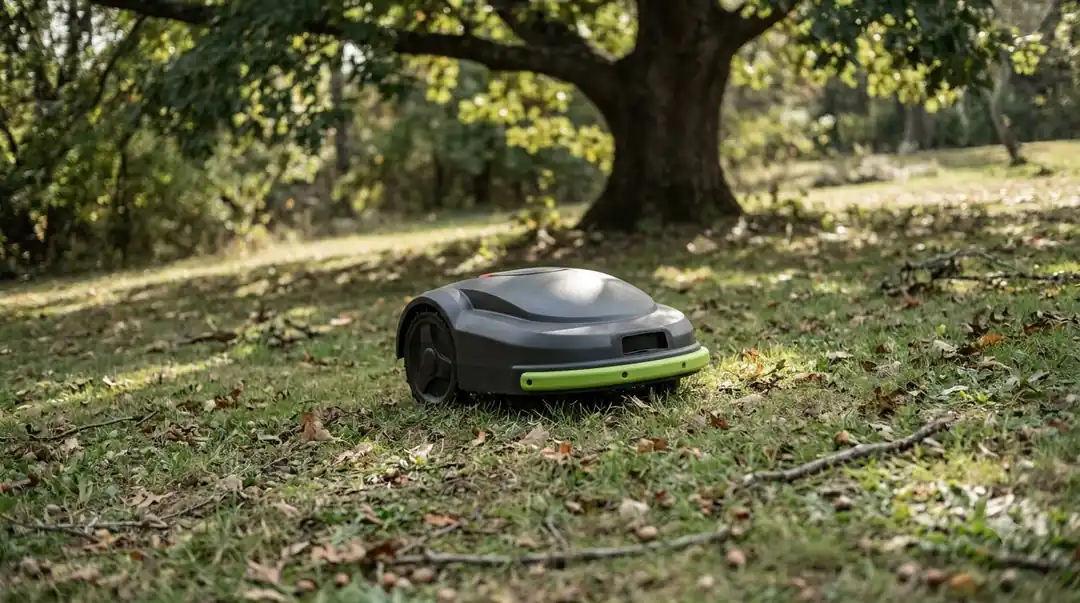
Heights for shade-tolerant warm-season grasses
Warm-season grasses have one height range each, with no seasonal split in the Clemson table. Clemson advises a higher cut for grass under stress, including shade, and its Mowing Height Matters article says shaded grass needs to be kept at the highest recommended height. Our reading is that the top of each range is the shade target.
| Grass | Recommended height in inches |
|---|---|
| St. Augustinegrass | 2.5 to 4 |
| Centipedegrass | 1.5 to 2 |
| Zoysiagrass | 1 to 2 |
| Common bermudagrass | 1 to 2 |
| Hybrid bermudagrass | 0.5 to 1.5 |
St. Augustinegrass has the tallest range in the table (see St. Augustine grass cutting height for the full detail), and hybrid bermudagrass has the lowest. Our reading is that a shaded hybrid lawn should still sit at the top of its range rather than below it, because Clemson’s guidance for stressed turf points in that direction.
How often to mow a shaded lawn
The one-third rule still applies in shade. Iowa State says never to remove more than 1/3 of the total leaf surface at any one time, and Ohio State puts it as never removing more than a third of the leaf blade length at once, which guards against scalping, especially during summer stress. Our guide to the one-third rule for mowing covers the math.
Iowa State gives a simple trigger for a 3-inch setting. Mow when the grass reaches about 4.5 inches, which keeps each cut within one-third. Iowa State also advises alternating the mowing direction between sessions to limit soil compaction from repeated wheel passes.
Frequency depends on growth. Ohio State notes that during active growth, a lawn may need mowing more than once a week. Our reading is that the height trigger, not the calendar, should decide when to mow.
Heads up
Ohio State advises avoiding mowing wet turf, since it cuts less cleanly. If a long wet spell has let the lawn grow too tall, it says to mow once at the highest setting, let the clippings dry, then lower the height and mow again in a different direction.
Avoiding scalping and thin patches
Scalping means cutting so low that most of the green leaf is removed and brown stems show. Ohio State warns that breaking the one-third rule risks scalping, which can severely damage or kill turfgrass, especially under summer stress. The risks of cutting grass too short are the same in sun or shade.

- Keep the height at the top of the range so each cut removes a small slice of blade.
- Limit traffic on a drought-stressed lawn when you can, since Ohio State says it is best to minimize traffic altogether on turf already under stress.
- Thin lawns: Clemson suggests a temporary lower setting for a month or two. Return to the higher setting once the grass fills in.
Setting a robot mower for shaded grass
Extension guides are written for push and ride-on mowers, so the robot mower advice below is our reading of that guidance, not a quote from any source. If the shade comes from trees, see our guides on a robot mower under trees and the best robot mower for a shaded lawn.
- Check the height limits first. Robot mowers differ in their lowest and highest settings. Compare the spec sheet with the tables above before you set the mower, because the best mowing height for shade grass only helps if the mower can reach it.
- Start at the top of the range. For cool-season shade, begin at 3.5 inches and keep the grass in the 3 to 3.5 inch band.
- Watch for thin spots. If shaded patches thin out, a temporary lower setting may help for a month or two, then return to the higher setting.
- Use frequent runs in active growth. Short runs remove less blade each time, which fits the one-third rule without measuring each cut.
Frequently asked questions
What is the best mowing height for shade grass?
For a cool-season lawn, Iowa State University Extension recommends 3 to 3.5 inches for shady turf and advises against going below 3 inches. For warm-season grass, use the top of the species range.
Should I mow shaded grass higher than sunny grass?
Clemson and Ohio State both say to cut grass under stress, including shade, at a higher level. Iowa State gives a 3 to 3.5 inch range that works for both shaded and sunny cool-season lawns.
How often should I mow a shaded lawn?
Mow when the grass reaches about 4.5 inches at a 3-inch setting, which keeps each cut within one-third of the blade. During active growth, Ohio State says it may need mowing more than once a week.
Can I mow shade grass too low?
Yes. Iowa State advises against mowing shady areas below 3 inches, so keep the best mowing height for shade grass as the floor, not the target to beat. Cutting too low removes too much leaf and can scalp the lawn, especially in summer stress.
Sources
- What is the proper mowing height for shady turfgrass areas? (Iowa State University Extension): shady and sunny heights, the 3-inch minimum in shade, the one-third rule and alternating mowing direction.
- Mowing Lawns (Clemson Cooperative Extension HGIC): species height ranges, the higher cut for turf under stress, and the one-third rule.
- Mowing Height Matters (Clemson Cooperative Extension HGIC): keeping shaded grass at the highest recommended height and the temporary lower setting for thin lawns.
- Lawn Mowing (Ohio State University Extension): light limitation and leaf area, the one-third rule and scalping, and wet-weather mowing.
- What’s the Best Height to Cut Your Grass? (LawnStarter, a commercial blog that names no source for its figure): the 1/2 inch increase for partial shade, used here only as a rule of thumb.
 Up next8 min readBy YardBahia Grass Mowing Height and Schedule: What Extension Sources SayUpdated Nov 11, 2026
 8 min readBy YardBest Mowing Height for Buffalo Grass (What Extension Guides Say)Updated Nov 11, 2026
 8 min readBy YardRobot Mower for Clover Lawn: What the Extension Sources SayUpdated Nov 11, 2026
 8 min readBy YardBest Mowing Height for Zoysia Grass: Summer, Spring and FallUpdated Nov 11, 2026
 8 min readBy YardBest Mowing Height for St Augustine GrassUpdated Nov 11, 2026
 7 min readBy YardBest Mowing Height for Centipede GrassUpdated Nov 11, 2026