
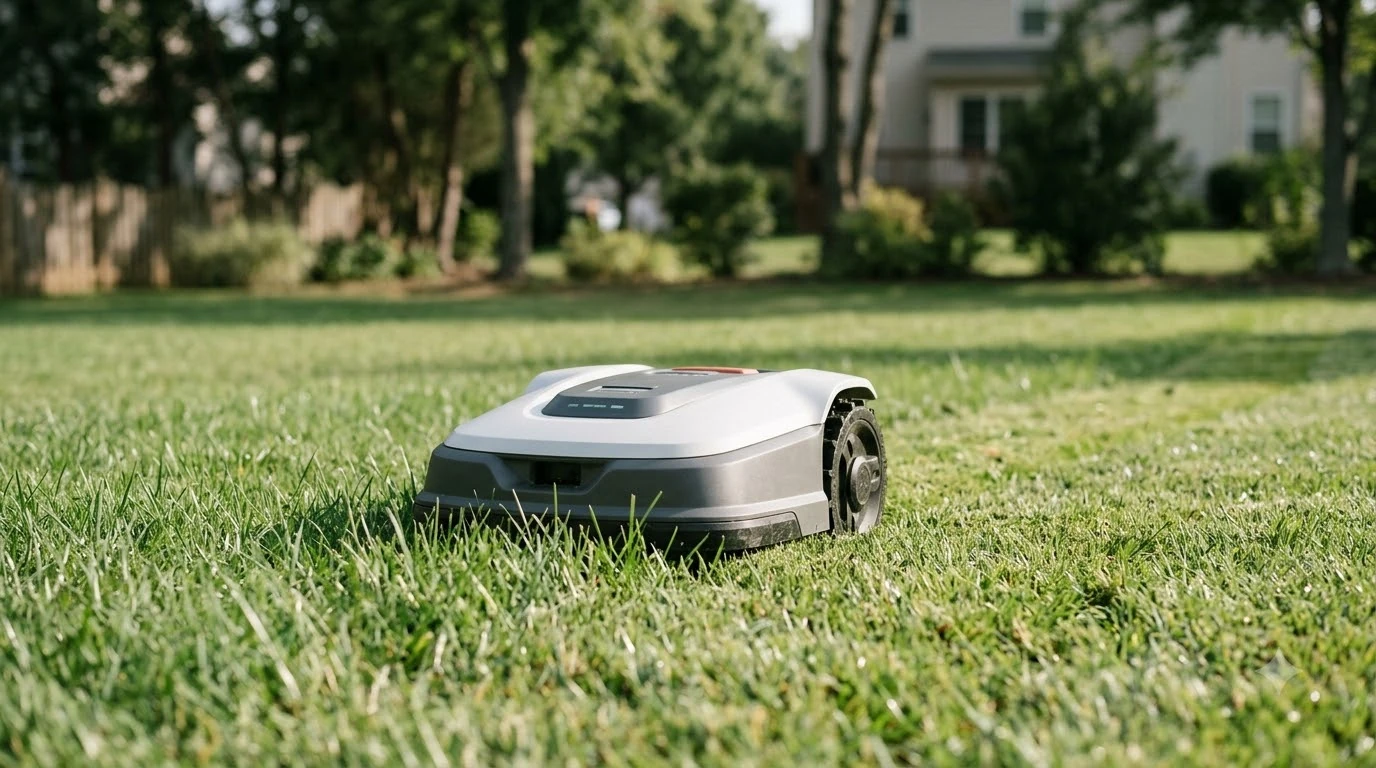

In the anthbot m5 vs anthbot genie comparison, the Anthbot M5 is the smaller, wire-free mower listed for about 500 m² of lawn, while the Genie line covers 900 m² to 3,600 m² across three models. Both the M5 and the Genie 1000 list a 45% slope limit and a 30 to 70 mm cutting height, so the real split is lawn size, battery and charging time, and how each claims to navigate. Figures are as of 2026-11-12 and come from the manufacturer store page and retailer or independent listings we read.
The short answer
- Lawn size: the M5 is listed for up to about 500 m² (0.125 acre). The Genie 1000 is listed at 2,000 m² (0.49 acre), and the Genie line starts at 900 m² with the Genie 600.
- Battery: the M5 uses a 45 Wh pack with a 40-minute runtime and 60-minute charge in one independent review. The Genie 1000 is listed at 5 Ah / 90 Wh with a 120-minute charge, and no runtime is stated.
- Navigation: the M5 listing describes 360° LiDAR plus dual vision. Anthbot’s Genie store page describes cameras and app mapping with no boundary wire, but one Genie 1000 listing says Full-Band RTK plus 3D vision.
- Price: this article does not quote prices, which change often. Check the current price on Anthbot’s site before comparing.
Anthbot M5 vs Anthbot Genie: the specs side by side
The Genie 1000 is the model in the line closest to the M5 in size and cutting hardware, so it is the fairest direct comparison. Both use a 20 cm (about 7.9 inch) cutting width and list the same 45% slope limit, which is about 24 degrees. The table below uses only figures we read on a listing or review page. A dash means the figure was not stated on the page we read.
| Spec | Anthbot M5 (LiDAR) | Anthbot Genie 1000 |
|---|---|---|
| Listed coverage | Up to 0.125 acre, described as up to 500 m² | 0.49 acre (2,000 m²) |
| Cutting width | 20 cm, 5 blades | 7.9 in (about 200 mm) |
| Cutting height | 30 to 70 mm, set in the app | 30.48 to 71.12 mm |
| Maximum slope | 45% | 45% |
| Battery | 45 Wh (2.5 Ah) | 5 Ah / 90 Wh |
| Runtime | 40 minutes (independent review) | Not stated |
| Charge time | 60 minutes (independent review) | 120 minutes |
| Noise | 58 dB | 58 dB |
| Weight | 22 lb | 27.1 lb |
| Navigation (as listed) | 360° LiDAR plus dual vision | Full-Band RTK plus 3D vision (4 cameras) |
| 4G remote | Available, extra cost after a free period | Listed as 4G |
On paper, the two mowers are closest on cutting width, slope and noise. The gaps are battery, charge time, weight and the size of lawn each one is sold for. The M5 is the lighter and smaller machine, and the Genie 1000 has the bigger battery and the larger listed coverage.
Heads up
Listings do not agree on how the Genie 1000 navigates. Anthbot’s own store page describes camera-based mapping, while the retailer listing we read says RTK plus 3D vision. Check the model label and the owner manual before you decide, because the answer changes how the mower behaves under trees and near walls.

Battery, charging and runtime
In an Anthbot M5 vs Anthbot Genie battery check, battery size and charge time decide how a mower copes with a bigger lawn. The M5’s 45 Wh pack is smaller than the Genie 1000’s 90 Wh, and the independent review gives the M5 a 40-minute runtime with a 60-minute charge. The Genie 1000 listing gives a 120-minute charge but does not state a runtime, so a direct runtime comparison is not possible from the pages we read.
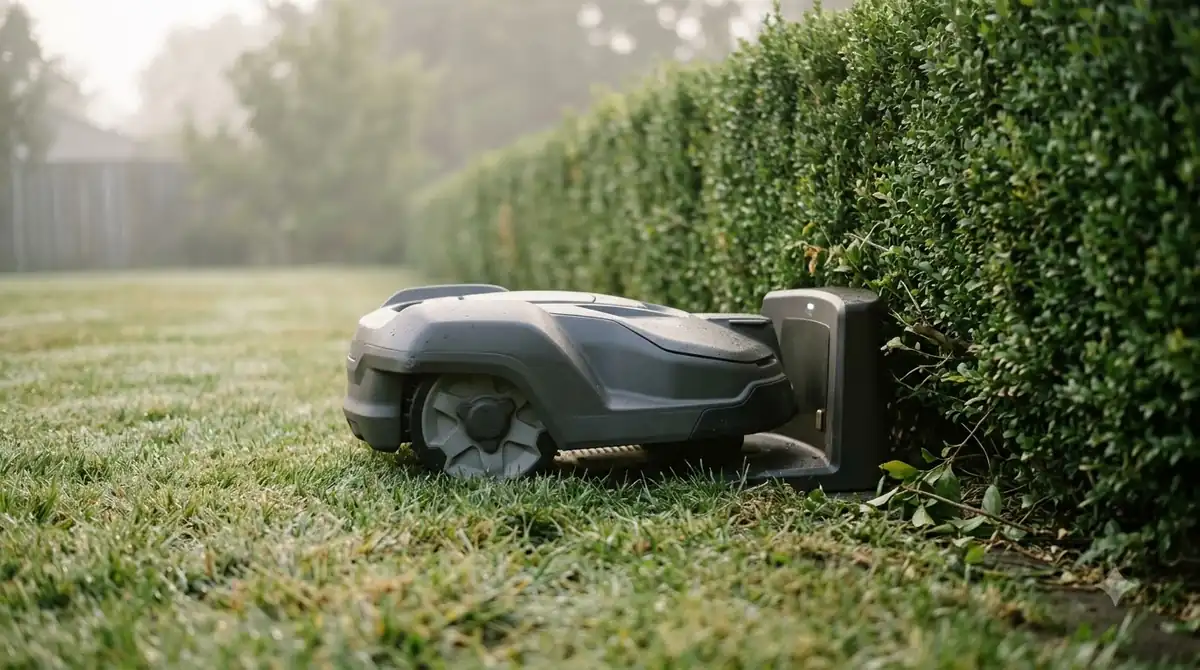
Our reading is that the battery gap lines up with the coverage gap, and our guide to how long the Anthbot M5 battery lasts goes further on the M5 pack. A mower sold for 2,000 m² usually needs more energy per session than one sold for 500 m². This is an inference from the listed numbers, not a measured result, and the runtime for the Genie 1000 should be confirmed with Anthbot before you rely on it.
The Genie store page also lists the Genie 3000 battery at 10,000 mAh, while its quick guide gives 4,000 mAh. The two figures conflict, so ask the company which one applies to the unit you buy. Our reading is that charge time and battery size should be read together with the lawn size on the box, not on their own.
How each one finds its way around
Navigation is where Anthbot M5 vs Anthbot Genie differ most in how each one is described. The M5 listing, read on Freshly Charged, names a 360° LiDAR system with dual vision and no boundary wire. The independent review says LiDAR is less precise than RTK on narrow passages, which is one trade-off to weigh against its no-antenna setup.
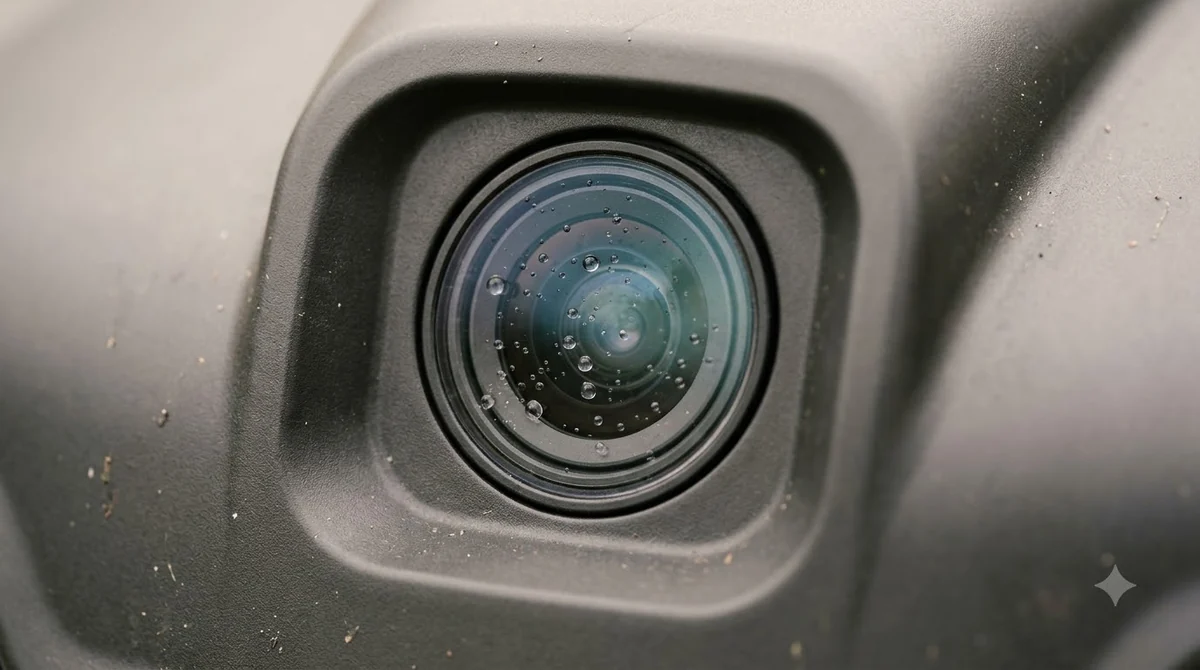
The Genie store page describes a wire-free system in which cameras and an app build the lawn map, and it lists zones and no-go areas as app features. The Genie 1000 retailer listing goes further and names RTK plus four cameras. We could not confirm from Anthbot’s own page which of these describes the Genie 1000 you would buy, so this is the first thing to verify.
For a yard with a lot of tree cover, the difference matters. A LiDAR-led design and a satellite-led design can behave differently under branches and close to buildings, which our RTK vs LiDAR guide explains. Our reading is that a buyer with a shaded lawn should ask for the navigation type in writing for the exact model number.
Ownership points from the reviews and listings
For ownership, the anthbot m5 vs anthbot genie picture is thinner than the spec table. The review we read for our Anthbot M5 review lists a few trade-offs: remote 4G access costs extra once the free period ends, and the mower has no four-wheel drive.
The Genie store page lists a three-year warranty and lists 4G on the Genie 1000 and 3000. We did not read a spec page that states 4G for the Genie 600, so confirm it if remote access matters to you.
The M5 review does not state a warranty length, so compare warranty terms directly with Anthbot before you buy either model.
Anthbot M5 vs Anthbot Genie: which one suits which yard
Our reading is that the M5 suits a smaller yard, up to about 500 m², where a lighter machine and a shorter charge are useful and where LiDAR navigation is the main concern. It is also a sensible pick if 4G remote access is not a priority.
The Genie 1000 suits a yard closer to 2,000 m², where the larger battery and listed 4G matter more, and our Anthbot Genie review covers the line in more detail. The Genie 600 and Genie 3000 cover the smaller and larger ends of the same line, but this article did not read a full spec page for either, so their figures are limited to coverage and battery as stated on Anthbot’s store page.
Neither model is a clear winner on the published numbers. Read together, the anthbot m5 vs anthbot genie specs point to two different buyers rather than one better machine. The better choice depends on lawn size, tree cover and how much you value 4G remote access, so the decision should follow the lawn you actually have.
What to check before you buy
- Confirm the exact model. For an Anthbot M5 vs Anthbot Genie decision, match the model name and battery label to the spec table above, since the Genie store page and quick guide disagree on the 3000 battery.
- Measure the lawn. Compare your measured area with the listed coverage, and leave room for beds and slopes.
- Ask about navigation. Get the navigation type for the exact model in writing, especially for the Genie 1000.
- Check runtime and charge time. Ask for the Genie 1000 runtime, which the listing does not give.
- Check the 4G and warranty terms. Confirm the cost of remote access after the free period and the warranty length for the model you buy.
Frequently asked questions
Anthbot M5 vs Anthbot Genie: which one is better?
Neither is a clear winner on published numbers. The M5 is smaller and lighter, with a listed coverage of about 500 m². The Genie 1000 is listed for 2,000 m² with a larger battery and a 120-minute charge.
Do the M5 and Genie 1000 cut at the same height?
Both listings give a cutting range of about 30 to 70 mm. The M5 range is set in the app, and the Genie 1000 listing gives 30.48 to 71.12 mm.
Do both mowers need a boundary wire?
The pages we read describe both as wire-free. Anthbot’s Genie store page says it needs no perimeter wire and builds the map automatically. Confirm the setup method for the exact model before you buy.
How long does the Anthbot M5 battery last?
An independent review gives a 40-minute runtime per charge with a 60-minute charge time. Runtime depends on lawn conditions, so treat it as the reviewer’s reported figure.
Sources
- Anthbot EU store (Anthbot, read 2026-11-10): Genie 600, 1000 and 3000 coverage, zones, battery, 4G listing and 3-year warranty.
- Anthbot M5 LiDAR listing (retailer): coverage, cutting height, slope, navigation, noise, IP rating and weight.
- Anthbot Genie 1000 listing (retailer): coverage, cutting width, battery, charge time, navigation and noise.
- Anthbot M5 LiDAR review (independent review site): runtime, charge time, 500 m² recommendation and the reviewer’s pros and cons, reported as the reviewer’s own account.
 Up next7 min readReviews & CompareAnthbot Genie Alternatives: What the Specs ShowUpdated Nov 15, 2026
 7 min readReviews & CompareAnthbot Genie vs eufy E15: Specs ComparedUpdated Nov 11, 2026
 8 min readReviews & CompareANTHBOT vs Navimow: Listed Specs for Genie 600, i105N and i206 AWDUpdated Nov 16, 2026
 6 min readReviews & CompareAnthbot Genie Review: Specs, Coverage and Owner FeedbackUpdated Nov 11, 2026
 9 min readReviews & CompareAnthbot M5 vs Mammotion YUKA: Specs, Slope and NavigationUpdated Nov 11, 2026
 7 min readReviews & CompareSegway Navimow i110N vs Anthbot M5: Specs ComparedUpdated Nov 13, 2026