
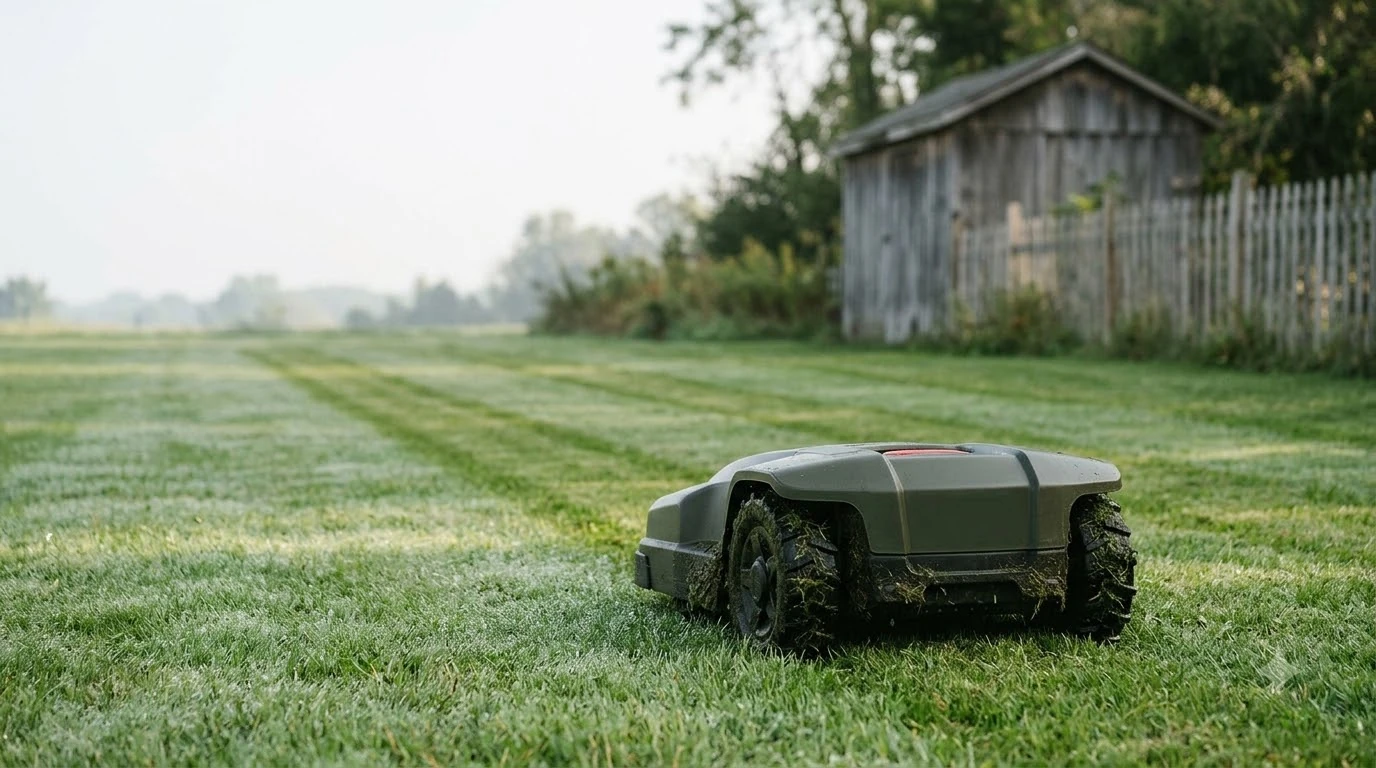

Corded electric mower vs robot mower comes down to who does the work and where the risk sits. A corded mower needs an operator, a nearby outlet and a cord kept clear of the blade. A robot mower runs on a battery and a charging base without an operator, but it depends on a set-up area and on its navigation system. The figures below come only from the sources listed at the end of this page.
The short answer
- Corded electric: you push or guide it, so the work is manual. The cord is the main hazard: the CPSC advises bright cord colors, a grounded machine, a proper-gauge extension cord, and not mowing wet grass.
- Robot mower: it mows on its own, with no cord on the lawn. Set-up depends on the model. Some use a boundary wire, while wire-free models such as the Worx Landroid Vision use satellite (RTK) positioning.
- Who each suits (our reading): a small, mostly flat yard with an outlet close by suits a corded mower. A larger lawn you want mowed without pushing suits a robot, provided it fits the model’s rated area and slope.
Corded electric mower vs robot mower: how they work
A corded electric mower draws power from a household outlet through an extension cord. The operator walks behind it, so the cutting schedule depends on the person. The CPSC’s rotary and reel mower guidance covers electric models in both forms.
A robot mower carries its own battery and returns to a charging base. Its output is set by a schedule, not by someone walking the lawn. Ratings differ widely by model. For example, the Worx Landroid Vision WR308E is listed with a 4 Ah Li-ion battery, an 80-minute charge time, and 12.8 kg weight with battery. Its cutting width is 18 cm, and cutting height adjusts from 30 to 60 mm. Worx rates the same model for lawns up to 800 m² and slopes up to 30% (17°). These are manufacturer ratings for that model only; they do not apply to robot mowers in general.
Safety differences
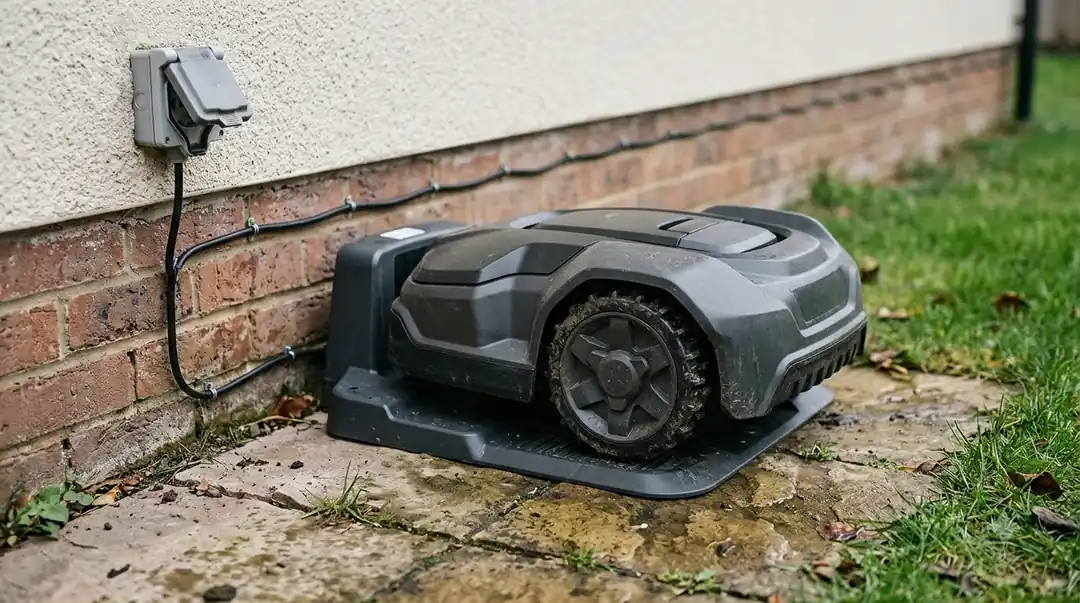
The CPSC’s electric mower tips are short and specific. Operators should use brightly colored cords to avoid cutting through them. The machine should be grounded, and any extension cord should be the proper gauge. Users should never mow wet grass. The agency’s release also gives estimated annual emergency room visits for electric mowers: about 600 for rotary electric models and about 200 for reel electric models. Those are estimates from that release, not current figures.
In a corded electric mower vs robot mower comparison, the cord is the failure point that a corded mower adds to the lawn. A robot mower removes the cord from the lawn but adds an unattended machine that moves while people and pets are nearby. For robot mowers, the relevant standard is IEC 60335-2-107 (edition 2.0, December 2017), which sets particular safety requirements for robotic battery-powered lawnmowers. We read only the preview pages, which cover scope. The clauses on lifting and stopping are not in that preview, so this article does not state them.
Heads up
The CPSC release is the only official US safety source we read for electric mowers. Its tips are general and do not name a model, so treat them as a baseline, not a full safety plan.
Noise near neighbors
In a corded electric mower vs robot mower choice, noise matters most for the robot, because it can run for hours on weekdays. One manufacturer blog, Robomow, names 60 dB as a common neighbor reference and states that sound drops about 6 dB for each doubling of distance. Husqvarna lists the Automower 430X at 58 dB(A). We did not find a verified decibel figure for a corded electric mower in the sources we read, so this article makes no decibel comparison between the two machine types. For ways to quiet a robot, see how to reduce robot mower noise.
Set-up and upkeep
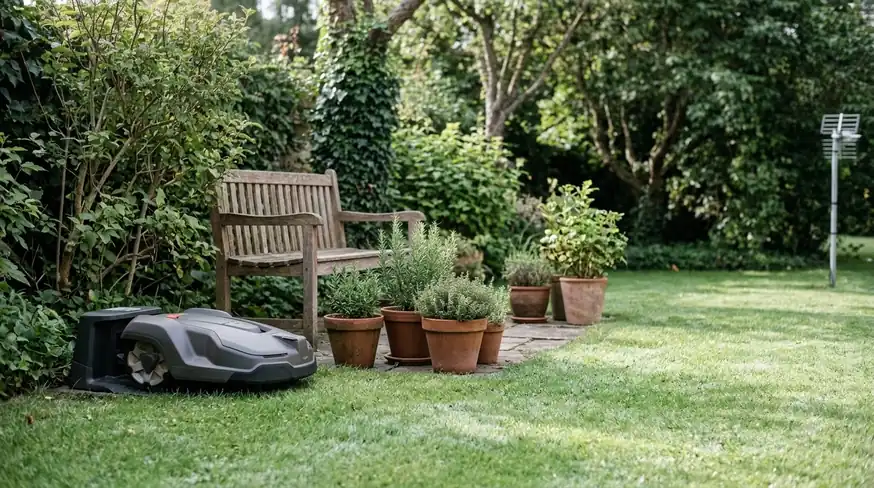
Set-up is where a corded electric mower vs robot mower comparison splits most clearly. A corded mower needs a grounded outlet within reach of the lawn, plus a cord routed so the mower never runs over it. Set-up is nothing more than plugging in and mowing, but the cord has to be checked and managed on every use.
A robot mower needs a set-up stage. Boundary-wire models need a perimeter wire laid around the lawn. Wire-free models use positioning instead. The Worx WR365E.1 page describes RTK Cloud positioning with Vision AI and V-SLAM, and says the model needs no rooftop antennas and no lawn poles. That is Worx’s own description and has not been checked against independent tests. Upkeep for both types includes blade replacement and battery care. We did not find verified cost figures for those tasks, so this article does not quote any. For a wider cost picture, see what a robot mower costs to own over time.
What to check before you buy
Use these five checks to settle the corded electric mower vs robot mower question for your own yard.
- Measure the lawn. Compare the real lawn area with the model’s rated maximum. Worx lists 650 m² for the WR365E.1 and 800 m² for the WR308E.
- Check the slope. Many robot ratings are given as a percentage and as degrees. The Worx models above are rated 30% (17°). Measure the steepest section of the yard before you rely on that figure.
- Map the cord route. For a corded mower, decide where the outlet and cord will sit and which parts of the lawn it will cover without crossing the cord.
- Plan for noise. If neighbors are close, compare the manufacturer’s dB rating and remember that sound falls with distance.
- Confirm the power supply. A corded mower needs a grounded outlet and a proper-gauge cord. A robot mower needs a charging base within reach of a power point.
Who each option suits (our reading)
For many households, the corded electric mower vs robot mower decision is really a question of yard size and effort. A corded electric mower suits a small yard that is mostly flat, with an outlet close to the lawn, for a person who does not mind pushing the mower. It keeps the purchase and set-up simple.
A robot mower suits a larger or repetitive lawn, or an owner who wants the job done without walking the yard. It makes sense when the lawn fits the model’s rated area and slope and the set-up work is acceptable. If you are also weighing a gas model, read our robot mower vs push mower comparison.
Frequently asked questions
Is a corded electric mower safer than a robot mower?
The sources do not give a single safety ranking. The CPSC lists cord, grounding and wet-grass risks for electric mowers. For robots, the IEC 60335-2-107 standard sets safety requirements, but the preview we read does not list its specific clauses. Both types need supervision around children and pets.
Do robot mowers need a boundary wire?
It depends on the model. Some robot mowers use a perimeter wire, while wire-free models such as the Worx Landroid Vision WR365E.1 use RTK positioning. Check the spec sheet for the exact model before you buy.
How loud is a robot mower compared with a corded mower?
We did not find a verified decibel figure for corded electric mowers in our sources, so no direct comparison is made. Robomow cites 60 dB as a common neighbor reference, and Husqvarna lists the Automower 430X at 58 dB(A).
What extension cord does a corded electric mower need?
The CPSC says the extension cord should be of the proper gauge, and the machine should be grounded. The mower’s manual gives the exact cord length and gauge limits for that model, so check it before buying a cord.
Sources
- CPSC Issues Safety Tips for Rotary Power Mowers (U.S. Consumer Product Safety Commission): electric mower cord, grounding, extension cord and wet-grass tips; estimated annual emergency room visits by mower type.
- Worx Landroid Vision WR308E product page (Worx): 800 m², 30% (17°) slope, 18 cm width, 30 to 60 mm height, battery and weight.
- Worx Landroid Vision Cloud WR365E.1 product page (Worx): 650 m², 30% (17°) slope, wire-free RTK Cloud positioning.
- How loud is a robotic mower? (Robomow blog): 60 dB neighbor reference; about 6 dB drop per doubling of distance.
- Husqvarna Automower 430X (Husqvarna): 58 dB(A) sound level.
- IEC 60335-2-107, edition 2.0 (2017-12), particular safety requirements for robotic battery-powered electrical lawnmowers, preview pages read for scope only.
 Up next8 min readReviews & CompareRobot Mower vs Electric Lawn Mower: What the Sources ShowUpdated Nov 11, 2026
 8 min readReviews & CompareDreame A2 vs Sunseeker X7: Specs, Sensors and Who Each SuitsUpdated Nov 12, 2026
 8 min readReviews & Compareeufy E18 Pros and Cons: Specs, Limits and Who It SuitsUpdated Nov 15, 2026
 8 min readReviews & CompareNavimow i206 AWD Review: Specs, Slope and Who It SuitsUpdated Nov 16, 2026
 8 min readReviews & CompareHusqvarna Automower 435X AWD Review: Specs, Slope and Who It SuitsUpdated Nov 16, 2026
 7 min readReviews & CompareRobot Mower vs Sheep Grazing: Which Suits Your LandUpdated Nov 17, 2026