
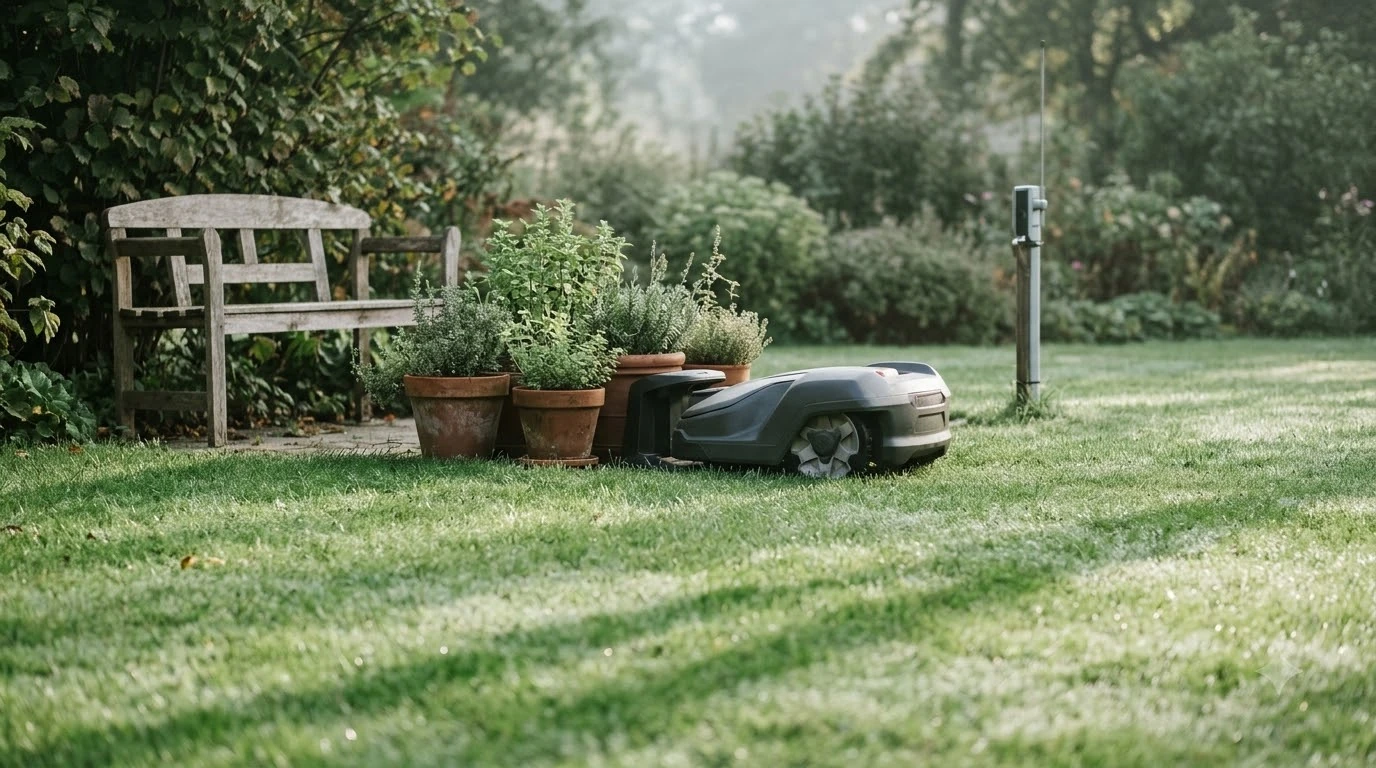

Dreame A2 vs Sunseeker X7 comes down to yard size and slope: on the published specs, the X7 lists more coverage, a wider cut and a steeper slope rating, while the A2 is the smaller mower that relies on LiDAR and a camera. The figures below come from the Sunseeker official page and a Notebookcheck data sheet for the Dreame A2, as of 2026-11-12. Neither company’s numbers have been independently tested here, so the table shows where each figure comes from.
The short answer
- Coverage: Dreame lists the A2 at up to 3,000 m2. Sunseeker’s official page lists the X7 and X7 Plus at up to 6,000 m2.
- Cutting width: 22 cm on the A2, up to 35 cm on the X7.
- Slope: 50% (26.5 degrees) on the A2, 70% (35 degrees) on the X7.
- Navigation: the A2 uses 3D LiDAR with an AI camera. The X7 uses RTK-GNSS with visual mapping.
- Our reading: the A2 suits smaller, mostly open lawns. The X7 suits larger or steeper yards that can take a base station.
Quick verdict at a glance
A Dreame A2 vs Sunseeker X7 comparison usually starts with coverage. On paper, the Sunseeker X7 has more room to grow. Its official coverage figure is double the A2’s, and its cutting deck is wider. The Dreame A2 is the lighter, more compact option with a shorter cut and a lower slope rating.
| Pick | Best for | Key fact |
|---|---|---|
| Dreame A2 | Smaller, mostly open lawns under about half an acre (our reading) | Up to 3,000 m2, 22 cm cut, 16.3 kg |
| Sunseeker X7 | Larger or steeper yards that can use an RTK base station | Up to 6,000 m2 (official), 35 cm cut, 70% slope |
Which Sunseeker X7 you are comparing
The name “Sunseeker X7” covers more than one mower, and retailer listings do not agree on the details. One UK retailer page describes a 14-inch version with 60 dB noise. A US listing gives a 14-inch width and about 1.5 hours of runtime. The official Sunseeker page describes the X7 and X7 Plus together, with a 35 cm cut and up to 6,000 m2 of mowing area.
We did not read every retailer sheet, so this comparison uses the official figures and marks the rest as unresolved. Before you buy, match the model name on the box and the serial number to the specification page you are reading. Doing this first keeps a Dreame A2 vs Sunseeker X7 comparison tied to the right machine.
Dreame A2 vs Sunseeker X7 side-by-side specs
The table lists each figure with its source level. Official means the manufacturer’s own page. Data sheet means a figure printed in a review by an independent publisher.
| Spec | Dreame A2 | Sunseeker X7 (official, X7 and X7 Plus) |
|---|---|---|
| Coverage | Up to 3,000 m2 (data sheet) | Up to 6,000 m2 (official) |
| Cutting width | 22 cm | Up to 35 cm |
| Cutting height | 3 to 7 cm, adjusted electrically | 20 to 100 mm |
| Maximum slope | 50% (26.5 degrees) | 70% (35 degrees) |
| Navigation | 3D LiDAR + AI camera | RTK-GNSS + visual mapping, 200+ obstacle types |
| Drive | Not stated | All-wheel drive |
| Weight | 16.3 kg | Not stated |
| Noise and runtime | Not stated | Not stated on the official page |
Coverage, cutting and slope
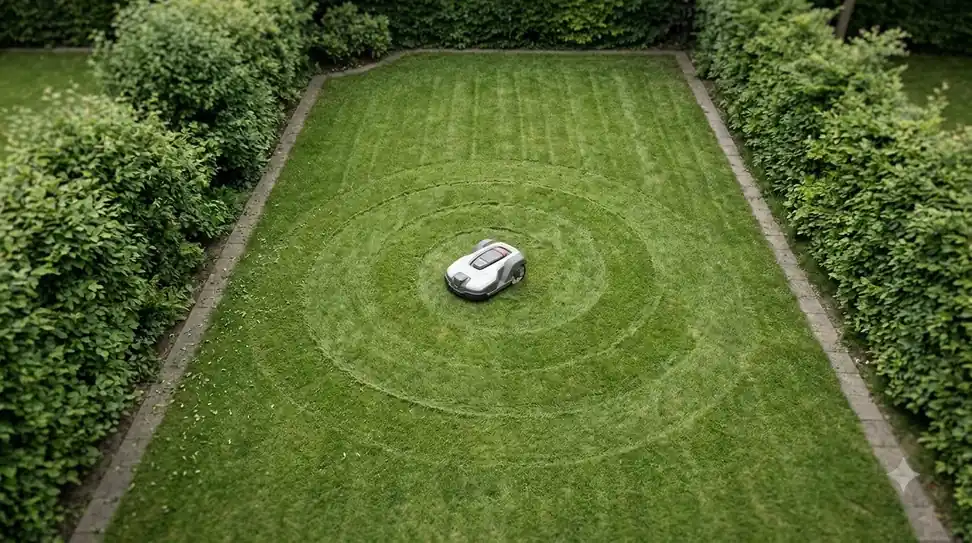
The A2’s 22 cm deck covers less ground per pass than the X7’s 35 cm cut. That gap matters most on large open lawns, where wider passes finish faster. In a Dreame A2 vs Sunseeker X7 choice, cut width is the figure to weigh first if time per session matters to you. The gap in cut width is the clearest physical difference between the two machines.
Dreame says the A2 can cut within 5 cm of walls with its EdgeMaster disc. A reviewer found that grass near the edge still needed a trimmer about once a month. Sunseeker’s official page does not describe an edge feature, so we cannot compare edge cutting from the sources we read.
Both slope figures are maximum ratings, not guarantees. A 70% rating means little on a lawn that is wet, uneven or covered in leaves. Check the real slope of your lawn before choosing, and treat the 50% and 70% numbers as the upper limit of each mower’s climb. For percent versus degrees, see robot mower slope rating explained.
Navigation and positioning
The two mowers find their position in different ways, and each has its own weak point. The A2 uses OmniSense 2.0 3D LiDAR together with an AI camera. A reviewer noted that it can lose position in large, featureless open areas, and that the front sensor array needs wiping about once a week. For more on the A2, see the Dreame A2 review.
- Dreame A2: LiDAR and camera. RTK is not stated for this model in the data sheet we read.
- Sunseeker X7: AONavi, which pairs RTK-GNSS with visual mapping. The box includes an RTK base station and holder.
- Boundary: the official X7 page describes wire-free mapping drawn in the app. The A2 is also a wire-free design.
- Owner reports: some A2 owners on the Dreame forum describe a PIN and wheel-lift alarm loop. Dreame support replied that it looked hardware-related. These are user reports, not confirmed faults.
Our reading is that RTK needs a clear view of the sky, so an X7 may struggle under dense tree cover, while a LiDAR system depends on the surroundings staying recognisable. Neither mower is immune to these conditions. For a broader look at the three approaches, see RTK vs LiDAR vs vision. For more on the X7, read the Sunseeker X7 review.
Drive, maintenance and setup
The X7 is listed as all-wheel drive with independent front suspension, which helps on slopes and uneven ground. The A2’s drive layout is not stated in the data sheet we read, so do not assume it matches the X7. Check the spec sheet before buying if traction on a slope is your main concern.
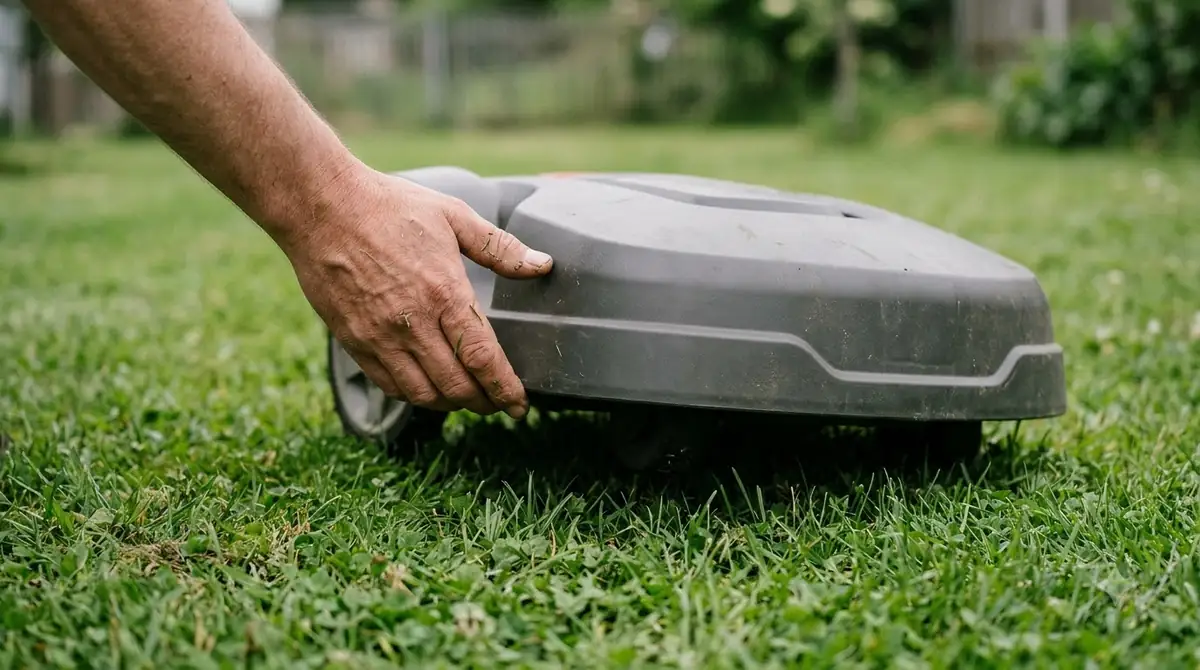
Maintenance is where the two differ in practice. The A2 needs its sensors kept clean, and the reviewer described weekly wiping as necessary. The X7 box includes an RTK base station, which means one more outdoor unit to place, power and keep clear of obstacles. The sources do not give a setup time for either mower, so plan for a first-run setup of its own.
Who each option suits
The A2 fits smaller, mostly open lawns. One reviewer calls it efficient mainly on lawns under 0.5 acre (2,000 m2) and describes it as an agility tool rather than a volume tool. That is an opinion from a review, not a test result. Our reading is that a lawn well under half an acre is where the A2’s smaller footprint makes sense.
The X7 fits larger yards, steeper ground and sites where an RTK base station can be placed with a clear sky view. Its official coverage figure of 6,000 m2 is well above the A2’s 3,000 m2, so it is the more natural choice for yards larger than the A2’s rated range. Neither mower in this Dreame A2 vs Sunseeker X7 matchup is the better buy for every lawn, and the comparison does not declare a winner. If you also want to see the A2 against another RTK model, read Mammotion LUBA 3 AWD vs Dreame A2.
What to check before you buy
A Dreame A2 vs Sunseeker X7 decision is only as good as the inputs. Four checks cover most of the risk, and each one uses a figure from the sources above rather than a guess.
- Confirm the exact model name. Sunseeker’s X7 family covers several variants with different figures. Read the model on the box.
- Measure your lawn. Compare your real area and the steepest slope against the coverage and slope figures above.
- Check the sensor plan. If you have large trees or open fields, consider how the LiDAR or RTK system will cope with your site.
- Confirm warranty and support in your country. The sources we read do not state warranty terms for either mower.
Frequently asked questions
Which is better for a small yard, the Dreame A2 or the Sunseeker X7?
On the published figures, the A2 is the better fit for lawns under about half an acre. A reviewer describes it as efficient mainly at that size. This is our reading from the sources, not a test result, and the X7 is the better fit for larger or steeper yards.
Does the Sunseeker X7 need a boundary wire?
No. The official Sunseeker page describes wire-free mapping, with boundaries drawn in the app. The X7 box includes an RTK base station and holder.
Can the Dreame A2 climb a 50% slope?
The Dreame data sheet lists a maximum slope of 50%, or 26.5 degrees. A maximum rating is not a guarantee, so check the real slope of your lawn and the condition of the grass before relying on it.
Which Sunseeker X7 should I buy?
Match the model name on the box to the official specification page, because retailer listings use different sizes and figures. The official page covers the X7 and X7 Plus together, so check the variant you are considering against the box and the serial number.
Sources
- Sunseeker Elite X7 product page (manufacturer): mowing area, cutting width, cutting height, slope, navigation, drive and box contents for the X7 and X7 Plus.
- Notebookcheck review of the Dreame A1 Pro (independent publisher): the Dreame A2 data sheet, including coverage, cutting width, height, slope, sensors and weight.
- Robot Mower Lab, Dreame A2 technical review (independent publisher): reviewer view on the A2 for lawns under 0.5 acre and on sensor upkeep.
 Up next6 min readReviews & CompareSunseeker X4 Review: Specs, Price and Who It SuitsUpdated Nov 18, 2026
 8 min readReviews & Compareeufy E18 Pros and Cons: Specs, Limits and Who It SuitsUpdated Nov 15, 2026
 8 min readReviews & CompareNavimow i206 AWD Review: Specs, Slope and Who It SuitsUpdated Nov 16, 2026
 8 min readReviews & CompareHusqvarna Automower 435X AWD Review: Specs, Slope and Who It SuitsUpdated Nov 16, 2026
 8 min readReviews & CompareSegway Navimow i105N Review: Specs, Limits and Who It SuitsUpdated Nov 11, 2026
 8 min readReviews & CompareSunseeker X7 Problems and Complaints: What Reviews and Specs ShowUpdated Nov 14, 2026