
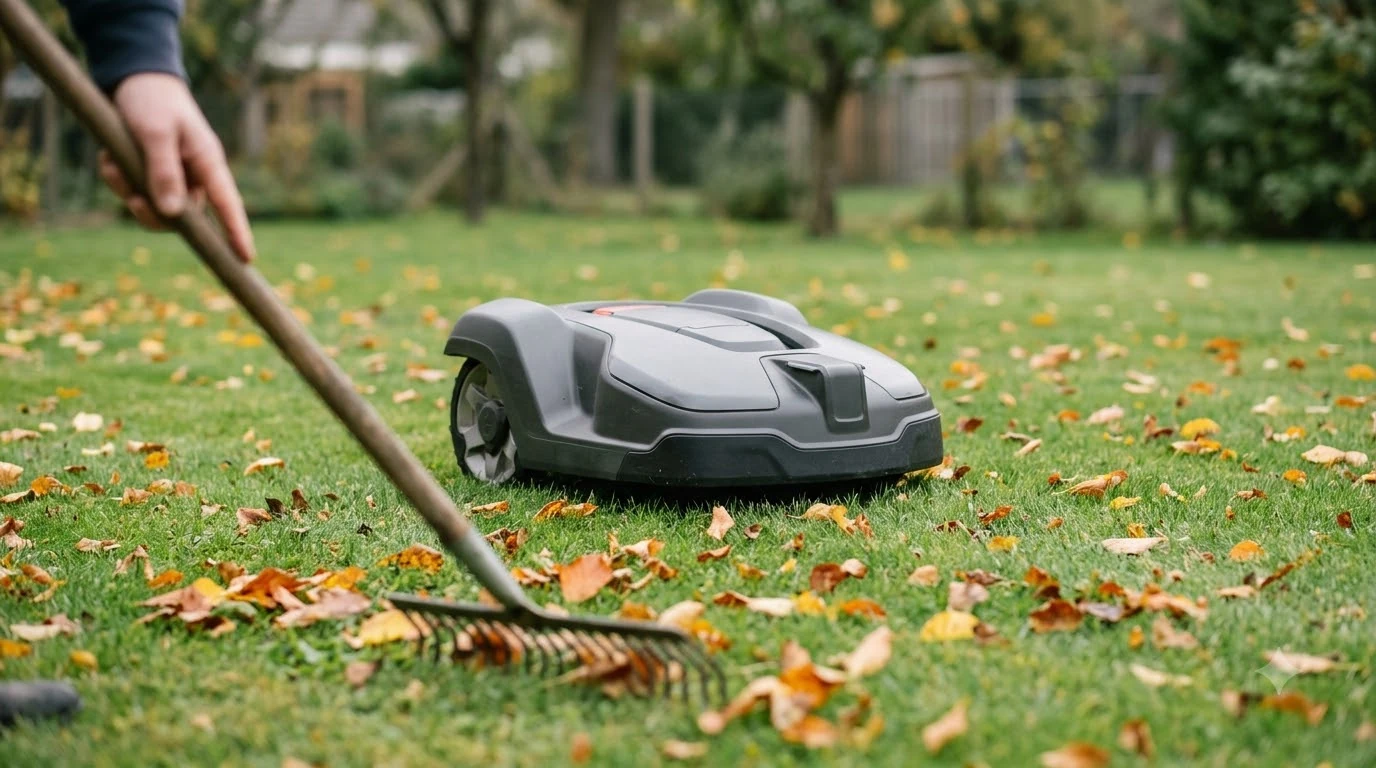

The best robot lawn mower for a yard with pine needles is one whose debris handling fits your trees, not just one that fits your lawn size. Robomow’s own guidance names “pine, larch and spruce cones” as common tree debris, and says cones can wedge in the mower and lift the drive wheels. No manufacturer page we read names pine needles directly, so the advice below rests on the closest debris guidance we could read, as of November 2026.
The short answer
- Debris is the main issue: pine cones and nuts are the hard cases in the manufacturer guidance we read.
- Blade type matters: Robomow says star blades are more robust than blade discs.
- Collect debris regularly: Robomow’s first advice is to collect foreign objects regularly.
- Leaves are a smaller problem: Robomow says leaves are chopped up either way, but wet leaves can cut traction and packed leaves keep air from the lawn.
What the manufacturer pages say about tree debris
Debris from trees is the main reason the best robot lawn mower for a yard with pine needles is hard to pick from brochures alone. Robomow lists branches, fallen fruit, nuts and “pine, larch and spruce cones” as the most common debris a lawn robot meets under trees. Its blog treats cones as a problem for both blade styles. Cones can get wedged in the mower and cause the drive wheels to lift, which stops the mower from moving normally.
Pine needles are a different kind of debris from cones, and a yard covered in them is a different job from a yard with a few cones. A needle is light and thin, so the manufacturer guidance we read does not describe it as a jam risk. What the guidance does describe is a build-up of foreign material, which is why the advice to collect it regularly applies to a needle-covered yard too. Our reading is that needles are less likely to jam the mower than cones, but the pages do not confirm that directly.
Foliage is the closest case the page covers. Robomow says fallen leaves do not challenge the mower and are chopped up whichever blades it uses, with star blades shredding them completely. It adds two catches: leaves keep the lawn from being aerated enough, which can lead to mold in autumn, and wet leaves can get caught in the wheels and hurt traction. For a closer look at that case, see robot mowers and fall leaves, and for shade and falling litter in general, a yard with a heavy tree canopy.
Blade type changes how debris is handled
Blade type is the first spec to compare when you look for the best robot lawn mower for a yard with pine needles, because it decides how much of the debris the deck can take.
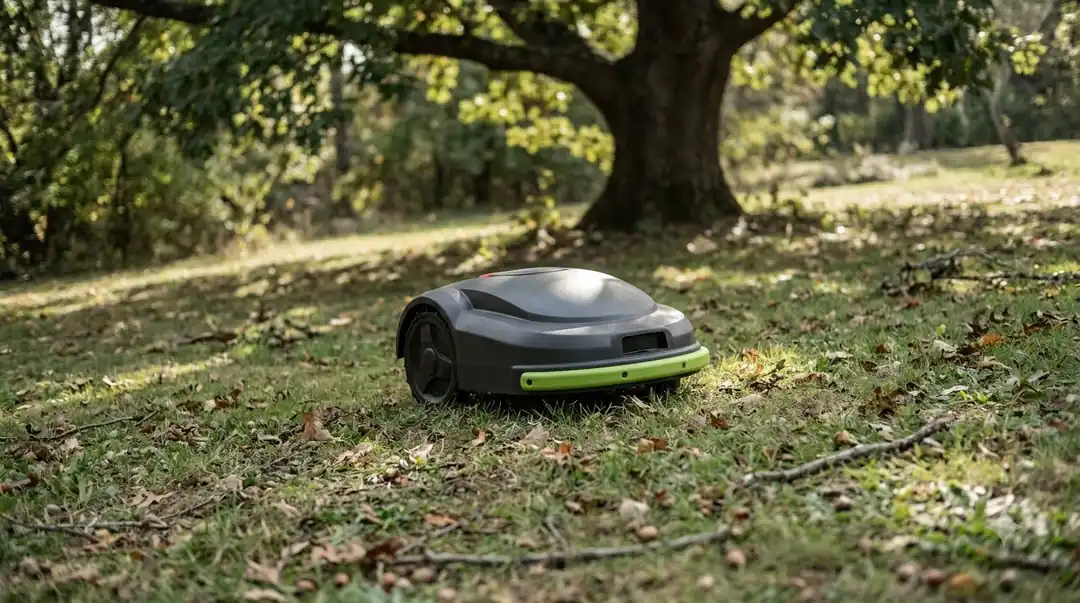
Robomow separates its two blade styles by how they treat debris. Star blades chop fallen fruit, while blade discs leave nicks in it. For nuts, the company says blade discs are significantly more sensitive, and cutting performance drops quickly. Star blades are described as significantly more robust.
| Debris type | Blade discs (per Robomow) | Star blades (per Robomow) |
|---|---|---|
| Pine, larch and spruce cones | Problematic | Problematic |
| Nuts | Significantly more sensitive; cutting performance drops quickly | Significantly more robust |
| Fallen fruit | Leaves nicks in the fruit | Chops the fruit |
The table shows why blade type is the first spec to check. Robomow itself says cones are a problem for both styles, so blade type reduces the damage but does not remove the need for cleanup. Our reading is that a yard with heavy debris favors star blades, though the company does not rank them as a general solution.
Heads up
Robomow says blades blunt faster than usual after contact with foreign bodies, whatever blade type the mower has, and that dull blades leave frayed grass tips that can turn brown. Check blade wear on a regular basis in a yard with tree debris.
Pine needles and pine straw: what the sources do not cover
We could not find a manufacturer page that gives instructions for pine needles or pine straw specifically. Robot mower manuals and support pages talk about debris in general, and about cones and fruit in particular. That gap matters because a needle-covered yard can build up a mat of material over a season, and the sources do not say how fast that happens or how a given model copes with it.
For that reason, treat the advice here as a starting point for choosing the best robot lawn mower for a yard with pine needles, not as a verdict on any model. Ask the manufacturer directly how its model handles needle litter, and check the operator’s manual for any note on debris, obstacles or deck cleaning before you buy.
Prepare the yard before the first run
Whichever model you choose, preparation matters as much as the spec sheet. Clear the lawn before the mower goes out, then keep clearing it on a schedule. Robomow says the lawn should in principle be completely free of foreign objects, and that a branch can fall overnight or a squirrel can drop a walnut, so some debris will always turn up. Larger obstacles are usually detected by the sensors and bypassed, but small debris can simply be run over. For wet conditions, see our notes on cutting wet grass with a robot mower.
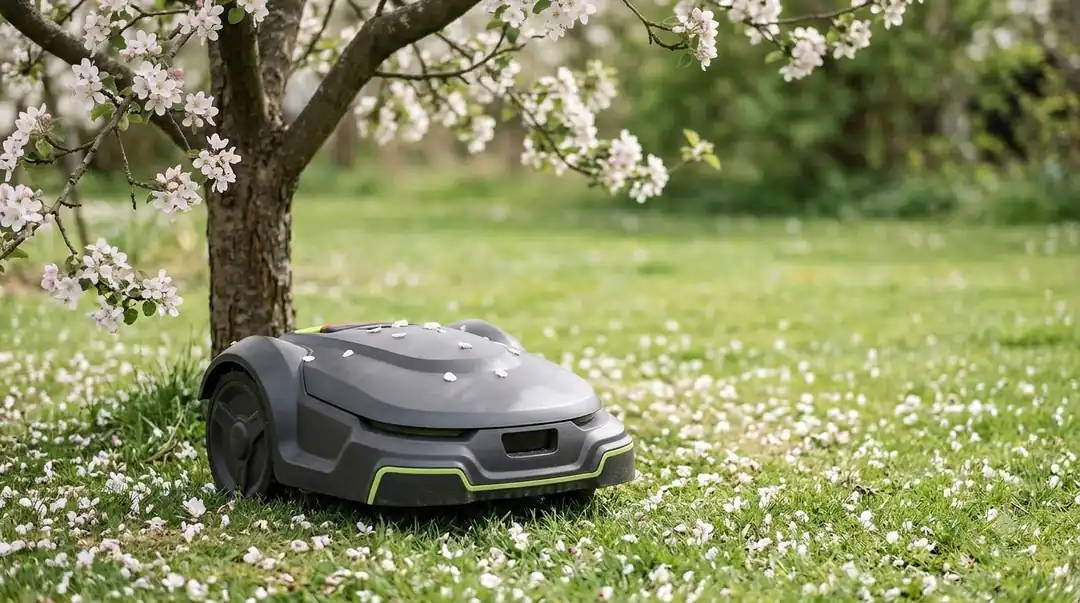
- Remove large debris first. Pick up cones, sticks and fruit before the first run, since the sources name cones and branches as the hard cases.
- Collect on a schedule. Robomow’s first advice is to collect foreign objects regularly, so set a routine for the season when needles and cones fall. A leaf and needle rake or blower is a simple way to do it.
- Check the deck after each cone fall. Look for wedged material near the drive wheels, because the guidance says cones can lift them.
- Watch for stuck objects. If the deck jams, switch the mower off and remove the object before you restart it, rather than forcing it through.
Best robot lawn mower for a yard with pine needles: what to check
Use the debris behavior above to narrow the list. A buyer looking for the best robot lawn mower for a yard with pine needles should treat each point below as a question to answer from the product’s own documents. They are criteria to verify on each product page, not a verdict on any one model. If trees also drop branches on your lawn, compare them with the checks for yards with fallen branches.
- Blade style: star blades versus blade discs, and how each is described for nuts and cones.
- Deflector or front bumper: Robomow describes a front deflector that works like a bumper and pushes objects aside, but only on ground free of major bumps. Ask whether your model has one.
- Stuck-object behavior: whether the mower stops and warns when something jams the deck.
- Manual debris rules: what the operator’s manual says about clearing debris before mowing.
- Wheel traction: wet leaves and needles can lower grip, and Robomow says wheels with good traction help on slippery ground.

Frequently asked questions
Can a robot mower handle pine cones?
Robomow says cones are problematic for both blade discs and star blades, and that they can wedge in the mower and lift the drive wheels. Collecting cones before mowing is the simplest way to reduce that risk. No source we read promises that a model will handle cones without problems.
Do robot mowers handle pine needles differently from cones?
The manufacturer pages we read do not describe needles specifically. They describe cones and general debris. Our reading is that needles are less likely to jam the deck than cones, but that is an inference, so ask the manufacturer about needle litter before you buy.
Are star blades better than blade discs for debris?
For the cases Robomow describes, yes. Star blades are described as significantly more robust, and they chop fallen fruit where blade discs nick it. Cones remain a problem for both styles, so star blades reduce the damage without removing the need for cleanup.
How often should I clear debris from the lawn?
For a yard with needles, the upkeep of the best robot lawn mower for that yard is mostly cleanup. The source we read gives no fixed interval; Robomow advises collecting foreign objects regularly. A practical rule is to clear the lawn after each heavy cone or needle fall, and before each season of mowing.
Sources
- Robomow blog: how the robotic lawnmower deals with fallen fruit and the like (Robomow, manufacturer): debris types, cones and wedging, blade disc versus star blade behavior, leaves, deflectors, collecting foreign objects.
 Up next10 min readBest Robot MowersChoosing the Best Robot Lawn Mower for Lawns with Heavy Pine Cone DropUpdated Nov 19, 2026
 6 min readBest Robot MowersBest Robot Mower for a Yard with a Rain Garden: What to CheckUpdated Nov 14, 2026
 8 min readBest Robot MowersBest RTK Robot Lawn Mower for Suburban Yards: What to Check Before You BuyUpdated Nov 11, 2026
 8 min readBest Robot MowersWhat Is the Best Robot Lawn Mower for a Small Yard?Updated Nov 13, 2026
 8 min readBest Robot MowersMost Accurate Robot Lawn Mower Navigation for Your YardUpdated Nov 12, 2026
 8 min readBest Robot MowersHow to Choose the Best Robot Lawn Mower for Sandy Coastal YardsUpdated Nov 19, 2026