
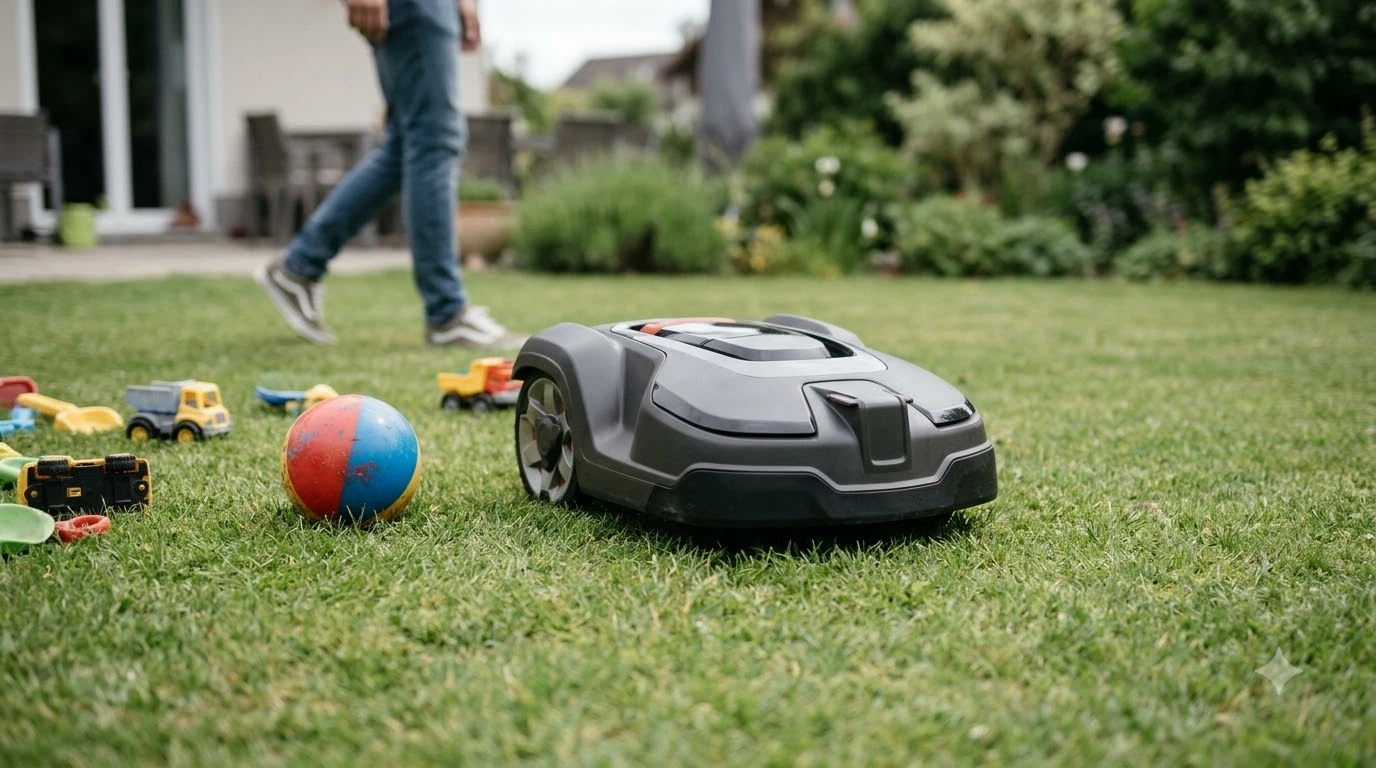

No published test shows which 3D LiDAR robot mower is the most accurate, so the question cannot be settled from spec sheets. Brands state figures between about 2 and 3 cm, but they use different units, models and test conditions. As of 2026-11-12, no independent head-to-head test that ranks 3D LiDAR mowers by accuracy was found.
The short answer
- No proven winner: no independent test settles which 3D LiDAR robot mower is the most accurate.
- Published range: from about 0.8 inch (2 cm) to 1.18 inches (3 cm) for LiDAR models, with RTK claims in a similar band.
- LiDAR and RTK differ: LiDAR is strong on nearby objects, while RTK gives global position when the sky is open.
- Check the conditions: trees, hedges, fog, rain and dirty sensors change results, so test any model in your own yard.
Which 3D LiDAR robot mower is the most accurate? What the published numbers measure
Manufacturers publish LiDAR and RTK accuracy in different units, and most do not say how they measured it. If you need the basics first, read how a LiDAR robot mower works. Ecovacs lists its GOAT A3000 LiDAR mower as “accurate to 0.8 inch”, which is about 2 cm. The same Ecovacs article lists its GOAT O1000 RTK model at “0.8 to 1.2 inches”, or about 2 to 3 cm. Both are product claims with no test method stated.
Other sources use different figures and units. Mammotion states RTK accuracy of 1 to 2 cm as a brand claim. Sunseeker states RTK positioning within 1 to 3 cm. RESIDENT describes LiDAR as within 1.18 inches (3 cm) but gives no test data, so it is best read as an editorial claim. The table below puts these side by side.
| Source | Technology | Figure as published | What the source says about it |
|---|---|---|---|
| Ecovacs, GOAT A3000 | LiDAR | “Accurate to 0.8 inch” (about 2 cm) | Vendor product claim, no test method stated |
| Ecovacs, GOAT O1000 RTK | RTK | “0.8 to 1.2 inches” (about 2 to 3 cm) | Vendor product claim |
| Mammotion (brand blog) | RTK | 1 to 2 cm | Brand claim |
| Sunseeker (brand blog) | RTK | Within 1 to 3 cm | Vendor claim |
| RESIDENT (editorial) | LiDAR | Within 1.18 inches (3 cm) | No test data given |
Because the units, models and conditions differ, these figures cannot be ranked against each other. The table shows the scale of what is claimed, not a leaderboard of which 3D LiDAR robot mower is the most accurate.
Coverage claims carry the same caveat. Ecovacs says its GOAT O1000 RTK reaches 100 percent coverage, and its footnote says the figure was measured by ECOVACS Laboratory and that actual results may vary. That is a clearer method than most, but it covers coverage, not accuracy, and it does not compare against other brands.
Why one number misleads
LiDAR gives strong relative accuracy for nearby objects, but it lacks global positioning on its own. Mammotion’s blog describes LiDAR as having “excellent relative accuracy for nearby objects” and says it lacks global positioning by itself. A single headline figure therefore does not show which 3D LiDAR robot mower is the most accurate across the whole lawn.
RESIDENT describes a guided mapping pass, where the mower is walked or driven around the yard to build its map, and virtual no-go zones are then set in the app. Accuracy against that map is a different question from how far the mowing edge sits from the real boundary after weeks of use. Our reading is that a headline figure from a short test cannot answer the second question, however precise it sounds.
Where each sensor type loses accuracy
Where the signal fails shapes accuracy in your yard. Tree canopy and tall hedges weaken satellite signals, while LiDAR is limited by fog, heavy rain and dirty sensors. The sources name these limits without giving thresholds, so the practical question is how often each condition occurs in your yard.
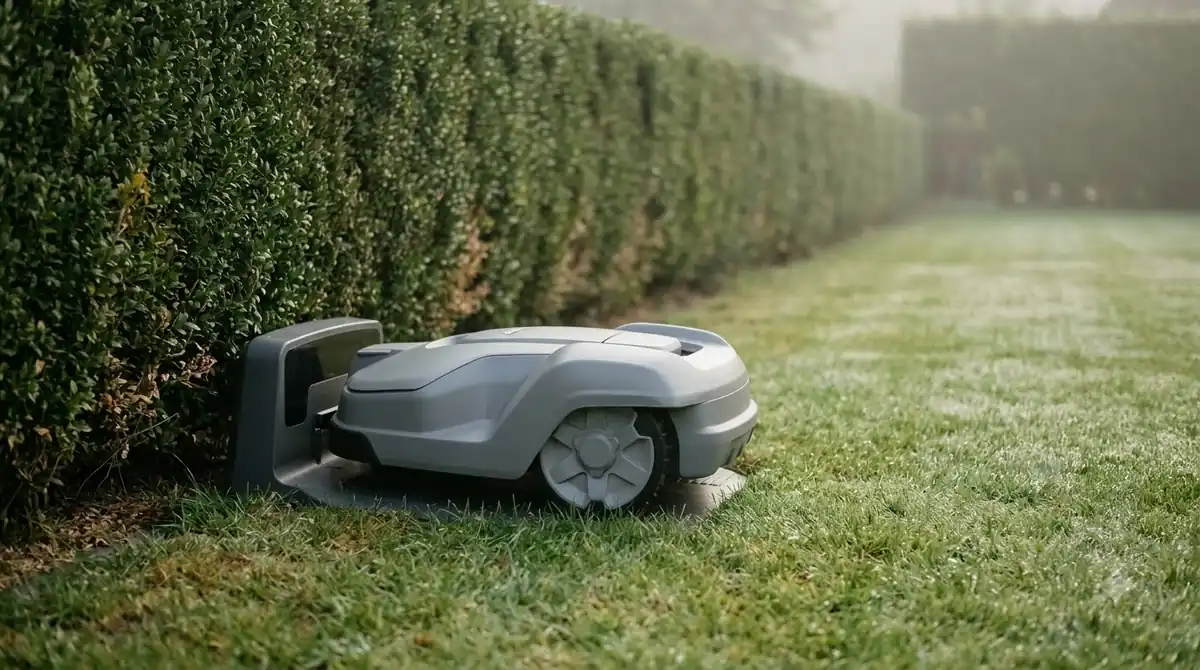
- Tree cover and hedges. RESIDENT says GPS multipath under tree canopy, or near tall hedges or fences, reduces RTK positioning accuracy. Mowrator notes that trees block, weaken and reflect satellite signals.
- Tall structures. Ecovacs says RTK “may lose precision near tall structures” and gives no distance or height limit.
- Shade for LiDAR. Ecovacs’ comparison table calls LiDAR “unaffected by shade or structures”, but the same article gives no test condition for that claim.
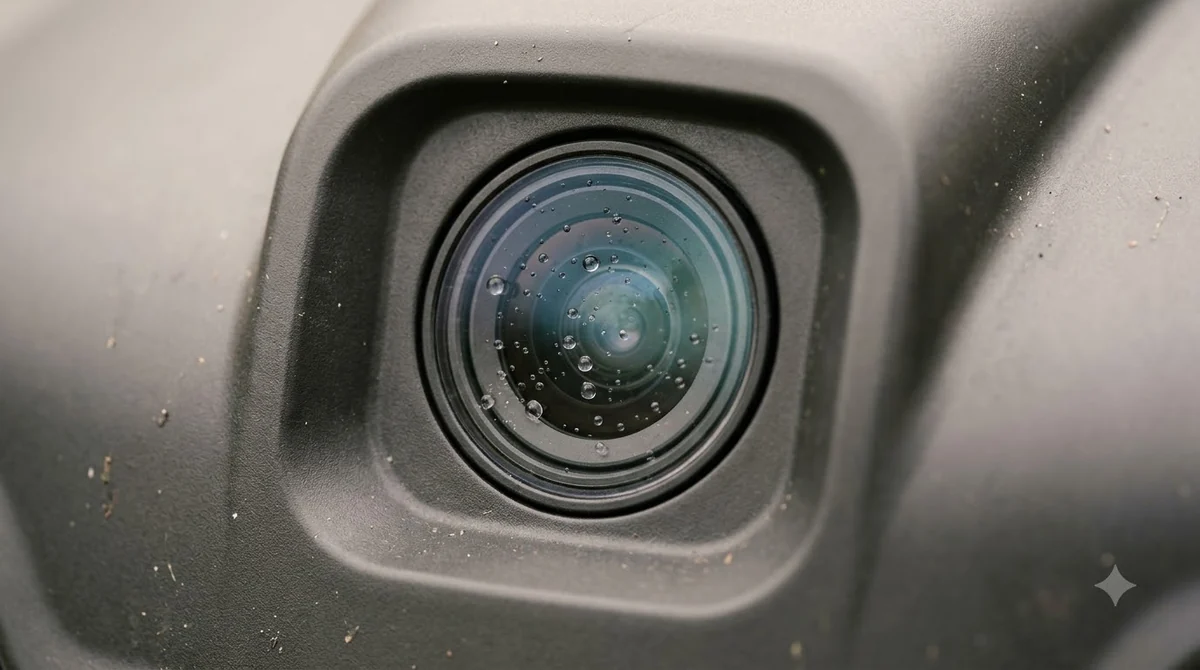
- Fog and heavy rain. Anker says heavy fog, strong rain or water droplets on the sensor may scatter laser pulses, and navigation may become less accurate in poor weather. Ecovacs says fog and heavy rain may scatter and absorb laser beams. Neither gives a visibility or rainfall limit.
- Dirty sensors. Anker says LiDAR sensors still need to stay clean and may need cleaning after rain, mud or dust.
None of the sources reviewed gives a shared accuracy test across brands, and none states an error rate for LiDAR under tree cover. That gap is why the answer to which 3D LiDAR robot mower is the most accurate has to be tested per yard rather than read from a spec sheet.
What to check before you trust a figure
Checking these points saves time and avoids false comparisons. Published figures do not share a method, so the same yard can give different results depending on what the maker tested.
- Units. Convert inches to centimetres before comparing. One inch is 2.54 cm, so 0.8 inch is about 2 cm and 1.18 inches is about 3 cm.
- Test condition. Ask whether the figure was measured in open sky, under trees or near structures. None of the sources above states this.
- Exact model. Match the figure to the model and sensor setup you are buying, not to a product line or a brand name.
- Yard shape. Count trees, hedges, fences and slopes. Anker gives general slope ranges of 25 to 35 percent for common robot mowers and 45 to 80 percent for AWD models, and says these are not specific to LiDAR.
- Maintenance. Plan to clean the sensors after rain, mud or dust, as Anker recommends.
LiDAR or RTK: how to choose
LiDAR suits yards with trees and shade where relative mapping matters most. RTK suits open lawns with a clear view of the sky. The answer to which 3D LiDAR robot mower is the most accurate for you depends on which of these conditions your yard exposes, and each option carries a cost and a limit.
| Factor | LiDAR | RTK |
|---|---|---|
| Global position | Lacks it on its own (Mammotion) | Uses satellites, needs a clear sky (RESIDENT, Mowrator) |
| Trees and shade | Claimed unaffected by shade, no test condition (Ecovacs) | Weakened by tree canopy and tall hedges (RESIDENT) |
| Fog and heavy rain | May scatter laser pulses (Anker, Ecovacs) | Not covered in the sources reviewed |
| Setup | Guided mapping pass, no fixed placement rule (RESIDENT, Ecovacs) | Needs a base station and an open spot (Ecovacs) |
| Cost | Generally more expensive (Anker, Ecovacs) | Generally more budget-friendly (Ecovacs) |
Our reading, which builds on our RTK vs LiDAR comparison, is that a yard with heavy tree cover gives LiDAR the stronger practical case, but only a test in that yard settles it. For a large open lawn, the satellite option (see which satellite navigation robot mower is the most accurate) may be the simpler choice, since it needs no mapping pass and its accuracy depends mainly on sky view. For that kind of yard, how much sky the lawn can see matters more than any accuracy ranking.
Choose by your yard rather than by a headline number. If your lawn has heavy tree cover or long hedges, ask the seller for test conditions in that setting before you decide which 3D LiDAR robot mower is the most accurate for you. Running a candidate through a full mowing season will tell you more than any published figure. For models that suit LiDAR, see our LiDAR robot lawn mower guide.

Frequently asked questions
Has an independent test named the most accurate 3D LiDAR robot mower?
No independent test shows which 3D LiDAR robot mower is the most accurate, and no head-to-head test ranking 3D LiDAR mowers by accuracy was found. The figures come from manufacturers and retailers, so treat them as claims until a test under known conditions is published.
Does a LiDAR mower cost more than an RTK model?
Anker and Ecovacs both say LiDAR mowers are generally more expensive than RTK models. Neither gives a price, so compare current listings from the seller before you decide.
Can a LiDAR mower work at night?
Anker says LiDAR does not rely on ambient light, so it can work in shade, at dusk or at night. Ecovacs says its LiDAR performs reliably in complete darkness. Both are manufacturer statements, not independent results.
Do LiDAR sensors need cleaning?
Yes. Anker says LiDAR sensors still need to stay clean and may need cleaning after rain, mud or dust. Dirt on the sensor can affect how well the mower reads its surroundings.
Sources
- Ecovacs, LiDAR vs RTK robot lawn mowers (manufacturer): vendor accuracy figures, coverage footnote, weather, shade and cost statements.
- Anker, LiDAR robot lawn mower guide (manufacturer): sensor cleaning, fog and rain limits, slope ranges and cost.
- Mammotion, AI vision vs RTK vs LiDAR (manufacturer): RTK 1 to 2 cm claim and LiDAR relative accuracy.
- Sunseeker, RTK vs LiDAR robot lawn mowers (manufacturer): RTK within 1 to 3 cm claim.
- RESIDENT, LiDAR in robot lawn mowers (editorial): mapping pass, RTK under tree canopy, and a 3 cm claim without test data.
- Mowrator, RTK signal loss under trees (vendor): trees block, weaken and reflect satellite signals.
 Up next9 min readBest Robot MowersBest LiDAR Robot Mower Under $1500: What the Spec Sheets ShowUpdated Nov 16, 2026
 8 min readBest Robot MowersWhich 4G Cellular Robot Mower Is the Most Accurate?Updated Nov 12, 2026
 8 min readBest Robot MowersWhich Vision AI Camera Robot Mower Is the Most Accurate?Updated Nov 14, 2026
 7 min readBest Robot MowersWhich 4-Wheel Drive Robot Mower Is the Most Accurate?Updated Nov 14, 2026
 7 min readBest Robot MowersWhich Satellite Navigation Robot Mower Is the Most Accurate?Updated Nov 13, 2026
 7 min readBest Robot MowersWhich No Base Station Robot Mower Is the Most Accurate?Updated Nov 18, 2026