
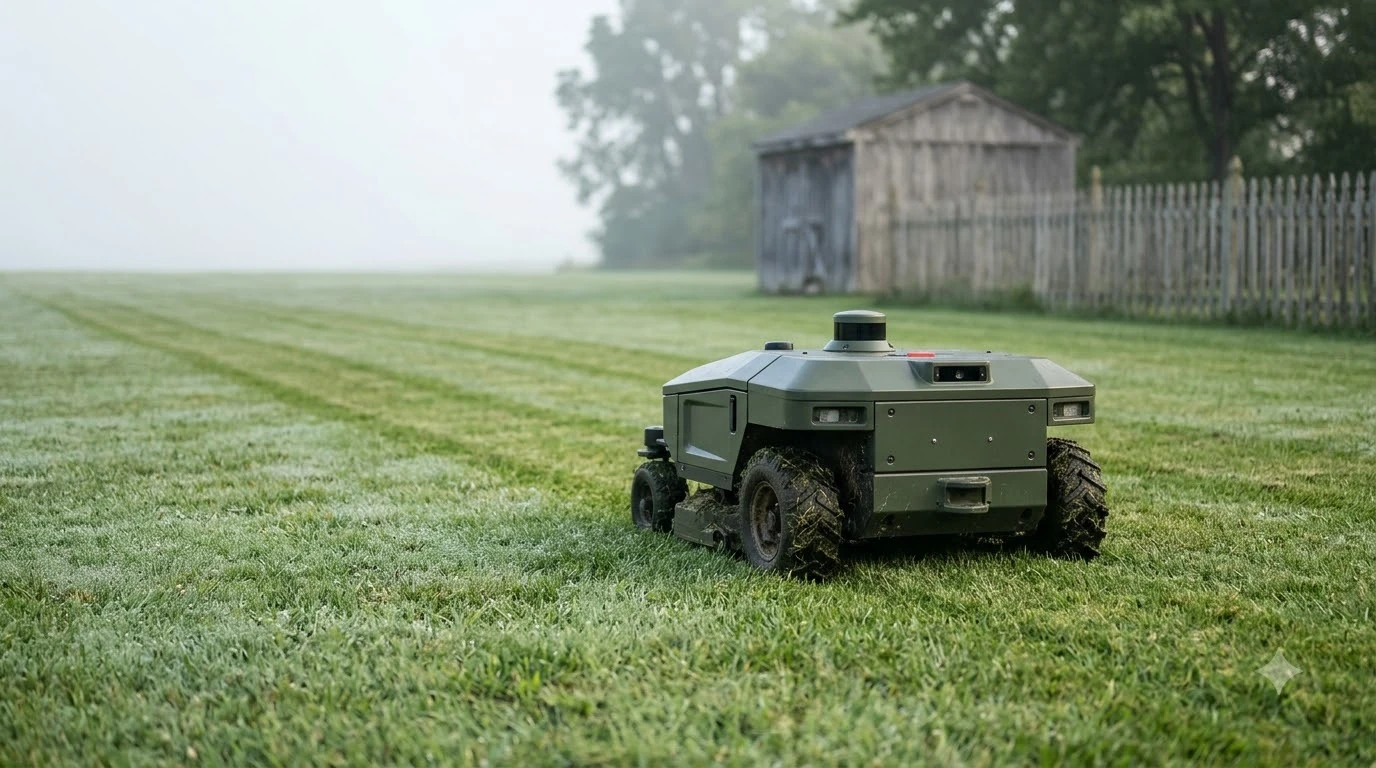

No single model is the best LiDAR robot mower under $1500 for every yard, so start with the spec sheet. Three LiDAR models read for this guide list rated areas of 1,012 and 1,497 square meters, with 45 percent work-area slope ratings, as of November 2026.
This guide does not rank models. It explains which numbers decide the fit, where spec sheets and real lawns disagree, and why the price band moves.
The short answer
- Coverage: keep 20 to 30 percent headroom above your mowing area, the margin Dreame advises for its robot mowers.
- Slope: the three models list 45 percent work-area ratings, but check the separate boundary rating too.
- Setup: LiDAR needs no perimeter wire, but it still needs a mapping walk and clear space at the dock.
- Price: confirm the current price and any subscription on the seller’s page, because the band moves.
How the three LiDAR spec sheets compare
The three LiDAR models read for this guide share a 45 percent work-area slope rating and an 8 to 8.66 inch cutting width. Rated area is where they differ, with the MOVA at 1,012 square meters and the Navimow i215 at 1,497. The table shows each figure as printed on its source.
| Spec | ECOVACS GOAT O1000 LiDAR PRO | MOVA LiDAX Ultra 1000 | Navimow i215 LiDAR |
|---|---|---|---|
| Rated area | No acreage limit stated | 0.25 acre (1,012 m2) | 0.37 acre (1,497 m2) |
| Work-area slope | 45% (24 degrees) | 45% | 45% |
| Cutting width | 8.66 in | 8 in | 8.66 in |
| Cutting height | 1.2 to 3.1 in (page text) | 1.2 to 3.9 in | 2 to 4 in |
| Navigation | Multiline LiDAR, 3D ToF and AI camera | 360 3D LiDAR and AI vision, RTK-free | LiDAR and vision, no perimeter wire, no RTK antenna |
| Battery and charge | 18 V, 90 min mowing, 70 min charge | 150 min charge | 160 min runtime, 130 min charge |
| Weight | 28.66 lb | 30 lb | 32.4 lb |
| Water rating | IPX6 | IPX6 | IP66 |
| Warranty | Not stated on the page | 3 years (retailer listing) | 3 years |
The ECOVACS column comes from its O1000 LiDAR PRO page, which gives no acreage limit. The MOVA and Navimow columns come from Smart Home Compared, which quotes maker figures. For more on those two models, see our Navimow i215 LiDAR review and ECOVACS GOAT O1000 LiDAR PRO review. Read the rated area as a ceiling, not a target. Dreame’s guide says homeowners often overestimate their mowing area by 20 to 40 percent, and that real coverage can fall 20 to 30 percent near trees, slopes, boundaries and wet grass.
Sunseeker advises at least 20 percent more rated area than the calculated lawn, and Dreame advises 20 to 30 percent. Our reading: a MOVA rated at 0.25 acre has no headroom at all for a lawn of that size, so a quarter-acre yard needs a mower rated above it.
Slopes: the 45 percent figure is for the work area
All three models list a 45 percent work-area slope rating, which ECOVACS gives as 24 degrees. ECOVACS lists a separate 17 percent limit for its virtual boundary, and that matters where the mower turns at the edge of a hill. Sunseeker’s guide also separates two ratings, one for the working area and one at the boundary, but gives no numbers for either.
Drive type is a separate question. Dreame advises ruling out two-wheel drive if any section of the lawn is steeper than about 35 percent, and notes that two-wheel models can slip on wet grass, without giving a figure. Sunseeker advises all-wheel drive above 30 percent. Smart Home Compared, summarizing Navimow’s maker page, lists the i215 as rear-wheel drive only.
Our reading: check the steepest section of your lawn, not the average slope, and check the boundary figure as well as the work-area figure.
Setup without a wire: the mapping pass and dock space
LiDAR models skip the boundary wire, but the Navimow i215 needed more than 50 percent battery before it could map, according to a PCWorld review. The same reviewer said two firmware updates added about 20 minutes. Dreame puts LiDAR setup at 15 to 30 minutes, compared with 2 to 3 hours of digging for a boundary wire.
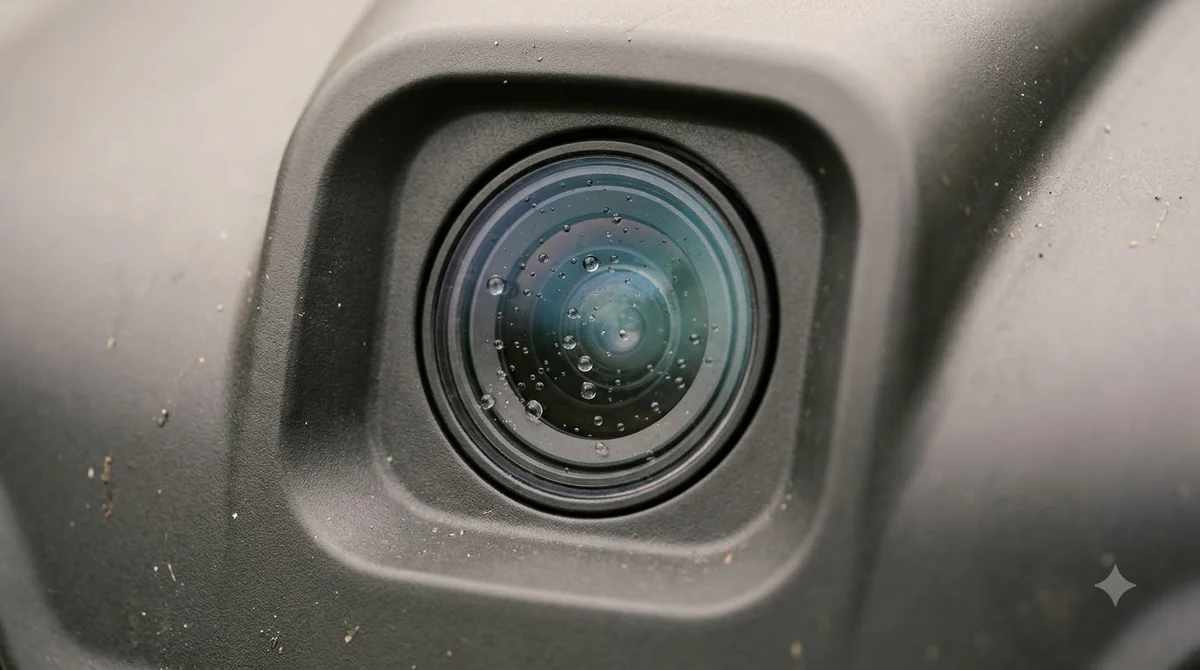
The mapping is a guided pass, and our guide on how to calibrate a LiDAR robot mower covers the follow-up. According to a Resident explainer, the sensor sends laser pulses to build a 3D map, and a guided pass around the perimeter records the edge and fixed obstacles. Virtual no-go zones are then set in the app.
Plan for the dock too. PCWorld recorded about 6.6 feet of clear space in front of the Navimow i215 dock and 1.6 feet on each side. Our reading: measure that space before you buy, because a spec sheet rarely shows it.
Where a spec sheet and a real lawn can disagree
A PCWorld reviewer’s hands-on test found the Navimow i215 slipping off the grass a couple of times in a narrow strip between a raised grass edge and a fence. The test lawn measured about 7,645 square feet, with slopes, trees, shade, mulch and a fence. Navimow confirmed the unit has no dedicated cliff sensor.
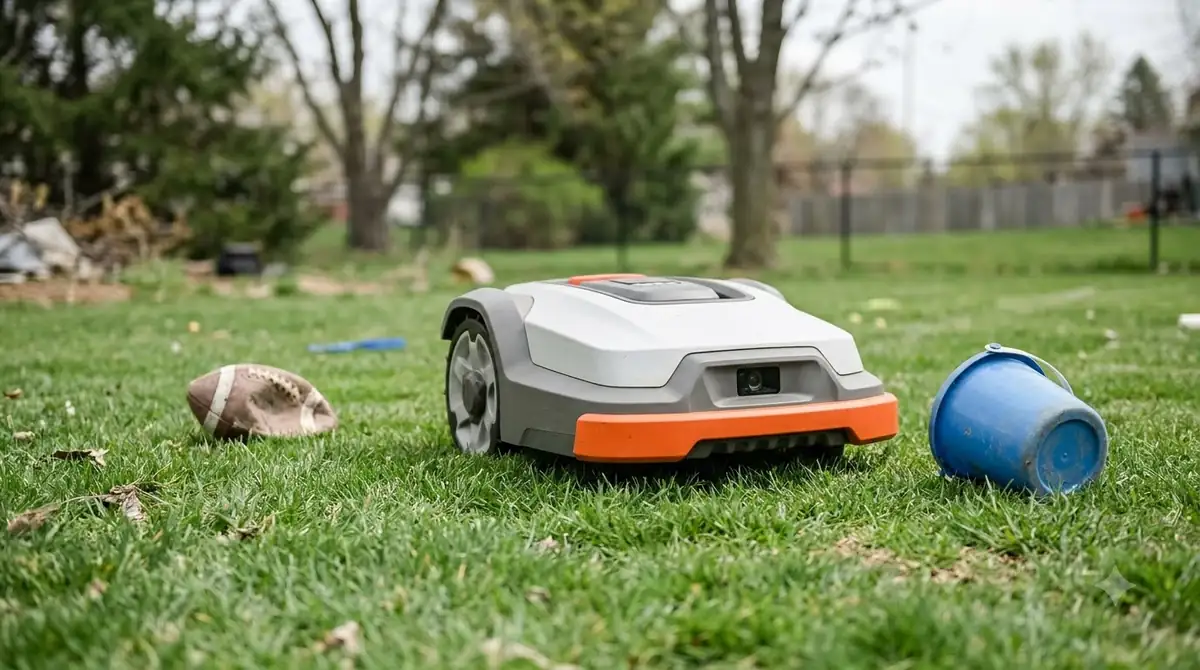
The maker’s own cons list, as quoted by Smart Home Compared, is useful too. It names low curbs, gravel and mulch that can stop the mower, and wide turns around obstacles. Weather is another limit. ECOVACS says fog and heavy rain may scatter and absorb laser beams, so LiDAR accuracy can drop in those conditions.
On trees, Mammotion says its LiDAR performs in shade and under tree cover. That is a brand claim. No independent test in the sources read for this guide compares LiDAR and RTK under a canopy, so treat the claim as something to check on your own lawn during the return window. Our RTK vs LiDAR comparison covers the other side of that choice.
The price band moves, so check the price on the day
One review reported the Navimow i215 LiDAR at $1,599, just above the $1,500 line, so a model can sit on either side of the band depending on the day.
The two buying guides also draw the bands differently. Sunseeker puts its entry tier at $800 to $1,500 and its mid tier at $1,500 to $2,800, while Dreame puts entry at $500 to $1,000 and mid at $1,000 to $2,000. Both are USD figures from the guides as read, not current prices. For a wider look at the same budget across all navigation types, see our best robot lawn mower under $1500 guide. The best LiDAR robot mower under $1500 on your shortlist can move in or out of the band with a single price change.
At the top of the range, the GOAT A3000 LiDAR PRO page lists a base price of $2,499.99, but the page shows no date. Our reading: treat every price in this guide as a check to repeat, not a fixed number, and confirm it on the seller’s page before you compare.
Ongoing costs: subscription, blades, battery and warranty
The Navimow Connect+ 4G service costs $32.90 a year after the first free year, as one review reported, and Dreame puts blade replacement at $20 to $40 per season.
- Subscription: the i215’s monitoring and anti-theft service is free for year one, then $32.90 a year. Check the current terms before you buy.
- Blades: $20 to $40 per season, according to Dreame’s guide.
- Battery: Dreame puts battery replacement at $100 to $300 after 3 to 5 years.
- Warranty: the i215 and the MOVA list 3 years, and the O1000 LiDAR PRO page states none. Sunseeker’s guide describes 2 to 3 years for a mower and 1 to 2 years for a battery as typical.
Lawn service is the comparison most owners make when they weigh the best LiDAR robot mower under $1500 against a monthly bill. Dreame’s buying guide puts a service at $30 to $65 per visit over a 4 to 8 month season, and says most owners recover costs in 2 to 3 seasons. That payback is the vendor’s estimate, so run the numbers with your own quote.
What to check to find the best LiDAR robot mower under $1500
- Rated area. Keep 20 to 30 percent headroom above your mowing area.
- Slope ratings. Check the work-area and boundary figures, then the steepest section of your lawn.
- Drive type. Rule out two-wheel drive if any section is steeper than about 35 percent.
- Dock and setup. Measure about 6.6 feet clear in front of the dock and 1.6 feet on each side, and plan for the mapping pass.
- Subscription. Find out whether monitoring or anti-theft costs a yearly fee after the first year.
- Warranty. Confirm the mower and battery terms separately.
- Current price. Check the price on the seller’s page on the day you buy.

Frequently asked questions
Is the best LiDAR robot mower under $1500 worth it?
It depends on the lawn and on what you pay now, and our guide on whether a LiDAR robot mower is worth it looks at the trade-offs. Dreame’s guide puts a lawn service at $30 to $65 per visit over a 4 to 8 month season and says most owners recover robot costs in 2 to 3 seasons. That payback is the vendor’s estimate, so compare it with your own service quote.
Does LiDAR work under trees?
Mammotion says its LiDAR performs in shade and under tree cover, which is a brand claim. Dreame’s guide notes that real coverage can fall 20 to 30 percent near trees, slopes and boundaries. No independent test in the sources read for this guide compares LiDAR and RTK under a canopy, so check reviews of the exact model you plan to buy.
How long does setup take?
Dreame’s guide puts LiDAR setup at 15 to 30 minutes, against 2 to 3 hours of digging for a boundary wire. In the PCWorld review of the Navimow i215, the reviewer needed more than 50 percent battery before mapping, and two firmware updates added about 20 minutes.
Is there a subscription?
For the Navimow i215, the PCWorld review reported a Connect+ 4G service that is free for the first year and then costs $32.90 a year. Check the current terms on the maker’s site. The MOVA and ECOVACS sources read for this guide did not list a subscription.
Sources
- GOAT O1000 LiDAR PRO (ECOVACS): cutting width, slope, efficiency, battery and noise figures.
- GOAT A3000 LiDAR PRO (ECOVACS): listed base price, undated page, cited as of November 2026.
- MOVA LiDAX Ultra 1000 specs (Smart Home Compared): rated area, slope, cutting height, navigation and warranty.
- Navimow i215 LiDAR specs (Smart Home Compared, quoting the maker): rated area, slope, battery, warranty and listed cons.
- Navimow i215 review (PCWorld): hands-on test, dock clearance, setup, subscription and reported price.
- Robot lawn mower buying guide (Dreame): headroom, coverage loss, setup times, running costs and price tiers.
- How to choose the right robotic mower (Sunseeker): slope ratings, drive threshold, headroom and warranty.
- LiDAR in robot lawn mowers (Resident): how the mapping pass and no-go zones work.
- LiDAR vs RTK for robot lawn mowers (ECOVACS blog): weather limits for laser sensing.
- AI vision vs RTK vs LiDAR (Mammotion blog): shade and tree-cover claim, a brand claim.
 Up next6 min readBest Robot MowersBest Wire-Free Robot Mower Under $1500: What the Spec Sheets ShowUpdated Nov 14, 2026
 7 min readBest Robot MowersRobot Lawn Mower Cyber Monday Deals: Compare the Spec Sheet FirstUpdated Nov 12, 2026
 9 min readBest Robot MowersHow to Read a Robot Mower Spec SheetUpdated Nov 11, 2026
 8 min readBest Robot MowersWhich 3D LiDAR Robot Mower Is the Most Accurate? What the Numbers ShowUpdated Nov 16, 2026
 8 min readBest Robot MowersBest Robot Lawn Mower Under $1500: What to Check FirstUpdated Nov 12, 2026
 7 min readBest Robot MowersWhat to Expect From a Robot Mower Under 1500Updated Nov 11, 2026