
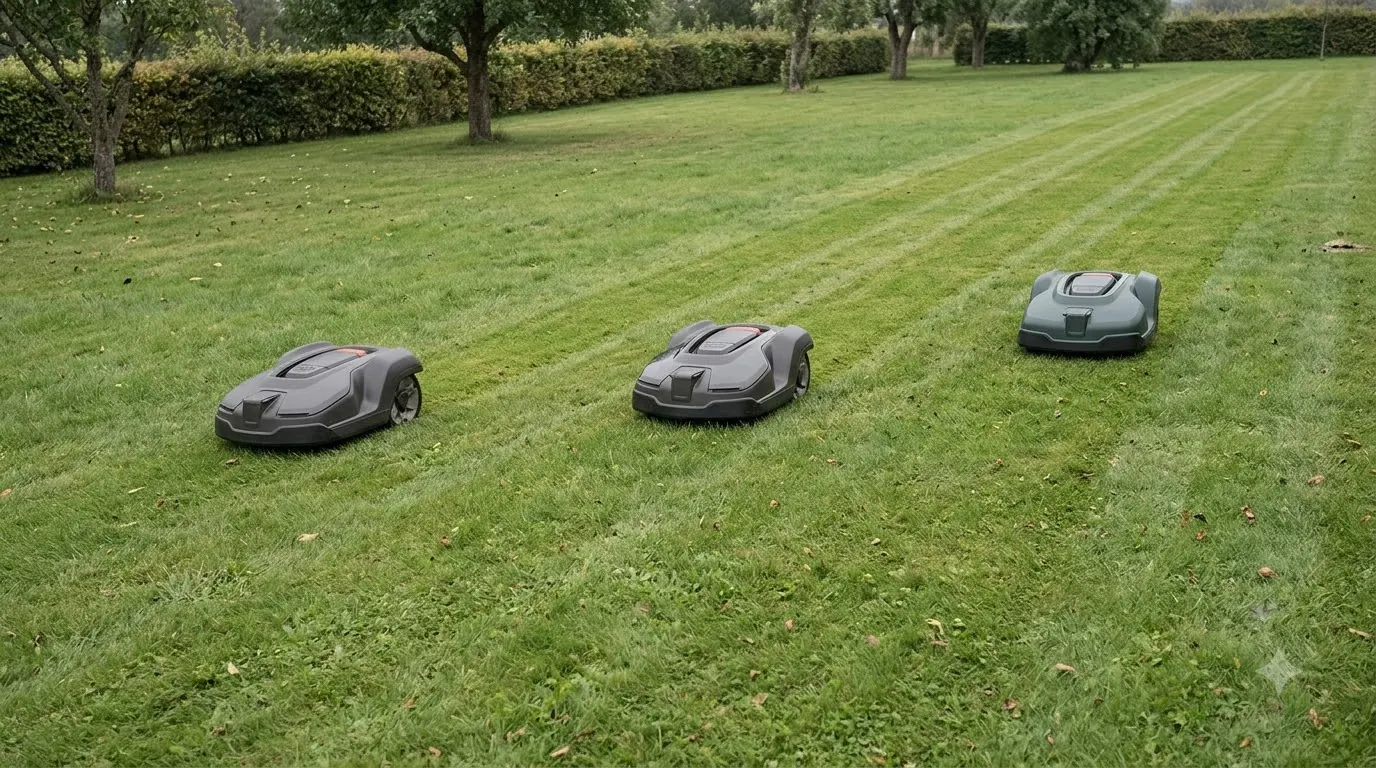

Is a LiDAR robot mower worth it? Usually only when the yard works against satellite positioning, such as tree cover, buildings, tall fences or an irregular shape. On a small, open lawn with clear sky, the extra cost buys less. The answer depends on your yard more than on the brand name, so start with the site before you compare models.
A LiDAR mower uses a laser sensor to map its surroundings instead of relying mainly on satellite signals. The premium is real, and the right choice depends on how your lawn is shaped, what blocks the sky and how much you want to spend. The points below use manufacturer spec pages and one independent explainer, read in November 2026.
The short answer
- Worth it when trees, buildings or fences block the sky and GPS signal weakens.
- Not needed for a simple, open lot where GPS or RTK performs well for less money.
- What you pay for: obstacle mapping, wire-free boundaries and better edge approach, per the sources below.
- Check first: slope rating, coverage area and whether a base station is required.
How a LiDAR robot mower finds its position
A LiDAR mower sends out laser pulses, times how long each one takes to return and builds a 3D picture of the lawn. During setup it makes a guided mapping pass to record the boundary and fixed obstacles such as trees and garden beds, then plans coverage paths from that map.
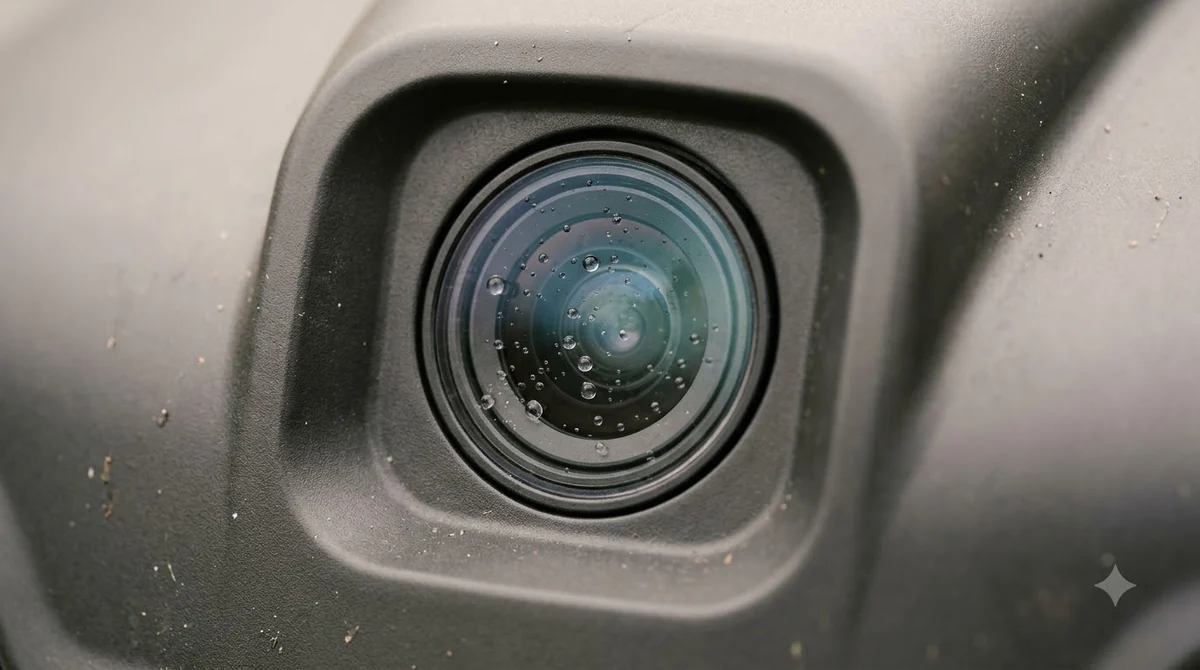
Manufacturers combine LiDAR with other sensors. The Mammotion LUBA 3 AWD uses what it calls Tri-Fusion positioning: a 360-degree LiDAR with a 70-meter detection range, dual AI cameras and NetRTK, a satellite correction service that needs no separate base station. The Ecovacs GOAT A3000 LiDAR PRO pairs a multiline LiDAR with a 3D ToF sensor and an AI camera, and its page lists no boundary wire at all.
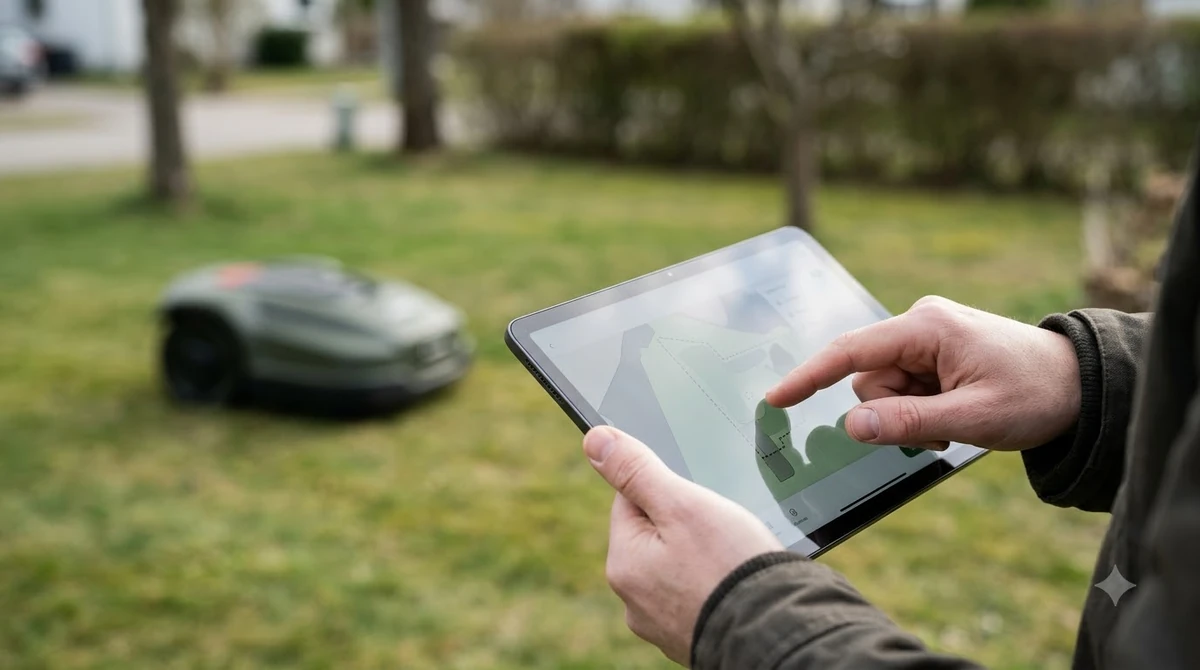
Is a LiDAR robot mower worth it for your yard?
LiDAR earns its premium where satellite signals struggle. GPS accuracy drops under tree cover because signals bounce off leaves and trunks, an effect the explainer calls multipath error. The same article says GPS-only systems leave a 4 to 6 inch gap from fences, while LiDAR can approach within about 1.18 inches (3 cm), according to the article. The author also argues that LiDAR performs about the same under dense canopy as in an open field, which is the central claim behind the premium.
On a heavily shaded lot, is a LiDAR robot mower worth it? The sources point to yes, because the sensor does not depend on a clear view of the sky, and our guide on a LiDAR robot mower for a wooded lot goes deeper on that case.
| Yard condition | LiDAR fit | Why |
|---|---|---|
| Large trees over much of the lawn | Strong | GPS signal weakens under canopy; LiDAR maps the trunks |
| Beds, fences and walls close to the mowing path | Strong | Closer approach to obstacles, per the explainer |
| Irregular shape with many corners | Good | The mapping pass records the real outline |
| Small, open lawn with clear sky | Weak | GPS or RTK usually covers it at lower cost |
When GPS or RTK is enough
For a simple, open property, the explainer says GPS-based navigation performs well and costs less. In that case the LiDAR premium is hard to justify, because there is little for the sensor to solve. A plain layout with a clear view of the sky gives satellite positioning good conditions.
Is a LiDAR robot mower worth it for a moderate yard? NetRTK without LiDAR is the middle option. Mammotion says its NetRTK service connects through its iNavi service and needs no base station or antenna, so the setup is simpler than a traditional RTK kit. This is a manufacturer statement, so check it against your own lawn before you buy. For a fuller comparison of the two approaches, see RTK vs LiDAR: which should you choose.
What the premium buys: specs that matter
The clearest way to judge a LiDAR mower is to compare the numbers on the spec sheet. The table below lists only figures from the manufacturer pages we read in this run. Where a page did not state a value, the cell says so.
| Model | Navigation | Max slope | Cutting height | Boundary wire | Price shown |
|---|---|---|---|---|---|
| Ecovacs GOAT A3000 LiDAR PRO | Multiline LiDAR, 3D ToF, AI camera | 50% (27 deg), work area | 30-90 mm (1.18-3.54 in) | Not required | $2,499.99 base, as of Nov 2026 |
| Mammotion LUBA 3 AWD | 360 deg LiDAR, dual AI cameras, NetRTK | Not stated on page | Not stated on page | Not mentioned | Not shown |
| Mammotion LUBA mini AWD LiDAR | 144-beam LiDAR, 70 m detection, NetRTK | 80% (38.6 deg) | Not stated on page | No buried wires, per page | Not shown |
| Segway Navimow i220 LiDAR Pro | LiDAR | 55% (29 deg) | Not stated on page | Not mentioned | Not shown |
| Segway Navimow i208 LiDAR | LiDAR | 45% (24 deg) | Not stated on page | Not mentioned | Not shown |
Two points stand out. First, the Ecovacs page gives a 50% slope rating for the work area, which is useful if your yard has a hill. Second, the Mammotion page lists a coverage of 1,500 square meters (0.37 acre) for its 1500(H) model. Compare that figure with your measured lawn, not the rounded size you remember. Our reading: the answer to “is a LiDAR robot mower worth it” depends on the premium per usable square foot of lawn, not on the model name. Slope claims also differ in how they are measured, as our explainer on robot mower slope ratings shows.
The Mammotion LUBA mini AWD LiDAR page adds a few more details. It lists a 144-beam LiDAR with a 70-meter detection range, an 80% (38.6 degree) slope rating, a 1,500 square meter garden coverage figure and 150 minutes of continuous operation. It also lists up to 20 mowing zones with no-go areas for features such as pools and flower beds, and cloud backup for up to 10 lawn maps. Those are useful features for a complicated yard, but they are also the parts of the premium you should be able to justify with your own layout.
Navimow’s LiDAR range shows the same pattern. Its i208 LiDAR is listed at 45% (24 degrees), its i220 LiDAR Pro at 55% (29 degrees), and the page groups the i208, i215 and i220 LiDAR models at a recommended lawn size of 800 to 2,000 square meters. The page does not state cutting height ranges or whether a boundary wire is needed, so check those on each model before deciding.
Claims and limits to check before you buy
Some numbers on these pages are vendor claims rather than independent measurements. Mammotion gives a positioning accuracy of plus or minus 1 cm for the LUBA 3 AWD. That is useful as a marketing figure, but it is not an independent test result. The RESIDENT article also comes from a guest writer at a magazine, not a lab, so treat its comparisons as a reasonable explanation rather than measured data.
- Coverage area: match the rated area to your lawn with a margin, not to the minimum.
- Slope: compare the work-area rating with the steepest part of your yard.
- Boundary setup: confirm whether a base station, antenna or wire is required.
- Service costs: ask whether correction service is free or paid over time.
Before you decide if a LiDAR robot mower is worth it, these checks matter more than the sensor name. If you are ready to shortlist, our best LiDAR robot lawn mower guide lists what to check. We did not find independent long-term test data for these specific models in this review, so the best evidence is the manufacturer spec sheet plus a check of your own yard layout.
Frequently asked questions
Is a LiDAR robot mower worth it for a small yard?
Usually not on a small, open lot with a clear view of the sky. The sources suggest the premium is easier to justify as obstacles, tree cover and lawn complexity increase.
Does a LiDAR robot mower need a boundary wire?
Not always. The Ecovacs GOAT A3000 LiDAR PRO page states that no boundary wire is required, because it detects boundaries with its sensors. Check each model’s spec sheet before buying.
Does LiDAR work under trees?
The RESIDENT explainer says LiDAR performs about the same under dense canopy as in an open field, while GPS degrades under trees. Treat this as the article’s claim and confirm with reviews of your own type of yard.
Is RTK still needed with LiDAR?
It depends on the model. Mammotion pairs LiDAR with NetRTK that needs no base station, while other models use LiDAR without a satellite base. Read the navigation line on the spec sheet.
Sources
- Mammotion LUBA 3 AWD product page (manufacturer): Tri-Fusion positioning, NetRTK, +/-1 cm claim, coverage figures.
- ECOVACS GOAT A3000 LiDAR PRO product page (manufacturer): navigation, 50% slope, cutting height, noise, no boundary wire, listed price.
- LiDAR in Robot Lawn Mowers: What It Is and Why It Matters (RESIDENT, May 19, 2026): mapping pass, fence distance, GPS under trees, cost comparison.
- Mammotion LUBA mini AWD LiDAR product page (manufacturer): 144-beam LiDAR, NetRTK, 80% slope, coverage and service claims.
- Segway Navimow i-series specs (manufacturer): LiDAR and LiDAR Pro slope ratings and recommended lawn sizes.
 Up next7 min readLearnAre Robot Lawn Mowers Worth It in 2026? Cost, Time and PaybackUpdated Nov 13, 2026
 7 min readLearnHow Does LiDAR Work on a Robot Mower?Updated Nov 14, 2026
 7 min readLearnDreame Robot Mower LiDAR Error: What It Means and How to Fix ItUpdated Nov 11, 2026
 9 min readLearnRTK vs LiDAR: Which Should You Choose for Your Robot Mower?Updated Nov 11, 2026
 8 min readLearnAre Robot Mowers Worth It for Large Yards?Updated Nov 11, 2026
 10 min readLearnAre Robot Mowers Worth It for Seniors? 5 Simple ChecksUpdated Nov 11, 2026