
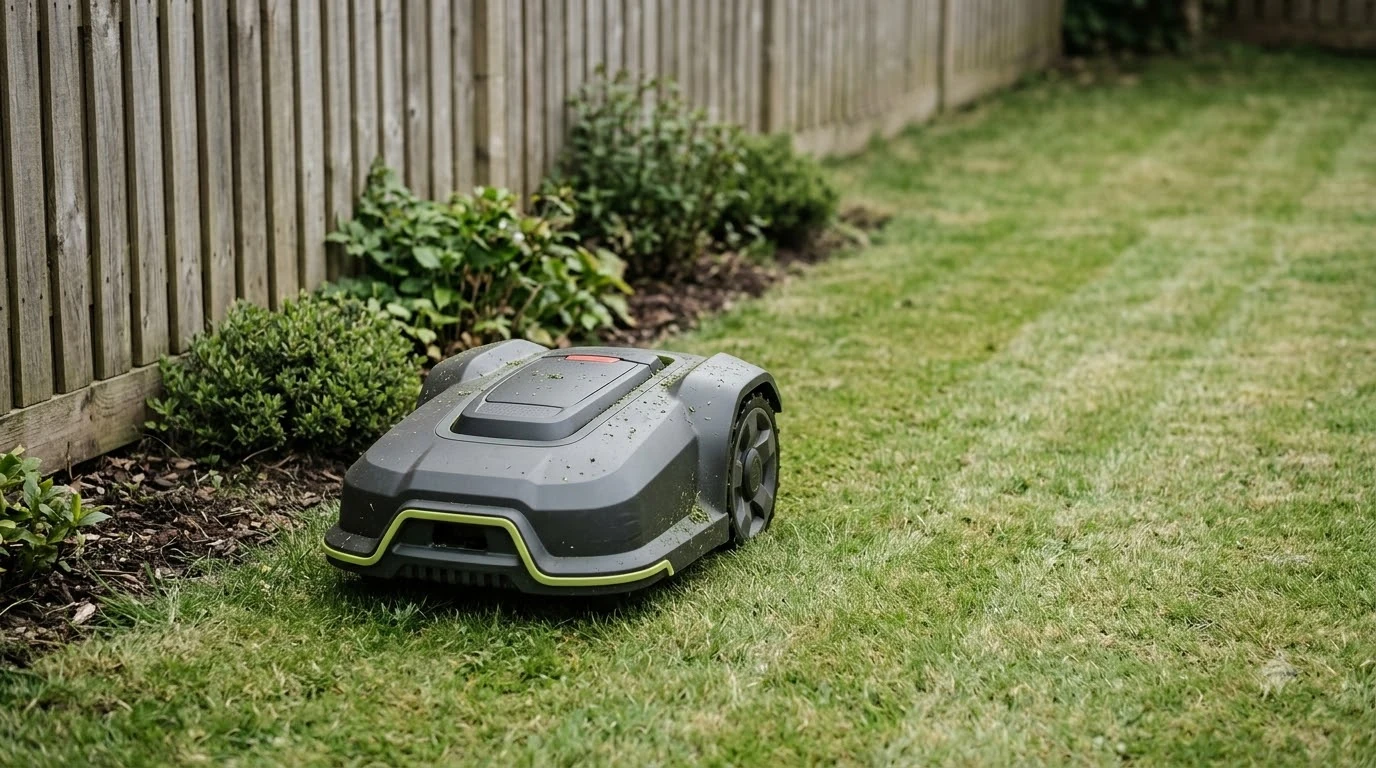

Are robot mowers better for the environment? For most yards, yes. A robot mower burns no gasoline and emits no exhaust while it cuts, which a gas mower cannot match. The size of the gain depends on your local electricity mix, how long the battery lasts, and how the old battery is disposed of.
The short answer
- Gas mowers burn fuel on every pass. EPA puts CO2 at 8,887 grams for each gallon of gasoline burned.
- Robot mowers run on electricity, so their footprint follows the grid. US utility generation averaged 0.81 pounds of CO2 per kWh in 2023.
- Batteries are the weak spot. Husqvarna says robot mower batteries last about 2 to 4 years on average.
- Disposal matters. EPA says used lithium-ion batteries should not go in household trash or recycling bins.
What a gas mower puts into the air
A gas mower burns gasoline on every pass, and EPA puts the CO2 from one gallon of burned gasoline at 8,887 grams. The engine also emits pollutants that are not CO2, including hydrocarbons and nitrogen oxides that form smog. The total for your yard depends on how many gallons the mower burns in a season, which depends on lawn size, mowing frequency, and engine efficiency. No single number fits every lawn, but the principle is simple: a mower that burns no fuel produces no engine exhaust.
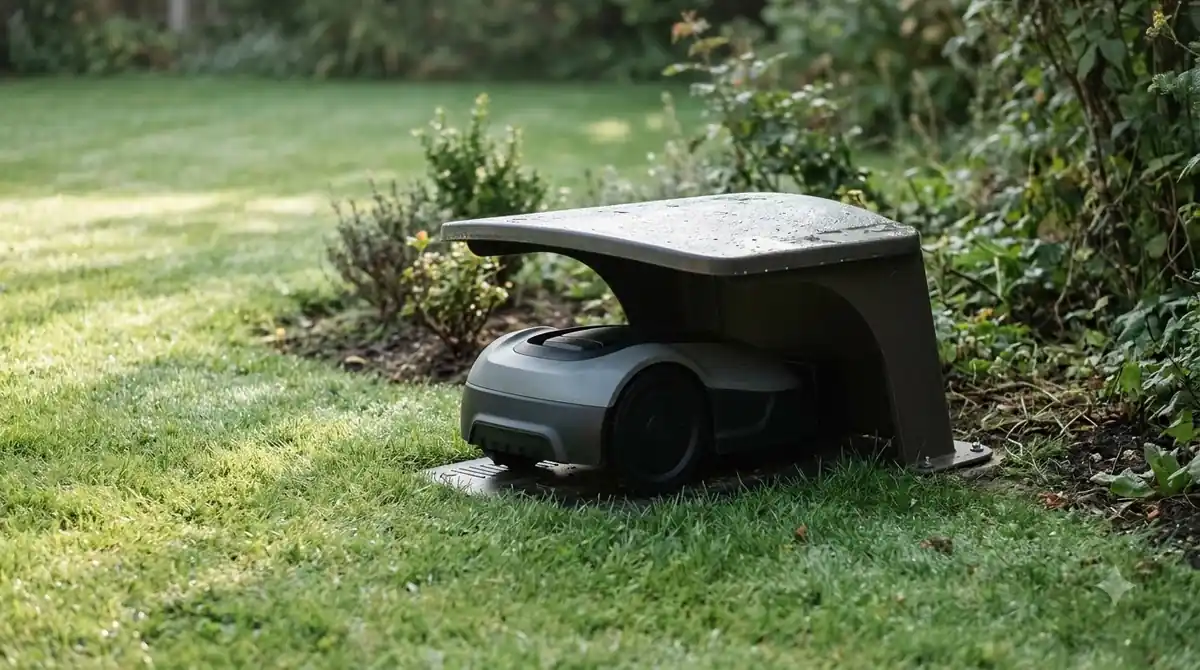
The exhaust from a small engine is the most direct environmental cost of mowing with gas. Robot mowers avoid it entirely on the lawn. So are robot mowers better for the environment on exhaust alone? Our reading is yes, and it is the clearest advantage a robot mower has over a gas model, one that holds regardless of the local grid.
Why regulators targeted small gas engines
EPA has tightened emission rules for small gas engines because they add up across millions of machines. In a 1999 release, EPA said small spark-ignition engines produce about one tenth of the nation’s mobile source hydrocarbon emissions. Its 2008 rule covered lawn and garden equipment of 25 horsepower or less starting in 2011, with an additional 35 percent cut in hydrocarbon and nitrogen oxide emissions and a 45 percent cut in fuel evaporative emissions.
EPA expected those standards to save about 190 million gallons of gasoline a year. Our reading is that the rules apply to newly built engines, so the older gas mowers still running in many garages and sheds were not affected. If you are comparing your current gas mower with a robot mower, the newer engine standards do not change the emissions from your existing machine.
What powers a robot mower
A robot mower uses electricity from your home, so its footprint tracks how that electricity is made. EIA’s 2023 figures show that the grid average is far lower than coal-fired power, and the mix matters. Are robot mowers better for the environment on a coal-heavy grid? Less clearly. Our reading is that a robot mower charged on a cleaner grid has a smaller footprint than one charged on a coal-heavy grid, even though the mower itself uses the same amount of energy. For a sense of scale, see our guide to robot mower electricity cost.
| Source of electricity (US, 2023) | Pounds of CO2 per kWh |
|---|---|
| All utility-scale sources (average) | 0.81 |
| Coal | 2.31 |
| Natural gas | 0.96 |
| Petroleum | 2.46 |
EIA notes that CO2 per kWh varies with the fuel sources in use at any given time. That means the same robot mower can have a different footprint in a region that burns mostly coal than in one that uses more hydro, wind, or solar.
Heads up
The sources reviewed for this guide do not give a kWh figure for a specific robot mower, so the footprint of one machine cannot be calculated from them. Check the battery capacity and the manufacturer’s stated charging energy if you want to estimate it for your own lawn.
Battery life and replacement
Husqvarna says robot mower batteries last about 2 to 4 years on average. Each replacement means building another battery, so a shorter battery life adds to the environmental cost of the machine. Are robot mowers better for the environment once battery replacement is counted? The gap narrows, because every replacement battery carries the materials and manufacturing footprint of the first one. Our guide to robot mower lifespan covers how long the whole machine tends to last.
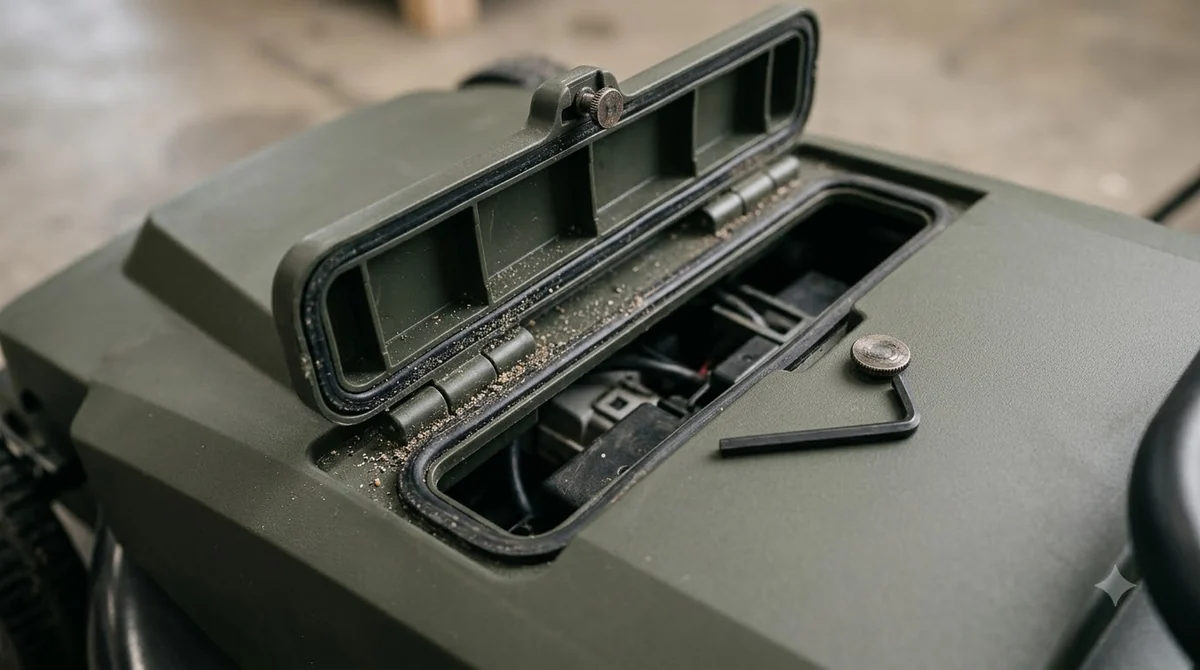
Husqvarna ties battery life to how the mower is used: the lifetime depends largely on the running time it is set to and on lawn size, and it puts the time spent searching for the dock at about 5 percent at most. Our reading is that the easiest way to protect the battery is a running schedule that fits the lawn instead of mowing longer than needed. If a pack seems to be fading early, see how to tell if a robot mower battery is failing.
These are our own practical tips for going easy on the battery, not a list from Husqvarna.
- Match the schedule to the lawn. Run the mower only as long as the grass needs, and shorten the schedule when growth slows.
- Keep the deck and wheels clean. Built-up grass and dirt add drag, so a clean mower should need less effort.
- Sharpen or replace the blades. Sharp blades should cut with less strain on the motor.
- Place the charging station where the mower can reach it easily, so search time stays short.
Manufacturing and lifecycle claims
Husqvarna’s life cycle assessment claims that its CEORA 546 EPOS battery mower has an 83 percent lower impact than a P525DX diesel ride-on mower over the full product life. The assessment covers materials, transport, manufacturing, use, and end-of-life, which is a broader view than fuel use alone. The comparison uses a functional unit of cutting two football pitches, about 16,000 square meters, over a 30-week season, with EU grid electricity for the battery mower and standard diesel for the ride-on.
Those assumptions shape the result. The comparison machine is a diesel ride-on, not the gas walk-behind most homeowners own, and the figure comes from the manufacturer. The published text does not give kilograms of CO2e, so it is hard to translate the percentage into a number for your yard. Independent lifecycle figures for a typical home robot mower were not in the sources reviewed for this guide.
Batteries at end of life
EPA says used lithium-ion batteries should not go in household garbage or municipal recycling bins. They should go to separate recycling or household hazardous waste collection points, and taping the terminals or bagging each battery separately is aimed at preventing fires. If a pack is swollen, read what to do if a robot mower battery is swollen before you move it.
- Check the manufacturer’s guidance for the battery model and any take-back option.
- Ask the dealer or maker whether they take back old packs. Husqvarna’s battery guide, for one, gives no recycling advice.
- Protect the terminals. Tape them or place the battery in a separate plastic bag before you drop it off.
Where a robot mower is not the greener choice
A manual push mower may have the smallest footprint of all, according to a consumer journalism article that discussed robot mower emissions. That article also said robot mowers are not carbon-neutral. The point is fair: a robot mower still depends on electricity and a battery, so it is not zero impact.
Our reading is that the advantage of a robot mower is strongest for a medium or large lawn that you would otherwise cut with a gas machine every week. Are robot mowers better for the environment for every lawn? No. For a small, flat lawn that a push mower handles in less time than it takes to set up a schedule, the manual option can be the better environmental choice. The answer changes with lawn size and how often you would mow; our robot mower vs push mower comparison covers the trade-offs.
Are robot mowers better for the environment? How to check one model
Most manufacturers do not publish a full footprint for each model, so you have to read the details yourself. To judge whether one model answers “are robot mowers better for the environment” for your yard, start with the battery, because it sets the replacement schedule. Then look for the lifecycle claims and check their assumptions. The four checks below cover most of what the public sources can tell you.
- Read the battery warranty. Look for the warranty length and whether the battery can be replaced separately.
- Look for a lifecycle assessment. Check the lawn size, season length, and comparison machine it uses.
- Find the disposal instructions. Confirm where the battery goes at end of life before you buy.
- Size the mower to the lawn. A mower sized for your yard runs fewer hours and wears its battery more slowly.
Frequently asked questions
Do robot mowers produce any emissions?
A robot mower produces no exhaust while it cuts, because it runs on a battery. Its footprint comes from the electricity used to charge it and from manufacturing the machine and battery.
Is a push mower better for the environment than a robot mower?
For a small lawn, a manual push mower may have the smallest footprint, according to a consumer journalism article. A robot mower still needs electricity and batteries, so it is not zero impact.
How much CO2 does a gas mower produce in a season?
EPA puts CO2 at 8,887 grams for each gallon of gasoline burned. Your season total depends on how many gallons the mower burns, which varies with lawn size and mowing frequency. The sources reviewed here do not give a typical figure for a home lawn.
Can I throw away a robot mower battery in the trash?
No. EPA says used lithium-ion batteries should not go in household garbage or recycling bins. Take them to a separate recycling or household hazardous waste collection point, and tape the terminals first.
Sources
- EPA Green Vehicle Guide (EPA): CO2 per gallon of gasoline burned.
- EIA carbon dioxide emissions FAQ (EIA): 2023 US electricity CO2 per kWh by fuel.
- EPA release on the lawn and garden equipment rule (EPA, archived): 2011 start, 35 and 45 percent cuts, 190 million gallons a year.
- EPA release on small engine emissions (EPA, archived, 1999): share of mobile source hydrocarbons.
- EPA guidance on used lithium-ion batteries (EPA): disposal and fire prevention.
- Husqvarna life cycle assessment (Husqvarna, manufacturer): the 83 percent claim and its assumptions.
- Husqvarna battery life guide (Husqvarna, manufacturer): 2 to 4 year average and factors that affect battery life.
- Inverse on robot lawnmowers and the environment (Inverse): push mower and carbon-neutral comments.
 Up next7 min readLearnAre Robot Lawn Mowers Safe? What Sensors Do and Don’t CoverUpdated Nov 13, 2026
 7 min readLearnAre Robot Lawn Mowers Worth It in 2026? Cost, Time and PaybackUpdated Nov 13, 2026
 6 min readLearnAre Robot Mowers Allowed in HOA Communities?Updated Nov 13, 2026
 7 min readLearnAre Robot Mowers Safe at Night for Wildlife?Updated Nov 11, 2026
 8 min readLearnAre Robot Mowers Expensive to Repair? What to ExpectUpdated Nov 11, 2026
 9 min readLearnAre Robot Mowers Tax Deductible for Rental Property?Updated Nov 11, 2026