
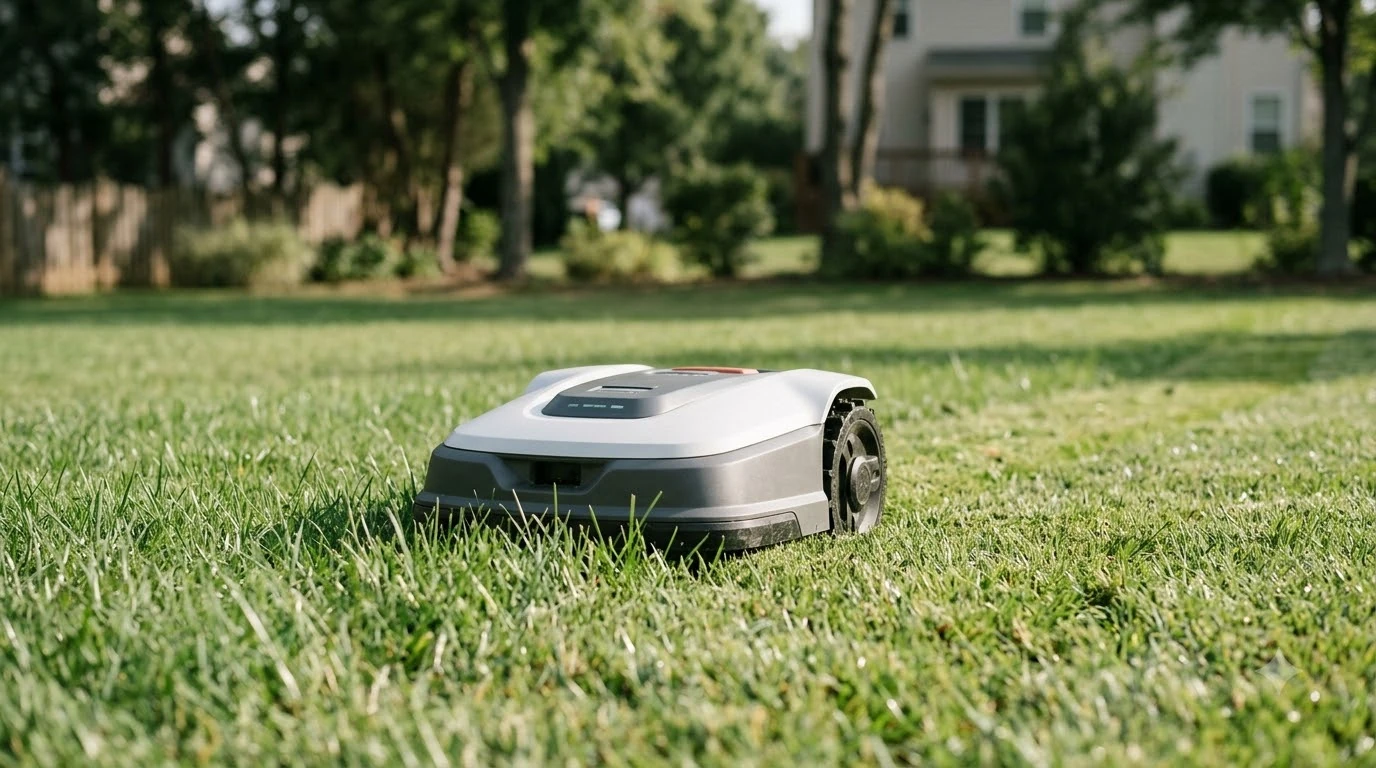

Can a robot mower run after applying lime to the lawn? Yes, but not right away. The University of Maine Extension advises waiting until the lime has been incorporated into the soil before using the yard, and lime dust should not be stirred up while it still sits on the grass. No university extension page found in our reading gives a fixed number of days for a robot mower, so the safe approach is to wait for incorporation or a good rain, then check the lawn before the first mow.
The short answer
- Wait until the lime is incorporated into the soil or a good rain has washed it in.
- Check the lawn for loose pellets or white dust before the mower goes out.
- Keep the robot off freshly limed turf that is wet, muddy, or frost-covered.
- Do not rely on a fixed day count. The extension pages in our reading do not give one.
What lime does to the lawn
Lime is mostly used to raise soil pH. The University of Maryland Extension states that if the soil pH measures below 5.5, lime should be applied to make the soil less acidic. Because the change happens in the soil rather than on the grass, the timing of the mower matters less than the timing of the lime itself. The soil test is the best guide to whether a lawn needs lime at all, and the lab usually gives a rate in pounds per 1,000 square feet.
Because the right rate depends on the test, guessing the amount is a poor plan. Applying the amount the lab recommends, spread evenly, also means fewer loose pellets for the mower to scatter later. So the real question, can a robot mower run after applying lime to the lawn, is about timing rather than soil chemistry.
Why a robot mower is different from a push mower
When a robot mower runs after applying lime to the lawn, timing is the main issue. It runs on its own schedule. It may cut in the early morning or late afternoon, often without anyone watching it. That means it can drive over lime pellets or powder that have not yet been watered in or washed off the blades. A push mower is usually run by a person who can see a fresh spread and wait. A robot does not know the lime is there unless the schedule is paused.
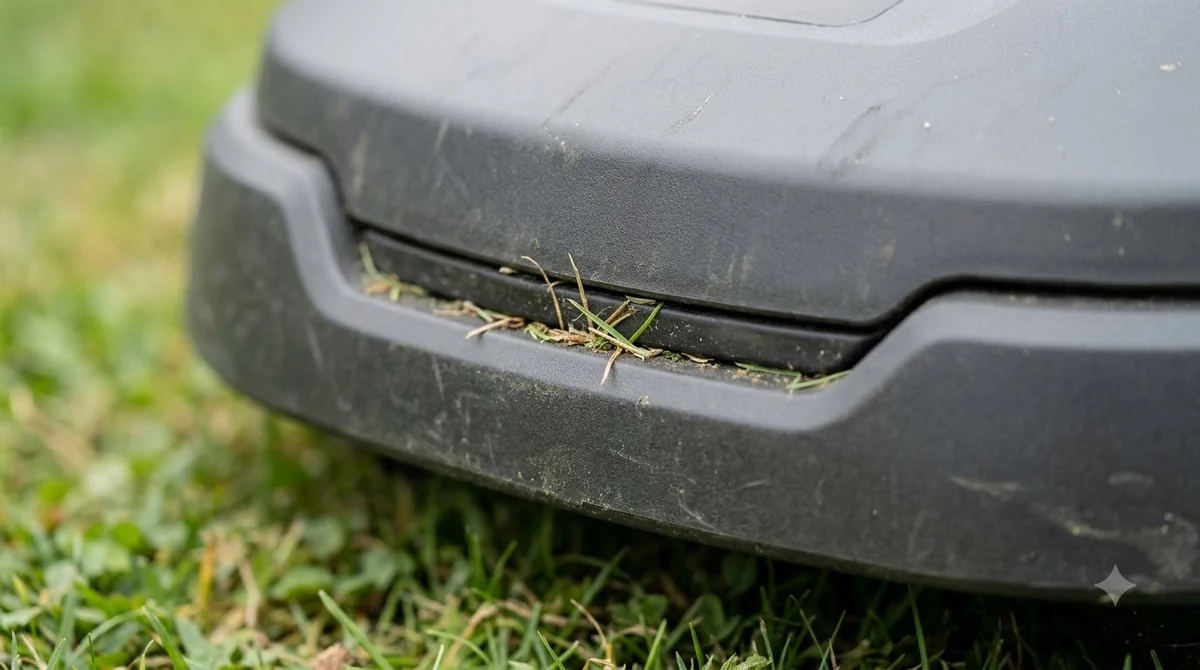
This is our reading, not a claim from an extension page. We found no robot-mower-specific source on lime. The main risks are practical: pellets and dust getting thrown or tracked around the yard, and lime caked onto the cutting deck and the bumper where grass clippings collect. Clean the deck and wheels after the first run on a limed lawn, and see our guide to whether robot lawn mowers can mow in the rain for wet-turf limits.
Can a robot mower run after applying lime to the lawn? How long to wait
The most useful extension guidance is about incorporation rather than days. The University of Maine Extension advises that you should wait until the application of lime has been incorporated into the soil before using your yard. It also notes that some people prefer to wait until after a good rain, which lets the lime dissolve into the ground. Maine does not give a waiting period in days, and the page does not mention watering the lime in.
Commercial lawn blogs give a range of answers on days and watering, and those numbers are not from an extension service, so we do not use them as rules here. In practice, can a robot mower run after applying lime to the lawn once the pellets are gone? Our reading is yes: wait until the pellets are no longer visible on the grass, let a rain or light watering settle the lime, and then run the robot on a normal schedule.
- Dry, visible pellets: pause the mower until they are gone or washed in.
- Light rain or irrigation: this helps the lime move into the soil and off the blades.
- Soft or wet turf: skip the mow, since the robot can rut the ground and smear the lime.
Lime dust and safety for people and pets after you apply lime to the lawn
Lime dust is the most concrete hazard in the extension material we read. The University of Maine Extension states that all types of lime dust can irritate the lungs, eyes and skin. That matters for a robot mower because it can stir up dust from a dry, freshly limed lawn while nobody is standing near it.
Keep children and pets off the lawn until the lime is incorporated. Wash hands after handling bags. Our reading, not an extension rule, is to keep the robot’s schedule paused on dry, windy days after a spread, and to sweep loose pellets away from the charging dock so the contacts stay clear.
When to lime: season and split rates
Lime can go on at almost any time of year, but the University of Maryland Extension says the ideal season is autumn. The same extension page says not to apply lime on top of snow- or frost-covered turf, and it notes that the freezing and thawing of soil over winter helps incorporate the lime into the ground. A late-autumn application on bare, dry grass is one way to fit the lime into the season, provided the ground is not frozen or covered with snow.
Application rate also affects the wait. The University of Maryland Extension states that if more than 50 pounds of lime per 1,000 square feet are needed, the amount should be split into two applications. A split plan means the robot will face a second limed lawn later, so it is worth repeating the same checks each time. The same pause-and-check habit applies after other lawn work, as in should a robot mower run after aeration.
Lime and fertilizer timing
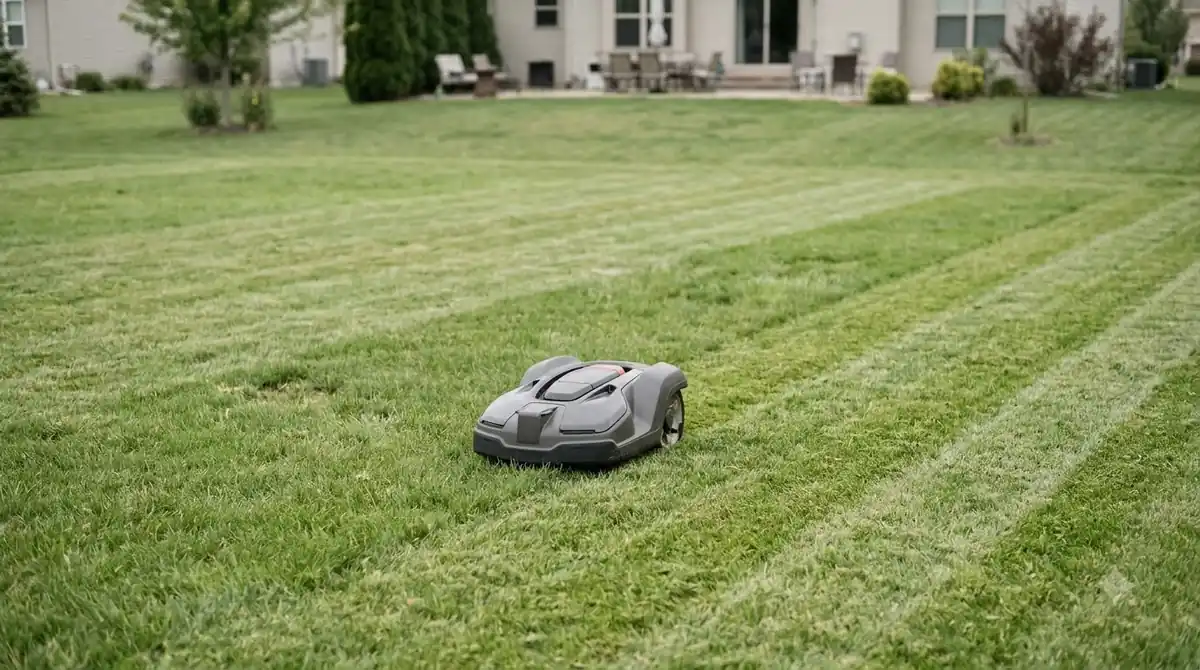
Lime and fertilizer are often sold and applied in the same season, so the order matters. The University of Maryland Extension advises that, if possible, the lime application should come about 1 month before the fertilizer application. If you need to apply both, schedule the lime first, then wait the recommended interval before adding fertilizer. Keep the same robot checks on the fertilizer day, since granules can cling to the grass just as lime pellets do. Our guides on fertilizing a lawn mowed by a robot mower and choosing fertilizer for a robot-mowed lawn cover that step.
For a robot-mowed lawn, the simplest approach is to space the two applications and let the mower run on its normal schedule between them. The mower schedule itself should not change for the fertilizer, only the pause on the day of the spread.
Checklist before the robot mows a limed lawn
- Confirm the lime is worked in. Look for visible pellets or white dust. If you see them, wait.
- Check the weather. Let a good rain or light watering settle the lime before the first mow.
- Look at the ground. Wet or soft turf can be rutted by the wheels, so skip the mow until it firms up.
- Clean the deck and wheels. Remove any caked lime after the first run and check the bumper and dock contacts.
- Keep the schedule normal after that. Once the lime is in the soil, can a robot mower run after applying lime to the lawn on its usual schedule? Yes, as long as the turf is firm.
Frequently asked questions
Can a robot mower run after applying lime to the lawn on the same day?
Extension guidance in our reading points to waiting until the lime has been worked into the soil before using the yard. A same-day mow risks spreading dust and loose pellets, so pause the robot until the lime is no longer visible on the grass.
How many days should I wait before a robot mower runs on limed grass?
No university extension page we read gives a fixed number of days. The safer rule is to wait until the lime is incorporated or a good rain has washed it in, then check the lawn before the mower runs.
Is lime dust harmful to people or pets?
The University of Maine Extension states that all types of lime dust can irritate the lungs, eyes and skin. Keep people and pets off the lawn until the lime is incorporated, and wash hands after handling the bags.
When is the best season to apply lime?
The University of Maryland Extension says autumn is the ideal season. Do not apply lime on top of snow- or frost-covered turf, since freezing and thawing over winter helps incorporate it into the soil.
Sources
- Maintaining an Established Lawn (University of Maryland Extension): lime rates, split applications, season, snow and frost, and lime before fertilizer.
- Is lime safe on lawns? (University of Maine Cooperative Extension): lime dust irritation and incorporation before using the yard.
 Up next7 min readBy YardShould a Robot Mower Run on Dormant Grass?Updated Nov 12, 2026
 7 min readBy YardRobot Mower for a Lawn With a Dog Run: Safe SetupUpdated Nov 14, 2026
 9 min readBy YardCan a Robot Mower Run on Frosty Grass?Updated Nov 12, 2026
 8 min readBy YardBest Time of Day to Run a Robot MowerUpdated Nov 11, 2026
 9 min readBy YardHow Does a Robot Mower Handle a Well Cap or Utility Pedestal in the Lawn?Updated Nov 12, 2026
 9 min readBy YardCan a Robot Mower Stay Under a Carport? Summer Yes, Winter NoUpdated Nov 12, 2026