
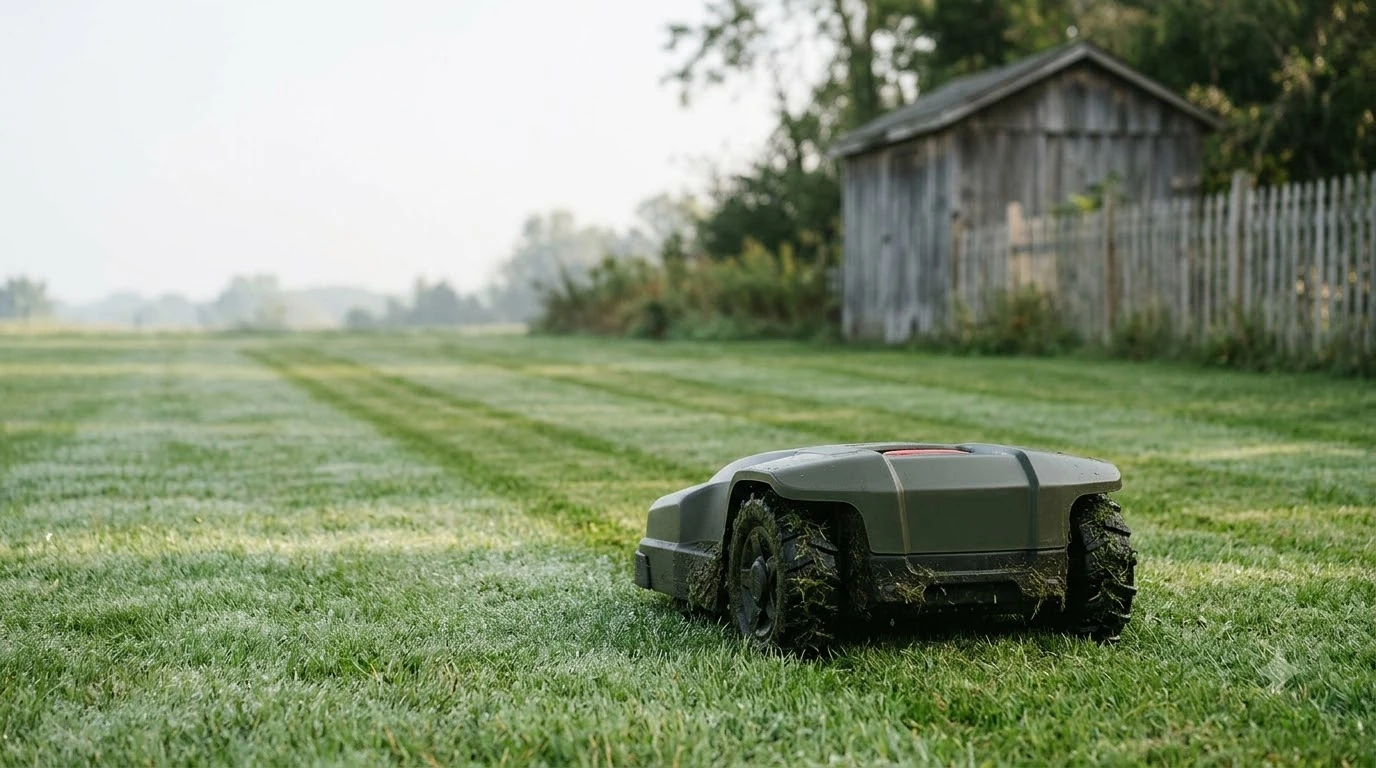

Should a robot mower run after dethatching? Hold it back until the lawn has recovered. An extension expert says a heavy dethatching needs about 3 weeks of recovery. None of the sources we read gives a robot-specific wait, so regrowth and firm soil matter more than the calendar.
The short answer
- Heavy dethatching: plan on about 3 weeks of recovery before the lawn is ready for regular cutting.
- Mowing height before dethatching: cut to about 1.5 to 2 inches so the dethatcher reaches the thatch layer.
- Robot restart: no robot-specific wait was found. Restart once new growth covers the exposed soil and the surface is firm.
- When to dethatch: the sources say to dethatch when thatch is thicker than 1/2 inch.
Should a robot mower run after dethatching? How long recovery takes
Recovery is what decides whether a robot mower should run after dethatching, and when. An expert answer on Ask Extension says it takes about 3 weeks for turf to recover from a heavy dethatching, and our reading is that lighter passes need less time. Dethatching pulls up dead material along with some living stems and roots, so the lawn looks thin for a while.
Colorado State University Extension warns that deep power raking “can be damaging and often removes a substantial portion of the living turf.” The same source says light power raking “may be beneficial if done often.” A lawn that was raked hard will usually need more time than one that was raked lightly. Our guide on whether robot mowers cause thatch buildup explains where the thatch comes from in the first place.

When to dethatch by grass type
Cool-season lawns are best dethatched in late summer or early fall, while warm-season lawns do best in spring after green-up or in early summer. The timing depends on your grass and your region, so check which group your lawn belongs to before you decide whether a robot mower should run after dethatching or wait.
| Grass or region | Best window | Source |
|---|---|---|
| Cool-season lawns | Late summer or early fall | Clemson HGIC |
| Northern cool-season lawns | Late August through September | LawnStarter |
| Warm-season lawns | Spring after green-up, or early summer | Clemson HGIC |
| Southern lawns | May to June | LawnStarter |
| St. Augustinegrass | May through early June only | LawnStarter |
Clemson’s guide also says to “Avoid hot and dry periods” when dethatching. LawnStarter advises waiting a couple of weeks after the lawn greens up in spring before the first dethatching. Our reading: a lawn that is already stressed by heat or drought is a poor candidate for a heavy pass, whatever the calendar says. The full guidance is in the Clemson HGIC thatch guide.
How low to mow before dethatching
Mow to about 1.5 to 2 inches before dethatching, because shorter grass lets the dethatcher reach the thatch layer. LawnStarter says to “Mow first, cutting grass to about 2 inches,” and notes that shorter grass “allows the dethatcher to reach the thatch layer more effectively.” The Ask Extension expert suggests cutting to 1.5 inches if you can, which is the lowest setting on most mowers.
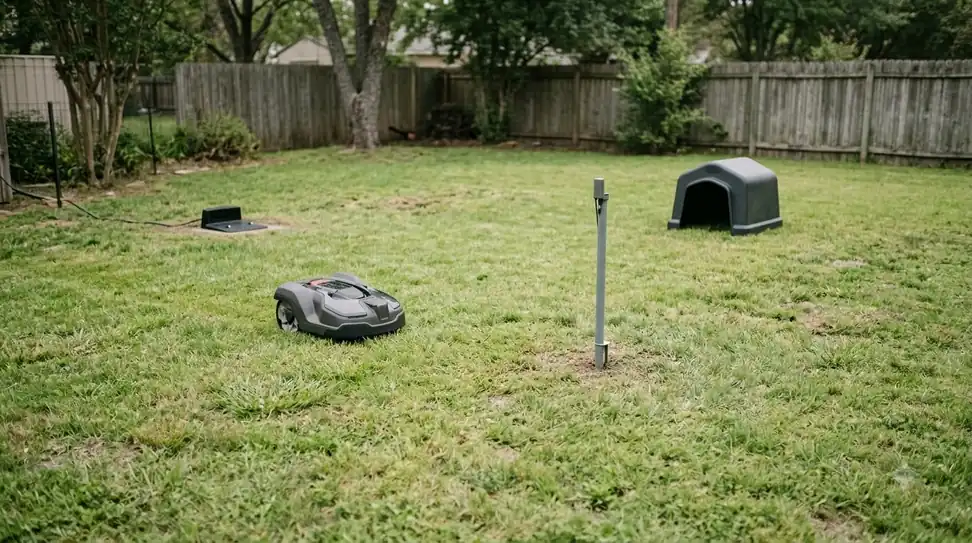
The sources describe the cut before dethatching in detail, but they say much less about the first cut after it. That gap matters for a robot mower, because the restart height is a separate decision from the pre-dethatch cut. Our reading: set the robot to a higher height for its first passes, and lower it only after the lawn has filled in. See our guide to the best mowing height for a robot-mowed lawn for the usual ranges.
Should a robot mower run after dethatching? The restart checks
None of the sources we read gives a robot-specific wait after dethatching. The guidance we found is general lawn-care advice, so treat the rule below as a cautious reading of the recovery figure, not a number from a manufacturer.
- Coverage: new growth covers most of the soil the dethatcher exposed.
- Firmness: the surface is firm underfoot and no longer spongy.
- Watering: the lawn was watered thoroughly after dethatching, as Clemson advises.
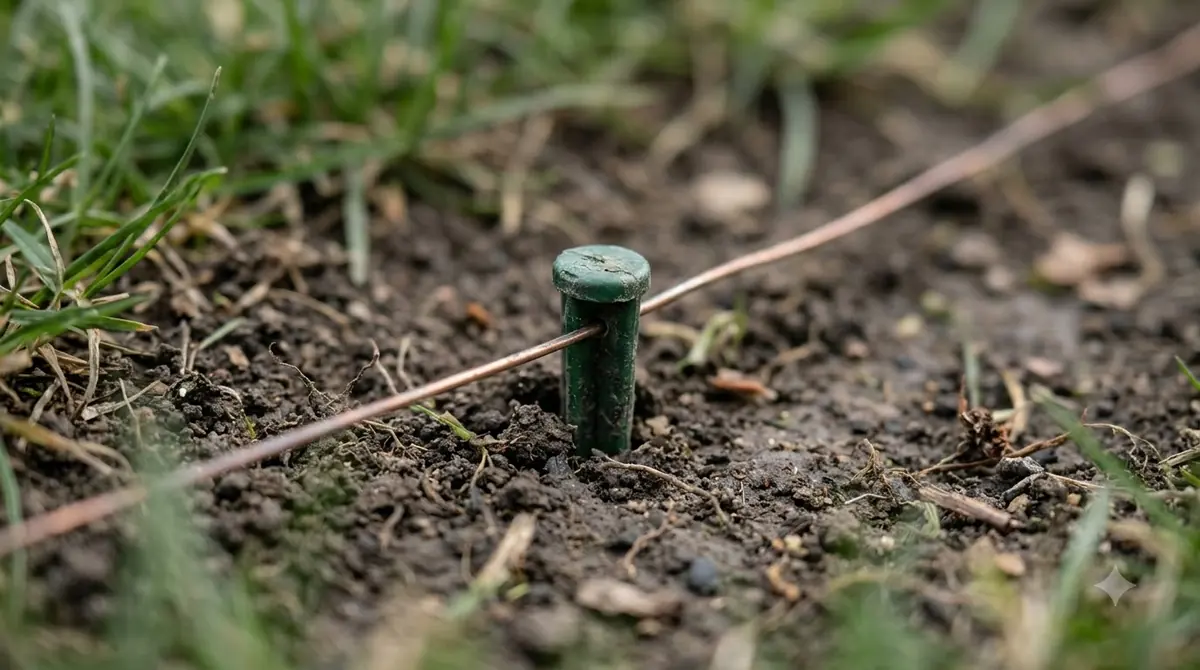
- Boundary wire: the wire was checked after the work, because raking and tools near the edge can move or damage it (our reading).
For a robot mower, the answer stays the same either way: wait for the checks. If the lawn meets these checks before the 3-week mark, a short early run is a judgment call. If it does not, keep the mower parked a little longer.
Signs your lawn needs dethatching
Dethatch when thatch is thicker than 1/2 inch. Clemson HGIC states it directly: “If the thatch layer exceeds ½ inch in thickness, then you need to dethatch your lawn.” Excess thatch also affects the mower itself. UF/IFAS Extension says that “Excess thatch causes the mower to sink and cut grass too short, leading to stressed turf.”
Heads up
LawnStarter says that when thatch is over 1 inch, gradual dethatching over 2 to 3 years may work better than removing it all at once. A single heavy pass on that much thatch is the case where the 3-week recovery figure is least reliable.
Thin thatch is not always a problem. UC IPM Healthy Lawns says “A thin layer of thatch (less than 1/2 inch thick) can be beneficial.” Penn State Extension says grass clippings do not add to thatch, so a robot mower that leaves clippings on the lawn is not the cause.
Aftercare while the lawn recovers
Water thoroughly after dethatching so the exposed roots do not dry out. Clemson’s advice is short, and it covers the most urgent step during recovery.
- Water: Clemson says to “Thoroughly water the lawn to prevent the exposed roots from drying out.”
- Fertilizer: Clemson’s page gives a schedule of 1 pound of actual nitrogen per 1,000 square feet about one week later. Check your product label before you apply.
- Mowing: hold the robot until new growth covers the exposed soil, then return to the higher setting first.
So, should a robot mower run after dethatching once about 3 weeks have passed? Our reading: if you dethatched in a window the sources recommend and then gave the lawn about 3 weeks, a restart is the lower-risk call. If the lawn is still thin at that point, keep the mower parked a little longer rather than cutting into recovering turf. For the wider seasonal picture, see our robot mower lawn care calendar and the guide on whether a robot mower should run after aeration.
Frequently asked questions
Can a robot mower run the same day as dethatching?
No source we read says a robot mower can run the same day. The extension expert figure is about 3 weeks of recovery after heavy dethatching, so holding the mower is the cautious choice.
Should a robot mower run after dethatching if the lawn looks green again?
Green color alone is not enough. The extension figure is about 3 weeks after a heavy dethatching, so check that new growth covers the exposed soil and the surface is firm before the first run.
Does dethatching damage a robot mower?
None of the sources we read reports dethatching damaging a robot mower. UF/IFAS Extension does say that excess thatch makes a mower sink and cut too short, which is a lawn problem that shows up at the mower.
Is one dethatching a year enough?
The sources tie the need to thatch thickness rather than a calendar rule. Clemson HGIC says to dethatch when thatch exceeds 1/2 inch, so measure first and act when the layer passes that point.
Is some thatch always bad?
No. UC IPM Healthy Lawns says a thin layer of thatch, less than 1/2 inch thick, can be beneficial. The problem starts when the layer gets thicker and the turf becomes spongy.
Sources
- Controlling Thatch in Lawns (Clemson HGIC): 1/2 inch threshold, timing by grass type, watering after dethatching, and fertilizer schedule.
- When to Dethatch Your Lawn (LawnStarter): regional windows, St. Augustinegrass timing, mowing to about 2 inches before dethatching, and the over-1-inch rule.
- Repetitive dethatching (Ask Extension): about 3 weeks of recovery after heavy dethatching, and cutting to about 1.5 inches first.
- Recycling turfgrass clippings (Penn State Extension): clippings do not contribute to thatch.
- Lawn diseases (UF/IFAS Gardening Solutions): excess thatch makes the mower sink and cut grass too short.
- Thatch (UC IPM Healthy Lawns): a thin layer of thatch under 1/2 inch can be beneficial.
- Lawn care basics (Colorado State University Extension): deep power raking can remove living turf; light raking may help if done often.
 Up next6 min readBest Robot MowersBest Robot Mower for a Lawn After Hydroseeding: First CutsUpdated Nov 13, 2026
 9 min readBest Robot MowersHow Many Hours a Day Does a Robot Mower Run?Updated Nov 11, 2026
 8 min readBest Robot MowersWhich Bosch Robot Mower Should I Buy? A Decision Guide by Lawn Size and SlopeUpdated Nov 14, 2026
 7 min readBest Robot MowersWhich Greenworks Robot Mower Should You Buy? A Checklist by Lawn TypeUpdated Nov 14, 2026
 7 min readBest Robot MowersWhich Dreame Robot Mower Should I Buy? Limits to Check FirstUpdated Nov 13, 2026
 8 min readBest Robot MowersWhich MOVA Robot Mower Should You Buy? A Sourced Guide by Lawn Size and SlopeUpdated Nov 13, 2026