
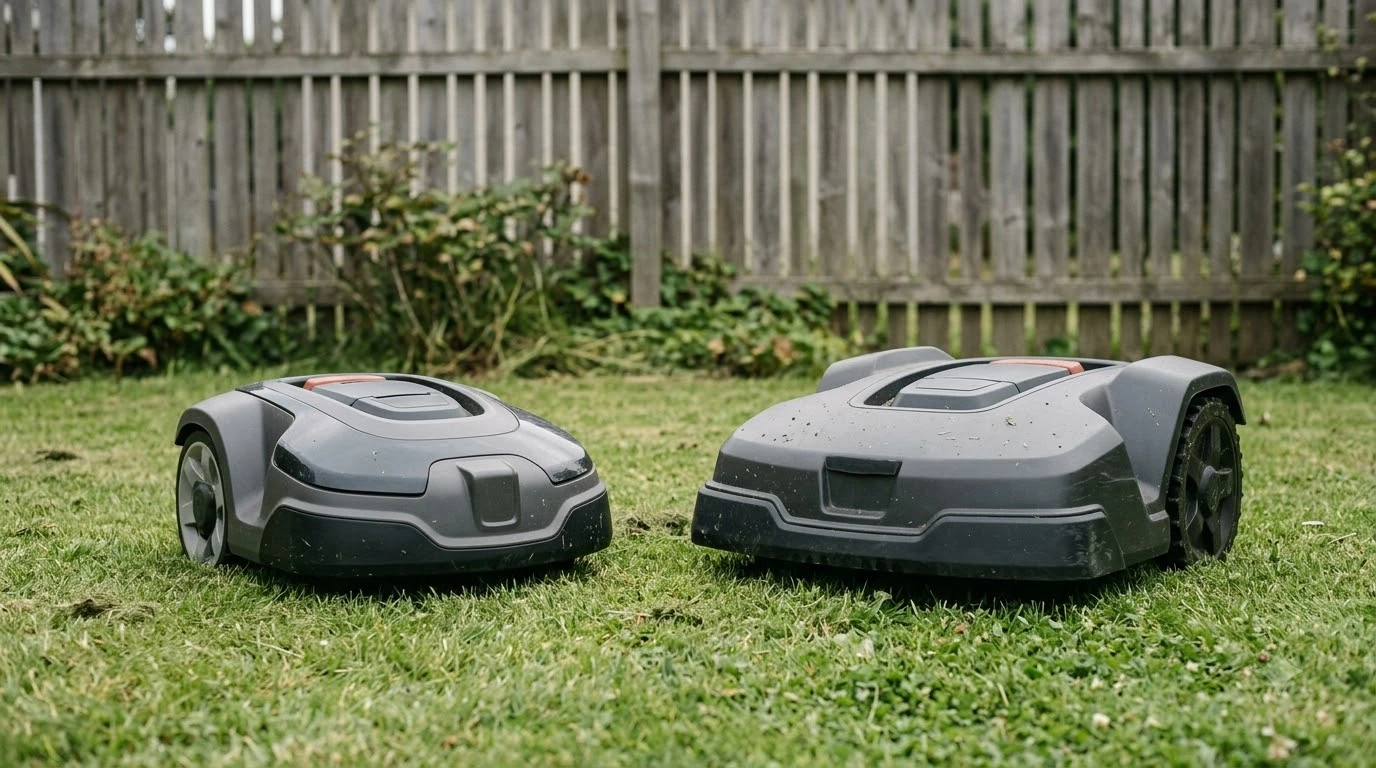

Which MOVA robot mower should I buy depends mainly on lawn size and slope. As of November 2026, the MOVA models with the clearest published ratings are the LiDAX Ultra 2000, rated for up to 0.5 acre and 45% slope, and the LiDAX Ultra 3000 AWD, rated for up to 0.75 acre per map and 80% slope. Both are wire-free, so the setup choice matters as much as the spec sheet.
The short answer
- Lawn up to about 0.25 acre: the LiDAX Ultra 1000, the smallest of the three models compared here.
- Lawn up to about 0.5 acre: the LiDAX Ultra 2000, rear-wheel drive with a 45% slope rating.
- Lawn up to about 0.75 acre or steeper ground: the LiDAX Ultra 3000 AWD, all-wheel drive with an 80% slope rating.
- Setup: MOVA says none of these need a boundary wire or RTK base, which is a brand claim we could not verify independently.
- Before you buy: confirm the warranty terms and the current price, because retailer listings change.
Which MOVA robot mower should I buy for my lawn size
Lawn size is the first filter. MOVA’s own comparison page lists the LiDAX Ultra 1000 at up to 0.25 acre and the Ultra 2000 at up to 0.5 acre. A third-party listing for the Ultra 2000 gives the same 0.5 acre figure, and a separate listing for the Ultra 3000 AWD gives 0.75 acre per map with two maps supported.
| Model | Rated area | Where the figure comes from |
|---|---|---|
| LiDAX Ultra 1000 | Up to 0.25 acre | MOVA comparison page (brand claim) |
| LiDAX Ultra 2000 | Up to 0.5 acre | Freshly Charged product listing |
| LiDAX Ultra 3000 AWD | 0.75 acre per map, two maps | Smart Home Compared listing |
Husqvarna makes the general point clearly in its buying guide. It says that “selecting a model that matches the size of your lawn is crucial,” and that each model’s capacity is rated per hour and per day at full 24/7 operation. A mower set to run fewer hours covers less ground.
Our reading is that you should size to your measured grass area (see our guide to half-acre lawn size), not to the largest model you can afford, and leave room for a mower that runs only part of the day. The honest answer to “which MOVA robot mower should I buy” starts with the measured grass area: pick the smallest model whose rated area still covers it with some room to spare.
Heads up
Measure only the grass. Driveways, patios and garden beds do not count toward the rated area, so a yard that looks large may fall well inside a smaller model’s range.

Check the slope rating before you buy
For anyone asking which MOVA robot mower should I buy, slope is the second filter, and it is easy to misread. The Ultra 2000 is listed at a 45% grade, and the Ultra 3000 AWD at 80%, which is about 38.6 degrees. Those numbers describe the steepest ground the mower can handle, not the ground it should work on every day.
Husqvarna’s support guidance gives the formula for slope percentage: vertical rise divided by horizontal distance, times 100. Fifteen centimeters of rise over 100 centimeters of run is a 15% slope. Eufy’s slope guidance adds that a maximum slope is an absolute limit, not a target, and that running a mower at its limit strains the motor, drains the battery faster and adds wheel slip.
- Gentle lawns: a 45% rating sits well above the 25% that Husqvarna cites for its standard models, though you should measure the steepest section yourself.
- Steeper yards: Husqvarna’s standard models are described as managing slopes “of at least 25%,” so a 45% or 80% rating gives more margin on paper.
- Measure first: the slope that matters is the steepest part of the lawn the mower must cross, not the average.
Rear-wheel drive or all-wheel drive
The Ultra 2000 is rear-wheel drive, and the Ultra 3000 AWD is all-wheel drive. In a rear-wheel layout, only the rear wheels drive the mower, so traction depends on those two wheels. When the question is which MOVA robot mower should I buy and two models both cover the lawn area, drive type is often the tiebreaker. A competing manufacturer, Mammotion, argues that 2WD suits yards under about 0.25 to 0.5 acre, which is a vendor view rather than independent testing; our AWD versus 2WD comparison for hilly yards covers the trade-off in more detail.
Our reading is that a rear-wheel model is reasonable for a flat-to-moderate lawn near the lower end of its area range, and that an all-wheel model makes more sense when the lawn is larger, rougher or hillier. The price difference is a trade-off you should weigh against the terrain you actually have, and our MOVA versus Mammotion comparison shows how the brand stacks up against its closest rival.
Wire-free navigation without a boundary wire
The main setup difference between MOVA and many robot mowers is navigation. MOVA’s product listings describe the Ultra 2000 as wire-free with 360-degree 3D LiDAR and AI vision, working “without boundary wires or RTK setup.” The Ultra 3000 AWD listing says the same: no perimeter wire and no RTK positioning.
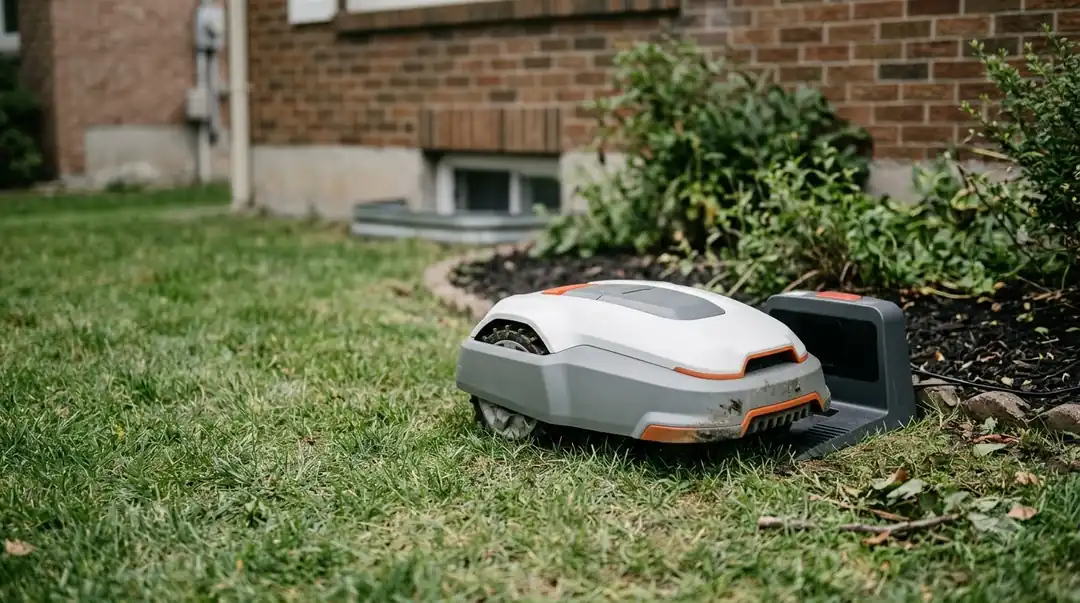
Husqvarna’s buying guide describes the appeal of wire-free models in similar terms. It says virtual boundaries allow flexible installation and remove “the risk of wire breakage.” The same page does not describe drawbacks, so the trade-offs below are our reading, not a sourced comparison.
- Setup: no buried wire means less installation work, which is the practical reason many owners choose wire-free models; our explainer on how robot mowers work without a wire covers the basics.
- Verification gap: we found no independent test data on how these LiDAR and vision systems handle heavy tree cover or unusual layouts.
- Checklist: ask the seller or support team how the mower behaves in the shadiest and most enclosed parts of your yard before you settle the “which MOVA robot mower should I buy” question.
Cutting height and tight passages
The Ultra 2000 is listed with a cutting height range of 30 to 99 mm, which is 1.2 to 3.9 inches. That range covers most home lawns, and it is useful if you plan to keep grass a little taller in heat or shade. Confirm that the range fits the grass species you have, since the right height varies by grass type. Our MOVA LiDAX Ultra 2000 review goes deeper on this model.
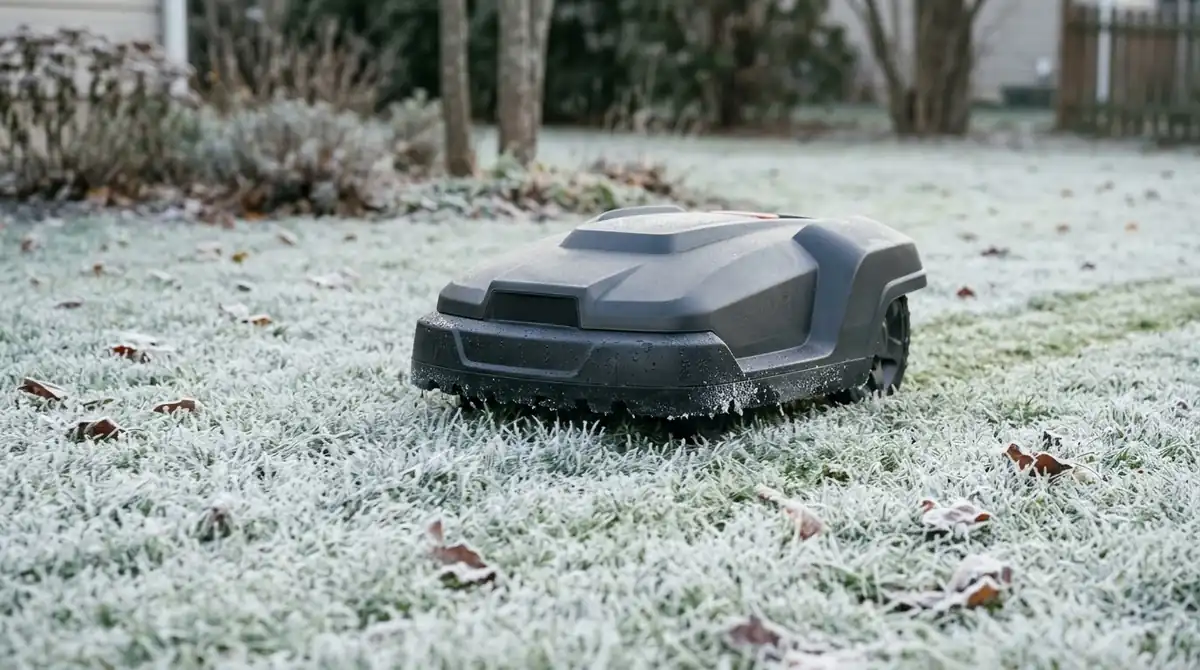
MOVA’s page also claims the mower can navigate corridors as tight as 23.6 inches and climb obstacles up to 1.6 inches high. Those are brand claims with no independent verification in the sources we read. If you have a narrow side yard, measure the passage and compare it with the claim before you rely on it.
What to check before you buy
Use this list to narrow down which MOVA robot mower should I buy before you compare prices. Each step depends on the lawn you actually have.
- Measure the grass area. Compare it with the rated area, and leave room for the mower to run only part of each day.
- Measure the steepest slope. Check it against the rated slope, and keep in mind that the rating is a limit, not a target.
- Decide on drive type. Choose rear-wheel drive for a moderate lawn near the lower end of the area range, and all-wheel drive for larger or hillier yards.
- Confirm the warranty. The MOVA warranty page we tried returned an error, so read the warranty terms on the product page before you buy.
- Check the current price. The Ultra 3000 AWD was listed at $2,999 with a $2,399 sale price on a page updated in November 2026. Prices change, so confirm on the retailer’s page.
Frequently asked questions
Which MOVA robot mower fits a half-acre lawn?
The LiDAX Ultra 2000 is rated for up to 0.5 acre in a retailer listing, which makes it the model that matches a half-acre lawn on paper. Confirm the measured grass area and the steepest slope before you choose it, and consider the Ultra 3000 AWD if the lawn is close to the top of the range.
Does a MOVA robot mower need a boundary wire?
MOVA’s product listings say no. The Ultra 2000 and Ultra 3000 AWD are described as wire-free and as not needing RTK positioning, using LiDAR and AI vision instead. This is a brand and listing claim, and we did not find independent testing to confirm it.
Is the Ultra 3000 AWD worth more than the Ultra 2000?
It depends on your yard. The Ultra 3000 AWD is listed at up to 0.75 acre per map, an 80% slope rating and all-wheel drive, while the Ultra 2000 is listed at 0.5 acre and 45% with rear-wheel drive. If your lawn is larger or steeper, the extra capability may justify the higher price; a smaller, flatter lawn may not need it.
Does MOVA charge a monthly fee?
MOVA says its features come with no recurring costs. That is a brand claim on its comparison page. Check the current terms on the product page before you buy, because subscription and service policies can change.
Sources
- MOVA comparison page (MOVA): brand claims for area, corridor width, obstacle climb, wire-free setup and no recurring costs.
- Freshly Charged listing for the LiDAX Ultra 2000 (retailer): 0.5 acre, 45% slope, cutting height range, wire-free navigation.
- Smart Home Compared listing for the LiDAX Ultra 3000 AWD (third-party): 0.75 acre per map, 80% slope, all-wheel drive, price on a page updated November 2026.
- Husqvarna buying guide for robotic mowers (manufacturer): sizing advice, 25% standard slope, wire-free trade-offs.
- Husqvarna support on steep-slope installation (manufacturer): the slope percentage formula.
 Up next8 min readBest Robot MowersWhich Bosch Robot Mower Should I Buy? A Decision Guide by Lawn Size and SlopeUpdated Nov 14, 2026
 9 min readBest Robot MowersBest eufy Robot Mower Model to Buy: E15 or E18 by Lawn Size and SlopeUpdated Nov 13, 2026
 9 min readBest Robot MowersWhich Ecovacs GOAT Robot Mower Model to Buy: A Sourced GuideUpdated Nov 11, 2026
 8 min readBest Robot MowersWhich Gardena Robot Mower Should I Buy? Limits to Check FirstUpdated Nov 13, 2026
 7 min readBest Robot MowersWhich Dreame Robot Mower Should I Buy? Limits to Check FirstUpdated Nov 13, 2026
 7 min readBest Robot MowersWhich Greenworks Robot Mower Should You Buy? A Checklist by Lawn TypeUpdated Nov 14, 2026