
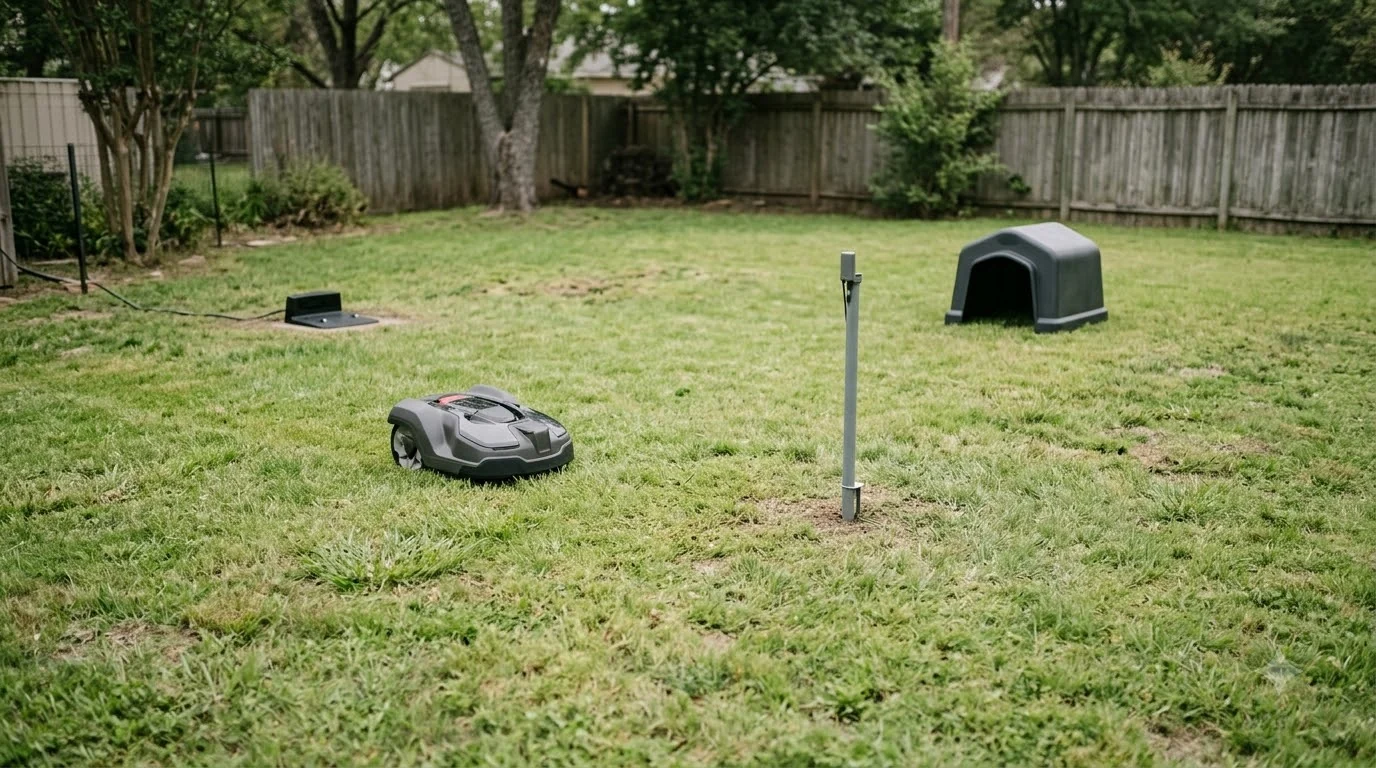

The best robot lawn mower for 2 acres or more is one rated for that lawn size with room to spare: a model listed for about 2 acres, enough battery or charging capacity for the whole area, and a navigation method that suits your trees and slopes. Two acres is roughly 87,120 square feet, or about 8,094 square meters, so the rated maximum on the product page is the first number to check, not the marketing headline.
The short answer
- Rated size: look for a model that lists about 2 acres as its maximum, and avoid buying exactly at the limit.
- Charging: confirm how much area one charge covers, because large lawns need several charging cycles.
- Slope: check the slope rating on the hilliest part of the yard, not the average.
- Navigation: wire-free models avoid digging, but they still need sky view or a clean sensor to work well.
What 2 acres means for a robot mower
An acre is 43,560 square feet, so two acres is about 87,120 square feet, or roughly 8,094 square meters. Manufacturers usually list a maximum lawn size for each model, and that number is a ceiling. A mower rated for 2 acres under ideal conditions may take longer on a lawn with beds, trees, and steep edges. A step up in size is covered in robot mowers for 3 acres. Very large lawns are covered in robot mowers for 5 acres as a useful companion to the points in this section.
Husqvarna’s US lineup shows how wide the range is. Its Automower 580 EPOS is listed for lawns up to 2 acres, while the Automower 560 EPOS is listed for up to 1.5 acres and the Automower 435 iQ AWD and 435X AWD for smaller areas. The 440 iQ carries a tolerance of plus or minus 20 percent on its rated size. These are manufacturer ratings, so compare them with your own measured area.
How to measure your lawn before you shop
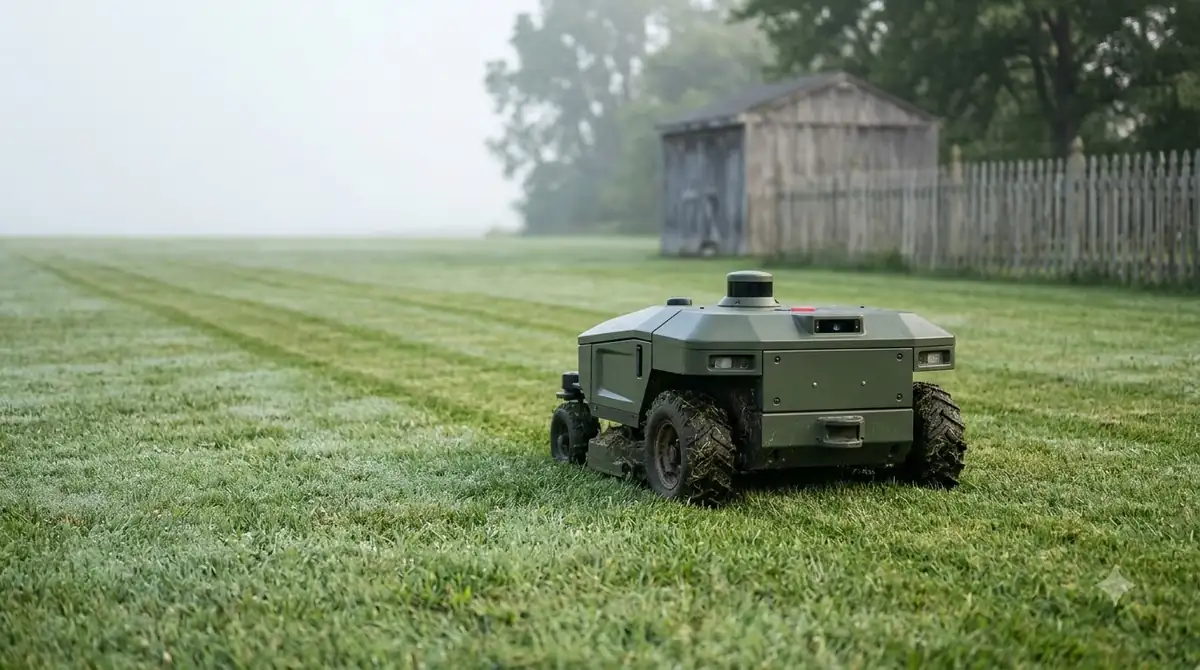
Measure the grass area, not the property line. Subtract the house footprint, driveway, patio, and garden beds, because a mower does not cut those. Then add a margin for odd shapes, narrow passages, and areas where the mower must go around obstacles. General guidance on big properties is in mowers for a large yard.
A simple check is to compare the grass area with the rated size and keep at least 20 percent in reserve. That margin covers the tolerance on rated sizes and the extra time a mower spends turning and avoiding objects. If your measured area is already at the rated limit, consider the next size up.
Charging and mowing time on a large lawn
On a 2-acre lawn the mower will often need to recharge and return to finish the job. Check how the model handles that: whether it can resume where it stopped, how far the charging station can be from the lawn, and whether the charging station needs a wire or a clear sky view.
Navimow’s large-lawn guide lists per-charge mowing areas of about 675 square meters for the X420 and 1,300 square meters for the X450, with a recommended lawn range of 2,000 to 5,000 square meters. Those numbers come from the vendor, and they show why per-charge area matters. A lawn near the top of a model’s range means the mower will be charging several times during each cut.
Heads up
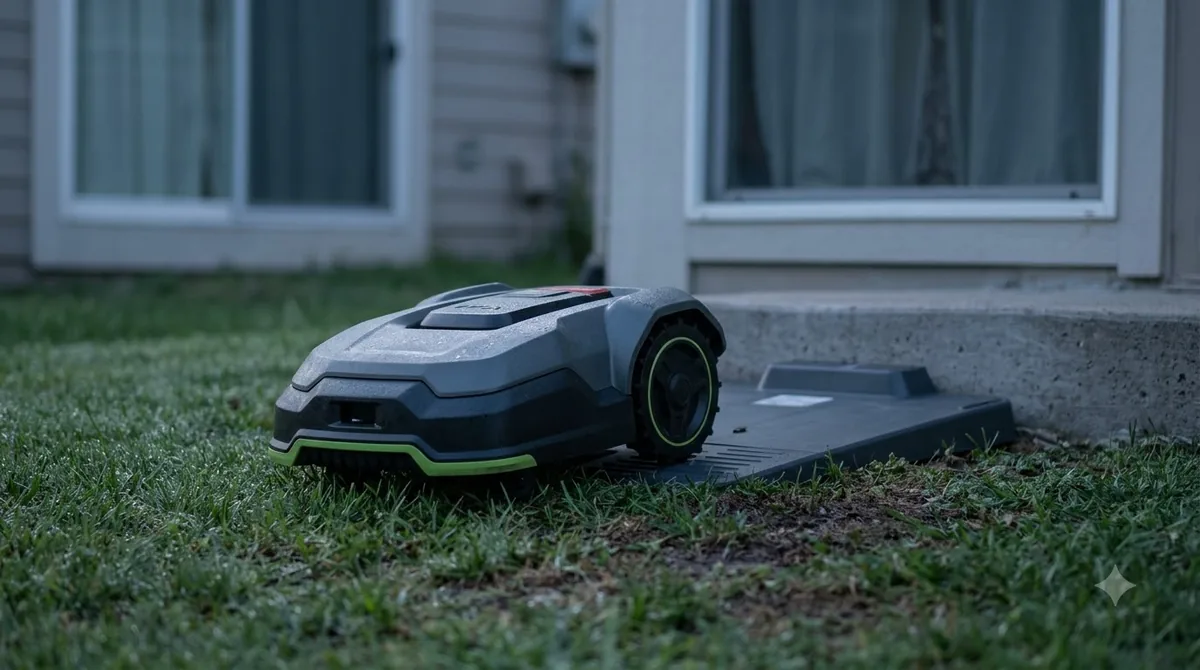
Vendor per-charge figures assume good conditions. Thick grass, wet lawns, and frequent turns can cut the usable area in one session, so plan on more charging cycles than the headline figure suggests.
Slope and terrain for a big yard
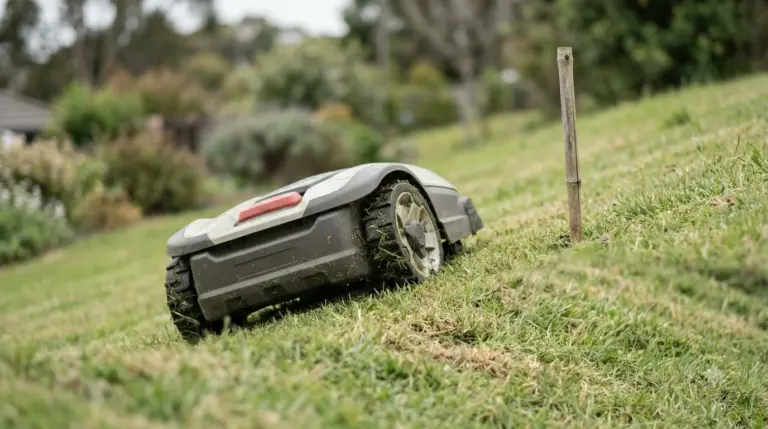
Large yards often have hills, banks, or uneven ground, so slope rating can matter more than lawn size. Husqvarna’s support guidance puts standard models at roughly 25 to 50 percent slope, with all-wheel-drive models rated up to 70 percent, which is about 35 degrees. For wire-based models, the company advises placing the boundary wire at least 1.5 meters from the bottom of a steep slope and laying the wire diagonally across it. Open ground and slopes are discussed in mowers for rural properties if you want to read further before deciding.
Navimow lists its i2 AWD at 45 percent, the i2 LiDAR Pro at 55 percent, and the X4 at 84 percent, which is about 40 degrees. These are vendor ratings measured under the company’s own conditions. For a 2-acre yard with hills, use the steepest section you actually have as the test, and look for a model whose rating clears it with some margin.
Wire, virtual boundary, or wire-free navigation
Large lawns make boundary wire expensive to install and harder to fix. A single break can stop a wired mower, and a 2-acre perimeter is a lot of wire to bury. Husqvarna’s EPOS system uses RTK-GNSS to create a virtual boundary through the Automower Connect app, and it can fall back to a buried wire where satellite coverage is poor. Larger yards are where satellite positioning gets tested hardest, and a related look at satellite-guided mowing for suburban lots covers the trade-offs. Navigation method is the main variable on bigger plots, and this guide to a wireless robot mower for one acre compares the common approaches.
Navimow’s Network RTK removes the local base station on some models, but the company says availability is checked by postcode. Confirm that coverage at your address before you buy a model that depends on it. Large open lawns usually suit satellite navigation well, while yards shaded by tall trees may still need a wire or a different system.
Choosing the best robot lawn mower for 2 acres or more
Our reading is that the strongest pick for a 2-acre yard is the model whose rated size, per-charge area, and slope rating all clear your measured lawn with some room to spare. A model rated for exactly 2 acres may still struggle if the yard is hilly or heavily shaded, so the rating is only one part of the decision. For a slightly smaller property, see robot mower choices for 2 acres. Premium models target big estates, as luxury mowers for large estates describes.
- Measure the grass. Subtract beds, paths, and the house footprint from the total.
- Check the rated maximum. Keep a 20 percent reserve below the listed size.
- Compare per-charge area. Estimate how many charging cycles the full lawn needs.
- Test the steepest slope. Compare it with the model’s rating, not the average.
- Confirm the navigation method. Check whether RTK, a virtual boundary, or a wire is needed for your yard.
- Verify on the manufacturer page. Specs and coverage claims change, so confirm them before buying.
Frequently asked questions
Can one robot mower cut 2 acres?
Some models are rated for about 2 acres, but the real result depends on slope, obstacles, and grass type. Check the rated maximum and plan for charging cycles on a lawn this size.
How many robot mowers do I need for 2 acres?
One mower rated for 2 acres can work if it has the charging capacity and slope rating for your yard. Two mowers are sometimes used on very large or complex lawns, but that is a separate decision from the rated size.
Should I buy a mower rated for exactly 2 acres?
A small reserve helps. Buying a model rated a bit above your measured area leaves room for tolerance on rated sizes, turns, and obstacles.
Does slope matter more than lawn size?
On hilly yards, slope can limit what a mower can do even if the lawn is within its rated size. Check both numbers before you buy.
Sources
- Husqvarna US, robotic lawn mowers (manufacturer): maximum lawn sizes by model and boundary types.
- Husqvarna support, optimising an installation for steep slopes (manufacturer): slope ranges, all-wheel-drive limit, and wire distance on steep ground.
- Navimow blog, robotic lawn mower for large lawns (manufacturer): per-charge mowing areas, recommended lawn range, and slope ratings.
 Up next8 min readBest Robot MowersBest Robot Lawn Mower for 1/2 Acre: How to Choose by Lawn SizeUpdated Nov 11, 2026
 8 min readBest Robot MowersWhat Size Robot Mower Do You Need for a 1/2 Acre Lawn?Updated Nov 15, 2026
 9 min readBest Robot MowersBest Robot Lawn Mower for 2 Acres: What to Check Before You BuyUpdated Nov 11, 2026
 7 min readBest Robot MowersWhat Size Robot Mower Do You Need for 2 Acres?Updated Nov 11, 2026
 9 min readBest Robot MowersWhat Is the Best Robot Lawn Mower for a 1/2 Acre With SlopesUpdated Nov 11, 2026
 7 min readBest Robot MowersBest Robot Lawn Mower for 1/3 Acre: How to Choose in 2026Updated Nov 17, 2026