
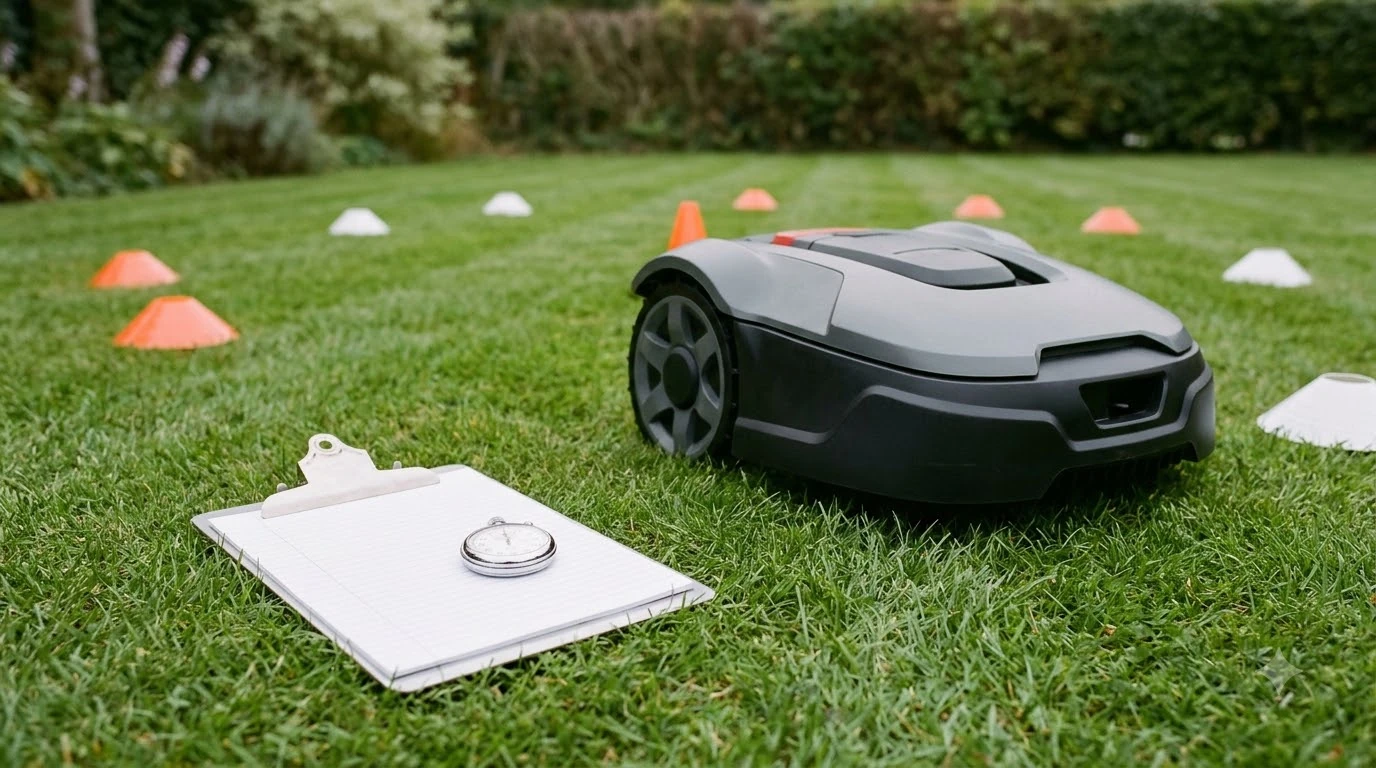

A best wire-free robot mower under $3000 is usually a premium LiDAR or vision model, and the extra money buys more than a bigger number on the spec sheet. At this ceiling, the question is whether the features you pay for match your lawn. This guide shows what the price band covers, what it does not prove, and how to check the claims, using maker pages and buying guides as of Nov 2026.
The short answer
- Price reality: one maker’s page lists a premium LiDAR model at a base price of $2,499.99, undated, so the figure can move.
- Price tier: one buying guide places mid-range mowers at about $1,500 to $2,800, so $3,000 is just above that range.
- What is unproven: we did not find an independent test that compares LiDAR and satellite positioning under tree cover.
- Value test: compare rated area, slope and warranty first, and treat maker claims about extra features as things to verify.
What a $3000 budget covers
Under $3,000, buyers can usually find a wire-free mower with a larger rated area, a stronger slope rating and better obstacle detection than a model at $1,500. Those gains matter most on large, sloped or tree-lined lawns. They matter far less on a small flat yard, where a $1,500 mower may do the same job. For background on how these systems replace the buried loop, read about mowing without a boundary wire loop. To check what a lower budget still covers, see wire-free options under $2000.
Navigation is the main difference. LiDAR builds a three-dimensional map with laser pulses, and a guided perimeter pass records the boundary and fixed obstacles. Ecovacs notes that fog and heavy rain can scatter or absorb the beams. Premium models often add a camera or vision system alongside LiDAR, which can help with obstacles that LiDAR alone may miss.

What the premium price does not prove
Premium marketing often claims that a mower works in shade and under trees. Mammotion, for example, says its LiDAR performs under tree cover, but that is a vendor claim. We did not find an independent test that compares LiDAR and satellite positioning under a tree canopy, so the claim should be checked on your own lawn during the return window. Premium pricing does not prove a model is right for you, and a Hookii robot mower model guide narrows the choice by brand.
The same caution applies to payback claims. Dreame says most owners recover their costs in two to three seasons, but that is a vendor claim, and it depends on what you would otherwise pay for mowing. Our reading is that payback is a useful question to ask, not a number to rely on.

Area and coverage at the top of the band
A larger rated area is the most common reason to pay more. Rated area should still be matched to your measured lawn, with 20 to 30 percent headroom. The Dreame guide notes that real coverage can drop 20 to 30 percent near trees, slopes and boundaries, and that homeowners often overestimate their lawn by 20 to 40 percent. A model with a large rating can still fall short if the lawn has many trees or narrow passages. Typical suburban lots are the main use case, which robot mowers for suburban homes address.
Coverage speed matters too. Some premium LiDAR mowers list a coverage rate in square meters per hour, with a delicate mode for tight areas and an efficient mode for open lawns. Check the rate against the time you want the mower to run, and confirm how the charge cycle affects a large lawn.
Slope and the boundary rating
Slope is where premium models should earn their price. The Dreame guide suggests ruling out two-wheel drive if any section of the lawn is steeper than about 35 percent. Sunseeker suggests all-wheel drive above about 30 percent and lists two ratings, one for the working area and one for the boundary. A model can list a 45 percent work-area slope and a much lower boundary figure, so read both numbers before you decide that a bank is covered.
Warranty, battery and service
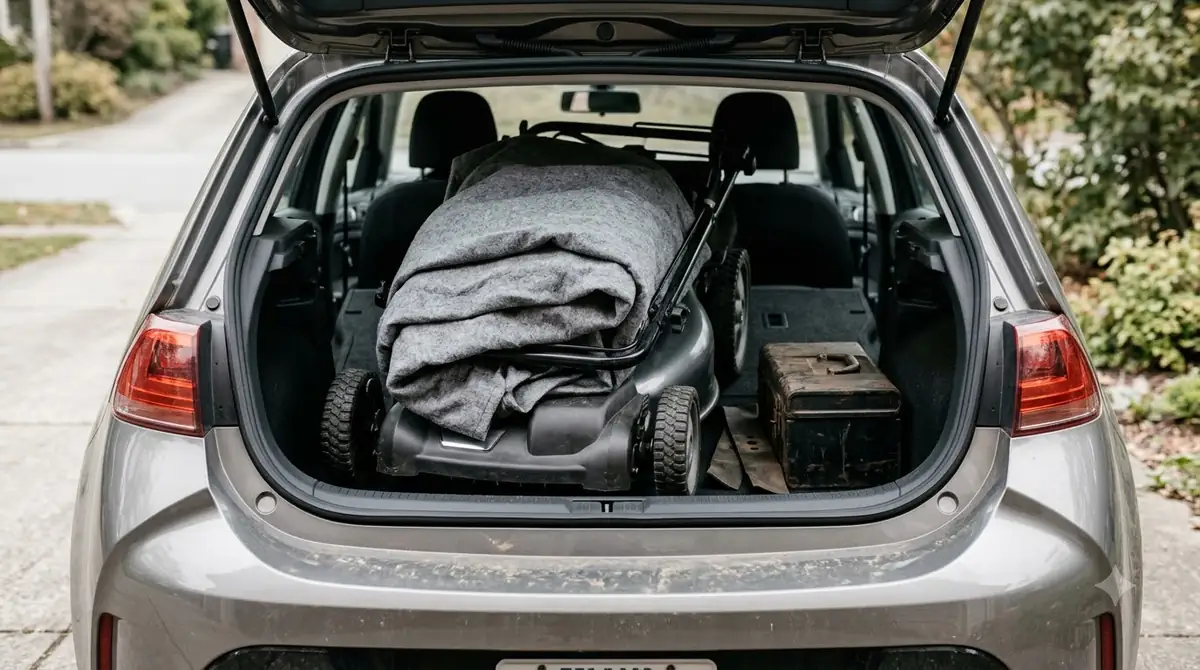
At $3,000, the warranty terms matter as much as the features. Sunseeker reports mower warranties of two to three years and battery warranties of one to two years. Dreame’s guide estimates battery replacement at $100 to $300 after three to five years. If a premium model has a shorter battery warranty than the mower, plan for that cost in your budget. Parts availability affects long-term ownership, so check sources for replacement parts in the US. Warranty, battery and service describe what you pay for after the sale, and how reliable robot lawn mowers compare is a good follow-up.
Heads up
Ask the seller who handles service and parts in your country, and how long a repair takes. A premium mower that waits weeks for a part can cost more in lost lawn time than the price difference suggests.
Running costs and subscriptions
Blades cost $20 to $40 per season, and electricity runs about $15 to $25 per year, according to the Dreame guide. Some wire-free mowers also sell a connection plan. One review of a LiDAR model reported a first year free and then $32.90 per year, but that terms may change. Add these yearly costs to the purchase price before you compare a $3,000 model with a $2,000 one.
When the best wire-free robot mower under $3000 is worth it
Our reading is that a mower near $3,000 makes sense when at least two of these are true: your lawn is larger or steeper than a typical yard, you need a bigger rated area with clear headroom, the warranty covers the battery for several years, and the dock space and service support fit your home. If only one is true, a cheaper model with a good spec sheet may serve you just as well. Readers considering the premium end of the market can compare wire-free mowers under $5000.
Frequently asked questions
Is a wire-free mower under $3000 better than one under $2000?
Usually for large, steep or tree-lined lawns, because the rated area and slope ratings are often higher. For a small flat yard, the difference may not change how well the mower performs.
Does LiDAR work under trees?
Some makers say so, but independent tests under tree canopy are limited. Expect lower real coverage near trees, and test the mower on your own lawn before you rely on it.
How long should a premium mower last?
Buying guides often describe mower warranties of two to three years and battery warranties of one to two years. Actual life depends on lawn conditions, maintenance and the battery, so ask for the warranty terms in writing.
Is the payback claim reliable?
It is a vendor claim. The payback depends on what you would otherwise spend on lawn service and how much you use the mower, so work out your own numbers before you accept the claim.
Sources
- ECOVACS, GOAT A3000 LiDAR PRO (manufacturer): used for the undated base price.
- ECOVACS, LiDAR vs RTK robot lawn mowers (manufacturer): used for the fog and heavy rain limit.
- Dreame robot lawn mower buying guide (manufacturer): used for coverage loss, battery cost, running costs and payback claim.
- Sunseeker, how to choose the right robotic mower (manufacturer): used for price tiers, slope ratings and warranty terms.
 Up next6 min readBest Robot MowersBest Wire-Free Robot Mower Under $800: What the Price BuysUpdated Nov 14, 2026
 6 min readBest Robot MowersBest Wire-Free Robot Mower Under $1000: Fit Before PriceUpdated Nov 14, 2026
 6 min readBest Robot MowersBest Wire-Free Robot Mower Under $700: What to Expect at This PriceUpdated Nov 17, 2026
 7 min readBest Robot MowersThe Best Wire-Free Robot Mower Under $500: What the Price Guides ShowUpdated Nov 14, 2026
 7 min readBest Robot MowersBest Wire-Free Robot Mower Under $1200: What to Check Before You BuyUpdated Nov 16, 2026
 7 min readBest Robot MowersBest Robot Lawn Mower Under $3000: What to Check Before You BuyUpdated Nov 14, 2026