
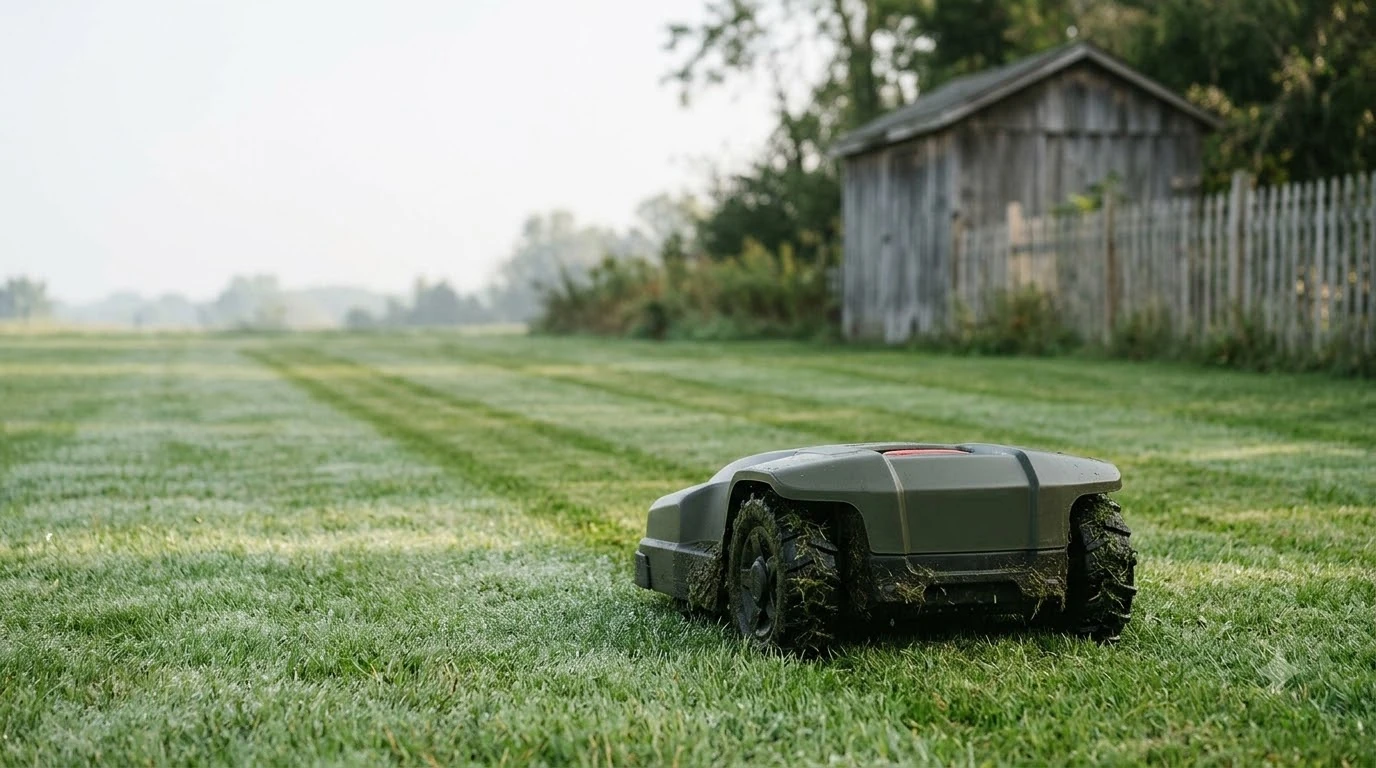

The best wire-free robot mower under $5000 is a realistic buy, but the budget alone won’t settle it. Wire-free models use satellite positioning (RTK) or LiDAR and cameras instead of a buried boundary wire, so setup is faster and the yard is easier to change later. Within this budget, the choice depends mostly on lawn size, slope, and how much you trust the navigation in trees and along fences.
The short answer
- Match the lawn size first: most wire-free models list a maximum coverage area, and that number is the one to compare against your yard.
- Check the slope rating next: ratings across the category run from the mid-40 percent range to about 80 percent, and the gap matters on hilly lots.
- Look at navigation, not just the brand: RTK plus LiDAR or vision is the setup most reviewers describe for tree-covered yards.
- Confirm the current price yourself: prices change often, so this guide does not quote fixed dollar figures.
What “wire-free” means for a robot mower
A wire-free robot mower does not need a buried or staked boundary wire to know where the lawn ends. Instead it builds its map from satellite signals (RTK-corrected GNSS), from LiDAR scanning, from cameras, or from a combination. Husqvarna’s own range shows the split: some models use a physical wire, some use a “virtual wire” that is drawn in an app, and the manufacturer does not always say which navigation system sits underneath. That is why the boundary type and the navigation type are two separate things to check. If the category is new to you, background on mowing without perimeter wire explains the basic approaches. Reliability varies by system, so see which wireless mowers are reliable before comparing price tiers.
For a buyer, the practical difference is installation and changes. A wire has to be laid, tested, and moved if you reshape a bed. A wire-free mower is set up by mapping the lawn in an app, and you can redraw zones later. The trade-off is that the navigation has to work where you live, so yards with heavy tree cover or a tall fence line deserve a closer look.

Best wire-free robot mower under $5000: how to compare
Start with three numbers from each spec sheet when you look for the best wire-free robot mower under $5000: the maximum lawn area, the maximum slope, and the navigation type. Those three predict most of the day-to-day experience. Then check the cutting height range, the blade system, and whether the mower has an anti-theft PIN or GPS tracking, since both matter if the unit lives outdoors all season. To check what a lower tier delivers, compare wire-free robot mowers under $2500.
Manufacturer specs are a starting point, not a verdict. Some listed coverage figures assume a simple rectangular lawn with no obstacles, and slope ratings are often measured under ideal conditions. Treat the numbers as a ceiling and leave a margin of about 20 to 30 percent for a real yard.
| Spec to check | Why it matters | What to look for |
|---|---|---|
| Maximum lawn area | Sets how far the mower can cover before it needs more battery cycles | At least 25 percent above your measured lawn |
| Maximum slope | Decides whether the mower can climb your hills without slipping | Rating above the steepest section of your lawn, not the average |
| Navigation type | Affects accuracy under trees and near walls | RTK with LiDAR or vision, or a clear statement of the fallback method |
| Boundary type | Tells you whether you still need to install wire | Wire-free listed as the primary method |
Measure your lawn before you shop. A tape measure and a rough sketch are enough to see whether a model’s stated coverage fits.
Where the navigation earns its price
Navigation is where a wire-free mower either justifies its cost or doesn’t. Vendor material for the category often describes RTK plus LiDAR plus AI vision as the combination that works under trees, near structures, and across uneven ground. That is a manufacturer claim, and independent testing is not always published, so ask the seller for a return window and check owner reports for your type of yard before you commit. Premium pricing often reflects positioning hardware, so see which navigation system suits which lawn.
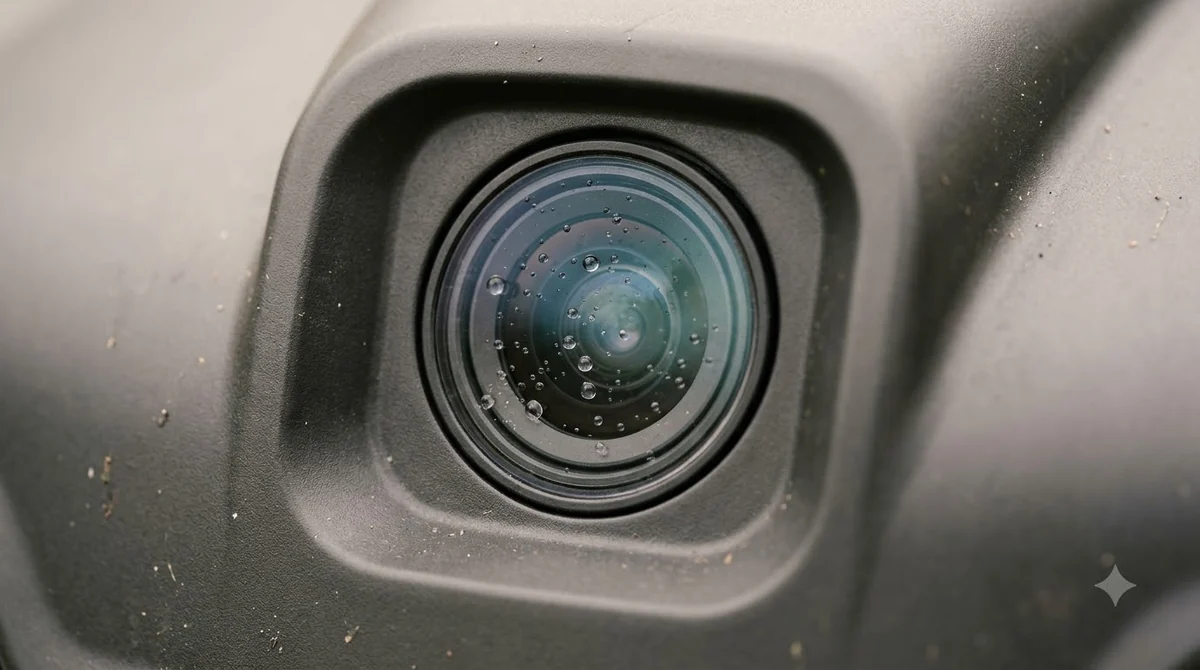
Our reading is that a yard with large open sun has the fewest navigation problems, while a yard with a lot of overhanging branches is the one most likely to show gaps. If your lawn sits under mature trees, the extra sensing hardware is worth paying for, and a model with only satellite positioning should be treated as a risk.
Slope, terrain, and the limits of the rating
Slope ratings in this category are not all measured the same way. Some vendors state a maximum that the mower can climb in a straight line, which is different from how it turns on an incline. A mower may climb a slope that it cannot cross sideways without tipping or slipping, so read the fine print on the spec sheet. Tree cover can affect satellite signals, so see mowing around trees with a robot for practical notes.
The official Husqvarna range shows how wide the spread is. Its page lists slope capability for only one of its ten models, with a stated 70 percent figure for the 435 iQ AWD, and gives no slope figures for the rest. When a manufacturer leaves the number off, ask for it in writing.
Heads up
Wet grass and steep slopes together are where wheel slip happens. Keep the mower’s schedule off the wettest days if your yard has a grade, even when the model is rated for the slope.
Wire-free versus wired under $5000
At this price, a wired model and a wire-free model can cost about the same, so the real comparison is what you give up. A wired mower with a good boundary install can be very reliable on a simple lawn, and it avoids depending on satellite signal. A wire-free mower saves installation work and handles yard changes better, but its performance depends on the navigation working in your conditions. A direct comparison of the two setups is in wire-free versus wired mowers compared. Some models keep a wire as a fallback, so read when a boundary wire is still needed.
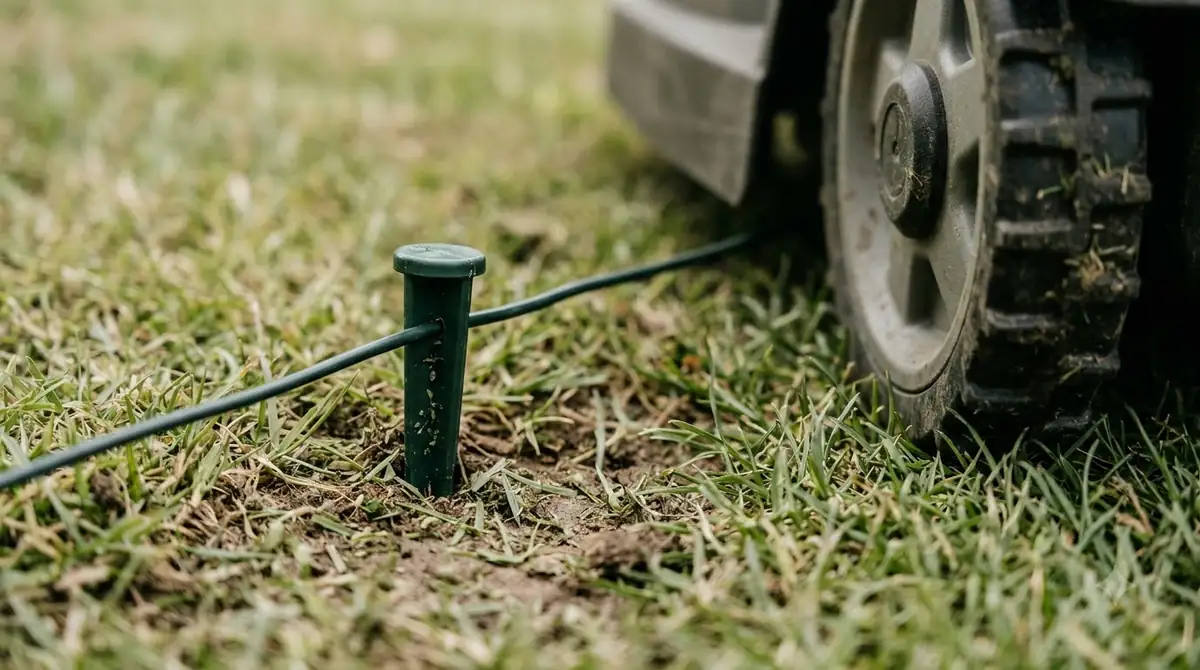
If your yard has no major trees, no tall walls, and no long narrow passages, a wire-free model with satellite positioning is a reasonable choice. If the yard is tree-heavy or has many tight corners, pay more attention to the sensing hardware than to the brand name.
What to check before you buy
Before you commit to the best wire-free robot mower under $5000 for your yard, work through these five checks.
- Measure the lawn. Write down the area and the steepest slope in degrees or percent, and compare both to the spec sheet.
- Confirm the navigation method. Ask whether the mower needs a clear sky view for satellite positioning, and whether it can run without it.
- Find the current price and warranty. Prices and bundles change, so confirm them at the seller on the day you buy.
- Check the app and the mapping process. A mower that is hard to map or hard to change later will cost you time every season.
- Confirm the return policy. Test the mower on your own lawn during the return window, especially under the trees and along the steepest section.
Related reads: If your site has poor satellite reception, an RTK antenna for precise positioning may help the base station.
Frequently asked questions
Can you get a good wire-free robot mower under $5000?
Yes. The category has several wire-free models in this range, and the cost differences usually reflect coverage area, slope rating, and navigation sensors. The right one depends on your lawn rather than on the price alone.
Is a wire-free robot mower accurate under trees?
It depends on the navigation. Satellite positioning can struggle under dense canopy, so models with LiDAR or vision as a backup are generally better suited to tree-covered yards. Ask the seller for owner reports from yards like yours.
Do wire-free mowers need a boundary wire at all?
Most do not, although some models still offer a physical wire option. Check the boundary type on the spec sheet, because some manufacturers list both methods for the same model.
What slope should I look for in a robot mower?
Pick a rating above the steepest part of your lawn, not the average slope. Leave margin for wet grass and for the difference between a straight climb and a sideways traverse, since the stated rating is not always measured the same way.
Sources
- Husqvarna robotic lawn mowers (Husqvarna): model list, lawn size ranges, boundary types, and the slope figure for the 435 iQ AWD.
- Best robot lawn mower without perimeter wire 2026 (Mammotion, a vendor): wire-free models with stated coverage areas, slope ratings, and navigation types. Vendor claims, used here only for the listed specs.
 Up next7 min readBest Robot MowersBest Wire-Free Robot Mower Under $1200: What to Check Before You BuyUpdated Nov 16, 2026
 8 min readBest Robot MowersBest Robot Lawn Mower Under $5000: What to Check Before You BuyUpdated Nov 12, 2026
 6 min readBest Robot MowersBest Wire-Free Robot Mower Under $1500: What the Spec Sheets ShowUpdated Nov 14, 2026
 6 min readBest Robot MowersBest Wire-Free Robot Mower Under $700: What to Expect at This PriceUpdated Nov 17, 2026
 7 min readBest Robot MowersBest Wire-Free Robot Mower Under $2000: Slope, Area and Running CostsUpdated Nov 14, 2026
 7 min readBest Robot MowersBest Wire-Free Robot Mower Under $2500: How to Choose in 2026Updated Nov 14, 2026