
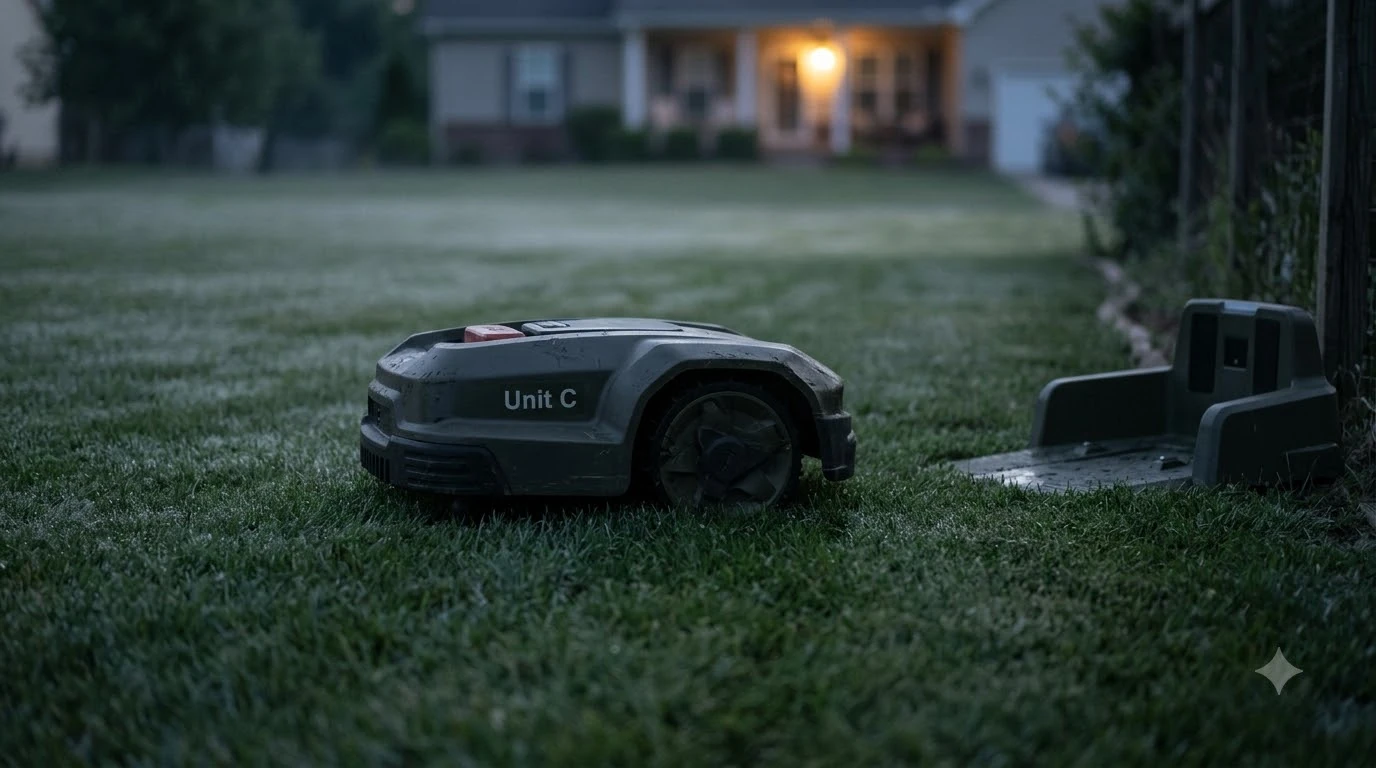

A best wire-free robot mower under $2500 is less about finding one winner and more about choosing the right trade-off between area, slope, warranty and running cost. At this ceiling, the budget covers the upper end of mid-range wire-free mowers and the lower end of the premium tier. The figures below come from maker pages and buying guides, as of Nov 2026, and any listed price should be confirmed on the current page.
The short answer
- Price band: one guide places mid-range mowers at about $1,500 to $2,800, so $2,500 sits inside that range but near its top.
- Warranty: a buying guide reports mower warranties of two to three years and battery warranties of one to two years.
- Slope: all-wheel drive is the common choice once a lawn has sections steeper than about 30 to 35 percent.
- Headroom: size the rated area at least 20 percent above your measured lawn.
Why the $2500 ceiling changes the question
At $1,000 or $1,500, buyers mostly ask whether a wire-free mower works at all. At $2,500, most mainstream LiDAR and vision models will mow a typical suburban lawn, so the question moves to fit and total cost. A mower that costs $2,300 but needs a $400 battery in year four may be worse value than one that costs $2,450 with a longer warranty. If you are still deciding between wired and wire-free setups, the wire-free robot lawn mower guide covers how the category works. To see what a lower ceiling still delivers, compare wire-free options under $1500 against this tier.
Navigation is still the first filter. LiDAR maps the yard with laser pulses, and Ecovacs notes that fog and heavy rain can scatter the beams. Some models add a camera for obstacle detection, and some add a satellite positioning option. Check which method your candidate uses, and whether it matches the weather where you live.
Warranty and battery: the costs that come later
The Sunseeker buying guide reports mower warranties of two to three years and battery warranties of one to two years. Dreame’s guide estimates that a battery replacement costs $100 to $300 after three to five years. Those two figures mean the battery warranty often ends before the mower does, so look at the terms in writing before you decide that a higher price is worth it. A battery is the most likely wear item, so see robot mower battery replacement options before you commit to a model.
Our reading is that a $2,500 mower with a three-year warranty that covers the battery is easier to justify than a cheaper model with a one-year battery term. Confirm the coverage with the seller, because marketing pages do not always show the details.
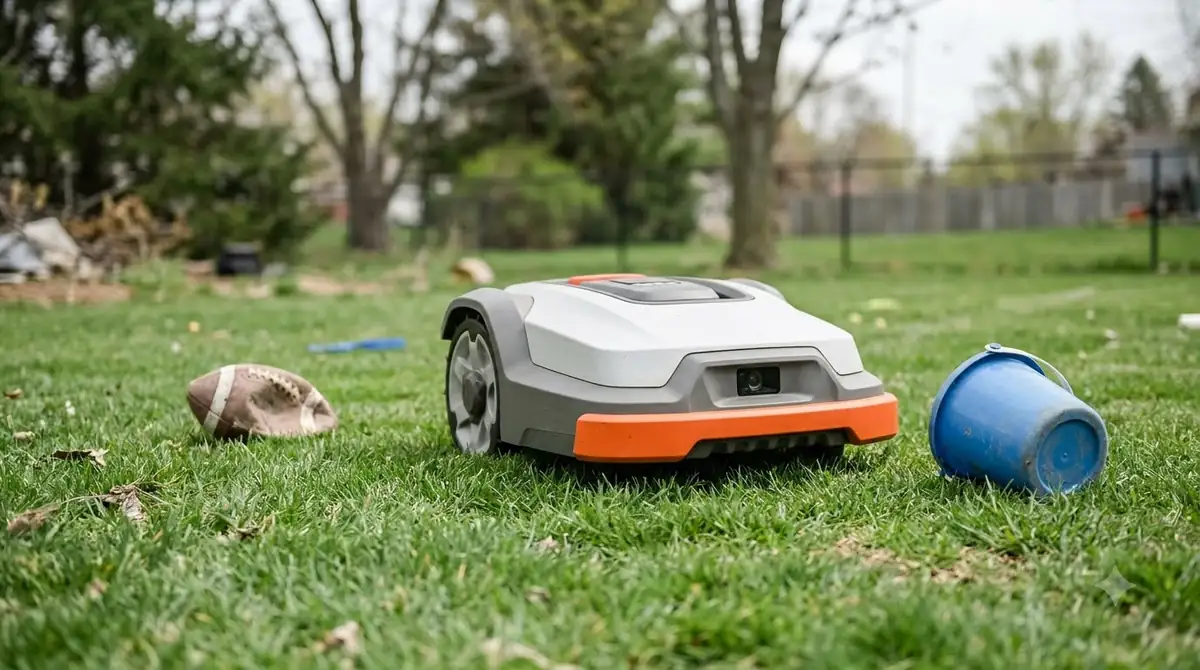
Slope is where a premium pays off
Slope decides whether a mower can reach the whole lawn, not just the flat part. The Dreame guide advises ruling out two-wheel drive if any section is steeper than about 35 percent. Sunseeker suggests all-wheel drive above about 30 percent and lists two ratings, one for the working area and one for the boundary. The Ecovacs GOAT O1000 LiDAR PRO page, for example, lists a 45 percent work-area slope and a 17 percent virtual boundary slope, which shows how far apart the two numbers can be. Steeper ground is where drive systems differ most, which the page on all-wheel-drive mowers for slopes explains.
Heads up
A rated work-area slope does not guarantee the boundary holds on a steep edge. If your steepest section is near the boundary limit, ask the maker about edge performance before you buy.
Area, speed and the charge cycle
Rated area is the number most buyers compare first, and it should be the start of the decision. The Dreame guide says real coverage can fall 20 to 30 percent near trees, slopes and boundaries, and that homeowners often overestimate their lawn by 20 to 40 percent. Coverage speed tells you how long a full mow takes. The Ecovacs O1000 LiDAR PRO page lists about 120 square meters per hour in delicate mode and about 180 in efficient mode, along with 90 minutes of mowing per charge and about 70 minutes to recharge. Large lots with obstacles complicate coverage, so look at complex-yard robot mower picks as well. Area, speed and the charge cycle all matter at scale, and a robot mower for 2 acres or more has to balance them.
Dock space and setup
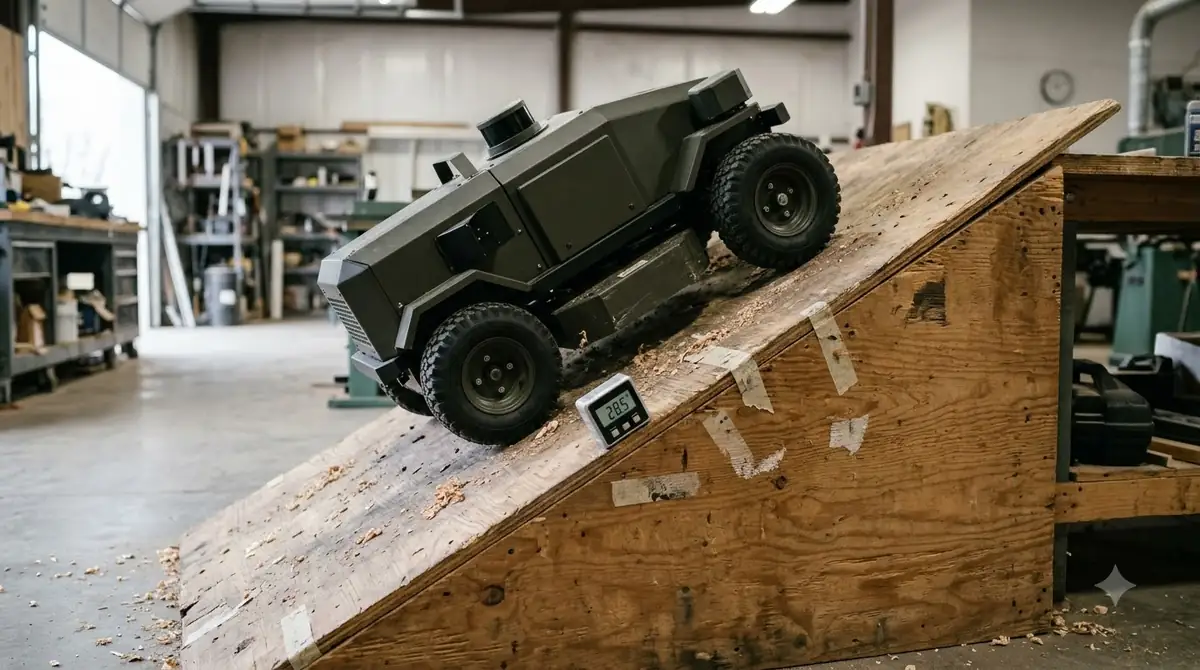
Dock space is easy to overlook at this price. The PCWorld hands-on review of the Navimow i215, a LiDAR model in a lower price band, measured about 6.6 feet of clear space in front of the dock and 1.6 feet on each side. Plan the dock spot before you pay, and check whether it needs a power outlet nearby. Setup with LiDAR typically takes 15 to 30 minutes according to the Dreame guide, compared with two to three hours to bury a boundary wire.
Running costs and subscriptions
Blades cost $20 to $40 per season, and electricity runs about $15 to $25 per year, according to the Dreame guide. Some wire-free mowers also need a connection plan. One review of the Navimow i215 reported a first year free and then $32.90 per year, with terms that may change. Add these yearly costs to the purchase price when you compare models at the top of the band.
A simple way to decide the best wire-free robot mower under $2500
Write down your measured lawn size, your steepest slope, your dock location and the number of years you plan to keep the mower. Then compare only the models whose rated area, slope rating and warranty fit those numbers. If two models are close, pick the one with the longer battery warranty and the lower yearly connection cost, since those are the two costs that tend to add up. Readers whose budget stretches a little further can compare the next tier in wire-free mowers under $3000. At a higher budget, wire-free navigation often relies on satellite positioning, which this RTK GPS mower guide for 2026 explains in more detail.
Frequently asked questions
Is $2500 too much for a wire-free robot mower?
It depends on the lawn. Sunseeker places mid-range mowers at about $1,500 to $2,800, so $2,500 is within that range. If your lawn is small and flat, a cheaper model may cover it, so compare your lawn size with the rated area first.
Do I need all-wheel drive under $2500?
If any section of the lawn is steeper than about 30 to 35 percent, the buying guides from Sunseeker and Dreame both suggest considering all-wheel drive. On a flat lawn, two-wheel drive is usually enough.
How long does a battery last?
Dreame’s guide estimates three to five years before replacement, which costs $100 to $300. Battery warranties in buying guides often run one to two years, so check the terms for your model.
Does a wire-free mower need a satellite signal?
Not always. LiDAR and vision models can map the lawn without a satellite signal, while some models add an optional positioning module. Read the navigation line on the spec sheet, and check how the mower handles fog and heavy rain.
Sources
- Sunseeker, how to choose the right robotic mower (manufacturer): used for price tiers, slope ratings and warranty terms.
- Dreame robot lawn mower buying guide (manufacturer): used for coverage loss, setup time, battery and running costs.
- ECOVACS, GOAT O1000 LiDAR PRO (manufacturer): used for slope, coverage speed and charge figures.
- PCWorld, Navimow i215 review (review): used for dock clearance and the subscription note.
 Up next9 min readBest Robot MowersBest Robot Lawn Mower Under $2500: How to Choose in 2026Updated Nov 12, 2026
 6 min readBest Robot MowersBest Wire-Free Robot Mower Under $800: What the Price BuysUpdated Nov 14, 2026
 7 min readBest Robot MowersBest Wire-Free Robot Mower Under $2000: Slope, Area and Running CostsUpdated Nov 14, 2026
 6 min readBest Robot MowersBest Wire-Free Robot Mower Under $700: What to Expect at This PriceUpdated Nov 17, 2026
 6 min readBest Robot MowersBest Wire-Free Robot Mower Under $1000: Fit Before PriceUpdated Nov 14, 2026
 7 min readBest Robot MowersBest Wire-Free Robot Mower Under $3000: What the Premium Price BuysUpdated Nov 17, 2026