
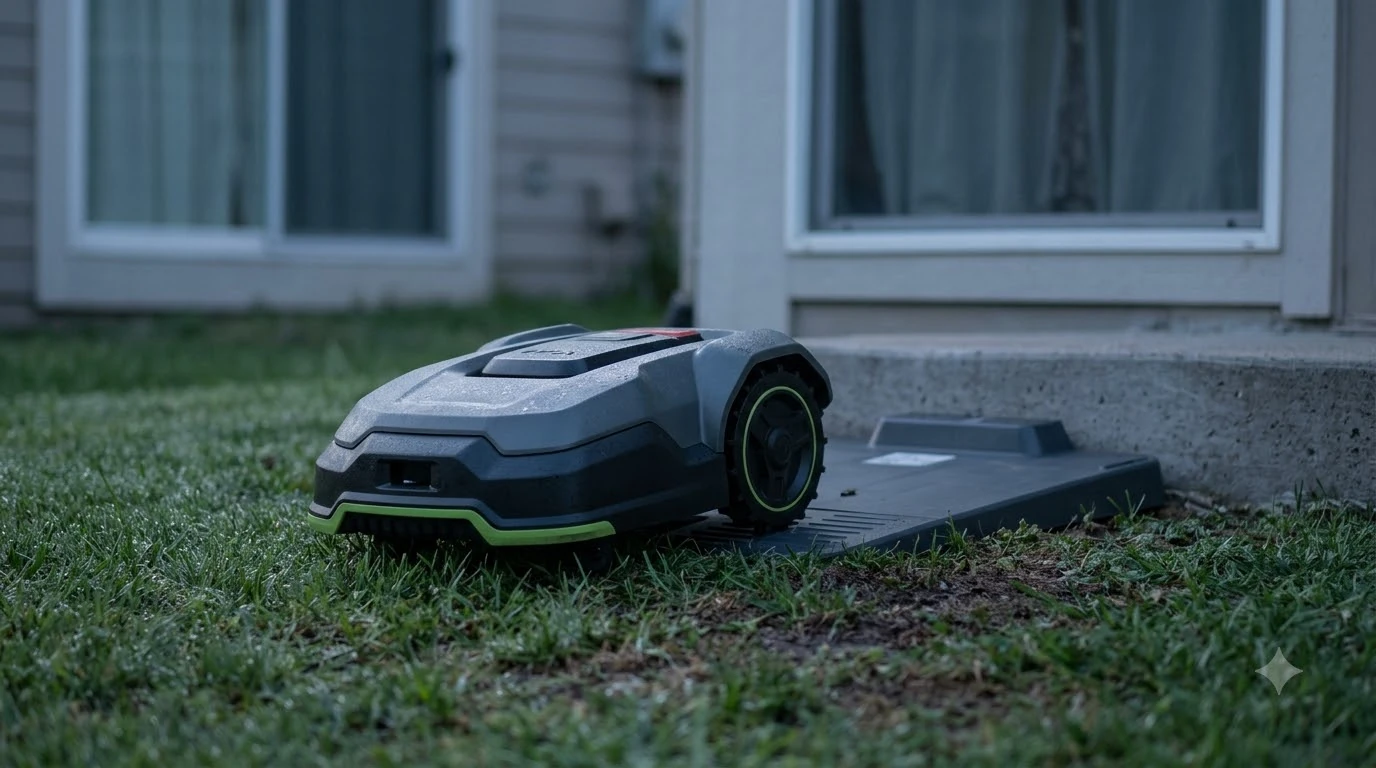

The Anthbot M5 slope limit is 45%, about 24 degrees, according to the product listing and a UK review. That figure is the maker’s rated maximum, not a daily working slope. The M5 is also a two-wheel-drive design, so grip on wet or loose slopes matters more than the number suggests. This guide explains what the rating means, how to measure your own slopes, and what to check before you assume the mower will handle a hill.
The short answer
- Rated maximum: 45% (about 24 degrees), listed by a retailer and repeated in a UK review of the LiDAR model.
- Working limit: keep the steepest section well below 45%, because wet grass and loose soil reduce grip.
- Drive system: the M5 does not use four-wheel drive, so do not assume AWD-level traction on hills.
- Measure first: use rise over run on the actual slope before you rely on the rating.
What 45% means in practice
A 45% slope rises 45 units for every 100 units of horizontal distance. That works out to about 24 degrees. To picture it, a 10-meter run at 45% rises about 4.5 meters, which looks steep once you walk it. Many yards have banks and drainage dips that feel gentle but sit close to that figure, so it is worth measuring rather than guessing. The slope rating is one entry in a longer balance sheet, and Anthbot M5 strengths and weaknesses put it beside battery, cutting and app notes.
The slope figure is a maximum the mower can climb under ideal conditions. It is not a setting for daily mowing on a bank. Running at the limit leaves no margin for a wet morning, a patch of loose soil, or a turn taken on the slope.
Anthbot M5 slope limit: is it enough for hills?
For a moderate yard with a few gentle slopes, the rating may be enough. For a yard with long banks near the rated figure, the M5 is a weaker choice than a mower with four-wheel drive, because all the traction comes from two driven wheels. A UK reviewer of the LiDAR model noted that the M5 is not four-wheel drive, which is the detail that matters most for hills. Slope numbers vary within the same brand, so Anthbot M5 compared with the Genie helps put the figure in context.
We did not find an independent slope test of the Anthbot M5 in the sources we read. The 45% figure is therefore a published rating, and the reviewer’s report does not give a separate measured limit for the model. Treat the rating as the upper bound and plan the lawn layout with a safety margin.
How to measure your slope
Husqvarna’s support guidance gives a simple method for steep areas. Measure the vertical height over a set horizontal distance, divide the first by the second, then multiply by 100 to get a percentage. A common approach is to place a straight board on the slope, level it, and measure the rise at one end. The rating is only a starting point, and mowers tested on steep slopes show how a range of brands handle real gradients.
Measure the steepest part of the lawn you intend to mow, not the average. Mark any section that feels steep as a caution zone and run a test pass before you rely on it. Husqvarna also advises keeping extra distance from the boundary near steep ground, so plan the wire or virtual boundary with the same care.
Slope zones, not one number
Other manufacturers describe slope in zones rather than a single figure. Husqvarna’s support guidance, for example, treats slopes up to about 50% inside the work area as normal operation, describes a band from 50% to 70% where the mower should avoid obstacles, and asks owners to keep about 1.5 meters from the boundary wire near steep sections. Eufy’s published guidance makes a similar point, that a maximum slope is an absolute limit rather than a target for daily work.
Read the M5’s 45% in that light. It is a ceiling for the machine, and a comfortable lawn sits well below it. If your steepest section is close to the rating, consider a model with stronger drive or reshape the lawn with a flatter path for the mower.
Two-wheel drive and wet ground
Traction is the limiting factor on a slope, not only the rated angle. With two driven wheels, a mower can lose grip on damp grass or when a wheel sinks into soft soil. The result can be a stalled session, a rut, or a mower that stops with an error. Wet slopes expose traction limits, and owner complaints about the Anthbot M5 describe how that plays out in reviews.
Wet conditions are the main risk. Dew, rain, and irrigation all reduce grip, so schedule slope mowing for dry periods. If your lawn is consistently damp, use a lower working limit than the rating and check for ruts after each session.
Cutting on slopes without causing damage
- Mow across the slope where the manufacturer allows it, or follow the mower’s own pattern settings.
- Keep the cutting height higher on steep sections, so the grass protects the soil and the mower has more to work with.
- Trim tall grass before a session, since long grass hides ruts and can slow the wheels.
- Check the dock area for slope as well, because a dock on a slope can make docking harder.
What to check before you buy
- Steepest measured slope: compare it with the 45% rating and keep a margin.
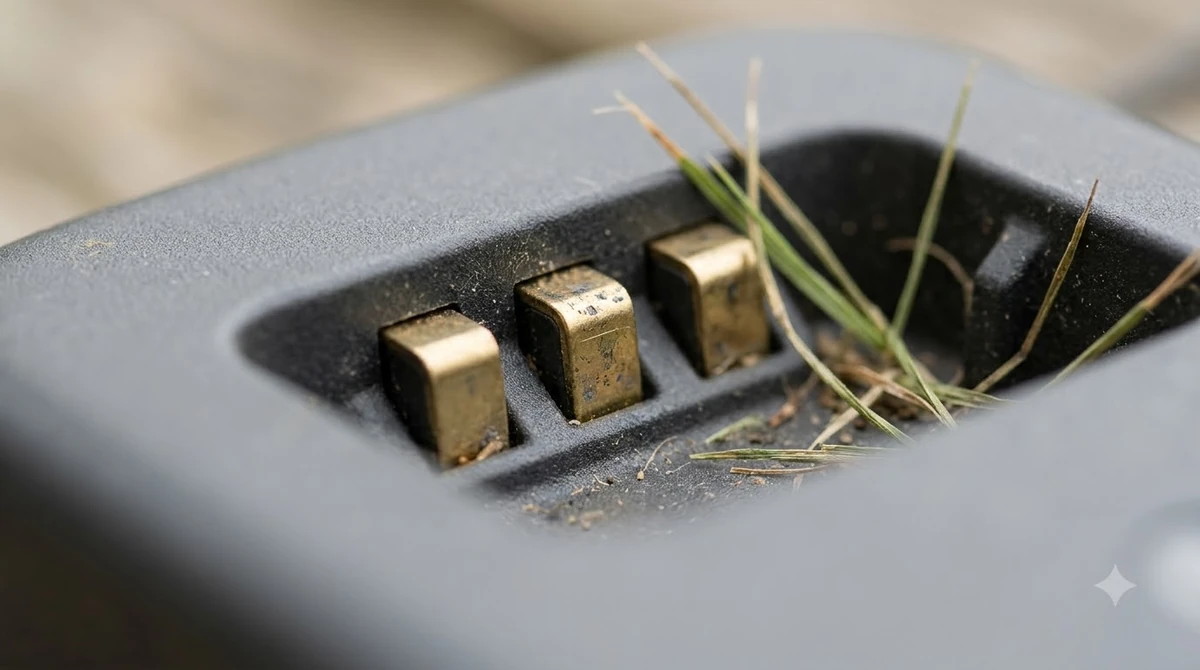
- Dock site: confirm the dock sits on level ground with clearance on each side, since the M5 needs room to dock.
- Lawn area: check the coverage figure against your measured area, because a steep yard often has more obstacles.
- Remote access: check any remote-access fee in the seller’s terms, since it is separate from the mower price.
Heads up
Specifications differ between retailer pages and reviews. Confirm the model version and rated slope on the manufacturer or seller page before you buy. If your yard is steeper than the rating allows, alternatives to the Anthbot M5 show what other brands claim. Slope rating is only one criterion, and the Eufy E18 value assessment looks at the wider picture for a similar buyer.
Frequently asked questions
What is the Anthbot M5 slope limit?
The listing and a UK review give a maximum slope of 45%, about 24 degrees. Treat it as the upper limit, not a working figure.
Does the Anthbot M5 have four-wheel drive?
No. A UK review of the LiDAR model notes that the M5 is not four-wheel drive, so traction on hills depends on two driven wheels.
How do I measure the slope in my yard?
Divide the vertical rise by the horizontal distance and multiply by 100. Measure the steepest section of the lawn you plan to mow.
Can the M5 mow wet slopes?
Wet grass reduces grip, so use a lower working limit than the rating and avoid slope mowing right after rain or irrigation.
Sources
- Freshly Charged (retailer): listed slope of 45%, coverage up to about 500 m², and IPX6 rating.
- Easy Lawn Mowing (UK review): 45% rating (about 24 degrees) and the note that the M5 is not four-wheel drive.
- Husqvarna support (manufacturer): slope formula and boundary guidance for steep ground.
 Up next9 min readReviews & CompareAnthbot M5 vs Mammotion YUKA: Specs, Slope and NavigationUpdated Nov 11, 2026
 9 min readReviews & CompareAnthbot M5 Pros and Cons: What the Reviewer ReportedUpdated Nov 15, 2026
 8 min readReviews & CompareAnthbot M5 vs Anthbot Genie: Smart Spec ComparisonUpdated Nov 14, 2026
 8 min readReviews & CompareAnthbot M5 Alternatives: What to Compare Before You BuyUpdated Nov 11, 2026
 7 min readReviews & CompareAnthbot M5 Problems and Complaints: Issues and FixesUpdated Nov 14, 2026
 7 min readReviews & CompareSegway Navimow i110N vs Anthbot M5: Specs ComparedUpdated Nov 13, 2026