
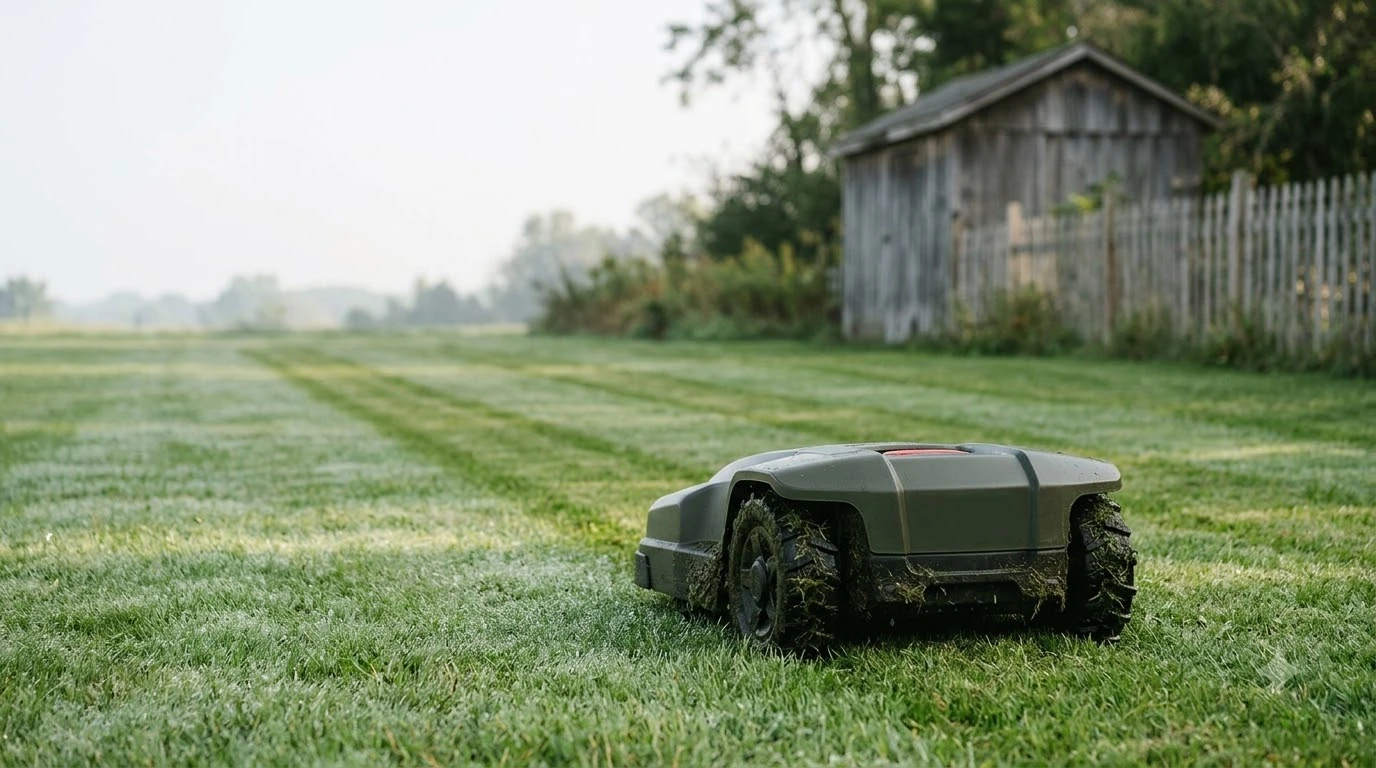

A robot mower buying checklist for first time owners should cover five things before paying: lawn area, slope, passage width, boundary and charging setup, and the running costs. Most returns and frustrated owners trace back to one of these being skipped, not to the mower itself. This checklist goes through them in the order that saves you the most money and time.
The short answer
- Measure the real lawn area in square feet or acres, not just the house footprint, and buy with headroom above it.
- Check the steepest slope and narrowest gap because they decide which models are realistic for your yard.
- Plan the boundary and the charging station, including whether you will bury wire or use a wireless setup.
- Budget the running costs: replacement blades, batteries, and any app or service fees.
Measure the lawn and its shape
Start with the area you want the mower to cover, not the number on the box. Extension guidance for home lawns, such as the Clemson Home and Garden Information Center factsheet on measuring a lawn, suggests sketching the yard and splitting it into simple rectangles and triangles, then adding them up. Robot mower spec sheets publish a maximum coverage figure, and that figure should sit clearly above your measured area. A mower rated for exactly your size will work hard all season and wear faster. A short checklist works best next to the broader picture, as an overview of choosing a robot mower provides.
Shape matters as much as size. A long, narrow yard with beds in the middle takes more boundary wire and more turns than a square lawn of the same area. Every corner, flower bed, and tree trunk is a place where the mower slows down or needs a boundary to stay out of. When you sketch the lawn, mark the obstacles too, because they change how much of the map the mower can actually use.
Check slope and the steepest spot
Slope is the most common reason a model fails in the real yard. Manufacturers list a maximum slope rating, usually as a percentage, and that number applies to the mower on ideal ground. Iowa State University Extension’s guidance on gardening slopes and hillsides is a useful reminder that grade changes the way water, soil, and traction behave, so a rating that looks fine on paper may struggle on wet grass. Measure the steepest section you plan to mow, and remember that a slope that is steep in only one corner still limits where the mower can safely go.
Our reading is that you should aim for a rating with a margin above your steepest measured slope rather than matching it exactly. Wet grass, bare patches, and new growth all reduce grip.
Confirm passage widths and tight spots
Narrow gaps between the house, a fence, and a garden bed are a frequent surprise. Husqvarna’s support article on creating a passage in an Automower boundary installation describes how the boundary wire spacing sets the minimum width the mower will enter, and that the required gap is different when a guide wire is used. Before you buy, measure every passage the mower must cross to reach the far side of the lawn. If one gap is too narrow, the mower will simply never cover the area behind it. Tight spots raise the noise question, as mower noise around the house explains.
Also check the spots where the mower must pass a driveway edge, a sidewalk, or a set of steps. Those are the places where a robot mower most often needs a boundary change, a physical barrier, or a second visit from you.
Plan the boundary and the charging station
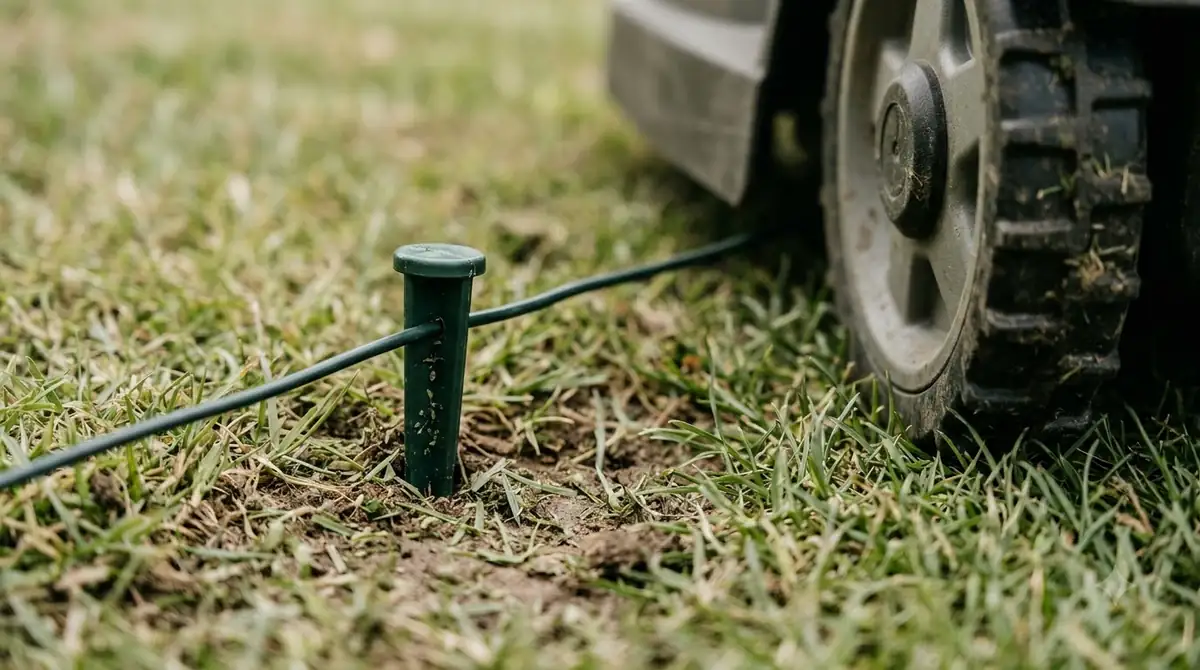
Most robot mowers need a boundary, and the two main options are buried perimeter wire and wireless systems that use satellite positioning or sensors. Wire setups are common on the market and need a day of careful work; wireless setups skip the trenching but depend on signal quality and an initial mapping run. Neither is automatically better. Choose based on how easy it is to dig in your yard, how many trees block satellite signal, and whether you want to change the layout later. The basics of boundary and docking are in how robot mowers do their job.
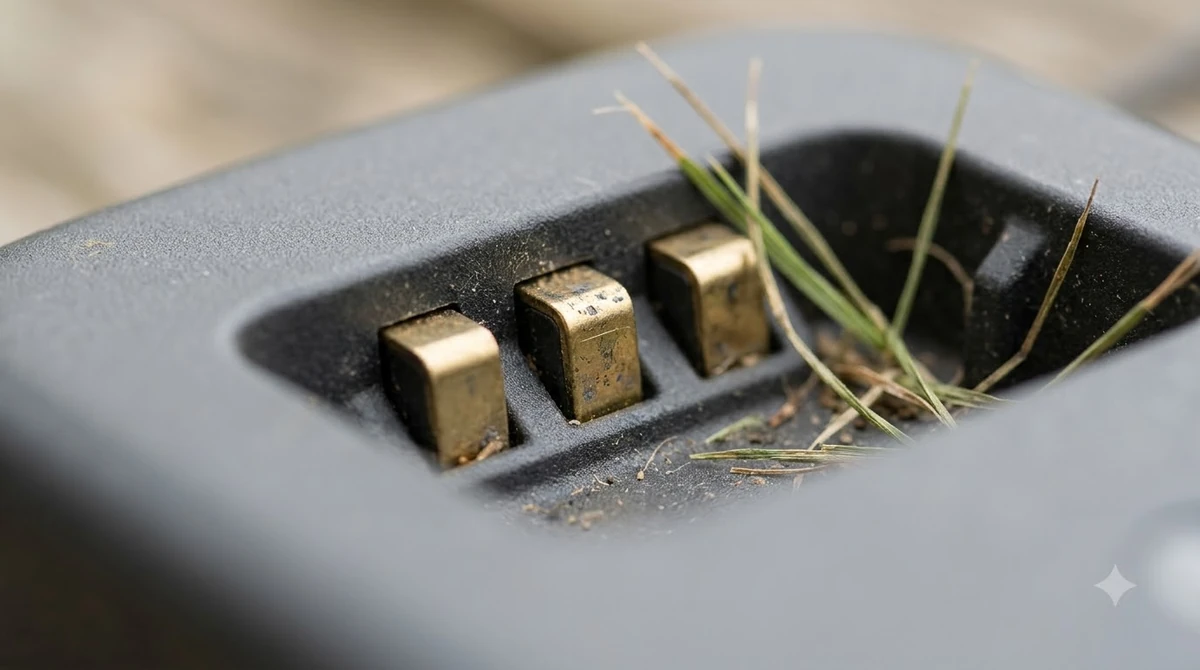
The charging station needs a level spot near a power outlet or a weatherproof run of cable, with clear space in front so the mower can line up. Manufacturer guidance on charging station placement, such as Husqvarna’s mower house and charging station guide, stresses shade, drainage, and access for service. Put the station where you can reach it without moving furniture, and where a sprinkler or runoff will not soak it.
Understand the running costs
The purchase price is only the first cost. Blades are a recurring expense, and manufacturers publish replacement schedules that depend on lawn size and mowing frequency. Batteries wear out over several years, so check what a replacement pack costs and whether it is sold separately. Ecovacs’ published guidance on how much a robot lawn mower costs over its life is a helpful reminder to count these items before you decide. Some brands also charge for app features, cloud tracking, or extended warranties, so read the fine print before you buy. Specs can mislead, so learn decoding a mower spec sheet first as a useful companion to the points in this section.
Ask the seller how long the warranty runs, whether parts are stocked locally, and who handles repairs. A cheap mower with no nearby service is an expensive choice if the blade motor fails in the middle of the season.
Robot mower buying checklist for first time owners: the first season
A first-time owner should expect a learning period. The first mowing runs are often the ones that reveal weak spots in the boundary or a passage the mower does not like. Plan to watch the first few runs, adjust the schedule so it runs during quiet hours, and tune the cutting height to suit the grass. Clemson’s mowing guidance and University of California IPM notes both point out that cutting too short stresses turf, so a higher starting height is usually the safer choice while you learn the machine. For a longer list of checks, see key questions for new owners. For a wider look at the category, read automatic mowers for every lawn. New owners can read about mowers for beginners for a gentle introduction. After the first-season checklist, a broader piece on choosing a robot mower for 2026 helps you compare what is currently on the market.
Use this robot mower buying checklist for first time owners as a final pass before you sign. Keep a simple log for the first month: cutting height, runtime, any stops, and where the mower got stuck. That record makes it much easier to adjust the boundary or talk to the seller if something does not work as promised.

Frequently asked questions
Do I need a boundary wire to use a robot mower?
Most models use a boundary, but the type varies. Wire systems are the traditional approach, while some newer models use satellite positioning or vision sensors. Check which system the model uses before you plan the yard.
How do I know if a robot mower can handle my slope?
Compare the maximum slope rating in the spec sheet with the steepest section you measured, and leave a margin for wet or uneven grass. A rating that matches your slope exactly leaves little room for error.
Should I buy a bigger model than my lawn needs?
A little headroom usually helps, because a mower rated near its limit works harder and wears faster. Avoid paying for a much larger coverage area you will never use, since extra capacity adds cost.
What running costs should I budget for?
Plan for replacement blades, a battery replacement after several years, and any subscription or service fees. Ask the seller for replacement part prices before you commit.
Sources
- Clemson Home and Garden Information Center (university extension): method for measuring lawn area.
- Iowa State University Extension (university extension): how slope affects soil, water, and grip.
- Husqvarna support (manufacturer): how boundary spacing sets passage width.
- Husqvarna support (manufacturer): charging station placement guidance.
- Ecovacs (manufacturer): overview of total ownership cost.
 Up next9 min readBest Robot MowersBest Robot Lawn Mower for Dog Owners: What to Check FirstUpdated Nov 11, 2026
 10 min readBest Robot MowersBest Robot Lawn Mower for First-Time Homeowners: What to Check Before You BuyUpdated Nov 10, 2026
 7 min readBest Robot MowersWhich Greenworks Robot Mower Should You Buy? A Checklist by Lawn TypeUpdated Nov 14, 2026
 8 min readBest Robot MowersRobot Mower Maintenance Checklist: Cleaning, Blades, and StorageUpdated Nov 11, 2026
 8 min readBest Robot MowersIs a Refurbished Robot Lawn Mower Worth Buying?Updated Nov 12, 2026
 8 min readBest Robot MowersBest Robot Lawn Mower Easiest to Set Up: What Affects Setup TimeUpdated Nov 10, 2026