
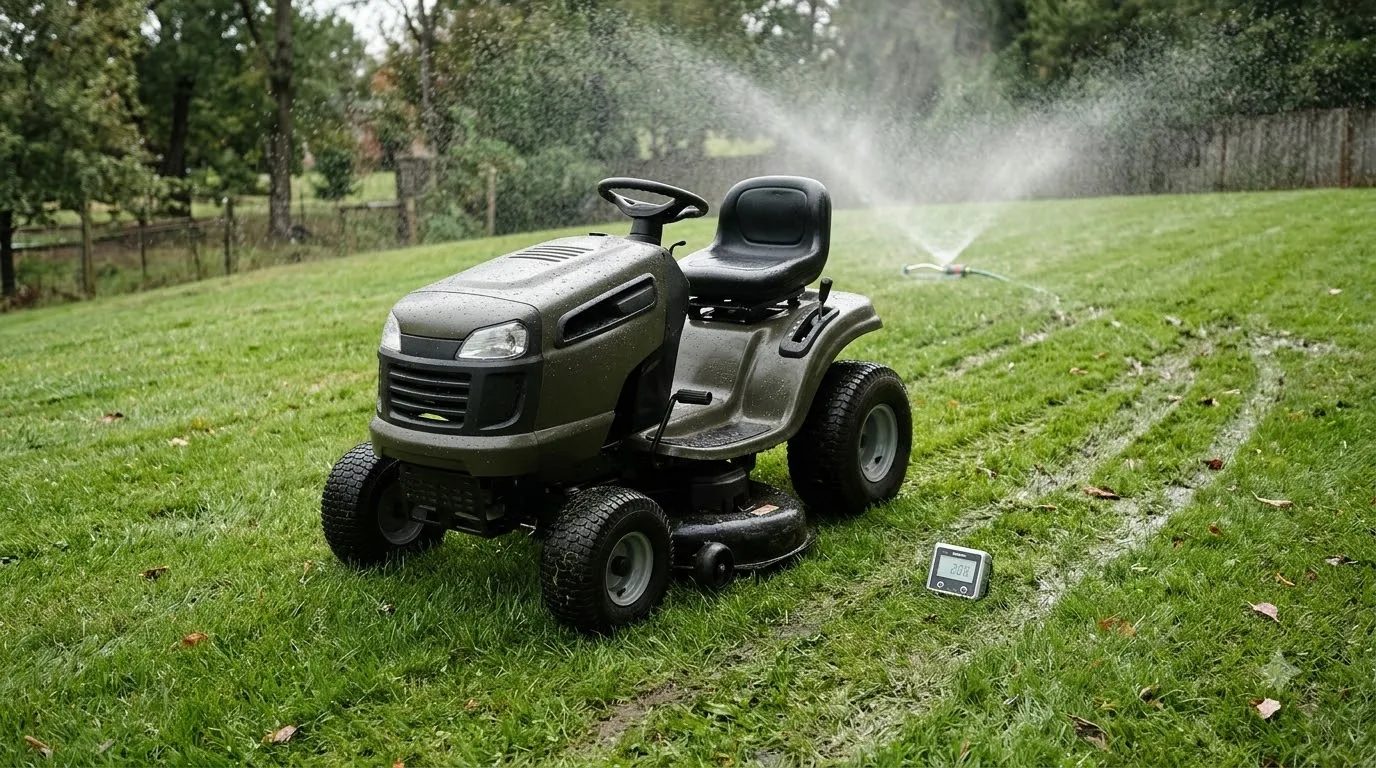

Robot mower wheel spikes for wet grass can help a mower grip on damp, slippery ground, but they are an edge-case upgrade rather than a default. Segway’s guidance for its Navimow H-series says standard wheels suit most people, and spikes are for particular terrain or seasons. The spikes add traction on wet, bumpy, or sloped lawns, and they bring trade-offs that are worth checking before you fit them.
The short answer
- Spikes add grip on wet grass, dips, and bumps where standard tread slides.
- Standard wheels are usually enough for flat, dry lawns and most homeowners.
- Expect mud to build up between the spikes and the tread, and plan to hose it off.
- Check the mower’s slope limit first. Spikes do not raise the limit that the manufacturer sets.
Why wet grass makes a robot mower slip
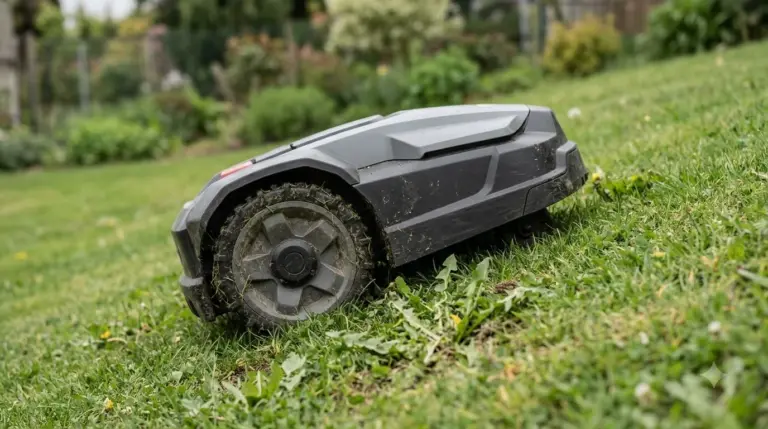
Wet grass, loose soil, and steep inclines make wheels slip, and slippage can tear up turf and leave bare patches. Sunseeker’s guide notes that slipping is more likely on clay soil, on new turf, and in shaded areas where moisture lingers. A mower that slides on wet ground may also need repeat passes, which wears the lawn further.
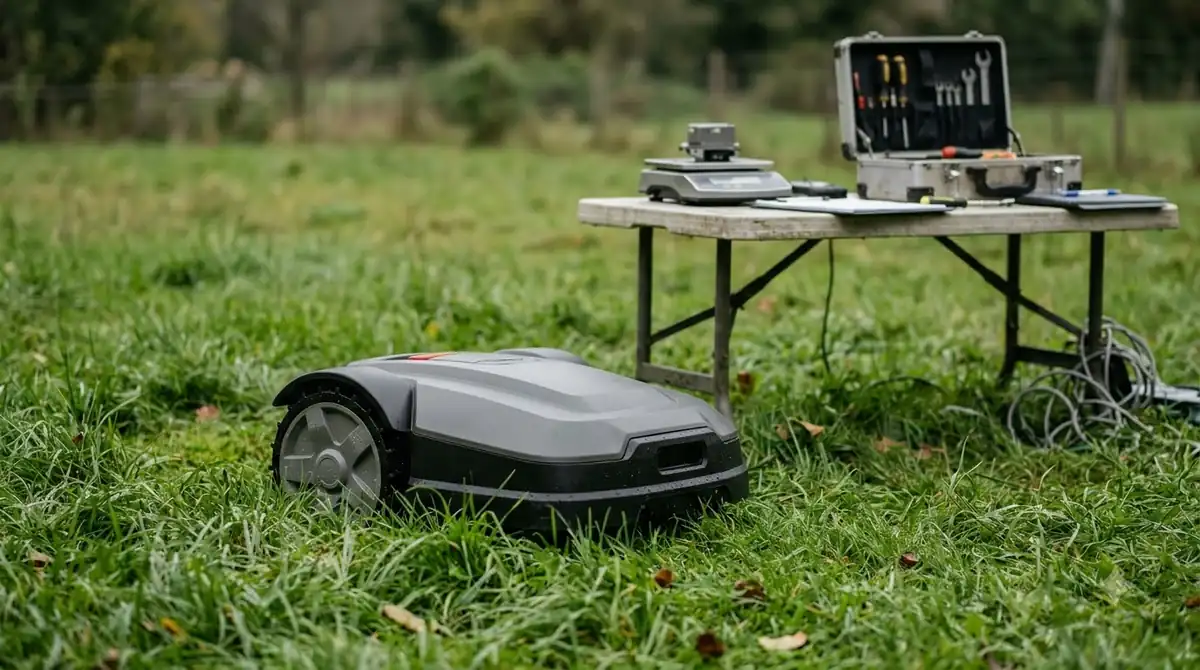
Segway’s post says the H-series standard wheels can climb 24-degree (45%) slopes on lawns. On rough ground, or with wet and slippery grass, the effective slope in dips and bumps can be much steeper, which is where a mower may struggle or get stuck. Our reading is that the problem on a wet lawn is usually the dips, not the main slope.
What wheel spikes change
Segway says spikes can help the mower climb with ease and turn accurately without slipping. On fairly flat ground they may also add a little speed through better traction, especially on spongy grasses such as kikuyu. The gain is most visible where the grass is soft and the wheels want to spin. The follow-up question most readers have is answered in our traction spikes for robot mower slopes.
Spikes do not change how the mower is built. Sunseeker’s guide calls all-wheel drive “arguably the most important feature for slope performance,” and says deep-tread tires grip damp surfaces better than smooth wheels. Spikes work on top of those features, not in place of them.
| Situation | Standard wheels | Spiked wheels |
|---|---|---|
| Flat, dry lawn | Usually enough | Little extra benefit |
| Wet grass in dips and bumps | May slide | Better grip, per Segway |
| Muddy or clay-heavy ground | Can slip | Mud can build up between spikes |
| Autumn with fallen leaves | Normal | Leaves can catch in the spikes |
Robot mower wheel spikes for wet grass: trade-offs to check
Segway lists two downsides. In autumn, spikes can catch fallen leaves, which the company says does not seem to affect performance, and they tend to fall off over time, so they are easy to pull off by hand. In muddy conditions, dirt can build up between the spikes and the tread, so the wheel needs cleaning more often. See our rubber wheel covers for traction for further detail on a connected question. If this point matters for your setup, read our front caster replacement guide for more detail on it.
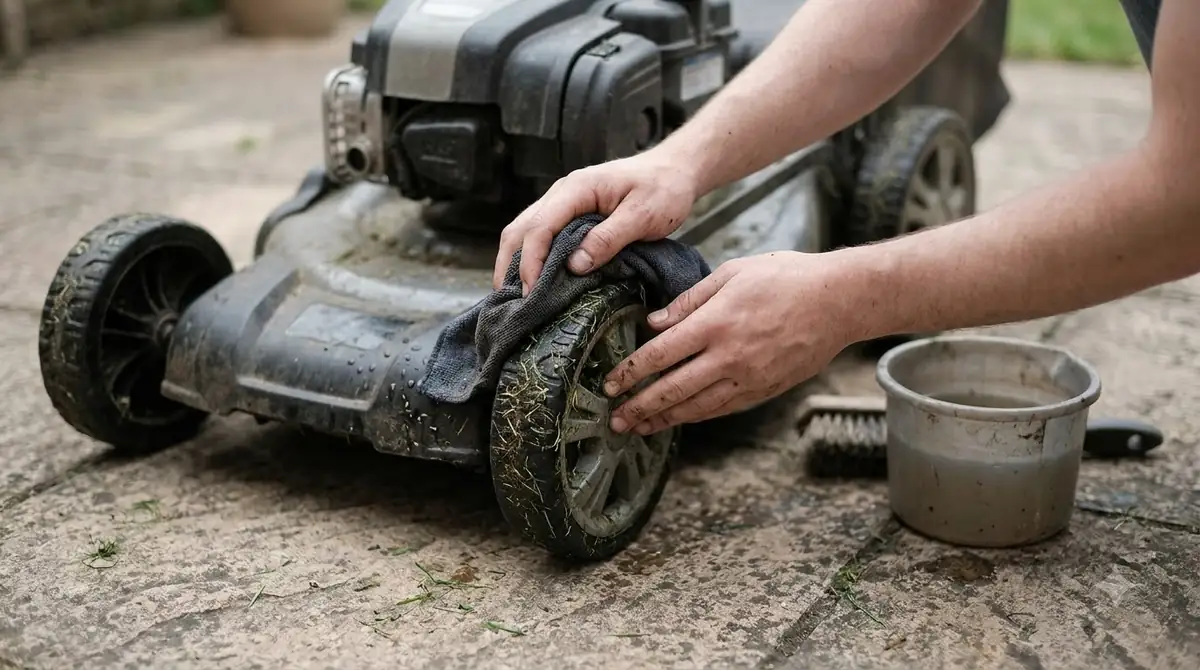
Robot mower wheel spikes for wet grass are only worth it if the trade-offs suit your yard. Neither source covers turf damage, noise, or wear from spikes, so we could not confirm those points. Before you buy, ask the manufacturer whether the spikes are approved for your model and whether they change the warranty or the slope rating.
Keeping spiked wheels clean and grippy
Segway’s cleaning advice is simple. Pull off leaves by hand, hose off mud, and check the underside of the mower for wet grass, which can reduce mowing efficiency. Scrape, wash, or blow that buildup away. Sunseeker adds a general habit: inspect the tread regularly, since it wears faster on inclines, and replacement wheels are usually inexpensive.
Heads up
Sunseeker notes that wheel slippage can tear up turf and leave bare patches. Spikes can reduce slipping, but they do not change the slope rating that the manufacturer sets, so keep to that figure.
Mowing wet grass and slope limits
Sunseeker’s guide gives slope figures as a reference: 15 degrees is about 27%, 20 degrees about 36%, and 25 degrees about 47%. Entry-level models may handle about 20% grades, and advanced hillside models 35% or more. These are vendor figures, so use the limit printed in your model’s manual. Beyond this topic, you can also read our weather station setup for robot mowers for an adjacent part of owning a robot mower.
Clear branches, toys, and other objects from steep areas before each session, and keep the sensors clean. A mower that is set up well on dry ground gives you a fair test of whether spikes are needed at all.
What to check before you buy wheel spikes
Start with your lawn. If the wet-grass slipping shows up only on one slope or in a few dips, a set of spikes may solve it. If the mower slips on every wet day, look first at the drive system and the tread, and check the slope limit against your yard.
Confirm that the spikes fit your model, because Segway’s example covers specific H-series and i-series versions. Read the cleaning advice and plan to check the wheels after each wet mowing.

Frequently asked questions
Do robot mower wheel spikes help on wet grass?
Segway says spikes can help the mower climb and turn without slipping, especially on rough ground or wet, slippery grass.
Do I need spikes for a flat lawn?
Segway says standard wheels suit most people, and spikes are for edge-case terrain or certain seasons. On a flat, dry lawn the benefit is small.
What is the main downside of spiked wheels?
Mud can build up between the spikes and the tread, and in autumn leaves can catch in them. Segway says the leaves do not seem to affect performance.
Do spikes raise the slope limit?
Neither source says so. Keep to the slope limit in your model’s manual, because spikes do not change that rating.
Sources
- Segway NZ, Navimow spiked wheel discs (manufacturer blog): used for the wet-grass and dip advice, standard versus spiked wheel guidance, the leaf and mud downsides, and cleaning steps.
- Sunseeker, Robot lawn mowers on uneven or sloped lawns (vendor blog): used for slippage on clay and shaded lawns, the all-wheel drive and tread notes, and the slope-to-percent figures.
 Up next8 min readGearRobot mower traction spikes for slopes: what actually helps gripUpdated Nov 19, 2026
 7 min readGearRobot Mower Dock Leveling Pad: When One HelpsUpdated Nov 20, 2026
 7 min readGearRobot Mower Wheel Replacement: When to Swap and What to CheckUpdated Nov 19, 2026
 6 min readGearRobot Mower Collision Bumper Strips: Are They Worth It?Updated Nov 20, 2026
 7 min readGearRobot Mower Grass Catcher AlternativesUpdated Nov 13, 2026
 9 min readGearBest Grass Seed for Robot Mowed Lawn: Match Light and HeightUpdated Nov 13, 2026