
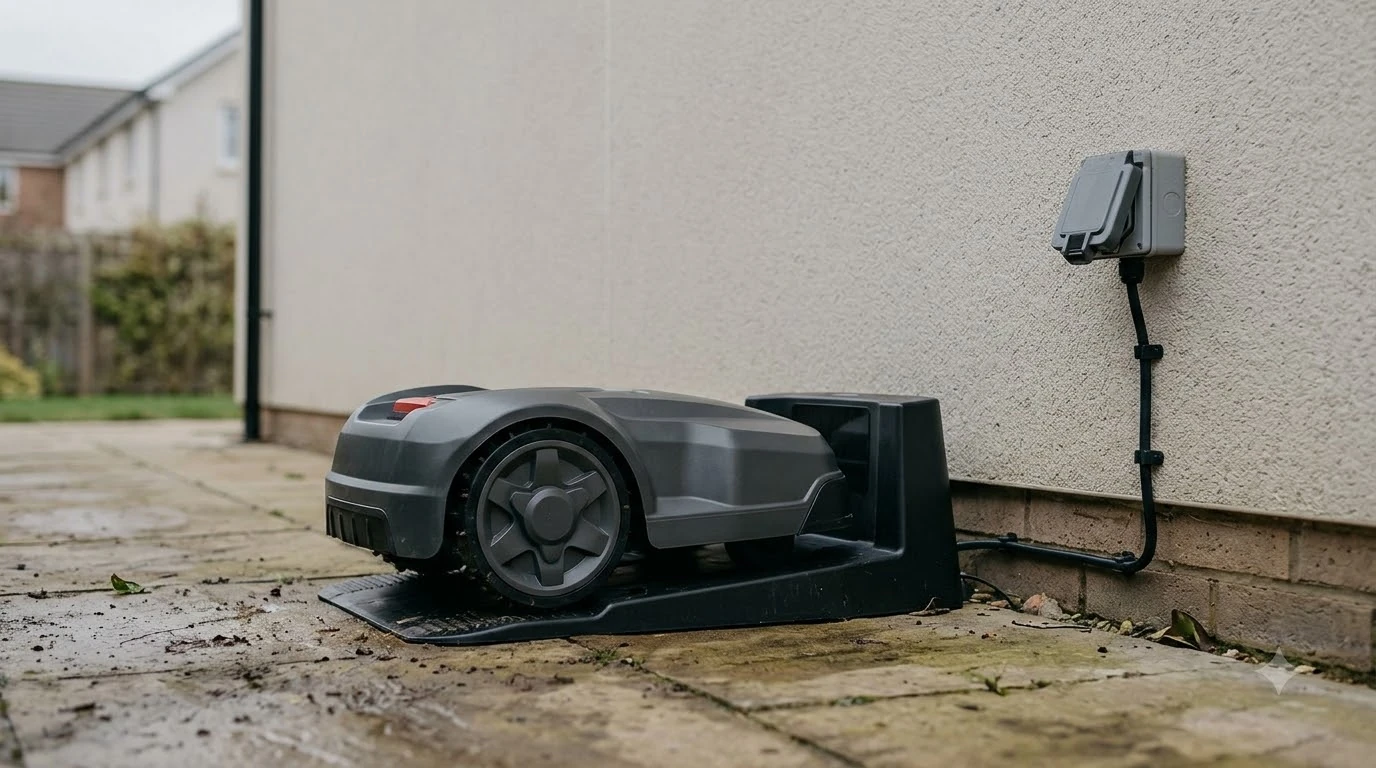

A robot mower dock leveling pad is a flat shim placed under the charging station to correct a base that sits unevenly, but it should only be a last resort. The charging station needs to sit on level, solid ground so the contacts line up and the mower can dock reliably. Before buying a pad, check the ground, fix what you can by digging out or packing soil, and confirm your model’s manual allows any added layer.
The short answer
- Level first: Husqvarna says the charging station must be on a level surface, and Mammotion says to install it on flat, solid ground.
- Fix the ground before adding a pad: soft soil, loose stones and a sagging corner cause more trouble than a small gap.
- A pad is a workaround: none of the manufacturer guides we read mention a leveling pad, so treat it as a trial.
- Keep the base still: Mammotion warns that a station that moves slightly can cause failed docking.
Why the dock base has to sit level
The charging station works by pressing the mower’s contacts against the station’s contacts. If one side of the base rocks or sits low, the contacts can meet at an angle, lose contact under the mower’s weight, or shift when the lawn softens after rain. A failed dock is usually a symptom of the ground under the base, not a fault in the mower itself. Several products solve the same problem, and the roundup of dock mats for a stable base compares them.
Mammotion’s installation guide says to install on flat and solid ground and to make sure the station does not move, because even slight movement can stop the robot from docking correctly. Husqvarna’s placement guide makes the same point about a level surface. Both guides treat level ground as the starting requirement, which is why the base should be checked before any accessory goes under it.
Check the base before you add anything
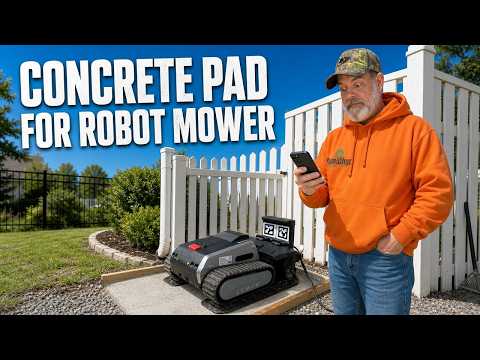
Start with a spirit level placed across the base plate, once front to back and once side to side. Then press each corner firmly with your hand. A base that rocks or ticks when pressed is not stable, and a pad will not fix that by itself. A cover added later needs the base to be level, so charging station cover and base fit should be checked together. Tilt limits differ by brand, and Landroid dock tilt and placement limits show how strict one maker is.
Look at the ground around the station too. A lawn that is soft from rain can settle unevenly after a few weeks, and a gravel or paver edge can hold water and wash soil out from under one corner. If the base sits on a slope, a pad is the wrong tool; the station needs a flatter spot or a different position.
When a robot mower dock leveling pad makes sense
A leveling pad is most useful when the base is nearly flat but one corner sits a small amount lower than the other, typically on a concrete slab or a patio where the surface is solid but not perfectly flat. In that case, a rigid shim matching the base footprint can bring the station back to level without digging. A pad stops tilt but not movement, so anchor screws for the dock base are often used alongside it. On soft but flat ground, ground stakes that keep the dock still are the simpler choice.
A robot mower dock leveling pad is not a fix for a soft lawn, a slope, or a station that has already moved. Our reading is that a pad only belongs under a base that is solid and stable, and that adding height on one side should be kept small so the docking path stays straight.
What to look for in a robot mower dock leveling pad
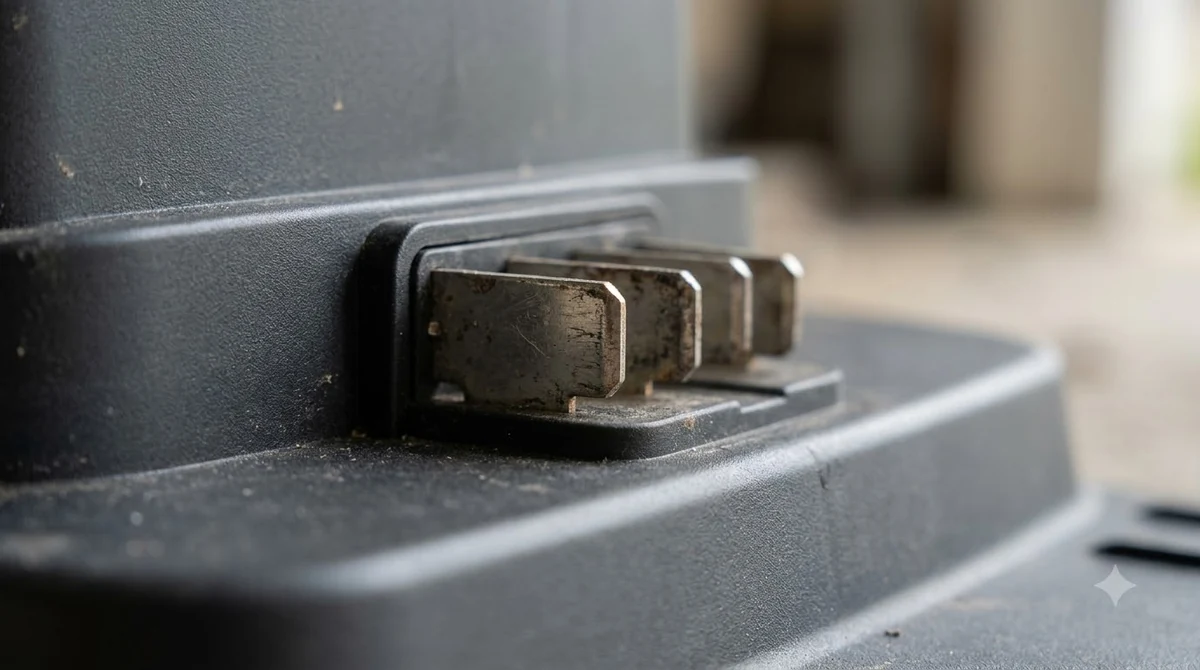
If you do use a robot mower dock leveling pad, choose one that will not compress over time. Foam, rubber sheets that flex under weight, and stacked soft pads can change height as the station sits on them, which brings back the same problem. A rigid, weather-resistant material is more predictable. Tilt can let water collect around the plates, and corrosion at the charging contacts is a typical result.
- Rigid material: it should hold its shape under the station’s weight and not creep or squash.
- Footprint: the pad should cover the whole base plate, so no corner is left on a different surface.
- Thin profile: keep the added height small, because a thick pad raises the contacts and can change how the mower approaches the dock.
- Non-slip underside: it should not slide when the mower drives onto the station.
- Weather resistance: it will sit outdoors, so it needs to survive rain, sun and freezing without warping.
How to level the dock with a pad, step by step
- Remove the station and the mower. Lift the base and check the ground beneath it for debris, roots, or wet soil.
- Fix the ground first. Pack soil, remove stones, or re-set the surface so the base can sit flat without any added layer.
- Measure the gap. Place a level across the base to find the low corner and the height difference.
- Choose a rigid pad. Match the footprint and keep the thickness close to the measured gap.
- Re-set the base and test. Re-pin the station, then check with the level again and press each corner.
- Run a docking test. Send the mower back to the dock several times and watch whether the contacts engage every time.
When not to use a pad
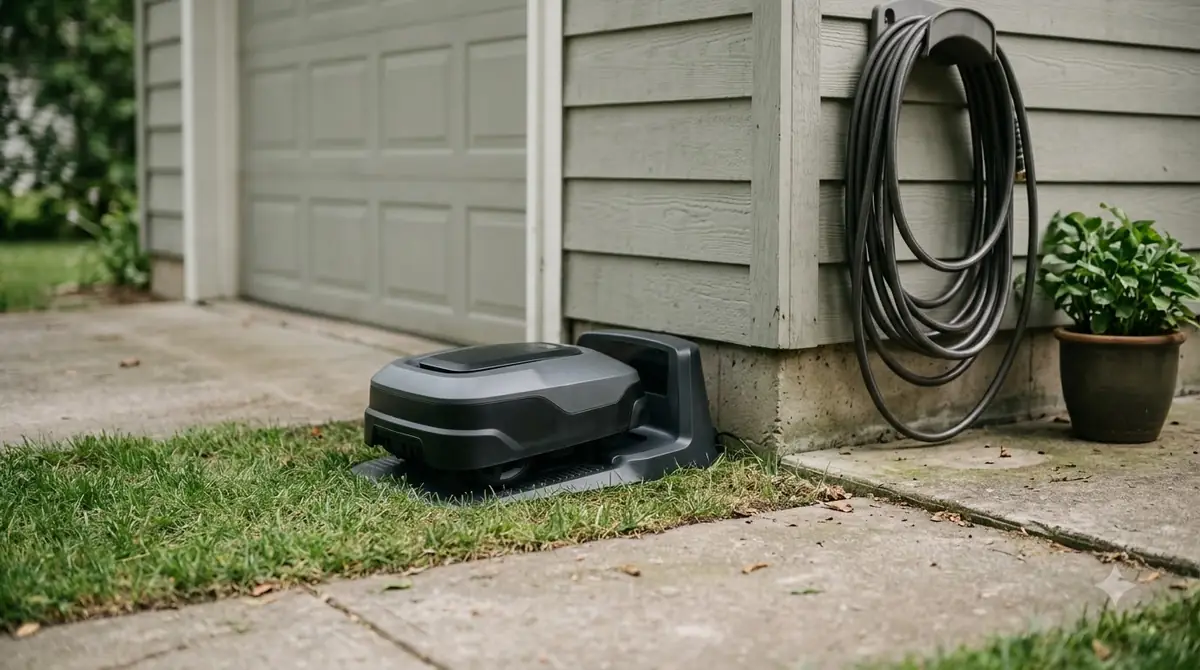
Skip the pad if the station needs more than a small correction, if the manual specifies a particular ground type, or if the add-on would move the contacts out of the range the mower expects. A pad under the station also changes how the base is anchored, so re-check the pegs or anchors after installation. Before placing the pad, leveling sand for the ground beneath can correct small dips in the turf. If the ground cannot be made level, a wall mount bracket instead of a pad is one alternative.
| Ground problem | Better fix | Is a pad suitable? |
|---|---|---|
| Soft or sinking soil | Compact soil or lay a firm base | No, it will shift |
| Small gap under one corner on solid ground | Rigid shim sized to the gap | Yes, as a trial |
| Slope or uneven grade | Move the station to flatter ground | No |
| Base rocks when pressed | Re-anchor and re-level | Only after the base is stable |
Heads up
Check your warranty and manual before adding anything under a charging station. A modification that changes the docking geometry can make a docking fault harder to diagnose.
Frequently asked questions
Does a robot mower dock need to be level?
Yes. Husqvarna says the charging station should be on a level surface, and Mammotion says to install it on flat, solid ground.
Can I use a foam pad under the charging station?
Soft foam can compress over time and change the height of one corner, so a rigid pad is more predictable. Check the manual before adding any robot mower dock leveling pad or other layer.
What if the station is on a slope?
A pad is the wrong fix for a slope. Moving the station to a flatter spot is the safer choice.
How do I know if the dock is level enough?
Place a spirit level across the base plate in two directions, press each corner, and run several docking tests. A base that does not rock and lets the mower dock every time is stable enough.
Sources
- Husqvarna, Automower charging station placement guide (manufacturer): used for the level-surface requirement.
- Mammotion, charging station installation guide (manufacturer): used for flat, solid ground, the warning about station movement, and anchoring.
 Up next6 min readGearRobot Mower Wheel Spikes for Wet Grass: When They HelpUpdated Nov 20, 2026
 6 min readGearRobot Mower Spare Antenna: When You Really Need OneUpdated Nov 20, 2026
 8 min readGearRobot Mower Cable Conduit for Driveways: When to Use OneUpdated Nov 20, 2026
 8 min readGearRobot Mower Spare Bumper Cover: When to Buy OneUpdated Nov 20, 2026
 7 min readGearRobot Lawn Mower Accessories: What Each One Does and When You Need ItUpdated Nov 13, 2026
 9 min readGearBest Soil Leveling Rake for Robot Mower Lawn: What to Look ForUpdated Nov 11, 2026