
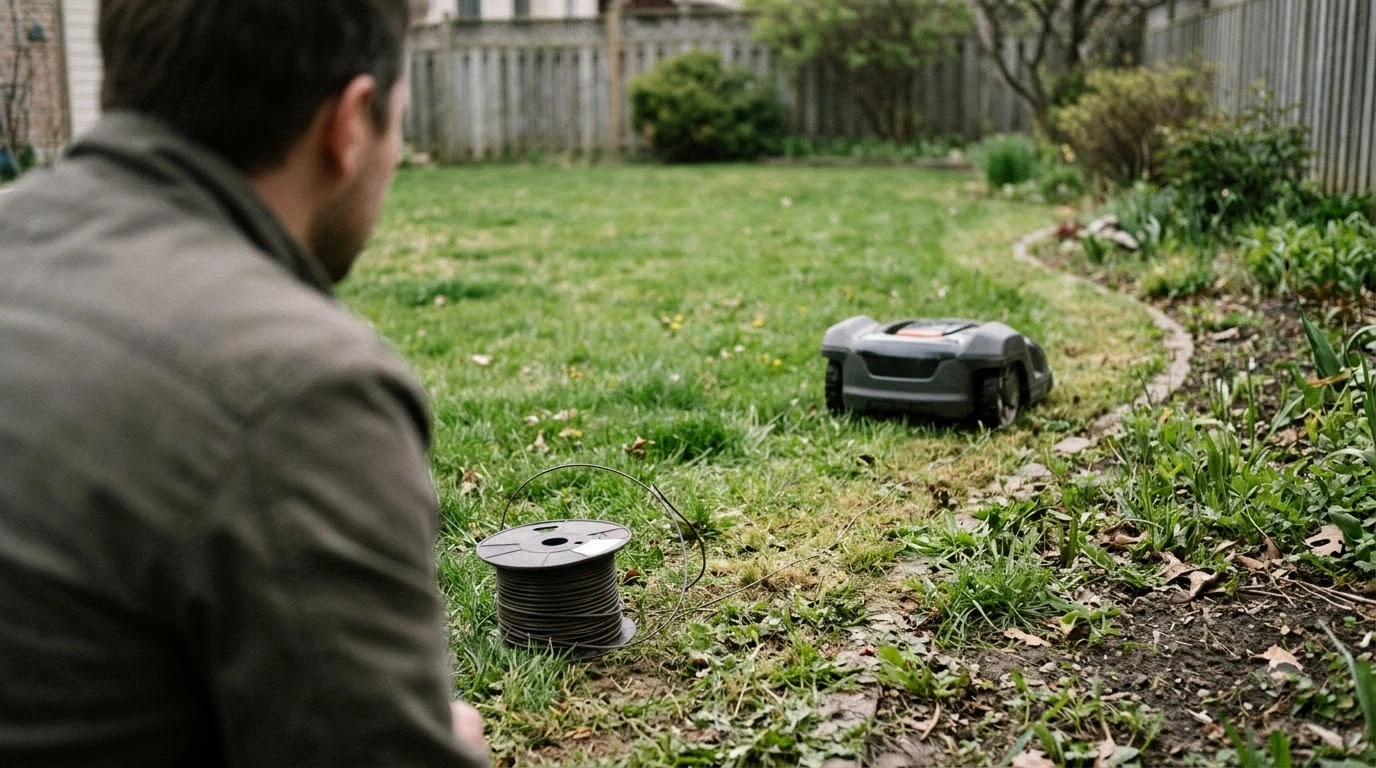

The best premium robot lawn mower worth the price is the one whose features match your lawn, not the most expensive model. As of November 2026, premium tiers run about $2,500 to $5,000+, and that extra cost pays off mainly on larger, steeper, or more complicated yards.
The short answer
- Premium is worth it when your lawn is large, sloped, or hard to map with a boundary wire.
- Mid-range is often enough for a small or flat lawn, roughly under 0.25 to 0.75 acre, in our reading.
- Check three things first: lawn size, navigation type, and slope rating.
- Confirm recurring costs, including whether key features need a paid subscription.
What premium means in price and features
Premium is a price tier, not a formal standard, so it helps to define it. For most buyers, the best premium robot lawn mower worth the price is defined by features, not by the label. Ecovacs groups robot mowers into three US tiers: entry at $500 to $1,000, mid-range at $1,000 to $2,500, and premium at $2,500 to $5,000+. Its page was published on December 18, 2025, so treat those figures as a starting point and check current listings. For a wider view of what mowers cost, see our guide to robot lawn mower cost.
| Tier | Typical US price (Ecovacs, published Dec 2025) | What it usually adds |
|---|---|---|
| Entry | $500 to $1,000 | Basic navigation and smaller lawn coverage |
| Mid-range | $1,000 to $2,500 | Wider lawn range and better navigation options |
| Premium | $2,500 to $5,000+ | Advanced navigation such as LiDAR, AI obstacle detection, and stronger slope handling |
Ecovacs says premium models use advanced navigation such as LiDAR for wire-free operation and high accuracy, along with AI and better sensors for obstacle detection. Those are the features you are paying for, so the question is whether your yard needs them.
When premium pays off: lawn size and terrain
Whether the best premium robot lawn mower worth the price is the right buy depends on yard size first. Price rises mostly with lawn size and terrain. Mammotion’s price guide, dated May 27, 2026, lists bands that climb with acreage: up to 0.25 acre at $800 to $1,500, 0.25 to 0.75 acre at $1,500 to $2,500, 0.75 to 1.25 acres at $2,500 to $3,500, and 1.25 to 2.5 acres at $3,299 to $4,500+, as of that date.
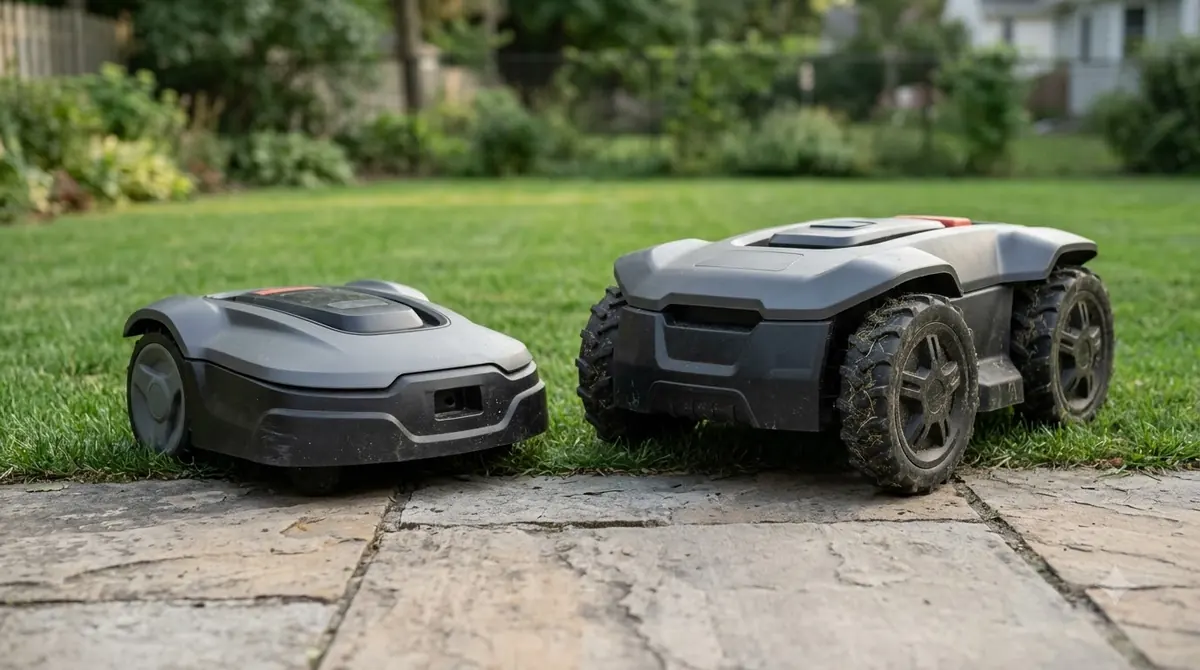
The same page names navigation and boundary technology as the biggest price driver in 2026, followed by lawn size and terrain and slope handling. Premium models usually earn their cost when several of these apply at once:
- The lawn is larger than about 0.75 acre.
- The yard has real slopes, uneven ground, or irregular shapes.
- You need wire-free navigation and do not want to bury a boundary wire.
A small, flat lawn gains little from the top navigation tier. In that case the extra money buys features you may never use.
Navigation: what LiDAR and RTK add to the price
For the best premium robot lawn mower worth the price, navigation is usually the deciding feature. LiDAR and RTK are the two navigation types that mostly separate premium from mid-range. LiDAR needs no base station, and Ecovacs rates its installation as easy. RTK uses a base station that must sit in an open, unobstructed spot, and Ecovacs rates its setup as moderate because of the base and calibration.
| Factor | LiDAR | RTK | Boundary wire |
|---|---|---|---|
| Base station | Not needed | Needed, open site | Not needed, wire buried |
| Install effort | Rated easy by Ecovacs | Rated moderate by Ecovacs | Depends on yard size and wire layout |
| Under trees | Vendor says it works in shade and under trees | Accuracy may drop from satellite interference | Not affected by sky view |
| Fog and heavy rain | Beams may scatter or absorb (Ecovacs) | Not listed as a limit in that source | Not listed as a limit in that source |
Vendors make these claims about their own products, so treat them as vendor claims. For the basics, see how LiDAR robot mowers work and how an RTK robot mower works. Neither technology is better for every yard. Our reading is that a yard with many trees or long shade favors LiDAR, while an open lawn with a clear base-station site can suit RTK well.
Slope and traction: where models differ
Slope data is the quickest way to judge whether a premium model fits a hillside. Slope rating and drive layout are where premium models often differ from cheaper ones. Navimow lists a 45% (24 degrees) rating for the i2 AWD, 55% (29 degrees) for the i2 LiDAR Pro, and 84% (40 degrees) for the X4, all as published on its buying guide. Husqvarna rates its Automower 435X AWD up to 70% (35 degrees) in its steep-slope support guidance.
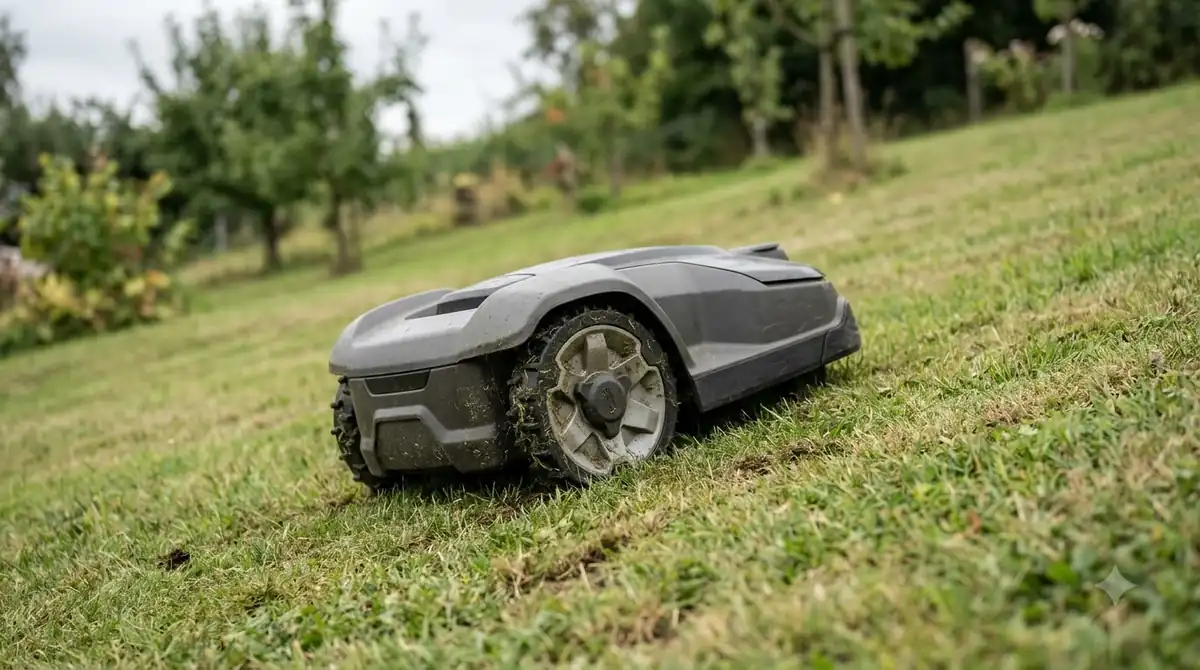
A slope rating is a ceiling, not a target. Eufy’s guide says a stated maximum slope is an absolute limit, and running at the top of that range strains the motor, drains the battery faster, and increases wheel slip. Mammotion says its 2WD models suit yards under about 0.25 to 0.5 acre, but its own slope figures for 2WD conflict across pages, so this guide does not quote a 2WD slope number.
Running costs and subscriptions to check
Recurring costs are small next to the purchase price of the best premium robot lawn mower worth the price. Ecovacs says most models need blade replacement, an occasional battery change, and limited electricity. Its figures are a battery replacement every 3 to 5 years when runtime drops, blades every 4 to 6 weeks or when they show wear, and about 0.5 to 2 kWh of electricity per week.
The bigger question is subscriptions. Mammotion’s guide says total cost depends on whether key features need subscriptions or paid services, but it does not say which features those are. Read the product’s feature list and ask the seller directly before you pay for premium navigation. Our guide to robot mower subscription fees lists what to ask.
When a mid-range mower is the better buy
For many lawns, a mid-range model is the better answer to whether the best premium robot lawn mower worth the price is worth paying for. A mid-range mower in the $1,000 to $2,500 band often covers a flat or modest lawn well (see our best mid-range robot lawn mower guide). Mammotion’s 0.25 to 0.75 acre band of $1,500 to $2,500 overlaps this tier, so many buyers in that size range will never need the top navigation package. Our reading is that mid-range makes the most sense when:
- The lawn is flat or has gentle slopes only.
- Trees or shade do not block the mower’s view of the sky.
- You are fine with a boundary wire or a simpler navigation setup.
- Key features do not depend on a subscription you would have to add later.
Is the best premium robot lawn mower worth the price? 4 checks
Before you pay the premium price, run through these checks. Each one ties back to a fact above.
- Measure the lawn. Compare your acreage with the lawn-size bands. Above about 0.75 acre, premium is more likely to pay off.
- Check the terrain. Look at the slope rating and whether the manufacturer rates it as a ceiling or a daily target.
- Look at your sky view. Heavy tree cover or long shade favors LiDAR over RTK, while an open yard suits RTK.
- Ask about subscriptions. Confirm in writing which features need a paid service and what they cost each year.
Premium is worth paying for when your lawn is large, sloped, or shaded in ways that make a cheaper navigation system struggle, and when the features you need do not sit behind a subscription. If none of those apply, the mid-range tier is the more sensible purchase.

Frequently asked questions
Is a premium robot lawn mower worth the price for a small yard?
Usually not for a small, flat lawn. Mammotion’s price bands put lawns up to 0.25 acre at $800 to $1,500 as of May 27, 2026, and the premium navigation tier adds cost that a small, simple yard may not use. Our reading is that a mid-range mower is the better value there.
Is LiDAR better than RTK for robot mowers?
Neither is better for every yard. Ecovacs says LiDAR needs no base station and is easier to install, while RTK needs an open base-station site and can lose accuracy under trees. Those are vendor statements, so check the layout of your own yard.
Do premium robot mowers need a subscription?
Some may. Mammotion says total cost depends on whether key features require subscriptions or paid services, but its guide does not name them. Check the specific model’s feature list and ask the seller before you buy.
How long does a robot mower battery last?
Ecovacs says a battery usually needs replacing every 3 to 5 years, when runtime deteriorates. Blades usually need replacing every 4 to 6 weeks or when they show wear, according to the same guide. Actual life depends on use and conditions.
Sources
- How much does a robot lawn mower cost (Ecovacs): tier price ranges, premium features, battery and blade intervals.
- How much does a robotic lawn mower cost (Mammotion, dated May 27, 2026): lawn-size price bands and price drivers.
- LiDAR vs RTK robot lawn mowers (Ecovacs): base station, installation effort, tree cover and weather limits.
- Robotic lawn mower buying guide (Segway Navimow): slope ratings and lawn-size bands by model line.
- Optimising an Automower installation for steep slopes (Husqvarna support): AWD slope rating and guide-wire advice.
- Robot lawn mower slope limits (Eufy, manufacturer blog): slope rating as an absolute limit.
 Up next7 min readBest Robot MowersBest Wire-Free Robot Mower Under $3000: What the Premium Price BuysUpdated Nov 17, 2026
 8 min readBest Robot MowersIs a Refurbished Robot Lawn Mower Worth Buying?Updated Nov 12, 2026
 9 min readBest Robot MowersAre Robot Lawn Mowers Worth It? Who Benefits and Who Should SkipUpdated Nov 11, 2026
 7 min readBest Robot MowersUsed Robot Lawn Mower: Worth It? 5 Expert Checks FirstUpdated Nov 13, 2026
 7 min readBest Robot MowersWhat to Check When a Robot Lawn Mower Arrives DamagedUpdated Nov 12, 2026
 7 min readBest Robot MowersWhen Is the Best Time to Buy a Robot Lawn Mower?Updated Nov 11, 2026