
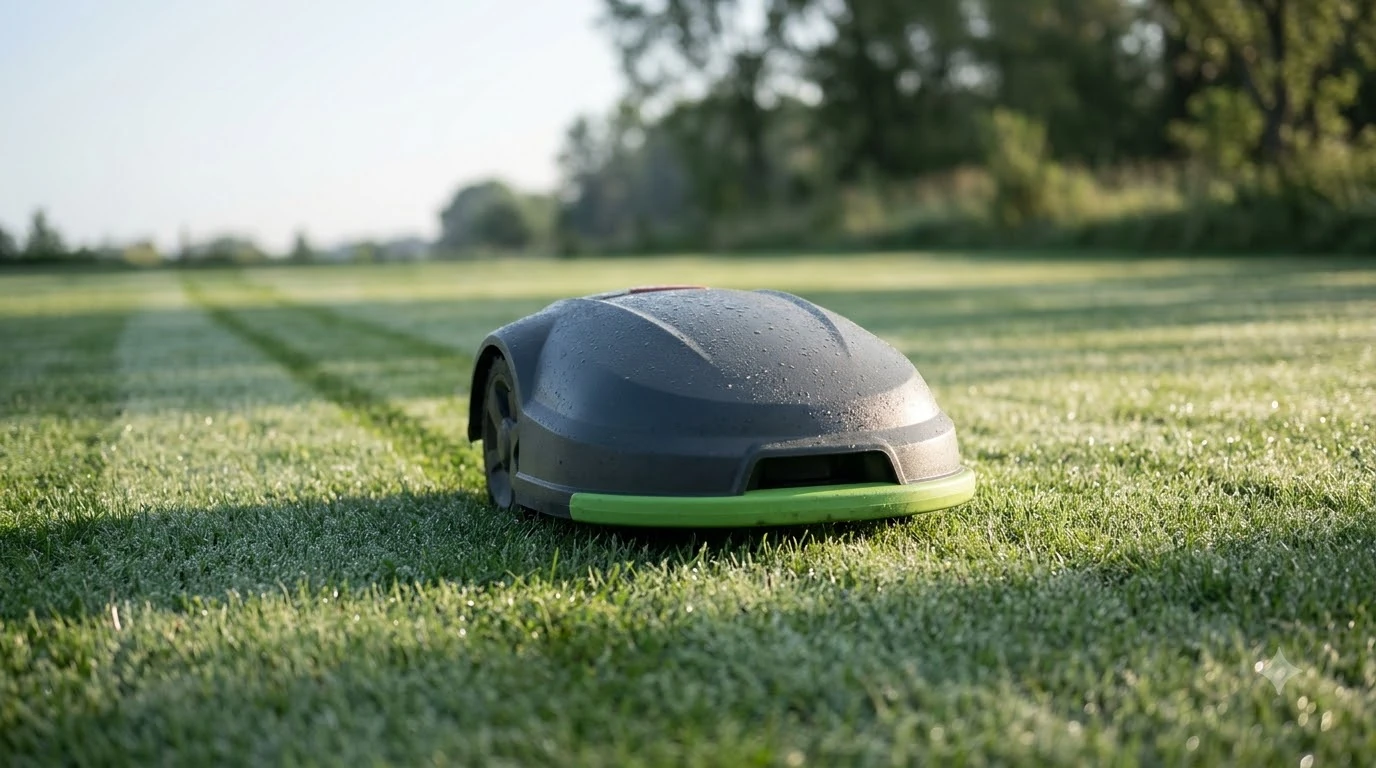

The best mid-range robot lawn mower is the one whose lawn size, slope rating and navigation type match your yard. As of November 2026, ECOVACS lists mid-range robot mowers at about $1,000 to $2,500, and Mammotion lists its wire-free RTK mid-range band at $1,500 to $3,000. Price tiers are vendor labels, not a standard, so this guide shows how to read them.
The short answer
- Price: vendor guides place mid-range robot mowers between about $1,000 and $2,500, with wire-free RTK models often at $1,500 to $3,000.
- Lawn size: match the model line to your lawn’s square footage or square meters, not to the tier name.
- Navigation: RTK needs a base station, while LiDAR needs no base station; each has a stated weak spot.
- Slope: check the percent and degree rating against your steepest section.
- Running costs: ECOVACS estimates about 0.5 to 2 kWh per week, plus blade and battery replacement.
How much the best mid-range robot lawn mower costs
A mid-range robot mower usually sits between the entry and premium tiers. ECOVACS groups US models into entry ($500 to $1,000), mid-range ($1,000 to $2,500) and premium ($2,500 to $5,000 or more) bands, as of November 2026. Mammotion uses a different split and lists its wire-free RTK mid-range band at $1,500 to $3,000. The two guides do not agree on exact edges, so treat the bands as a starting point and compare the spec sheet of the model you are considering.
Navigation technology is the biggest price driver for the best mid-range robot lawn mower and for every other tier. Mammotion names navigation and boundary technology as the biggest factor, with lawn size, terrain and slope handling, AI obstacle detection and AWD also adding to price. Mammotion also tells buyers to check whether key features depend on subscriptions or paid services, because that changes the real cost over several years (see our guide to robot mower subscription fees).
Lawn size that fits a mid-range model
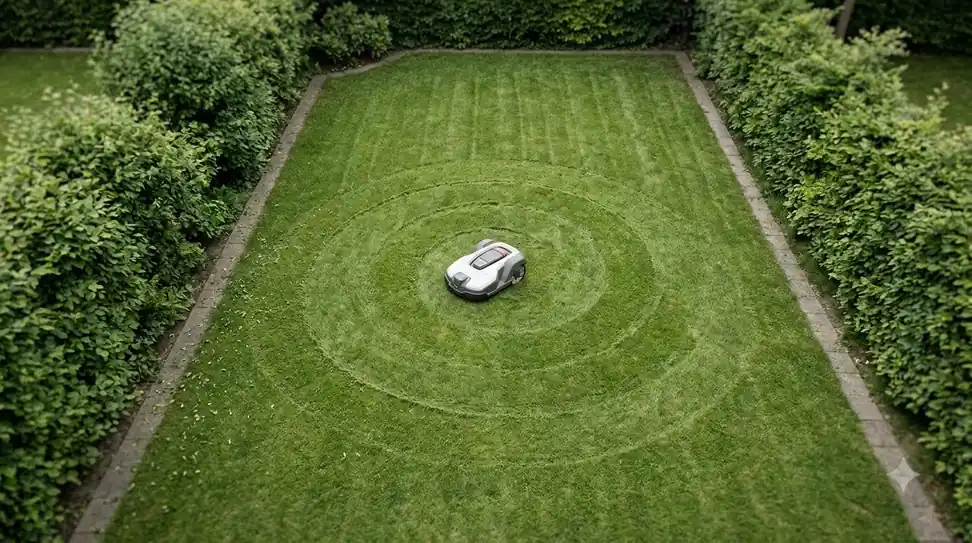
Lawn size is the most useful filter. Mammotion’s price bands rise with yard size: up to 0.25 acre at $800 to $1,500, 0.25 to 0.75 acre at $1,500 to $2,500, 0.75 to 1.25 acre at $2,500 to $3,500, and 1.25 to 2.5 acres at $3,299 to $4,500 or more.
| Yard size (Mammotion band) | Typical price band | What it means for a mid-range pick |
|---|---|---|
| Up to 0.25 acre | $800 to $1,500 | Usually entry or lower mid-range |
| 0.25 to 0.75 acre | $1,500 to $2,500 | Core mid-range territory |
| 0.75 to 1.25 acre | $2,500 to $3,500 | Upper mid-range or premium |
Segway Navimow gives sizes by model line in square meters: its i2 AWD is recommended for 500 to 1,000 m2, its i2 LiDAR for 800 to 2,000 m2, its i2 LiDAR Pro for 1,000 to 2,000 m2, and its X4 line for 2,000 to 5,000 m2. Our reading is that a lawn near the top of a model’s range leaves little room for uneven turns or large obstacles, so buy one rated above your measured lawn when the budget allows.
RTK or LiDAR at this price
Both RTK and LiDAR appear in mid-range models, and each trades setup effort against a different limit. ECOVACS rates RTK installation as moderate because it requires a base station, and LiDAR as easy because it needs no base station or satellite setup.
| Point | RTK (satellite) | LiDAR (laser) |
|---|---|---|
| Setup | Moderate; base station needed | Easy; no base station |
| Main limit | Tree cover and shade can reduce accuracy | Fog and heavy rain may scatter laser beams |
| Vendor note | Base station placement affects precision | Vendor says it handles uneven terrain well |
RTK accuracy depends on the base station sitting in an open, unobstructed spot, as our RTK vs LiDAR vs vision comparison also explains. According to ECOVACS, incorrect setup reduces positioning precision, and RTK accuracy may drop when tree cover interferes with satellite signals. ECOVACS says LiDAR performs better on uneven mixed terrain and hills, but that is a vendor claim, not an independent test.
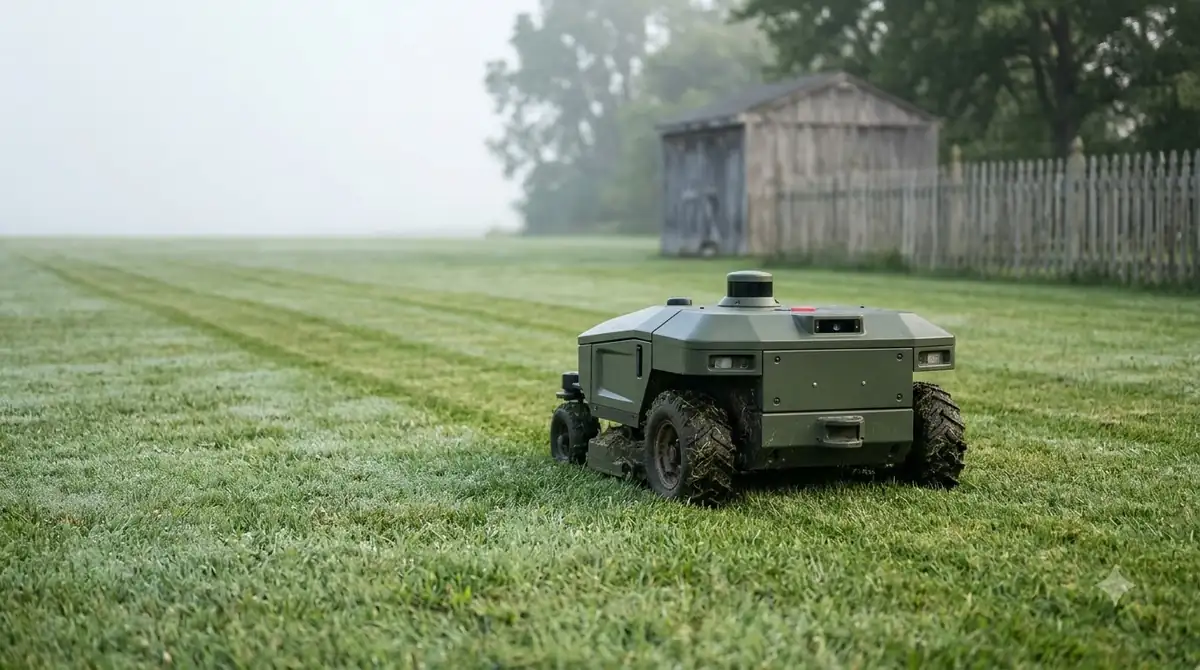
Some brands use network RTK instead of a local base station. Segway Navimow says its network RTK is included at no extra cost on its models and needs no local antenna. Its buying guide also says availability is checked by postcode, so confirm coverage for your address before you buy.
Slope and terrain ratings to check
A slope rating tells you how steep a yard the mower can handle, and the figure is published as a percent and in degrees (our explainer on robot mower slope ratings shows how to read it). Navimow’s rating for its i2 AWD and i2 LiDAR is 45% (24 degrees), suited to gentle inclines and small rocks. Its i2 LiDAR Pro is rated at 55% (29 degrees), and its X4 at 84% (40 degrees) for serious hills and uneven ground.
- Measure the steepest section first. Check the grade of your worst slope, not the average lawn.
- Check traction, not just the rating. Mammotion lists AWD drive and terrain handling among the factors that change price and performance.
- Look for obstacle detection. Mammotion names AI obstacle detection as a cost factor, which matters in yards with toys, hoses and roots.
Running costs and features to compare
Ongoing costs are small compared with the purchase price, but they add up. ECOVACS estimates that a robot mower uses around 0.5 to 2 kWh per week. At the US average residential price of 18.16 cents per kWh for August 2026 (preliminary, per the Energy Information Administration), that works out to roughly $0.40 to $1.60 a month (our arithmetic). For the full picture, see how much electricity a robot mower uses.
- Blades: ECOVACS advises replacing blades every 4 to 6 weeks or when signs of wear appear (more in how often to replace robot mower blades).
- Battery: replace when runtime drops, typically every 3 to 5 years according to ECOVACS.
- Subscriptions: Mammotion advises checking whether key features need paid services.
What to check before buying a mid-range robot lawn mower
Start with the yard, then the feature list when you pick the best mid-range robot lawn mower. Confirm the mower’s recommended lawn size, slope rating and navigation type against your own measurements before comparing brands.
- Measure the lawn. Use the square footage or acreage, then compare it with each model’s recommended size band.
- Measure the steepest slope. Match the percent and degree rating to that grade.
- Pick a navigation type. Choose RTK if you can place a base station in open sky, LiDAR if you cannot.
- Confirm network coverage. If a model uses network RTK, check availability for your postcode first.
- Check subscriptions and replacement parts. Read which features need paid services, and how often blades and batteries need replacing.
Frequently asked questions
How much does a mid-range robot lawn mower cost?
ECOVACS places mid-range robot mowers at $1,000 to $2,500, and Mammotion lists its wire-free RTK mid-range band at $1,500 to $3,000, both as of November 2026. Prices change, so check the current listing before buying.
Is RTK better than LiDAR at this price?
Neither is better in every yard. RTK needs a base station and can lose accuracy under trees, while LiDAR needs no base station but may be affected by fog and heavy rain, according to ECOVACS.
Do I need a subscription for a mid-range robot mower?
Some models tie key features to subscriptions or paid services. Mammotion advises checking this before you buy the best mid-range robot lawn mower for your needs, because it changes the real cost over the life of the mower.
Is a 45% slope rating enough for my yard?
It depends on your steepest slope. Navimow rates its i2 AWD and i2 LiDAR at 45% (24 degrees) for gentle inclines and small rocks, so yards with steeper grades need a higher-rated model such as its X4 at 84%.
Sources
- How much does a robot lawn mower cost (ECOVACS): entry, mid-range and premium price bands, electricity use, blade and battery replacement.
- How much does a robotic lawn mower cost (Mammotion): wire-free RTK band, price by lawn size, price drivers and subscription check.
- Robotic lawnmower buying guide (Segway Navimow): slope ratings, lawn-size bands by model line and network RTK terms.
- LiDAR vs RTK robot lawn mowers (ECOVACS): installation effort, base station placement, tree-cover and fog limits.
- Electric Power Monthly, Table 5.6.A (U.S. Energy Information Administration): average residential electricity price, August 2026 (preliminary).
 Up next10 min readBest Robot MowersBest Robot Mower With Auto Return to Dock: How to Choose One That Docks ReliablyUpdated Nov 11, 2026
 9 min readBest Robot MowersWhat Is the Best Cheap Robot Lawn Mower? How to Choose One That FitsUpdated Nov 11, 2026
 8 min readBest Robot MowersBest Worx Landroid Robot Mower Model to Buy: How to Choose in 2026Updated Nov 11, 2026
 8 min readBest Robot MowersBest Mammotion Robot Mower Model to Buy: How to Choose by LawnUpdated Nov 11, 2026
 8 min readBest Robot MowersHow to Choose an RTK GPS Robot Lawn Mower in 2026Updated Nov 11, 2026
 8 min readBest Robot MowersBest Robot Lawn Mower for 1/2 Acre: How to Choose by Lawn SizeUpdated Nov 11, 2026