
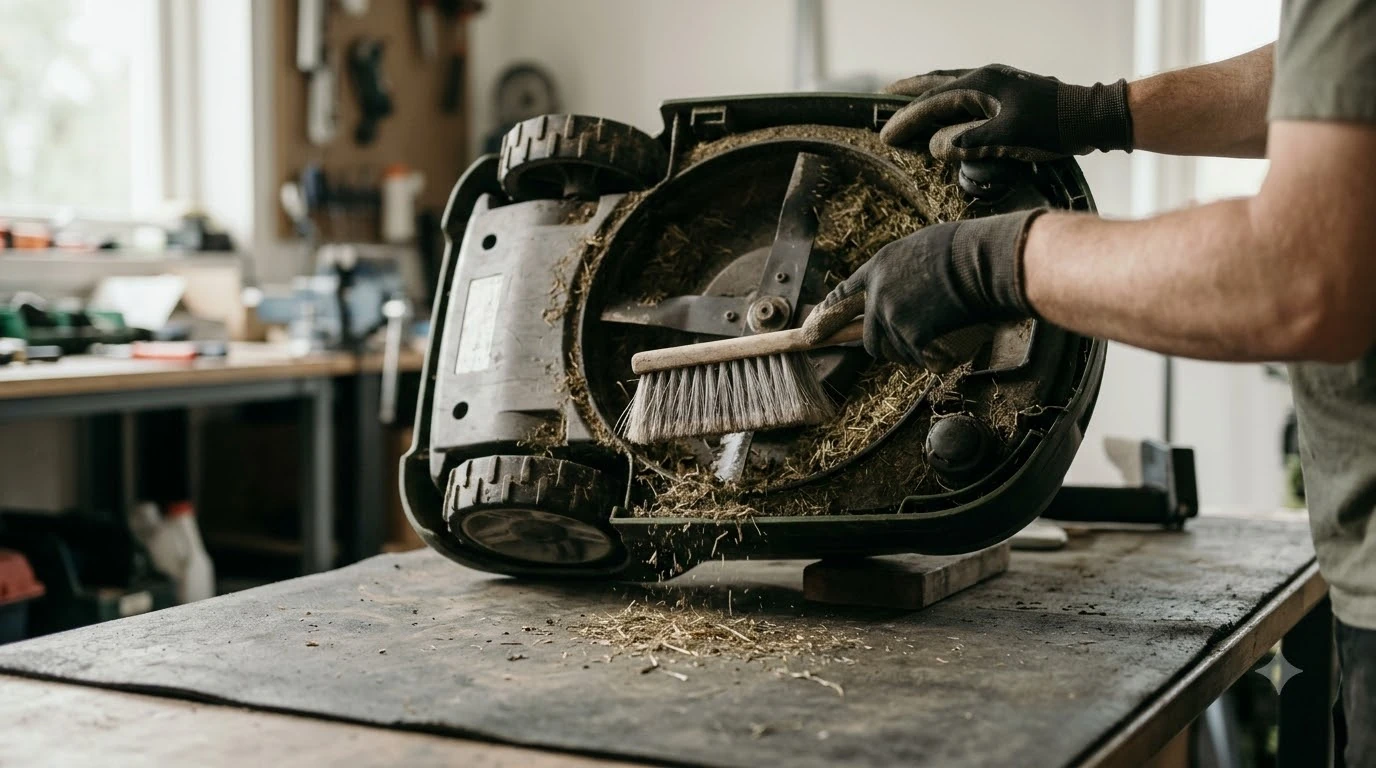

Robot mower wheel brushes should be soft, such as a dry brush or a plastic scraper. Husqvarna’s care guidance recommends a dry brush for the wheels, and Ecovacs advises a soft brush instead of sharp or hard tools. Manufacturers also warn against wire brushes, metal tools, and pressure washers, so the choice of brush matters as much as how often you use it.
The short answer
- Type: a soft dry brush or plastic scraper for mud and grass on the treads.
- Avoid: wire brushes, wire wool, and metal tools, which manufacturers say can damage components.
- Frequency: Mammotion suggests cleaning every one to two weeks during the growing season and inspecting wheels monthly.
- Method: power off, brush the treads and axles, then rotate each wheel by hand to check for stiffness.
- Liquids: skip pressure washers and cleaning sprays, and let the mower dry fully before it returns to the dock.
Robot mower wheel brushes: what kind works best
A soft dry brush or plastic scraper is the tool the manufacturer guidance describes for wheel care. Husqvarna’s care page names a dry brush of the type included in its cleaning kit, and says to run it over the wheels, body and skid plate to remove stubborn debris. Mammotion recommends a soft brush or plastic scraper for grass, dirt and debris, and Ecovacs asks for a soft brush rather than sharp or hard tools. For the underside and deck rather than the wheels, see our guide to the best robot mower cleaning brush.
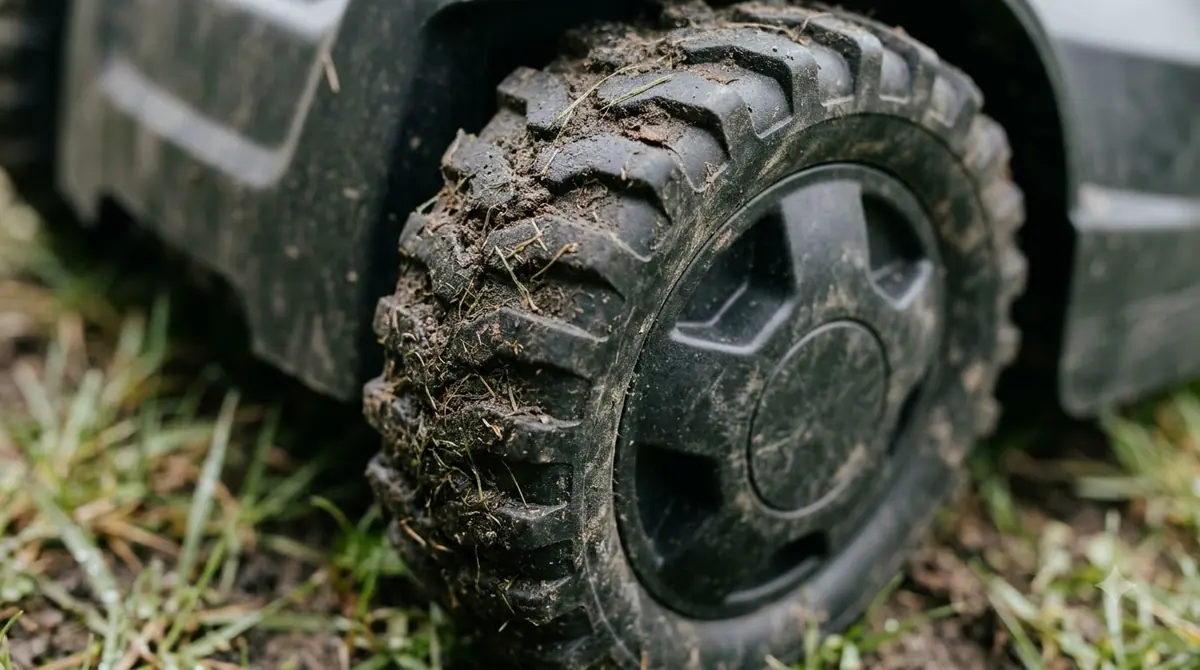
Wheel care with robot mower wheel brushes is mostly about soft tools. The table below sums up which tools the guides name and which ones they warn against.
| Tool | What the guidance says | Source |
|---|---|---|
| Dry brush (soft bristles) | Run over the wheels, body and skid plate to remove stubborn debris | Husqvarna |
| Soft brush or plastic scraper | Clears grass clippings, dirt and debris from the wheels and deck | Mammotion |
| Damp microfiber cloth | Use a cloth free of solvents, chemicals and detergents | Husqvarna |
| Wire brush or wire wool | Avoid | Husqvarna |
| Metal tools | Avoid, as they can damage components | Mammotion |
What to look for when choosing a wheel brush
Manufacturers do not publish a specification for robot mower wheel brushes, so the criteria below are our reading of what the cleaning guidance requires, not a product standard. A brush that meets them is more likely to clean the treads without scratching the wheel body.
- Soft bristles or a plastic edge: the guides ask for soft tools, so avoid stiff wire heads.
- Bristles that reach the tread grooves: mud packs into the grooves, not just the surface, so the head should fit between the tread blocks.
- A handle that reaches the wheel from the side: the mower sits low, and Husqvarna’s method turns it upside down, so a short handle makes the job harder.
- No metal parts that touch the wheel: Mammotion warns against metal tools.
- A scraper edge for caked debris: Mammotion mentions a plastic scraper for the deck, which can also remove dried clumps before brushing.
What to avoid when brushing wheels
Most of the warnings in the manufacturer guides about robot mower wheel brushes are about the tools and liquids you use around the wheels, not the brush itself. Husqvarna warns against wire wool and wire brushes, and says solvents, chemicals and detergents can damage the chassis and inner parts. Ecovacs also advises against cleaning sprays and detergents.
- Pressure washers: Husqvarna says not to use one because high-pressure water can force its way into the electrics. Ecovacs does not recommend them, and Mammotion says to avoid them unless the maker states they are safe.
- A hose on an upside-down mower: Husqvarna says never to submerge the mower or use a hose while it is upside down.
- Cleaning while the power is on: Husqvarna and Mammotion both say to switch the mower off first, and Ecovacs adds to activate any lock.
- Metal tools: Mammotion warns against metal tools that could damage components.
How often to brush robot mower wheels
The guides give different answers on how often to use robot mower wheel brushes, and none of them sets a single interval for every lawn. Mammotion’s checklist says to inspect the wheels and sensors once a month, and its main cleaning routine is every one to two weeks during the growing season. Ecovacs includes clearing the wheels in its weekly maintenance steps, alongside gently wiping the sensors. A full robot mower maintenance checklist shows where wheel cleaning fits in the wider routine.
Husqvarna takes a different view. It gives no set interval for underside or wheel cleaning, describing a general clean as needed “every now and then,” and recommends a professional service at an Elite Automower Dealer every six months. We read this as a sign that the frequency depends on the lawn: mud, clay, and fast growth all add debris to the treads.
As a working rule, we would brush the wheels weekly during peak growth and inspect them monthly the rest of the year. That schedule is our reading, not a manufacturer figure, and it should move up if your lawn stays wet.
How to brush the treads and axles, step by step
The steps below for using robot mower wheel brushes combine the method from Husqvarna, Ecovacs, and Mammotion. Check your model’s manual, because the exact order and parts vary by brand. For the rest of the machine, our guide on how to clean a robot mower covers the body, sensors and dock.
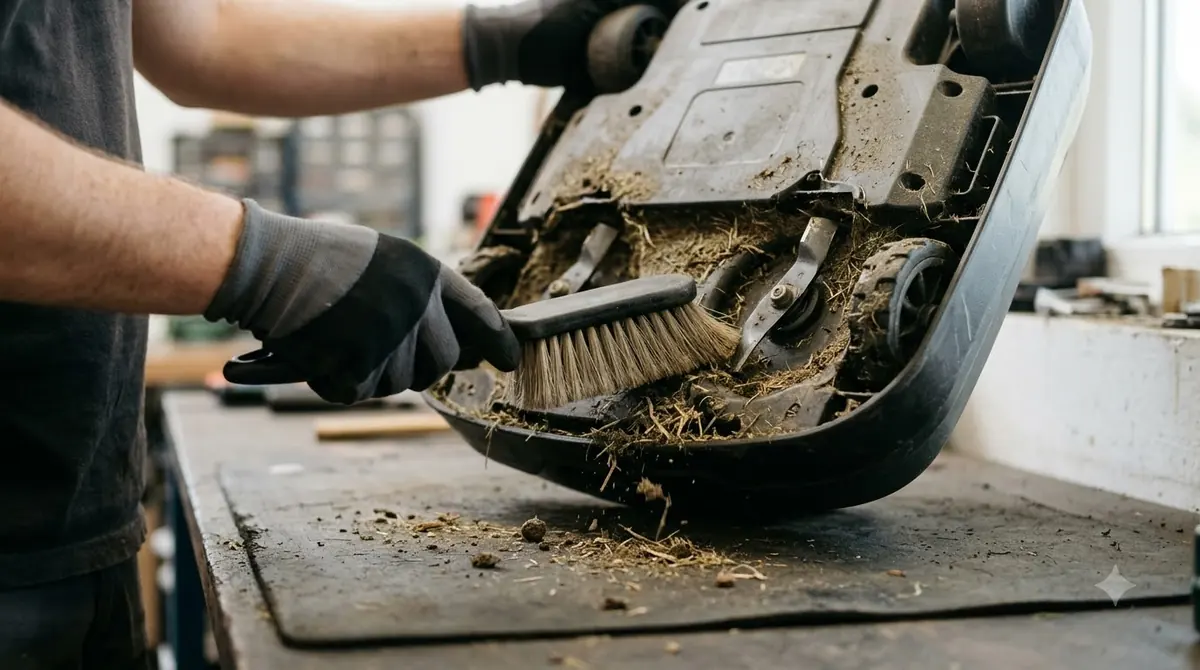
- Power off first. Husqvarna and Mammotion both say to switch the mower off before cleaning, and Ecovacs advises activating any lock to prevent accidental startup.
- Turn it over on a towel. Husqvarna suggests placing the mower upside down on a towel or blanket, which helps prevent scratches to the body.
- Brush the treads and axles. Ecovacs says to brush debris from the wheel treads and axles, and Mammotion says to brush mud and grass from the drive wheels while rotating them by hand.
- Rotate each wheel by hand. Ecovacs says to turn each wheel to check for stiffness or resistance, and to confirm smooth movement after cleaning.
- Dry it fully before reuse. Ecovacs says to dry parts fully to prevent corrosion and electrical issues, and Mammotion says to let the mower dry before it returns to the charging station.
When brushing is not enough
Robot mower wheel brushes remove debris, but they do not restore a worn part. Ecovacs’s troubleshooting advice for a mower that stops unexpectedly is to clean the wheels and axles thoroughly, then rotate them by hand to confirm smooth movement. Mammotion’s advice for reduced traction is similar: clean the wheels thoroughly and remove built-up grass or dirt.
If a wheel still feels stiff, grinds, or the mower keeps losing grip after a thorough clean, the cause may be inside the hub or wear on the tread, and our robot mower wheel replacement guide covers that next step. We did not find a manufacturer figure for tread wear limits in the pages we read, so check the manual for your model and contact its support team before deciding on further work. If the mower halts in the same place each time, why a robot mower gets stuck in the same spot lists other causes.
Frequently asked questions
What kind of brush is safe for robot mower wheels?
A soft dry brush or plastic scraper is the safe choice. Husqvarna recommends a dry brush for the wheels, and Ecovacs advises a soft brush instead of sharp or hard tools. Manufacturers warn against wire brushes and wire wool.
Can I hose off robot mower wheels?
Manufacturers are cautious about water. Husqvarna says never to submerge the mower or use a hose while it is upside down, and to avoid pressure washers. Mammotion says a gentle rinse may be acceptable on some high-rated models, so follow your maker’s recommendation first.
How often should I clean robot mower wheels?
Mammotion suggests cleaning every one to two weeks during the growing season and inspecting the wheels monthly. Husqvarna gives no fixed interval and recommends a professional service at an Elite Automower Dealer every six months.
Should I lubricate the wheels?
We did not find a lubricant recommendation in the manufacturer pages we read. Husqvarna’s warnings focus on solvents and detergents, so check your model’s manual before applying any product to the wheels or axles.
Sources
- Automower care and maintenance tips (Husqvarna): dry brush for wheels, upside-down cleaning, pressure washer and wire brush warnings, dealer service interval.
- Cleaning and Maintenance Tips to Keep Your Robot Mower in Top Shape (Ecovacs): brushing treads and axles, soft tools, detergent and pressure washer cautions, wheel stiffness check.
- Robot lawn mower maintenance (Mammotion): monthly wheel inspection, cleaning interval, drive wheel brushing, metal tool and power warnings.
 Up next9 min readGearBest Compressed Air Duster for Robot Mower Sensors: What to Use and What to AvoidUpdated Nov 11, 2026
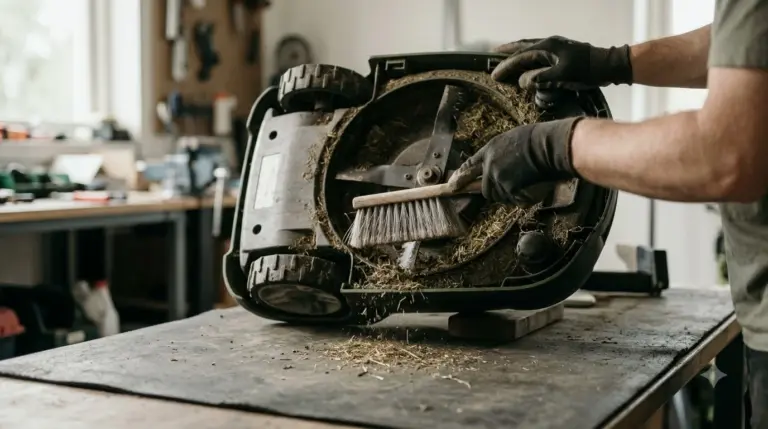 8 min readGearBest Robot Mower Cleaning Brush: What to Use and What to AvoidUpdated Nov 11, 2026
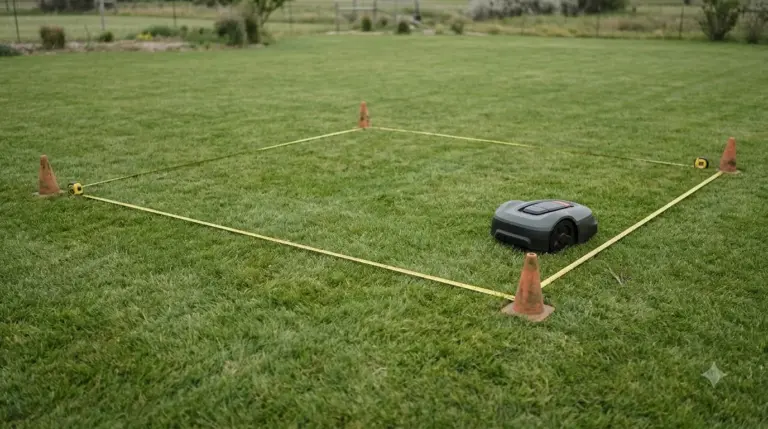 9 min readGearBest Lawn Measuring Wheel for Robot Mower SizingUpdated Nov 11, 2026
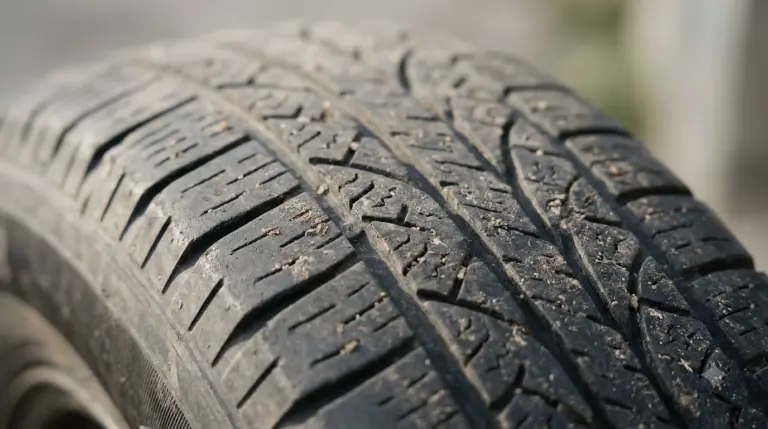 7 min readGearRobot Mower Wheel Replacement: When to Swap and What to CheckUpdated Nov 11, 2026
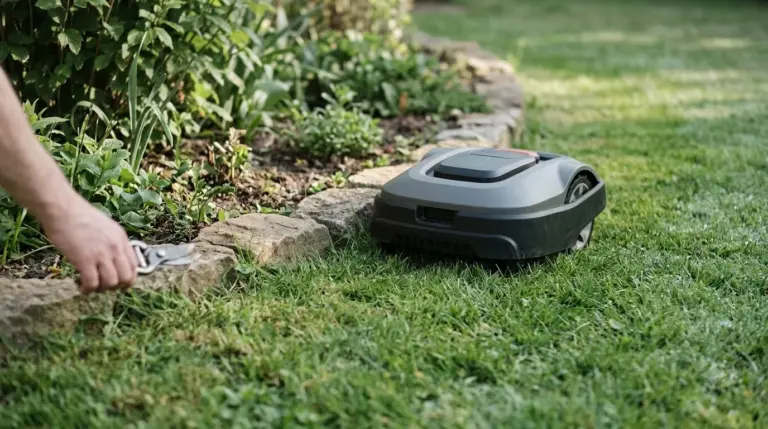 7 min readGearBest Landscape Edging for Robot Mower Borders: What Works and What to AvoidUpdated Nov 11, 2026
 8 min readGearBest Lawn Edger to Use With Robot Mower: 6 Points to CheckUpdated Nov 11, 2026