
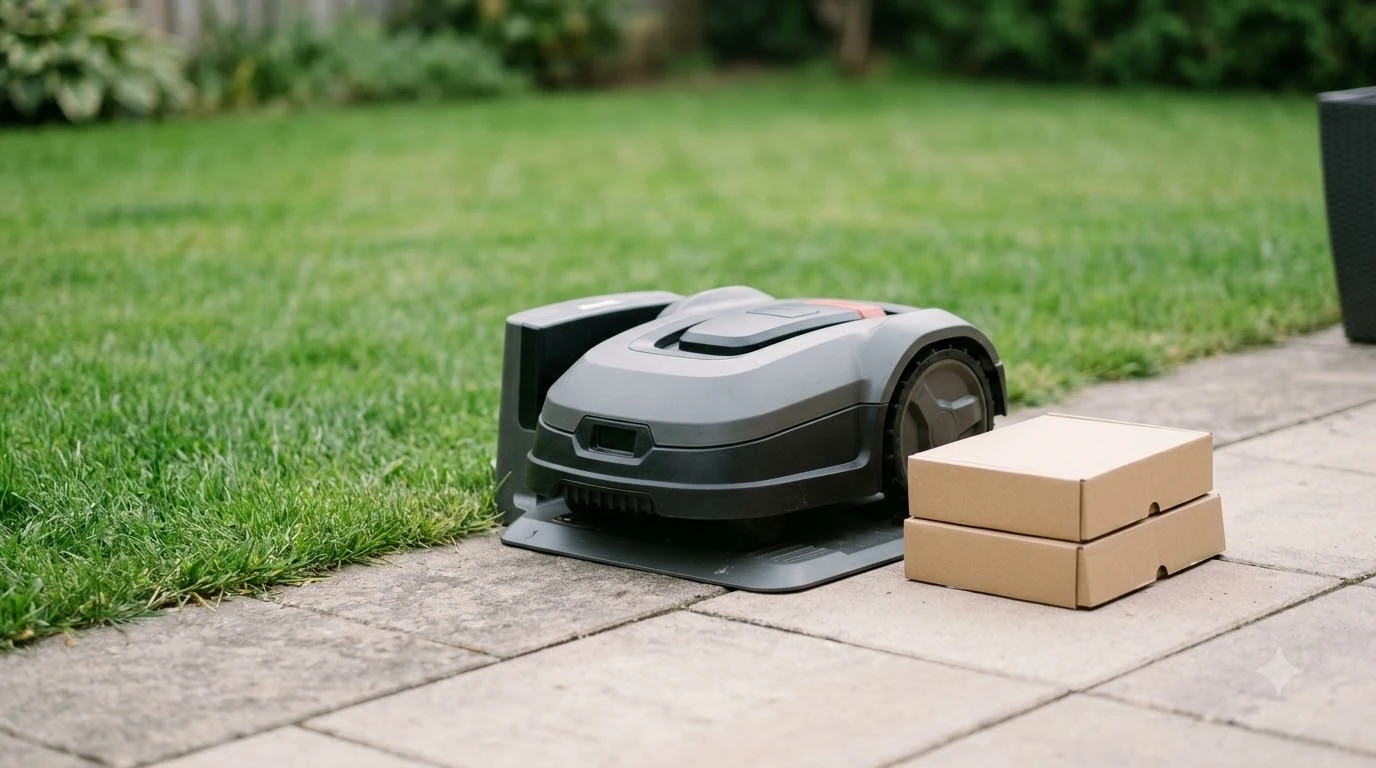

A compressed air duster helps clear loose debris from a robot mower, but the best compressed air duster for robot mower sensors is the one you can use gently and safely. Air lifts dry grass and dust from the wheels and deck. Charging contacts and the rain sensor need a cloth instead, and the sources below do not show air being used on them.
The short answer
- Use air for loose debris on the wheels, underside and deck, then brush what is left.
- Wipe, do not blow the charging contacts and the rain sensor with a cloth.
- Keep the can upright. Tilting or shaking can release liquid propellant.
- Keep water off the underside and let parts dry before the mower docks.
What a duster can and cannot clear
Compressed air works best on loose grass, dust and clippings that have not dried into a crust. That is why a search for the best compressed air duster for robot mower sensors is really a search for a gentle, easy-to-control can, not a powerful one. Robomow’s guides say that compressed air can make cleaning easier, and they list it as one way to remove leaves and dirt from the wheels. The same material gives no cleaning instructions for sensors or cameras, which is a gap in the manufacturer guides we read.
The eufy guide now published by Anker, dated 26 October 2026, is more specific. It says that if a mower uses cameras, sensors or vision-based navigation, owners should gently wipe them with a soft, dry cloth. It adds that dirt or water spots can reduce navigation accuracy, which is why sensor care matters beyond appearance.
Our reading is that the safe approach is to treat sensor housings as surfaces to wipe rather than targets to blast. The same guide says to avoid spraying directly at cameras, sensors, charging contacts, buttons or charging ports. A duster can lift debris away from a sensor, but the sources we read do not describe blowing directly at one. Check your own model’s manual before making that a habit. If your mower has a camera, a robot mower camera lens cleaning kit is a related tool to read about.
Clean the wheels and deck with air, then brush
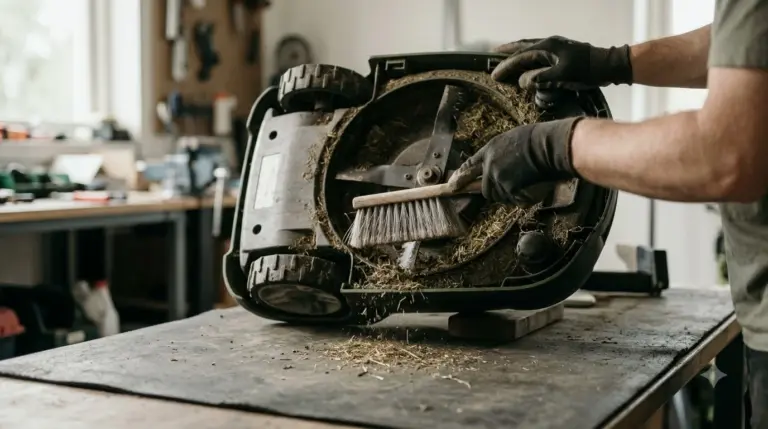
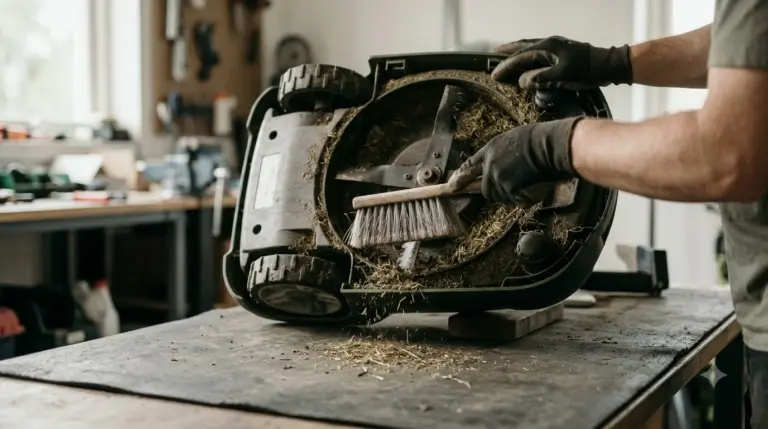
The wheels and underside collect most of the debris. Robomow’s cleaning guide suggests removing leaves and dirt from the wheels with a stick, a coarse brush or compressed air, and it says this should be done regularly. For the underside and mowing deck, the same guide advises a coarse brush or a plastic kitchen spatula to remove dry, stubborn grass.
Brushing also suits moist clippings. Robomow’s maintenance guide says to simply use a brush to remove moist grass clippings. Our reading is that air is most useful for the dry dust that gathers in wheel hubs and gaps, while brushing handles material that is packed or wet. For the full routine, see our guide on how to clean a robot mower.
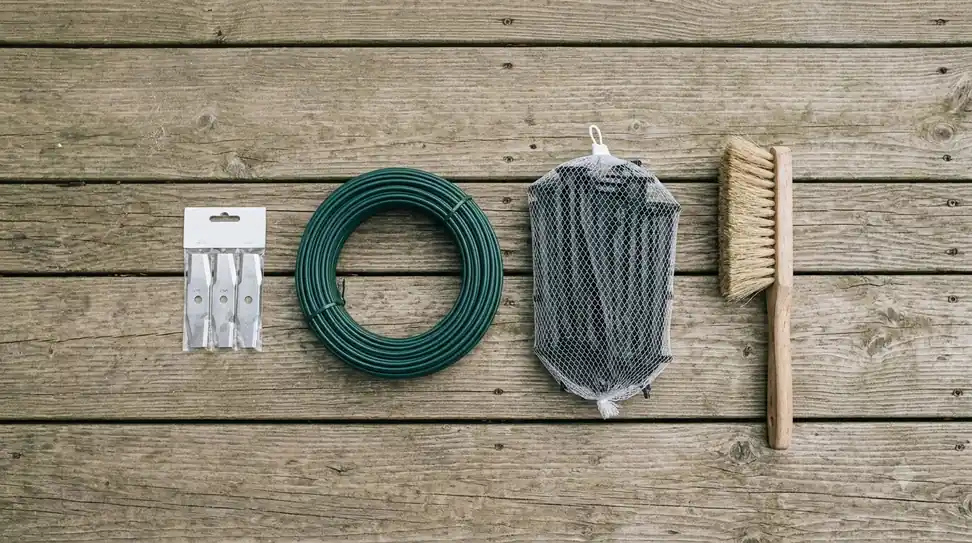
- Activate the mower’s safety switch before you clean it.
- Wear heavy-duty, cut-proof gloves when you work near the blades.
Wipe the charging contacts and rain sensor
Charging contacts and the rain sensor are cleaned with a cloth, not with air. Robomow says the contacts should be wiped down regularly, and that a damp cloth or fine sandpaper is enough to clean them if rust has formed. Sanding is a last step for corrosion, not a routine.
Dirty contacts matter because they affect charging. Robomow’s cleaning guide says dirt on the contacts can sometimes significantly slow down the charging process, and the Anker guide says dirty contacts can lead to poor charging performance or charging errors.
The Ecovacs support FAQ, which is published in Lithuanian, gives the same kind of advice for the rain sensor. It says to clean the sensor gently with a cloth or fine sandpaper, and it recommends regular cleaning and maintenance. The FAQ also warns that long-term contact with the sensor contacts, or moisture on them, can activate the rain protection, which sends the mower back to its dock. For how mowers behave in wet weather more broadly, read about how mowers handle rain.
Even the best compressed air duster for robot mower sensors should be a pre-wipe step at most: blowing air may help lift loose dust, but neither source describes that as the method. Wipe after you blow, and use a dry or lightly damp cloth. If the mower still will not charge after a wipe, see these robot mower not charging fixes.
Keep water off the underside and sensors
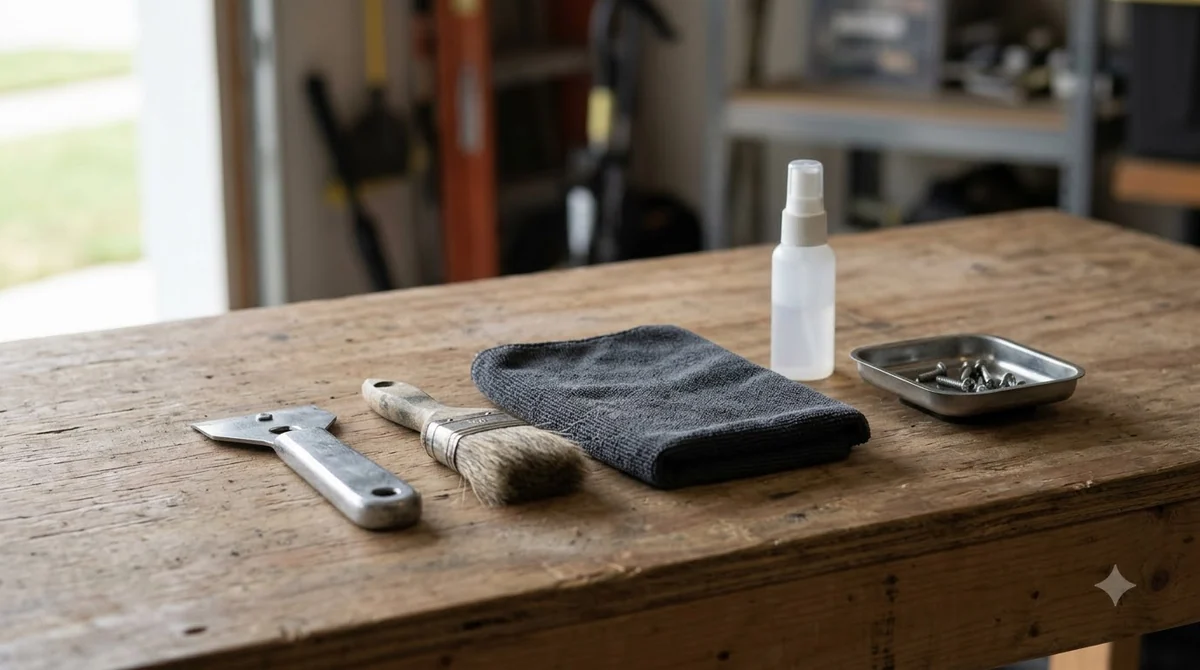
Water on the top of a robot mower is not a concern, but contact with the underside should be avoided, according to Robomow. Its deck advice uses a brush, not water.
The Anker guide is more permissive about the top and sides. It says a gentle rinse with a garden hose is often acceptable for removing grass clippings and mud, and it warns never to use a pressure washer, even on a mower described as waterproof. The underside is a different case. Robomow’s cleaning guide says the underside is not necessarily designed for running water.
Moisture is also the trigger that matters for the rain sensor. Because damp contacts can switch on the rain protection, a mower that has been wiped should dry before it is returned to the dock. That drying step is our reading of the Ecovacs warning rather than a separate instruction from the maker.
Safety rules for canned air
Tilting or shaking a can of compressed air can release liquid propellant, which can cause frostbite. The Chemtronics page on shaking a duster explains that turning or flipping the can can bring liquid refrigerant into the spray, and that this liquid is cold enough to cause frostbite and damage sensitive electronics.
A 2011 article in Safety and Health magazine cites Washington State’s Labor and Industries department on the same hazards. It says that when canned gas is tilted, the highly flammable gas can be released into the air and onto surfaces. It also warns that flames, sparks and electrical switches can ignite a concentrated gas and cause a flash fire, and that the risk is greater in poorly ventilated areas. Whichever can you pick as the best compressed air duster for robot mower sensors, the same tilt and flammability rules apply.
- Keep it upright. Hold the can so the valve draws from the top, as its design intends.
- Work in an open area. Move outdoors or to a well-ventilated space rather than a closed garage bench.
- Keep ignition sources away. Turn off nearby flames and sparks, and avoid working next to electrical switches.
How often to clean a robot mower
Robomow’s maintenance guide recommends regular cleaning of the robot every 7 to 17 days. That range is a starting point rather than a rule, because Robomow’s cleaning guide also lists weather, frequency of use, lawn type and soil conditions as factors.
For a sensor-focused routine, the best compressed air duster for robot mower sensors is only one step. Robomow’s cleaning guide says that experts even recommend cleaning the mower once a week, depending on use, and that the intervals depend on weather, frequency of use, lawn type, soil conditions and extra equipment. Damp lawns therefore push the schedule toward the shorter end.
The same guide describes what happens when cleaning slips. Debris between the wheels or on the deck will sooner or later affect performance, the mower uses more energy because it returns to its charger more often, dirty blades reduce cutting quality, and the noise level increases. Our reading is that a duster is best used as a quick step between full cleanings, not as a replacement for them. A robot mower maintenance checklist can help you keep to the schedule.
What to look for in the best compressed air duster for robot mower sensors
The best compressed air duster for robot mower sensors is easy to hold upright and easy to aim gently. Read the label for tilt and upside-down warnings before you buy, because not every can behaves the same way when it is turned.
Chemtronics describes one of its products as designed to spray upside-down without expelling liquid refrigerant. That is an example of a feature to check on the label, not a recommendation of a brand. The sources we read do not test any duster on robot mowers, so no product is ranked here.
Heads up
This guide does not evaluate cordless electric blowers or other cleaning tools. The sources here cover canned air and manual cleaning only, so check the maker’s manual before using any other tool on sensors or cameras.
Frequently asked questions
Can I use compressed air on robot mower sensors?
Robomow lists compressed air for wheels and loose debris, but its guide gives no sensor cleaning instructions. For the rain sensor, the Ecovacs FAQ recommends a cloth or fine sandpaper. Use air only to lift loose dust, then wipe the sensor.
Is it safe to spray the underside of a robot mower?
Robomow advises against water contact with the underside and recommends brushing dry, stuck grass from the deck. Compressed air is not water, but the guide does not describe using it on the deck, so brushing is the documented method.
How long should I keep the can upright?
Keep the can upright for the whole time you use it. Chemtronics says turning or flipping a can can bring liquid propellant into the spray, and that liquid can cause frostbite.
How often should I clean my robot mower?
Robomow recommends regular cleaning every 7 to 17 days. Clean more often when the lawn is damp or the mower runs heavily, and use a duster between full cleanings rather than in place of them.
Sources
- How do I maintain a robotic lawnmower? (Robomow): cleaning interval, brushing moist clippings, charging contacts, water on the underside.
- Does a robotic lawnmower need to be cleaned? (Robomow): compressed air and brushing for wheels and deck, safety switch and gloves, factors that change cleaning frequency.
- Robotic lawn mower maintenance (Anker, formerly eufy, 26 October 2026): wiping sensors and cameras with a dry cloth, charging contacts, plastic brush over metal, hose rinse rules, no pressure washer.
- Rain sensor FAQ (Ecovacs support, Lithuanian-language page): cleaning the rain sensor with a cloth or fine sandpaper, and moisture triggering rain protection.
- The dangers of canned air (Safety and Health magazine, 2011, citing Washington State L&I): tilting, frostbite, flammability and ventilation.
- What happens if you shake a can of duster (Chemtronics): liquid propellant, frostbite and the upside-down product design.
 Up next8 min readGearBest Robot Mower Cleaning Brush: What to Use and What to AvoidUpdated Nov 11, 2026
 8 min readGearRobot Mower Wheel Brushes: What to Use and What to AvoidUpdated Nov 11, 2026
 8 min readGearBest Soil Moisture Sensor to Pair With Robot Mower: What Actually Controls MowingUpdated Nov 11, 2026
 7 min readGearBest Landscape Edging for Robot Mower Borders: What Works and What to AvoidUpdated Nov 11, 2026
 8 min readGearRobot Mower Wire Splice Kit: What It Includes and How to Use ItUpdated Nov 11, 2026
 8 min readGearRobot Mower Maintenance Kit: What to Include and How Often to Use ItUpdated Nov 11, 2026