
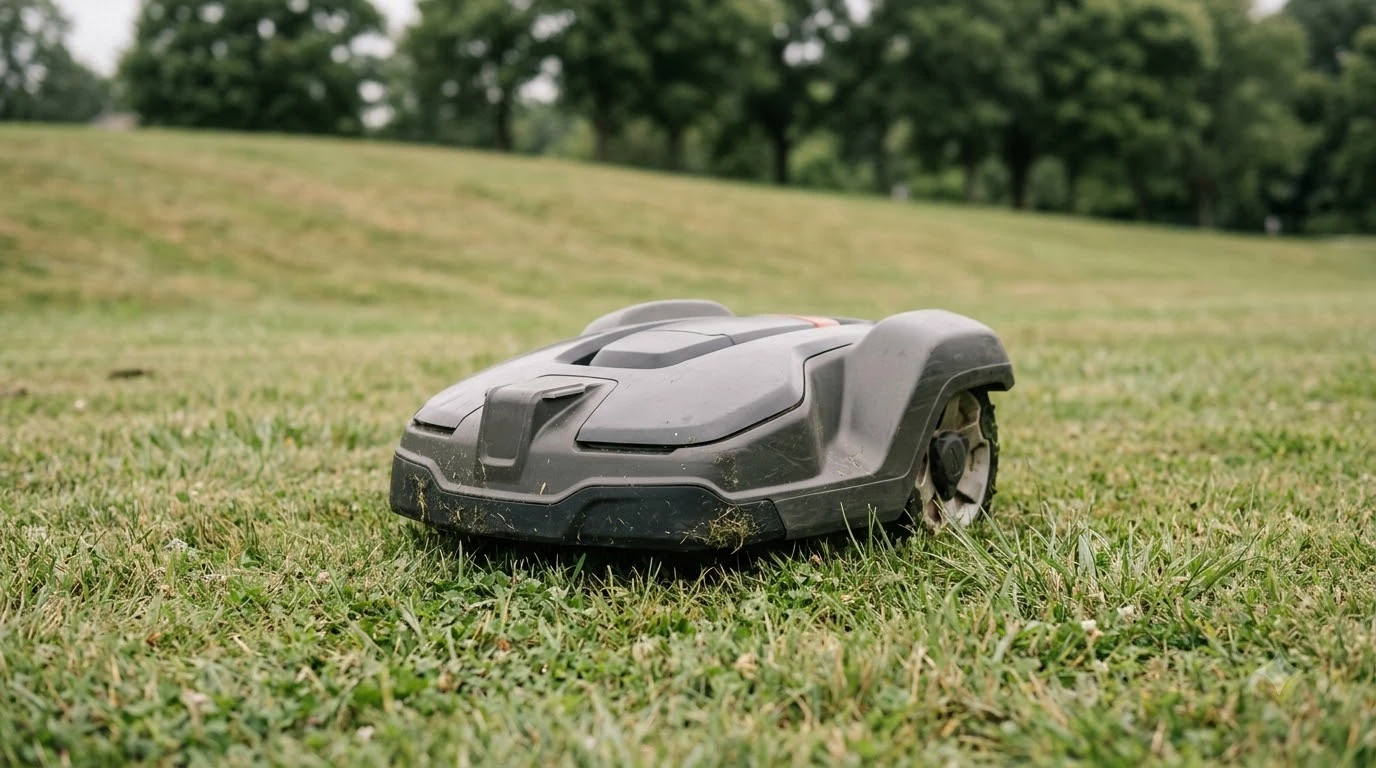

Do robot mowers spread lawn disease: no independent study we found shows that they do. The bigger risk is the blade, because a dull blade tears grass tips and can make turf more susceptible to disease, according to University of Maryland Extension.
Frequent light cutting may even help a healthy lawn, based on one University of Florida study. That study has clear limits, so treat it as a lead for your own lawn, not a rule.
The short answer
- Do robot mowers spread lawn disease? Not according to any independent study we read.
- Main risk: a dull blade, which leaves a ragged, brown look and weakens turf.
- Blade care: sharpen or replace at least once a year (UMD Extension), and up to four to six times a year (Purdue AY-8).
- Frequent light cutting: one University of Florida study linked it to denser turf, with no published measurements.
Do robot mowers spread lawn disease? What the evidence says
No study we could read compares disease spread between robot mowers and conventional mowers, so the answer rests on what extension sources say about blades and cutting habits. Those sources describe the blade as the main mowing problem for turf health.
People who search “do robot mowers spread lawn disease” are usually worried about one lawn that already looks unhealthy. That worry is reasonable, but the sources point to a different first check: the blade and the cut, not the type of mower.
The University of Maryland and Purdue pages we read discuss dull blades and sharpening. Neither says that a mower spreads disease, robotic or otherwise. Purdue makes no statement on disease spread at all.
Some robot mower brands publish their own comparisons showing less disease after robotic cutting. We could not verify those claims in full, so this article does not rely on them. Our reading is that the useful question is whether the blade is sharp and the grass is healthy, which applies to any mower.
Why a dull blade is the real disease risk
A dull blade is the mowing problem most clearly linked to disease in the sources we read. It tears leaf tips, leaves a ragged cast, and makes the turf more vulnerable. University of Maryland Extension says a dull blade may leave turf with a brown cast or a ragged look after mowing, and that this can make it more susceptible to disease.
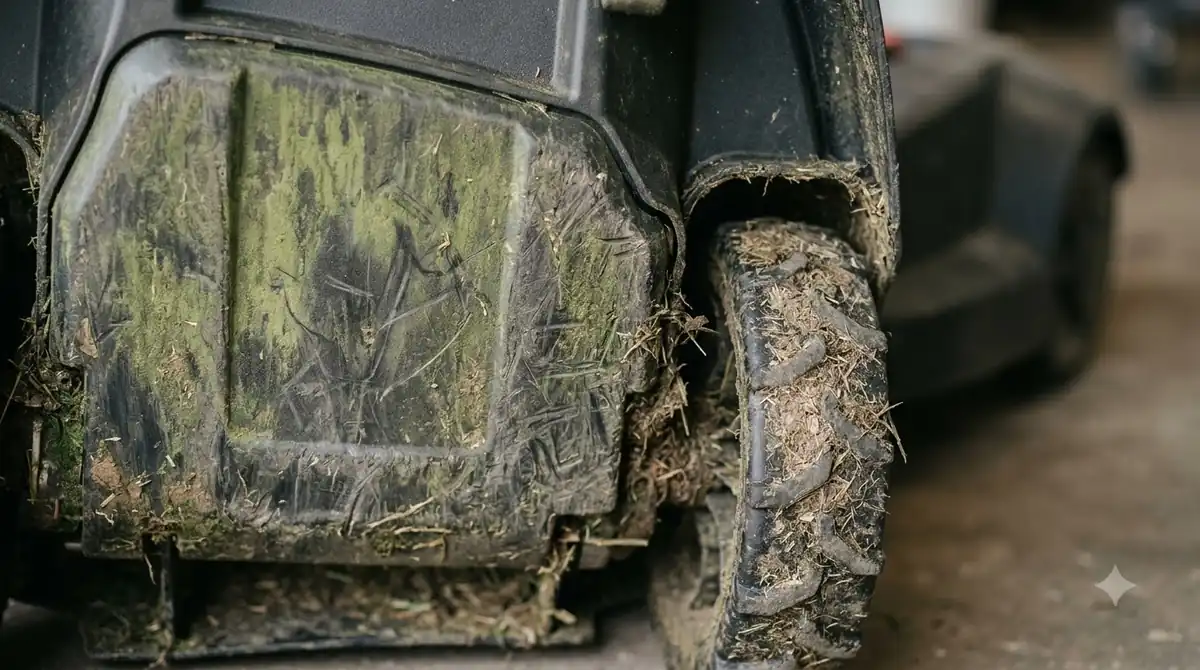
Purdue Extension adds further effects that show up even when no disease is present:
- Ragged tips: leaf blades that look ragged are an indicator of a dull mower blade.
- Slower healing: lawns mown with a dull blade heal more slowly.
- Water loss: the same lawns have greater water loss.
- Poor appearance: the grass looks worse, which is often the first sign owners notice.
A joint Purdue and University of Illinois Extension publication, AY-8 on mowing turf, shows leaf blades injured by a dull mower blade, with shredded white tissue protruding. It also shows a lawn with a whitish cast from mowing with a dull blade. The publication does not link dull blades to disease, so the disease link rests on the University of Maryland page.
Uneven ground adds a second problem. Maryland Extension warns that on uneven lawns, high spots may be scalped and the crowns of plants exposed. Our reading is that leveling high spots is a practical step before you blame the mower or the grass.
What frequent light cutting may do for turf
A University of Florida study reported that robot mowers cutting St. Augustine grass often produced denser turf that resisted pests and disease better, though the article gives no measurements.
The UF/IFAS news release is dated June 9, 2026. The turf was St. Augustine grass, a warm-season lawn, cut at 2.4 inches. Bryan Unruh, associate center director at the West Florida Research and Education Center, said daily mowing with robotic mower blades “increased turf density and promoted healthier turf that was more resistant to pests and disease.”
Unruh described the benefit as “clipping off a small amount of grass repeatedly, which helps keep the grass healthier and denser.” The article contrasts this with conventional guidance, which it describes as mowing about every seven days and removing roughly one-third of the blade. The release also says the research found no negative impacts from running the units in rainy conditions (see also whether robot lawn mowers can mow in the rain).
The UF release does not address whether mowers move disease between lawns, and it does not state how long the study ran or how many lawns it covered. It is about turf density and general health, so it cannot answer “do robot mowers spread lawn disease” on its own.
Our reading is that the study is useful for a different question, which is how often to cut once the turf is healthy. That leaves one study, one grass, and one climate. Use it as a reason to try light, frequent cutting on your own lawn, not as proof that a robot mower protects against disease.
Check the blades and the turf
Purdue Extension advises homeowners to sharpen mower blades at least twice a year, and University of Maryland Extension sets a floor of once a year. Checking on a fixed schedule is the simplest way to keep turf healthy. Purdue’s blade sharpening guide also suggests buying two sets of blades so one can be sharpened each winter.
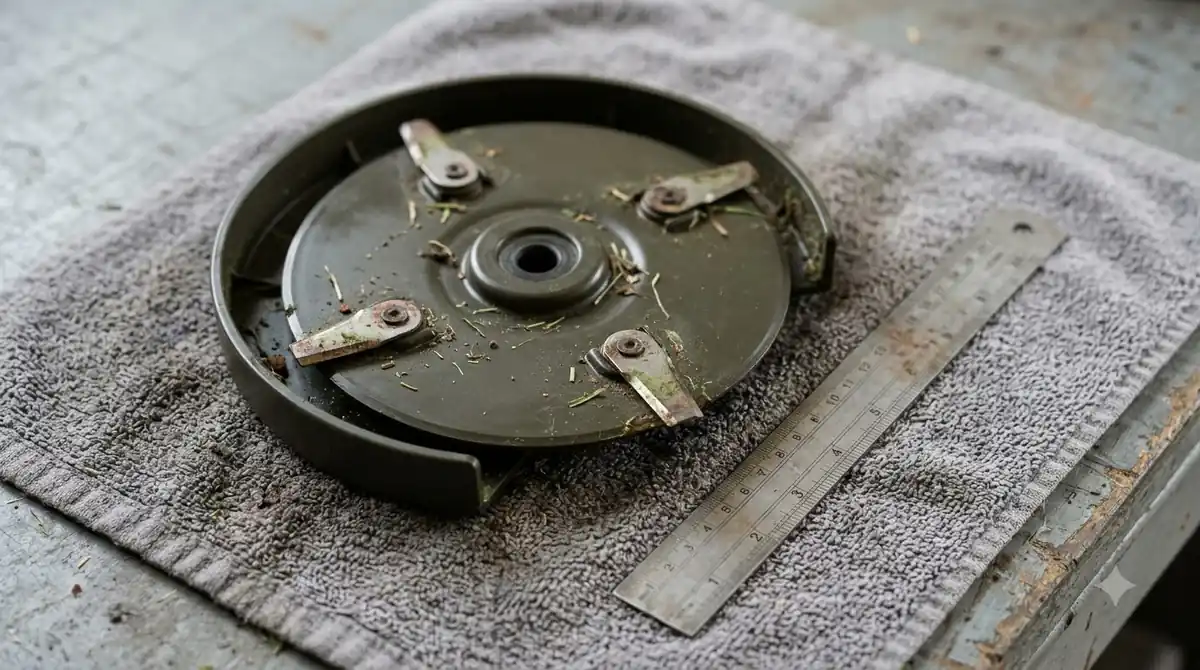
- Inspect the leaf tips. Ragged tips are the warning sign of a dull blade, according to Purdue Extension.
- Sharpen or replace on a schedule. Purdue suggests homeowners sharpen at least twice a year. UMD Extension says at least once a year, or more often if needed.
- Level the high spots. On uneven ground, UMD warns that high spots can be scalped and plant crowns exposed.
A newer Purdue and Illinois publication, AY-8, goes further and says mower blades may need sharpening four to six times a year. That is more often than the twice-a-year figure in the 2012 Purdue article, so the interval you choose should depend on how much you mow and what you see on the leaf tips.
For a practical check on “do robot mowers spread lawn disease” in your own yard, start with the blade, then look at the leaves after each cut.
Our reading is that the same schedule applies to a robot mower’s blades. Check the manufacturer’s blade guidance for your model as the final word on replacement intervals. Our guides to dull robot mower blade signs and how long robot mower blades last cover the brand intervals, and how to change robot mower blades walks through the swap.
Gaps and limits in the evidence
No study we could read compares disease rates between robot and conventional mowers, so the question is still open for independent research. If your issue is weeds rather than disease, see whether robot mowers spread weeds. Anyone who asks “do robot mowers spread lawn disease” today gets a partial answer from extension advice on blades, and no trial data on transmission.
- Vendor claims: manufacturer comparisons exist, but we could not verify them, so none are used here.
- Narrow study: the UF study covers one grass and reports no published disease measurements.
- Conflicting intervals: the sources do not agree on how often to sharpen. The 2012 Purdue article says twice a year for homeowners, AY-8 says four to six times a year, and UMD Extension says at least once a year.
- Older advice: the Purdue sharpening article was posted in 2012, so check your county extension office for newer local guidance.
- Docking station: UF recommends routine treatment for fire ants near docks, and grounding or surge protection for lightning risk.
Frequently asked questions
Do robot mowers spread lawn disease from one patch to another?
No independent study we found shows that a robot mower carries disease from one patch to another. The documented turf risk in the sources we read is a dull blade, so keep the blade sharp. If you are unsure what is affecting your lawn, ask your county extension office to identify the problem.
Does frequent mowing help or hurt lawn health?
One University of Florida study found that frequent light cutting of St. Augustine grass produced denser turf that was more resistant to pests and disease. That study does not settle “do robot mowers spread lawn disease,” because it measured turf health, not spread. The article gives no measurements and does not state the study length, so treat it as one data point. The conventional guidance it cites is to remove about one-third of the blade roughly every seven days.
How often should I sharpen mower blades?
Purdue Extension advises homeowners to sharpen mower blades at least twice a year. University of Maryland Extension says to sharpen or replace them at least once a year, or more often if needed. Check the leaf tips after mowing, since ragged edges signal a dull blade.
Should I worry about a dull robot mower blade?
Yes. University of Maryland Extension says a dull blade can leave turf with a brown cast or ragged look and can make it more susceptible to disease. Purdue Extension adds that turf mown with a dull blade heals more slowly and loses more water, so sharpness matters even when no disease is present.
If you are deciding whether to trust a robot mower on a lawn that already has disease, the honest answer to “do robot mowers spread lawn disease” is that no study we read shows it. Start with a sharp blade, check the leaf tips, and ask your county extension office to identify the problem before you change how you mow.
Sources
- University of Maryland Extension page on dull mower blades (University of Maryland Extension): dull blade effects, sharpening interval, scalping on uneven lawns.
- Purdue Turfgrass Science sharpening article (Purdue University, by Aaron Patton): sharpening twice a year, ragged tips, slower healing.
- AY-8: Mowing, Dethatching, Aerifying and Rolling Turf (Purdue Extension and University of Illinois Extension): dull blade injury, whitish cast, sharpening four to six times a year.
- UF/IFAS robot mowers news release (University of Florida, June 9, 2026): St. Augustine study, frequent light cutting, docking station cautions.
 Up next8 min readLearnDo Robot Mowers Spread Weeds?Updated Nov 11, 2026
 10 min readLearnHow Do Robot Mowers Handle Thunderstorms?Updated Nov 12, 2026
 6 min readLearnHow to Update Worx Landroid Vision FirmwareUpdated Nov 12, 2026
 8 min readLearnHow Long Does the Worx Landroid Vision Battery Last?Updated Nov 12, 2026
 7 min readLearnHow Much Does a Robot Mower Charging Station Cost to Replace?Updated Nov 12, 2026
 8 min readLearnDo Noise Ordinances Apply to Robot Lawn Mowers?Updated Nov 12, 2026