
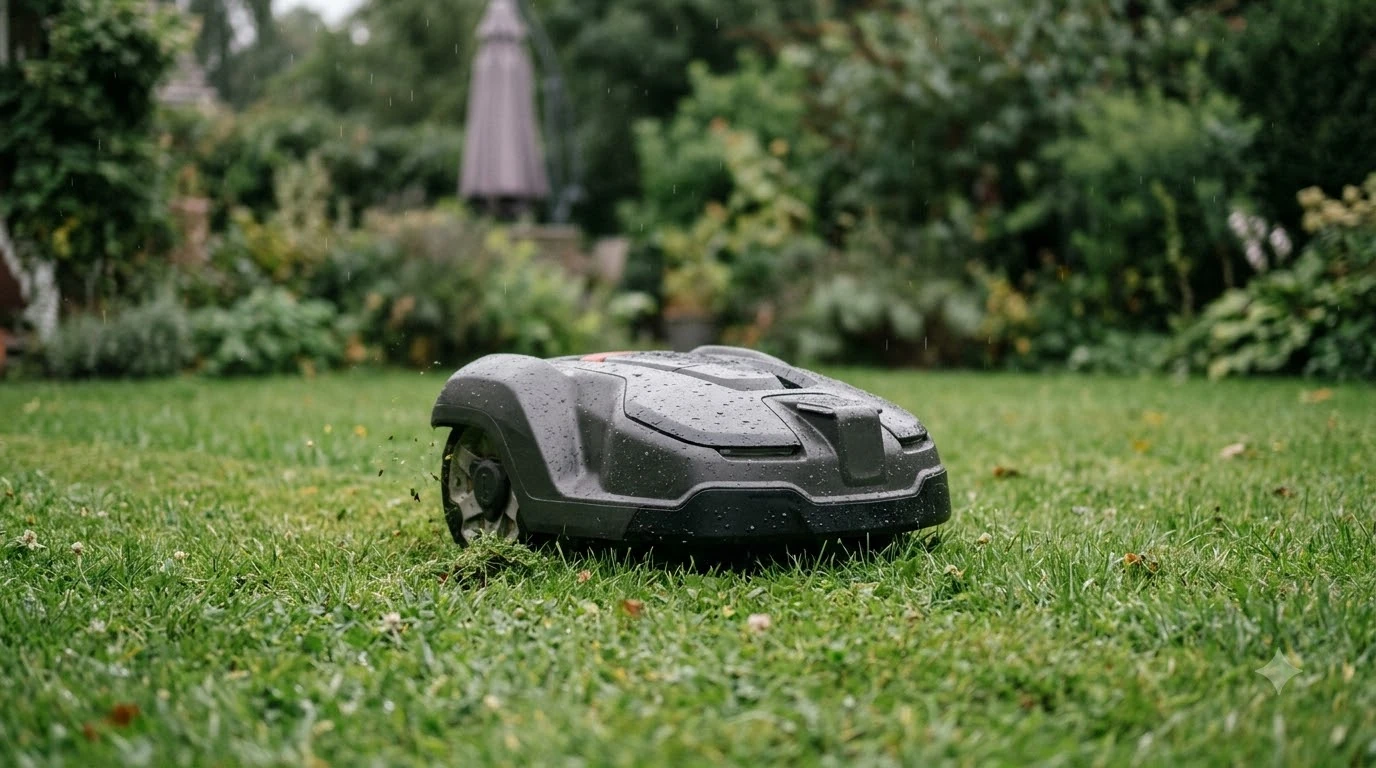

Do robot mowers spread weeds? Not in the sense of carrying new weed seed across the lawn, which the sources we read do not show. The real spread risk comes from timing and from creeping weeds. Mowing a weed that has already gone to seed can scatter the seed, and UF/IFAS reports that low-growing clover can spread under frequent mowing. Most of the control comes from when you mow and how high you set the blades.
The short answer
- Seed carried by the mower: the sources we read describe seed sticking to blades and clippings in general mowing advice. We did not find a robot-specific study showing a robot does this more than a standard mower.
- Weeds already in seed: mowing them can spread the seed, so check for seedheads before the robot runs.
- Clover and creeping weeds: UF/IFAS says these may increase under frequent mowing, even though overall weed coverage can fall compared with rotary mowers.
- Cutting height: blades set too high and cut infrequently leave more room for weeds and moss to spread, according to Robomow’s guidance.
Do robot mowers spread weeds by carrying seed?
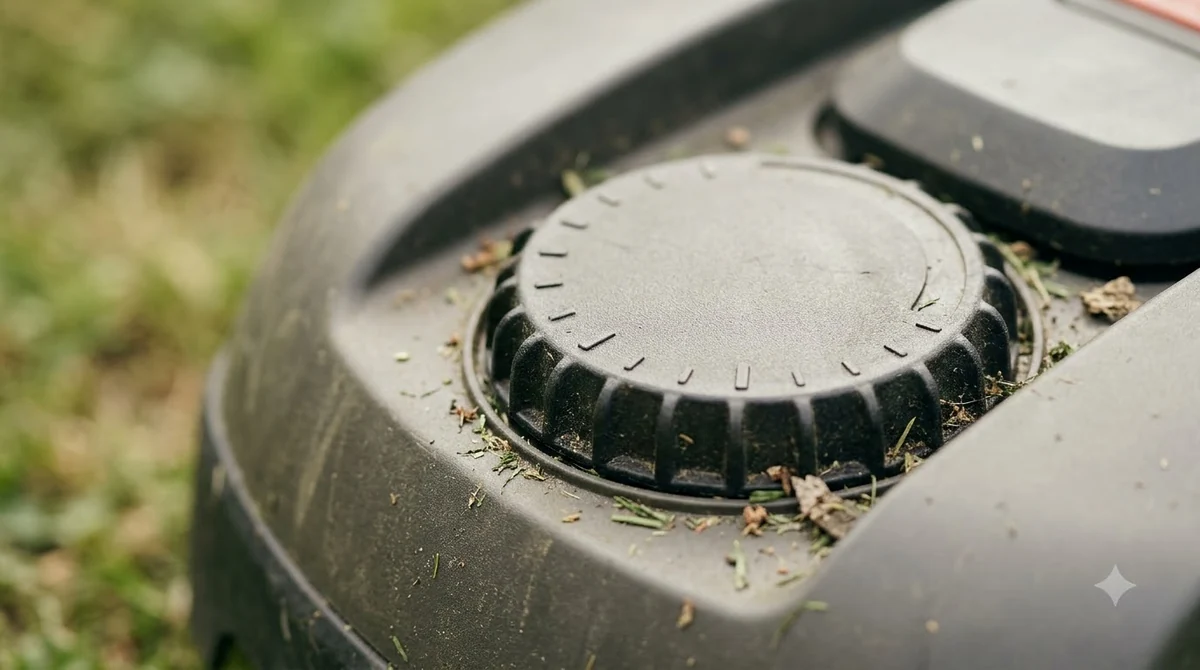
A robot mower cuts with small blades on a spinning disk, and it moves across the lawn on its own schedule. The lawn-care advice on seed transport is written for mowers in general, and it names the blades and housing as places where seed can collect. Better Lawn Care notes that seeds “can stick to the mower blades” and move to other parts of the lawn, and that clippings containing weed seed can take root somewhere new.

So do robot mowers spread weeds in this way? Our reading is that the same logic applies to a robot, because seed on the underside and in the housing can fall off wherever the mower goes. The sources we read do not measure this for robots, so treat it as a plausible mechanism rather than a proven one. Cleaning the underside after runs is a cheap precaution, and it is the step the sources point to most often. Our guide on how to clean a robot mower safely covers the brushing and rinsing.
Mowing a weed that has already gone to seed
Mowing is most likely to spread weeds once they have started to set seed. Better Lawn Care says mowing weeds that have begun to produce seed “can spread them across your lawn,” and that mowing early, before seed forms, helps limit spread by preventing seed production. The same page advises removing weed seed stems before mowing where practical.
For a robot, this means checking the lawn for seedheads before you rely on the regular schedule. A patch that has flowered or gone to seed should be cut back by hand first, as the sources suggest, so the seed is not scattered across the lawn by the blades. Our reading is that this step matters more than which brand of mower you own. So do robot mowers spread weeds when they run over seedheads? They can, in the same way any mower can, and timing is the lever you control. If your lawn is already full of weeds, see can a robot mower handle a lawn full of weeds.
Clover and creeping weeds spread under frequent mowing
Creeping weeds behave differently from upright ones. The UF/IFAS publication says that autonomous mowers can reduce overall weed coverage compared with rotary mowers, citing Grossi et al. 2016. It then adds that creeping-type weeds, such as clover, may increase under frequent mowing, citing Pirchio et al. 2018a. It also notes that this result could be positive if a mixed-species lawn is what you want.
The same extension publication puts the idea in one line: frequent mowing improves turf density, which may reduce some weeds, but it can allow low-growing species like clover to spread. Our reading is that a robot mower is not simply a weed reducer or a weed spreader, so the answer to do robot mowers spread weeds is split. It favors dense grass over tall weeds, while low, flat-growing plants can take advantage of the short, frequent cut. For a closer look at clover on a robot-mowed lawn, see how a robot mower copes with a clover lawn.
Cutting height and weed spread
Cutting height is the setting you control most directly. Robomow’s guidance recommends a cutting length of 30 to 40 mm in practice, and it warns that blades which grow too high and are cut infrequently leave more room for weeds and moss, which can spread quickly. The same source notes that the cutting interval should be adjusted to the lawn’s growth rate.
| Factor | What the sources say | Effect on weed spread |
|---|---|---|
| Cutting height | Robomow: 30 to 40 mm recommended in practice | Too high and cut infrequently gives weeds and moss room to spread |
| Mowing frequency | UF/IFAS: frequent mowing improves turf density | Denser turf may reduce some weeds, but low clover can spread |
| Weeds already in seed | Better Lawn Care: mowing seeding weeds can spread the seed | Check and cut seedheads before the robot runs |
| Blades and housing | Better Lawn Care: seed can stick to blades and housing | Clean after runs to limit carry-over |
Changing the height is not a fix on its own. The UF/IFAS guide advises removing no more than one-third of the leaf blade at a time, so a sharp jump in height can be as hard on the turf as a low cut. Our reading is that small, steady adjustments work better than a single large change. Check the height range in your mower’s manual before moving the setting, and see what height a robot mower should cut grass for the robot-specific side.
The UF/IFAS guide also lists the lawn types where autonomous mowers fit less well: very large or complex landscapes, lawns that need higher mowing heights, and areas with frequent debris or uneven terrain. Our reading is that debris matters here because a mower working through seed-bearing clippings in a cluttered area has more chances to move material around. The same guide says limited research exists for bahiagrass, centipedegrass and bermudagrass, so advice on spread for those lawns is less certain than for cool-season grass.
What to clean and check before and after runs
The question do robot mowers spread weeds comes down to timing, cleaning and height, so these steps follow the logic of the sources above. None of them needs special equipment.
- Walk the lawn first. Look for weeds with seedheads or flowers, and note where any creeping clover is spreading.
- Cut seeding weeds by hand. Use a string trimmer or a hand tool to remove seed stems before the robot runs over them.
- Check the cutting height. Keep it in the range your manual gives, and avoid large jumps in one step.
- Clean the underside after runs. Brush off clippings and seed from the blades and housing, since the sources name these as places where seed collects.
- Replace blades on schedule. UF/IFAS advises replacing them every six to eight weeks in the growing season, because dull blades make less clean cuts.
Frequently asked questions
Does a robot mower spread weed seeds?
The sources we read do not show that a robot mower carries weed seed across the lawn more than a standard mower does. General lawn-care advice says seed can stick to blades and clippings, so cleaning the mower after runs is a sensible step. Our reading is that timing matters more than the mower type.
Will mowing spread weeds that have gone to seed?
Yes, according to Better Lawn Care, mowing weeds that have already begun to produce seed can spread them across the lawn. Cut seeding weeds by hand before the robot runs, if you can.
Does a robot mower make clover spread?
UF/IFAS says creeping-type weeds such as clover may increase under frequent mowing. The same publication says autonomous mowers can reduce overall weed coverage compared with rotary mowers.
What cutting height helps limit weed spread?
Robomow recommends a cutting length of 30 to 40 mm in practice and warns that blades set too high and cut infrequently give weeds and moss more room. Check your mower’s own height range in the manual before changing the setting.
Sources
- Autonomous or Robotic Mower Use on Florida Lawns (UF/IFAS, ENH1402 / EP667, Singh, Boeri, Unruh and Lindsey): weed coverage compared with rotary mowers, creeping weeds such as clover, debris and blade replacement.
- Does mowing weeds spread them? (Better Lawn Care, general lawn-care guide, not a university source): seed on blades and clippings, and mowing seeding weeds.
- What is the ideal cutting height for a robotic lawnmower? (Robomow, manufacturer blog): recommended cutting length and weeds and moss in blades set too high.
 Up next9 min readLearnDo Robot Mowers Spread Lawn Disease?Updated Nov 12, 2026
 9 min readLearnHow to Keep a Robot Mower From Scaring the DogUpdated Nov 11, 2026
 9 min readLearnHow Do Robot Mowers Know Where to Go?Updated Nov 11, 2026
 9 min readLearnHow to Update Mammotion Luba 3 Firmware: Versions and StepsUpdated Nov 11, 2026
 8 min readLearnDo Robot Mowers Mow in Straight Lines? 6 Smart ChecksUpdated Nov 11, 2026
 7 min readLearnHow to Update Segway Navimow i110n FirmwareUpdated Nov 11, 2026