
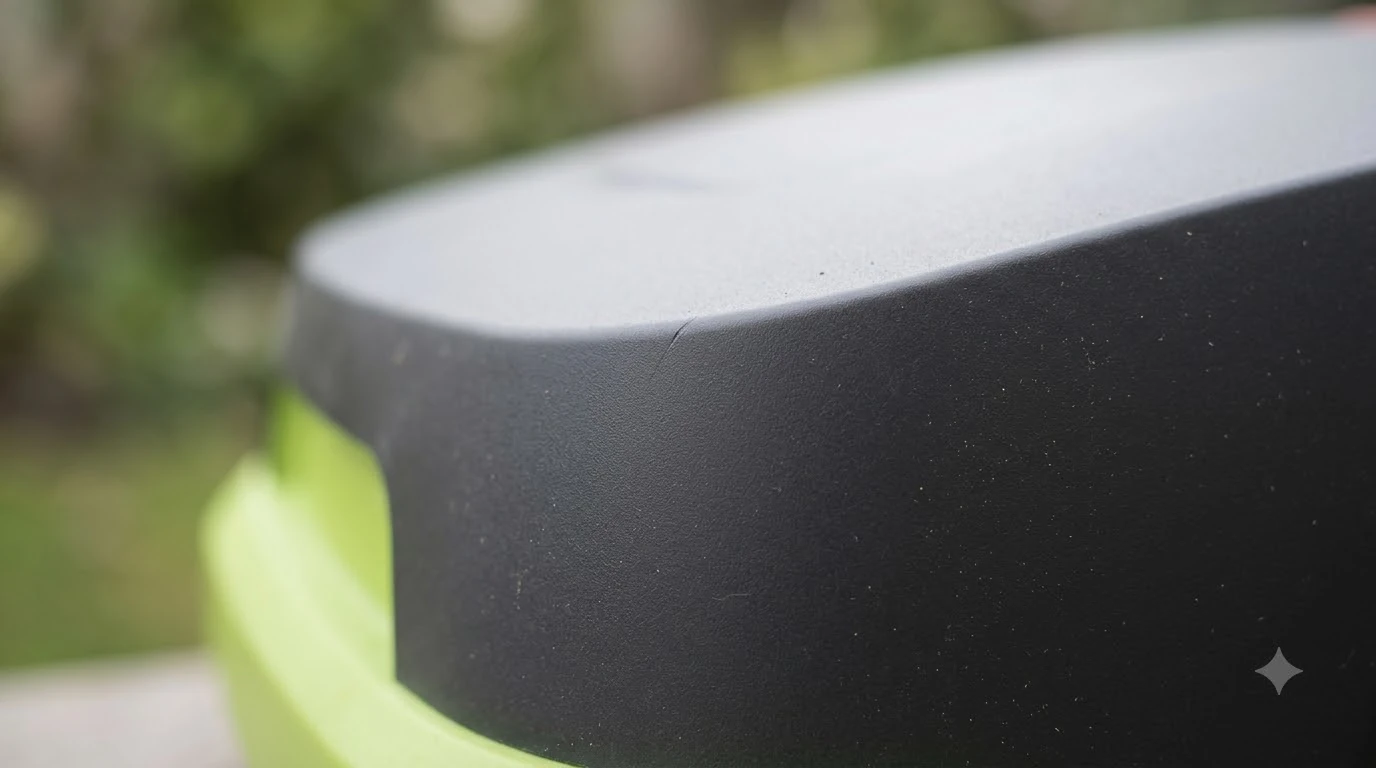

Learning how to prevent sun fading on a robot mower plastic body comes down to blocking ultraviolet rays while the mower rests, applying UV-inhibiting protectants, and avoiding harsh cleaners that strip factory stabilizers. Because autonomous mowers spend hundreds of idle hours parked in open yards between cutting cycles, their outer shells absorb far more solar radiation than walk-behind mowers stored in a shed. With a shaded docking setup and simple surface care, you can keep the housing from turning chalky, gray, or brittle.
The short answer
- Install a mower garage: Covering the charging dock shields the shell from direct midday ultraviolet exposure during the hours your mower sits idle.
- Site the dock strategically: Placing the base on the north or east side of a house or fence naturally blocks intense afternoon sunlight without interfering with boundary wires or satellite signals.
- Apply a UV protectant spray: Water-based, silicone-free trim dressings or manufacturer-approved plastic polishes act like sunscreen and should be reapplied every few weeks during peak summer.
- Skip harsh solvents: Degreasers, alcohol, and abrasive pads strip away surface stabilizers and accelerate chalking; stick to damp microfiber cloths and mild soap.
- Store indoors for winter: Bringing the mower and charging station inside a dry, frost-free room during the off-season cuts months of unnecessary solar wear.
Why robot mower shells fade faster than standard mowers
Unlike traditional push mowers that live inside a garage between weekly cuts, robot mowers stay outdoors continuously from spring through autumn, exposing their polymer housings to cumulative ultraviolet radiation and heat.
Most robot mower bodies are molded from impact-resistant plastics such as acrylonitrile butadiene styrene (ABS), polypropylene, or ASA blends. Manufacturers compound these resins with light stabilizers and pigments to withstand outdoor life, yet constant sunlight triggers photo-oxidation. Ultraviolet photons break chemical bonds near the surface, causing dark grays, oranges, and blacks to turn chalky white while making the shell more brittle over time.
Heat compounds the problem. When a mower docks in direct afternoon sun, dark plastic panels trap thermal energy, speeding up oxidation and stressing nearby rubber seals and battery cells. According to Mammotion’s robot mower garage guide, continuous UV exposure combined with high heat causes the most severe long-term wear to exterior housings and weather seals.
Shade the charging station without blocking signals
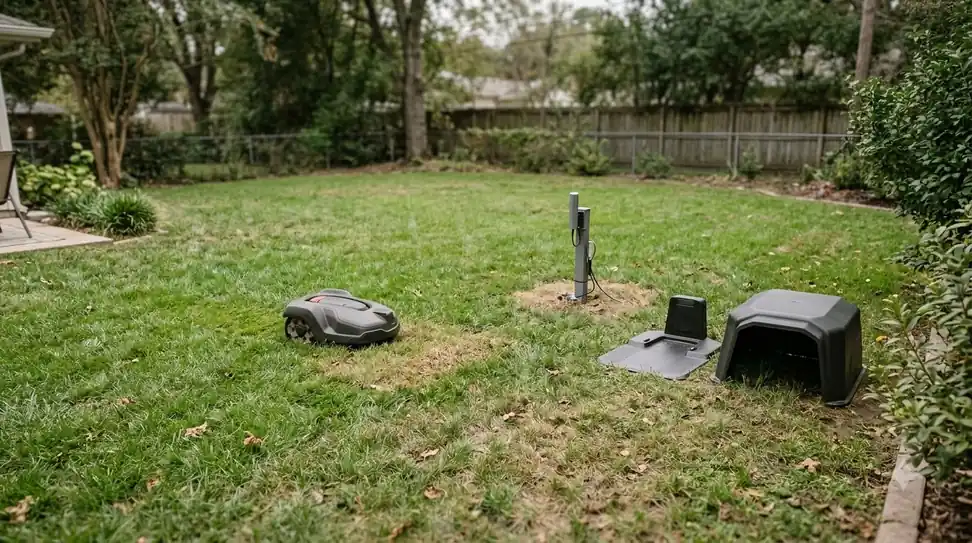
Shielding your mower while it charges is the single highest-impact change you can make, because a robotic mower typically spends most of every 24-hour cycle parked on its base.
Adding a dedicated roof or shelter over the charging station blocks direct overhead rays during peak UV hours. When choosing or positioning a shelter, keep three practical factors in mind:
- Material choice: UV-stabilized polycarbonate roofs block harsh rays while allowing satellite and radio signals to pass through. Solid metal roofs offer strong shade but can reflect or block GPS/RTK signals on wire-free mowers.
- Compass orientation: Positioning the charging station against a north- or east-facing wall or fence uses your home’s natural shadow to block hot afternoon sun.
- Airflow and clearance: Leave open sides on any cover so heat does not build up underneath, and maintain a straight, level approach path so docking sensors align cleanly.
Heads up
If your robot mower uses RTK-GPS or vision cameras for wire-free navigation, check the manufacturer’s clearance rules before adding a metal canopy. A clear view of the sky above the dock is often required so the mower maintains a steady satellite lock before departing.
Clean the plastic housing without stripping UV protection
Routine washing removes corrosive grass sap and dust, but using the wrong chemicals or tools will strip the outer polymer layer and speed up discoloration.
Dried grass clippings, pollen, and acidic sap bake onto warm plastic panels in the sun, etching the finish if left for weeks. According to Husqvarna’s official Automower cleaning instructions, owners should avoid solvents, harsh detergents, and high-pressure washers, which can damage exterior panels and force water into electronics. Follow this safe cleaning sequence instead:
- Power down and wear gloves. Switch off the main power button and pull the mower away from the charging dock before touching the shell or underside.
- Brush away dry debris. Use a soft dry brush to sweep off dust, dried clippings, and mud from the top cover, bumper, and wheel arches.
- Wipe with mild soap and water. Dampen a soft microfiber cloth with plain water or a mild soap solution to lift stubborn sap without scratching glossy or textured finishes.
- Rinse carefully only if rated. Only use a gentle garden hose on models explicitly rated for running-water washdowns, and keep the mower upright while rinsing.
- Dry completely before treating. Buff the shell dry with a clean microfiber towel so water spots do not bake onto the surface in direct sunlight.
Apply UV protectants and compare maintenance options
Applying a sacrificial UV-blocking dressing creates a clear barrier on top of the plastic that absorbs or reflects ultraviolet rays before they reach the mower’s pigments.
Once the shell is clean and cool to the touch, wipe on a water-based, silicone-free UV protectant formulated for automotive exterior trim or marine vinyl, or use a brand-specific plastic care spray. Avoid oily tire shines or petroleum-based dressings, which attract dust and grass clippings into a sticky film. Spray the product onto a microfiber applicator pad rather than directly onto the mower so overspray does not coat optical sensors, LiDAR windows, or metal charging contacts.
| Protection method | Primary benefit | Reapplication or upkeep | Best suited for |
|---|---|---|---|
| Polycarbonate mower garage | Blocks overhead UV rays and rain while letting RTK signals pass | Seasonal check of ground anchors and roof cleanliness | All models, especially wire-free GPS/RTK mowers |
| North or east wall placement | Uses natural building shade to block hot afternoon sun | One-time setup during initial dock installation | Yards with shaded exterior walls and open approach paths |
| Water-based UV trim protectant | Adds a non-greasy sacrificial UV barrier and deepens color | Every 30 to 45 days during peak summer sun | Mowers parked in open yards without a covered dock |
| Manufacturer plastic care polish | Restores satin sheen and repels dust without harsh solvents | After monthly or seasonal deep cleanings | Owners seeking OEM-approved surface maintenance |
| Indoor winter storage | Eliminates off-season UV, frost, and moisture exposure | Once per year at the end of the mowing season | All regions with freezing winters or dormant turf |
Seasonal storage habits that preserve color
How you store your robot mower during winter and multi-week vacations prevents months of silent ultraviolet wear when the grass is not even growing.
Even cool autumn and winter sunshine carries strong UVA rays that continue breaking down exposed plastics. At the end of the mowing season, clean the housing thoroughly, apply a fresh coat of UV protectant, charge the battery according to your owner’s manual, and move both the mower and charging base into a dry indoor space such as a garage or basement. If the charging station must stay anchored outdoors over winter, cover it with a breathable, UV-resistant weather cover so spring arrives with the plastic looking close to factory fresh.
Frequently asked questions
Can I use automotive ceramic coating or wax on a robot mower?
Yes, synthetic paint sealants and trim-safe ceramic coatings work well on smooth robot mower shells as long as the surface is thoroughly cleaned first. Keep all coatings off optical cameras, ultrasonic sensors, rain sensors, and metal charging strips so navigation and docking stay reliable.
How do I restore a robot mower plastic body that has already turned chalky?
Wash the oxidized layer with mild soap and a soft microfiber cloth, let it dry in the shade, and apply an automotive exterior plastic trim restorer. These coatings penetrate porous, sun-bleached plastic to darken the color and seal the surface against further UV oxidation.
Will a robot mower garage interfere with GPS or RTK navigation?
A roof made of UV-resistant polycarbonate or ABS plastic rarely interferes with satellite signals, whereas solid metal roofs can block or bounce GPS signals. Always check your mower’s manual for open-sky clearance requirements around the dock before installing an enclosure.
Does sun fading void a robot mower warranty?
Cosmetic discoloration and normal outdoor wear are typically excluded from standard manufacturer warranties, which cover defects in materials and workmanship rather than sun exposure. Protecting the housing early keeps resale value higher and prevents brittle plastic cracks that are also outside warranty coverage.
Sources
- Robot Lawn Mower Garage: DIY Build Guide & Placement Tips (2026) (Mammotion): referenced for UV and heat degradation impacts on mower housings, polycarbonate material selection, and shade placement tips.
- How to clean Husqvarna Automower and CEORA (Husqvarna): referenced for safe cleaning steps, microfiber cloth use, and avoiding solvents or pressure washers on plastic bodies.
- How to Improve UV Stability in Outdoor Plastics (Safic-Alcan): referenced for polymer photo-oxidation mechanisms and how UV absorbers and light stabilizers protect outdoor plastics.
 Up next8 min readLearnHow to Prevent Ant Nests Inside a Robot Mower Charging BaseUpdated Nov 19, 2026
 10 min readLearnRobot Mower and Invisible Dog Fence Wires: How to Prevent InterferenceUpdated Nov 19, 2026
 9 min readLearnHow to Prevent Rust on Robot Mower Blade ScrewsUpdated Nov 19, 2026
 8 min readLearnHow to Prevent Grass Buildup Inside Robot Mower Wheel WellsUpdated Nov 19, 2026
 7 min readLearnHow Do Robot Mowers Prevent Theft?Updated Nov 13, 2026
 7 min readLearnDo Robot Mowers Scalp the Lawn? Causes and How to Prevent ItUpdated Nov 12, 2026