
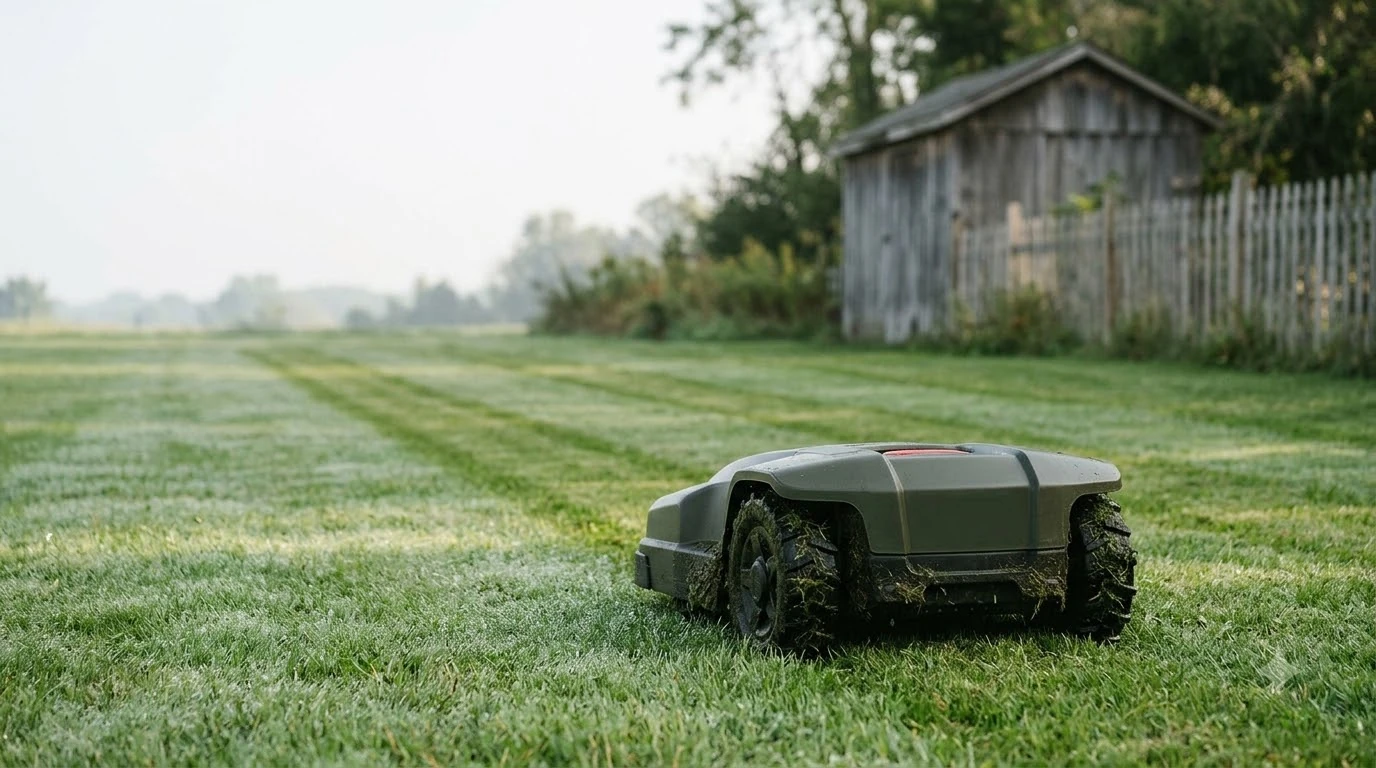

Do robot mowers scalp the lawn? Yes, but usually only when the cutting height is set too low or the ground has bumps, dips or ruts. Scalping shaves the grass too short and leaves brown patches behind. Raising the cutting height and leveling the worst low spots fix most cases.
The short answer
- Cause: the blade drops below the grass top over raised spots and bumps, according to Anker’s guide to uneven lawns.
- Height rule: Clemson advises removing no more than one-third of the grass height at any one mowing.
- Design: a floating deck lets the cutting disk follow the terrain, which Worx says reduces scalping.
- Starting setting: on an uneven lawn, start with a slightly higher cut, as Anker recommends.
- Prevention: raise the height when grass is tall or stressed, and level deep holes and ruts.
Why do robot mowers scalp the lawn?
Scalping happens when the blade drops below the top of the grass, usually over a raised spot, a bump or a setting that is too low. Anker says uneven ground can make the blades cut too low over raised areas, which leaves brown patches behind. Worx says that when a mower meets a bump or a dip, its blade is likely to scalp some turf.
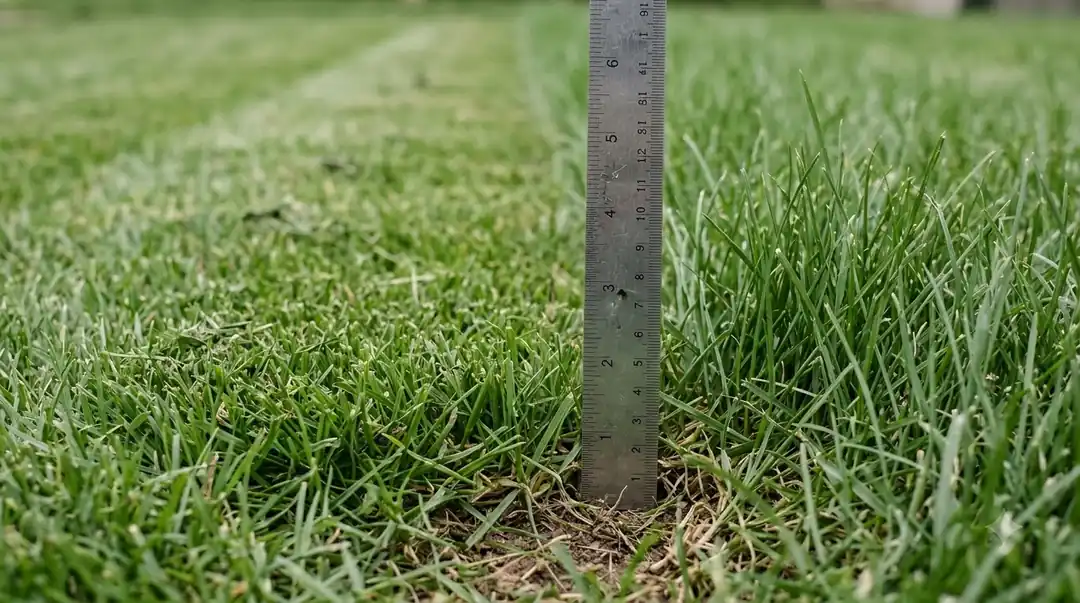
Both sources point to the same mechanism, which is why robot mowers scalp the lawn most often on uneven ground. The blade follows the ground, not the top of the grass, so a bump brings the blade down into the turf. Scalping is therefore a terrain and setup problem more than a sign that the mower is faulty. So do robot mowers scalp the lawn on flat, even ground? Our reading is that it is much less likely there. Check the height setting first, then walk the lawn and look for bumps, dips and ruts where the blade drops.
Why cutting too low harms the turf
Cutting too low causes damage beyond the look of the lawn. Clemson Cooperative Extension says cutting off more than one-third of the grass at one time can stop the roots from growing. Its rule of thumb is to remove no more than one-third of the grass height at any one mowing. The guide is from 1999, so check it against your local extension service for current advice.
Mississippi State University Extension makes the same point from a different angle. Its turf note from May 12, 2008 says the one-third rule applies regardless of species, and that mowing height extremes may cause scalping, turf thinning and even loss of the lawn. The practical lesson is that a height change is safer when it is gradual.
Heads up
Clemson’s one-third rule and Mississippi State’s warning about height extremes both apply to any mower, robot or not. Our reading: a lawn that grows too tall between runs forces a bigger cut at once, so keeping the height steady matters as much as the setting itself.
How a floating deck reduces scalping
A floating deck lets the cutting disk adjust its height to the roughness of the ground, which reduces scalping on rough lawns. Worx describes the cutting disk as automatically adapting its height to the terrain. The same article says the adaptive deck also keeps the blade from hitting fallen branches and other low obstacles.
Not every model has this feature, so check the spec sheet before you assume it does, and see why a robot mower cuts unevenly if the lawn still looks patchy. Our reading: a floating deck reduces scalping on bumps, but it does not replace leveling a lawn with deep holes or ruts. It works best as one part of a setup that also includes a sensible height setting.
What cutting height to use on an uneven lawn
On an uneven lawn, start with a slightly higher cut and lower it gradually. Our guide to what height a robot mower should cut grass covers typical settings. Anker advises a higher cutting height on uneven lawns at first. Its page lists an adjustable cutting height of 25 to 75 mm for the eufy E15 and E18, which is a vendor specification for those two models only. Do robot mowers scalp the lawn less at a higher setting? Anker says a higher cutting setting helps the mower glide over rough patches more easily.
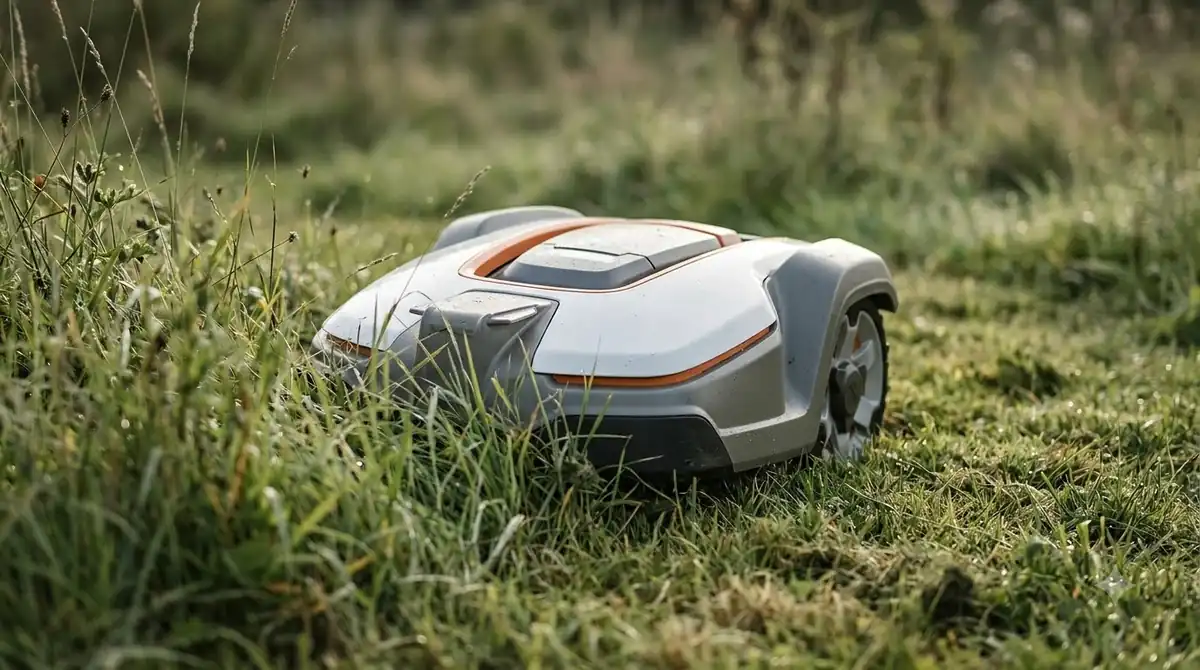
The extension guidance agrees with starting high. Clemson recommends mowing turf under stress, such as heat, drought or shade, at a higher level of cut (our notes on the one-third mowing rule explain the math). Its table gives tall fescue a winter cut of 2 to 3 inches and a summer cut of 3 to 3.5 inches.
| Situation | Suggested action | Source |
|---|---|---|
| Uneven lawn with bumps | Start with a slightly higher cut | Anker |
| Grass too tall between mowings | Raise the mowing height, then lower it gradually | Clemson |
| Turf under heat, drought or shade | Mow at a higher level of cut | Clemson |
| Cut more than one-third at once | Avoid it; it can stop root growth | Clemson |
How to prevent scalping on a robot-mowed lawn
Prevention is a short checklist for when robot mowers scalp the lawn: set a higher height, fix the worst low spots, and keep the grass from growing too tall. Each step follows from the sources above.
- Set a higher height first. Anker recommends a higher cut on uneven lawns at the start, and Clemson advises lowering the height gradually until the recommended height is reached.
- Walk the lawn and mark the problem spots. Look for bumps, dips and ruts where the blade drops, including spots where bumpy lawns are already visible. Anker says small bumps are usually not a problem, while deeper holes and ruts are.
- Level the deeper holes and ruts. Anker says filling problem areas with topsoil or a soil-and-sand mix can help smooth the surface, and that you do not need to level the whole garden (see also whether you should level your lawn before getting a robot mower). Our reading: fix these before lowering the height, because a lower setting over a hole is the most likely place to scalp.
- Do not let the grass get too tall. Clemson says that if grass becomes too tall between mowings, you should raise the mowing height and then reduce it gradually, and it advises mowing regularly with a sharp blade.
Frequently asked questions
Do robot mowers scalp the lawn every time?
No. Scalping is most likely over bumps and dips, or when the cutting height is set too low.
How much grass should one mowing remove?
Clemson advises no more than one-third of the grass height at any one mowing. Mississippi State Extension gives the same rule.
Does a floating deck stop scalping completely?
No. Worx says a floating deck adapts the cutting disk to the terrain, which reduces scalping on rough lawns. Deep holes and ruts still need leveling, per our reading.
Should I always mow as low as possible?
No. Clemson recommends a higher cut for turf under stress, and Anker recommends a slightly higher start on uneven lawns.
Sources
- Mowing Lawns (HGIC 1205) (Clemson Cooperative Extension, published 1999): the one-third rule, stress height and tall fescue heights.
- Lawn mowing efficiency (Turf Tips) (Mississippi State University Extension, May 12, 2008): one-third rule and scalping from height extremes.
- Robot mowers and complex lawns (Worx): bumps and dips, and the floating deck.
- Do robot mowers work on uneven lawns (Anker, eufy): scalping on raised areas, the 25 to 75 mm range on the E15 and E18, and the higher starting cut.
 Up next7 min readLearnHow Do Robot Mowers Prevent Theft?Updated Nov 13, 2026
 8 min readLearnHow to Prevent Grass Buildup Inside Robot Mower Wheel WellsUpdated Nov 19, 2026
 9 min readLearnHow to Prevent Rust on Robot Mower Blade ScrewsUpdated Nov 19, 2026
 10 min readLearnRobot Mower and Invisible Dog Fence Wires: How to Prevent InterferenceUpdated Nov 19, 2026
 8 min readLearnHow to Prevent Ant Nests Inside a Robot Mower Charging BaseUpdated Nov 19, 2026
 8 min readLearnHow to Prevent Sun Fading on a Robot Mower Plastic BodyUpdated Nov 19, 2026