
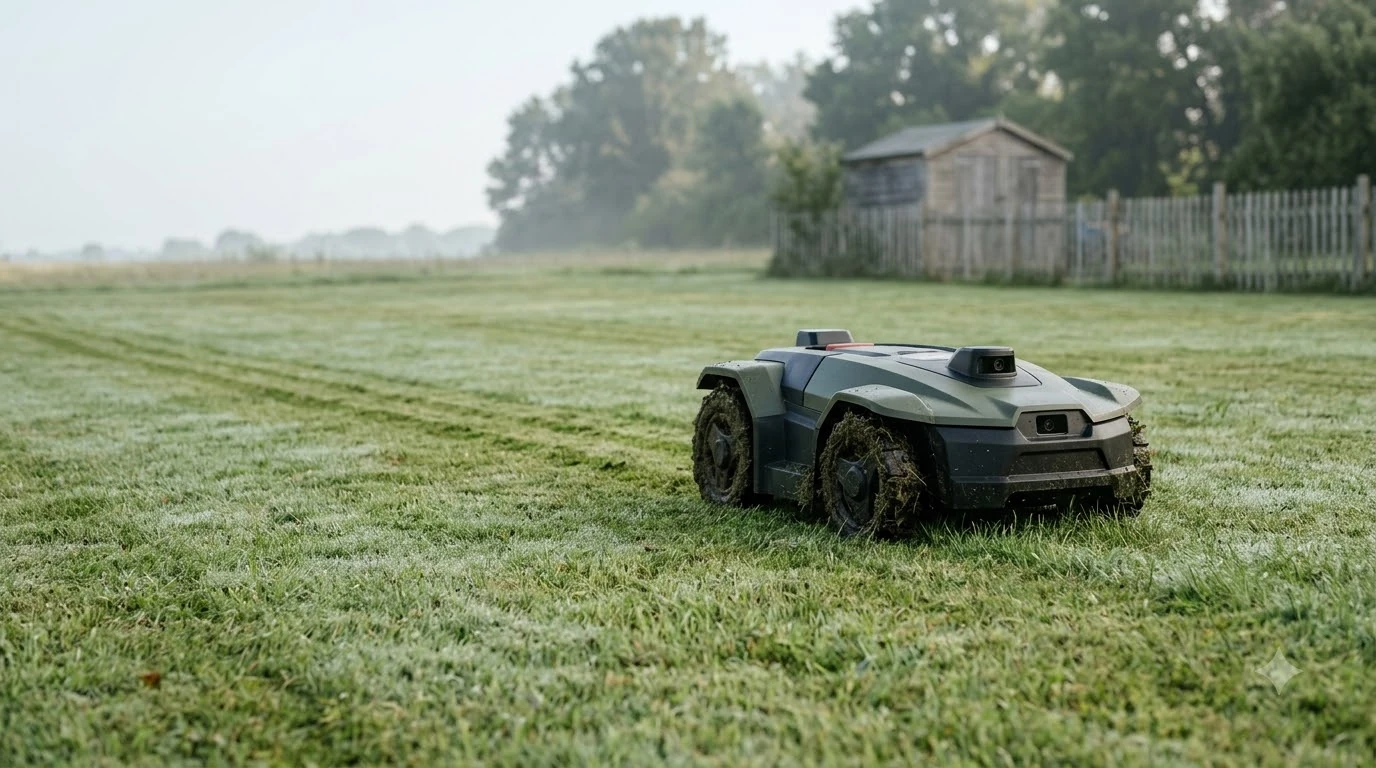

The Hookii Neomow X SE vs Mammotion YUKA choice comes down to navigation: the Neomow X series uses LiDAR with no perimeter wire, while the YUKA uses 3D vision and RTK, according to each brand’s published pages. Hookii does not publish an official spec page for the SE, so its figures below are labeled as series or retailer data.
The short answer
- Navigation: Neomow X series LiDAR with no wire and no base station; YUKA vision with an RTK station.
- Slope: Neomow X series 24 degrees (45%); YUKA 28 degrees without the sweeper. The SE has no official rating.
- Cut: 280 mm for the Neomow X series; 32 cm for the YUKA.
- Battery: 13 Ah for the Neomow X series; 4.5 Ah for the YUKA, or 9 Ah with the sweeper.
- Choice: the answer depends on lawn size, slope and whether you want to run an RTK station. Neither spec sheet shows a clear winner.
Navigation: LiDAR without a wire vs vision with RTK
The Neomow X series uses LiDAR SLAM navigation and needs no perimeter wire or RTK base station, according to Hookii’s Neomow X series page. The mower builds its map during a mapping pass, and that map is what keeps it inside the lawn and away from fixed obstacles. The SE is sold as a LiDAR model as well, according to a retailer listing, but Hookii’s series page does not name the SE. Our Hookii Neomow X SE review covers what is and is not published for that model.
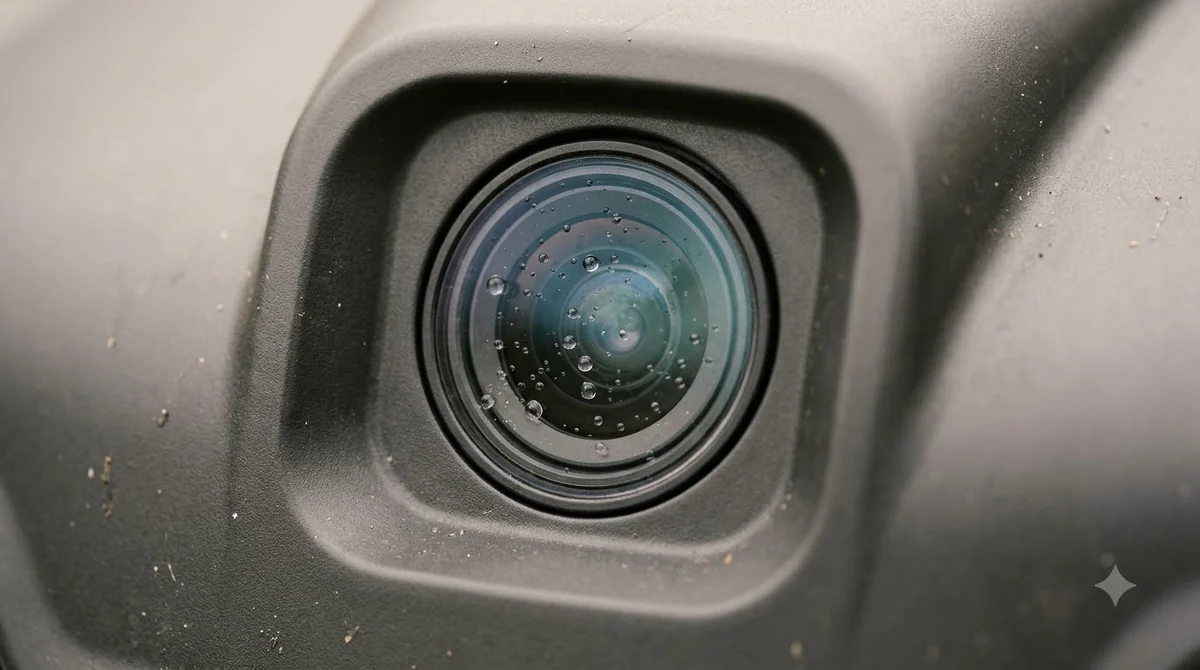
The YUKA takes a different route. Mammotion’s support page lists 3D vision and RTK as its navigation type (see our Mammotion YUKA review for the wider spec picture), and the RTK station carries an IPX7 rating. That means the YUKA depends on a RTK base station placed where it can receive satellite signals, which is one more item to set up and keep in a fixed position.
Each route has a trade-off, and the Hookii Neomow X SE vs Mammotion YUKA decision often turns on it. A wire-free LiDAR mower skips the boundary wire, and a wire is hard to fix when it breaks, because a break in the loop can stop the whole mower (our guide on how to find a break in robot mower wire shows what that repair involves). Robomow’s guide on boundary wires explains why a complete loop matters. A mower that uses LiDAR or RTK does not depend on that loop, but it does depend on the mapping pass or the station being set up correctly.
Cutting width, height and area claims
In a Hookii Neomow X SE vs Mammotion YUKA check, the YUKA cuts a wider path than the Neomow X series, at 32 cm (12.59 in) against 280 mm (about 11 in). Cutting height is close, with the Neomow X series at 30 to 85 mm and the YUKA at 30 to 100 mm in the US, or 20 to 90 mm in the EU, UK and Australia.
| Spec | Hookii Neomow X series | Mammotion YUKA 1500/2000 |
|---|---|---|
| Navigation | LiDAR SLAM, no perimeter wire | 3D vision and RTK |
| Cutting width | 280 mm | 32 cm (12.59 in) |
| Cutting height | 30 to 85 mm | US: 30 to 100 mm; EU, UK, AU: 20 to 90 mm |
| Area claim | Series page: 3,000 m2; listings say up to 4,000 m2 | 1,500 m2 (YUKA 1500); 2,000 m2 (YUKA 2000) |
The area claims need care. The Neomow X series page lists a recommended mowing area of 3,000 m2, while product listings say up to 4,000 m2, so the two figures do not match. For the SE, a retailer listing gives up to 0.75 acre, or about 3,035 m2, but that rating is reduced by obstacles, layout and slope. Mammotion’s figures are the maximum mowing size for each model, so neither set of numbers is a like-for-like test.
Slope limits: 45% vs 28 degrees
For a Hookii Neomow X SE vs Mammotion YUKA slope check, the Neomow X series is rated for slopes up to 24 degrees, which is 45%, while the YUKA is rated for 28 degrees without the sweeper. Percent grade is 100 times the tangent of the angle (see robot mower slope ratings in percent and degrees), so 24 degrees works out to about 45% and 28 degrees to about 53%. Mammotion’s page gives a with-sweeper figure too, but the text is cut off, so this guide does not use it.
- Neomow X series: 24 degrees (45%), listed on Hookii’s series page.
- Neomow X SE: no official rating. A retailer listing says Hookii does not publish one.
- YUKA 1500/2000: 28 degrees without the sweeper, per Mammotion’s YUKA specifications.
The gap in the SE rating matters more than the gap in the series figures. If your lawn has a steep section, a published rating is the only number you can check before you buy, and for the SE that number is missing. Our reading is that anyone with a steep section should ask Hookii for the SE rating in writing, and should not assume the series figure applies.
Battery, charge and water resistance
In the Hookii Neomow X SE vs Mammotion YUKA comparison, the battery is the figure that most affects how often you must recharge. The Neomow X series carries an 18 V, 13 Ah battery rated at 234 Wh, with a 180-minute charge and up to 120 minutes of mowing on one charge, according to Hookii’s series page. Those battery figures are for the X model, not confirmed for the SE.
The YUKA battery is listed at 4.5 Ah, rising to 9 Ah with the sweeper. Mammotion’s page does not give a charge time or weight, so a direct comparison of run time is not possible from published numbers alone.
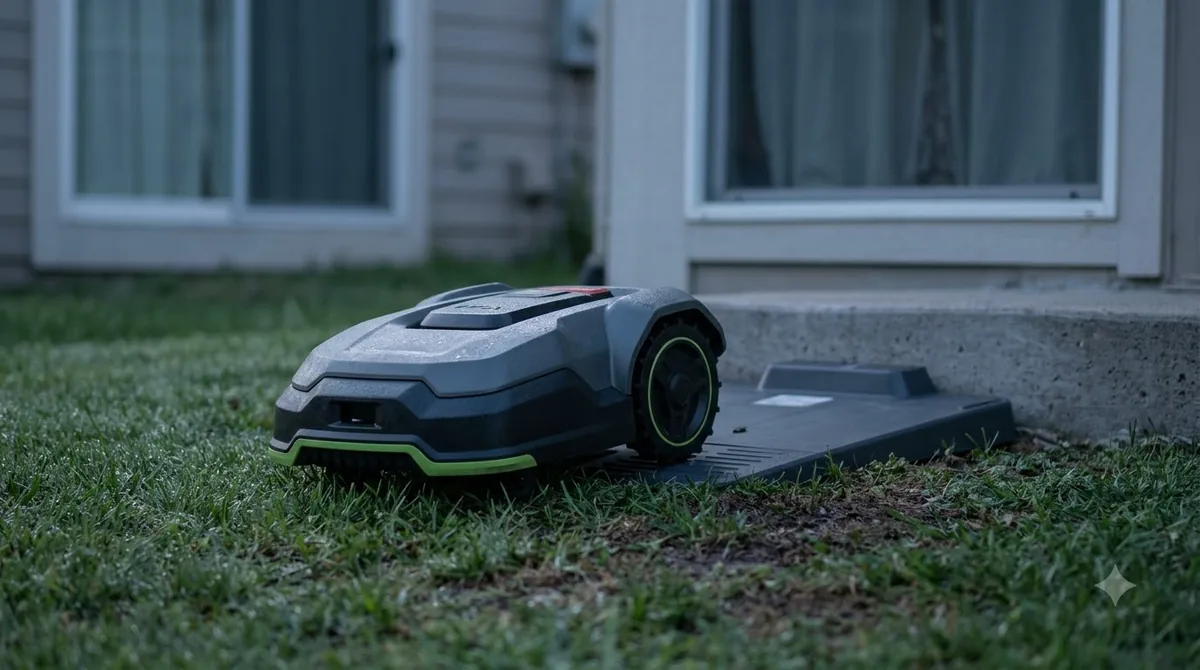
Both brands rate their mowers for water. The Neomow X series is rated IPX5. The YUKA mower and dock are rated IPX6, and the RTK station is rated IPX7. These are different test claims on different parts, so they should not be read as a head-to-head result.
Hookii Neomow X SE vs Mammotion YUKA: who each option suits
The Neomow X SE suits a buyer who wants no boundary wire and a lawn that is mostly flat, and who can accept that its slope rating is unpublished. The YUKA suits a buyer who is comfortable placing an RTK station and wants a published slope figure before buying. Neither choice is wrong, and the spec sheets do not declare a winner in the Hookii Neomow X SE vs Mammotion YUKA matchup.
- Pick the Neomow X SE if you want no wire and no base station, and your lawn has no steep sections.
- Pick the YUKA if you can place an RTK station with a clear view of the sky, and you want a published slope rating.
- Look elsewhere if your lawn is larger than about 3,000 m2 and you need a verified area figure for the exact model.
What to check before you buy
Use the spec sheet for the exact model you plan to buy, because the SE and the series do not share every figure. Before you commit to either Hookii Neomow X SE vs Mammotion YUKA option, run the four checks below. They take less time than a return, and each one turns a published number into a decision you can test against your own lawn.
- Confirm the SE specs in writing. Ask Hookii for the cutting height, battery and slope rating for the SE, since the series page does not list them.
- Measure your steepest slope. Compare the measured figure with 45% for the Neomow X series, or with 28 degrees for the YUKA.
- Plan the YUKA station. Choose a spot with a clear view of the sky, then confirm the RTK station’s IPX7 rating covers where it will sit.
- Check the wire question first. If you do not want a boundary wire, a wire-free LiDAR or vision mower avoids the loop problem that Robomow describes. Our reading is that this is the single biggest difference between the two.
Frequently asked questions
Does the Hookii Neomow X SE need a boundary wire?
No. Hookii’s Neomow X series uses LiDAR SLAM navigation and needs no perimeter wire or RTK base station. The SE is listed as a LiDAR model by a retailer, but Hookii’s series page does not name the SE, so check the SE manual for its exact setup before you buy.
Does the Mammotion YUKA need an RTK base station?
Yes. Mammotion lists 3D vision and RTK as the YUKA navigation type, and it sells an RTK station rated IPX7. The station needs a spot with a clear view of the sky, so plan its placement before you set up the mower.
Which one has the higher published slope limit?
On the published figures, the YUKA’s 28 degrees without the sweeper is higher than the Neomow X series’ 24 degrees, which is 45%. The SE has no official slope rating, so it cannot be compared on this point with confidence.
Is either mower tested against the other?
No. The Hookii Neomow X SE vs Mammotion YUKA comparison here uses only published specifications from the manufacturers and a retailer listing. It does not include independent test data, so the comparison shows what each brand claims, not how the mowers perform on a lawn.
Sources
- Hookii Neomow X series (Hookii): LiDAR navigation, cutting height and width, slope, battery, IP rating.
- Mammotion YUKA specifications (Mammotion support): navigation, cutting width and height, slope, battery, IP ratings, area.
- Boundary wire vs grass sensors for robotic mowers (Robomow): why a broken wire loop is hard to locate.
- Hookii Neomow X SE listing (retailer): rated area, width, connectivity; no official slope rating.
 Up next8 min readReviews & CompareHookii Neomow X SE vs Dreame A1 Pro: What the Published Specs ShowUpdated Nov 11, 2026
 6 min readReviews & CompareIs the Hookii Neomow X SE Worth It? What Reviews ShowUpdated Nov 17, 2026
 8 min readReviews & CompareHookii Neomow X SE Review: 0.75-Acre Specs and Slope LimitsUpdated Nov 12, 2026
 8 min readReviews & CompareHookii Neomow X SE Problems and Complaints: What Owners ReportUpdated Nov 18, 2026
 7 min readReviews & CompareHookii Neomow X SE Pros and ConsUpdated Nov 18, 2026
 9 min readReviews & CompareHookii Neomow X Review: Specs, Coverage and LimitsUpdated Nov 16, 2026