
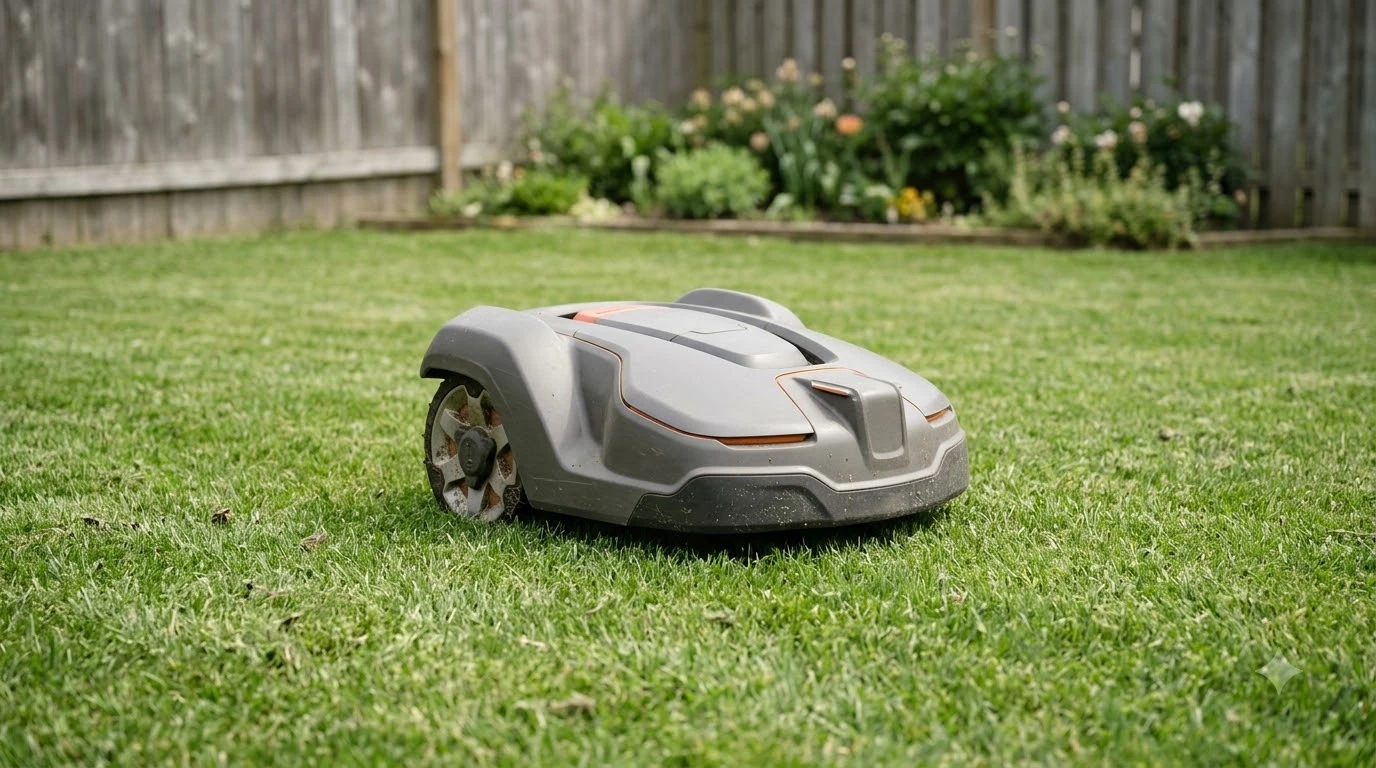

Robot lawn mower vs riding mower cost over 5 years comes down to three lines: the upfront price, the yearly running cost, and whether a battery replacement falls inside the window. In the sources read, a robot is the cheaper one to run, while Mammotion calls riding mowers cheaper initially but adds fuel, oil, and annual service. The result shifts with your local electricity rate and the model you choose.
Riding mowers are often said to last longer than robots, so a five-year window captures only part of a ride-on’s life. That makes the comparison a question of timing as well as price.
The short answer
- Starting price: Mammotion gives robot mowers a range of $700 to $5,000 and ride-ons an average of about $2,500, so the upfront gap can run either way.
- Electricity: at the August 2026 US average of 18.16 cents per kWh (EIA, preliminary), every 100 kWh used in a year costs about $18.16.
- Fuel and service: riding mowers add fuel, oil changes, and annual professional servicing, while robots need monthly cleaning and occasional blade swaps.
- Battery: Mammotion says a robot battery may need replacing after 3 to 5 years, which can land inside a five-year window.
How the five-year total is built
A five-year total cost adds the purchase price, five years of running and service costs, and any battery replacement, then subtracts what you expect the mower to sell for at year five. Our reading is that you should build this total from your own numbers, not from one vendor table, because the figures published in this category are promotional and often disagree with each other.
- Purchase. Use the price you would actually pay for the model and size class.
- Running cost. Multiply the yearly kWh or fuel use by your local rate, then add the yearly service.
- Battery. Add one replacement if the battery’s expected life ends before year five.
- Resale. Subtract the value you expect at year five, if you plan to sell.
Purchase price: where the gap starts
Mammotion puts robot mowers between $700 and $5,000 and ride-ons at an average of about $2,500, as of 2026-11-10 (see our robot lawn mower cost guide for price tiers). Its buying guide splits robots into three bands: entry-level at $700 to $1,500, mid-range at $1,500 to $2,500, and premium at $2,500 and up.
Its comparison table gives different ranges, $900 to $5,000 and above for robots and $1,500 to $5,000 and above for ride-ons, so the page’s own figures overlap. Our reading is that a robot priced above a ride-on at entry level should be judged on its five-year running line, not the sticker price alone.
Electricity cost for a robot mower
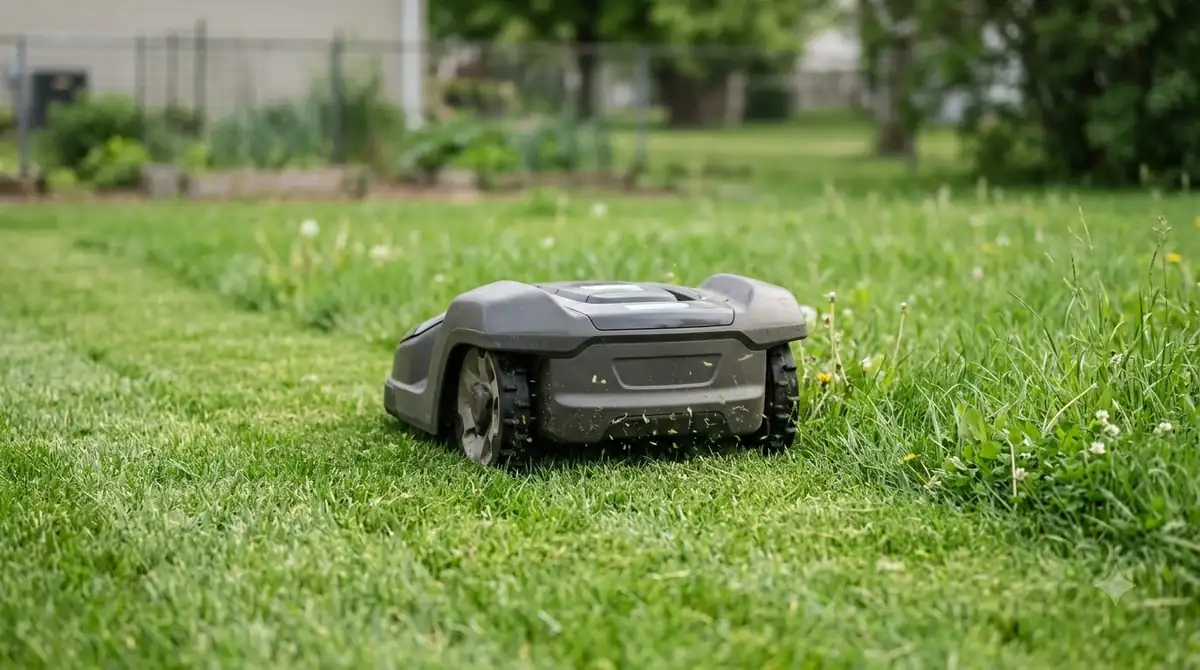
At 18.16 cents per kWh, electricity is cheap per season, but in a robot lawn mower vs riding mower cost over 5 years check, the kWh a robot uses each year is the number that matters. The U.S. Energy Information Administration lists the national average residential electricity price at 18.16 cents per kilowatt-hour for August 2026, a preliminary estimate. EIA’s monthly table shows the series by month. Rates vary by state and utility, so use your own bill, and our guide to robot mower electricity cost shows how to estimate the kWh. At the national average, 100 kWh a year costs about $18.16, and five years of 100 kWh costs about $90.80.
The sources read for this article do not publish a kWh-per-season figure for a robot mower, so take that number from your model’s spec sheet and multiply it by your rate. Ecovacs says robotic mowers are more cost-efficient over time because they run on electricity and need fewer repairs, but it gives no dollar totals to check against.
Fuel, oil, and service for a riding mower
Ecovacs lists fuel refills, oil changes, spark plug replacements, blade sharpening, and annual professional servicing as ride-on tasks. Mammotion says ride-ons “can become more expensive in the long run due to fuel costs, oil changes, and general maintenance.” Neither page gives a dollar figure for these items, so this part of the five-year total has to come from your local gas price, your mowing hours, and a service quote from a dealer near you.
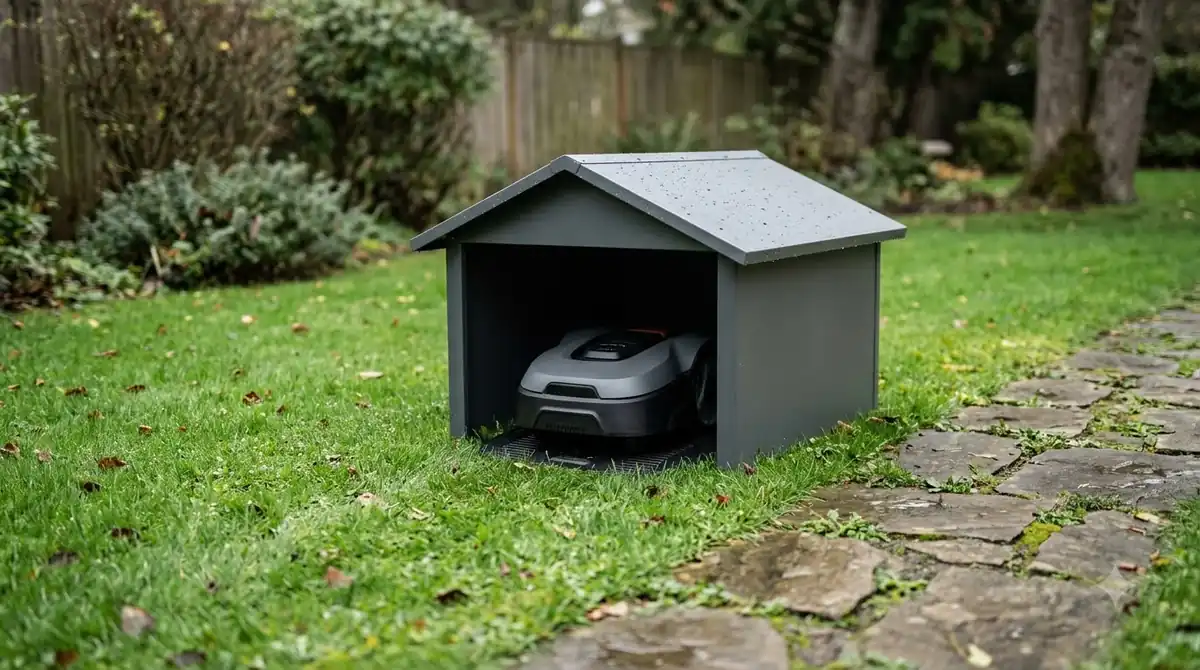
Robot upkeep is lighter in a different way. Ecovacs puts a robot at a monthly cleaning of the blades, sensors, and body, and Mammotion says robot blades typically need replacing a few times a year. Those tasks cost money, but they are a different kind of job from an engine service; our robot mower maintenance checklist lists them.
Battery and lifespan inside five years
Within five years, the battery is the part of a robot lawn mower most likely to add a cost. Mammotion gives a robot mower a lifespan of 5 to 10 years and says the battery may need replacing after 3 to 5 years. Ecovacs says most robot mowers last 5 to 10 years with proper care and tells owners to replace the battery when it shows signs of wear.
Lawn Care Center, as summarized by Techwalla, gives robots 7 to 10 years and says the lithium battery pack is typically the limiting component. Battery prices are not in the sources read here, so check the manufacturer’s parts list for the replacement cost. Our pages on robot mower battery life and robot mower lifespan go deeper.
For ride-ons, Mammotion gives 10 to 20 years with regular maintenance, and Techwalla quotes Lawn Care Center saying “15 or more years is common with regular service.” A five-year window covers only a small share of that life. Lawn Care Center, as summarized by Techwalla, also says robot mowers typically recover their price premium between years four and seven, so the five-year mark sits near the edge of payback.
Robot lawn mower vs riding mower cost over 5 years, line by line
The table lists each cost line for robot lawn mower vs riding mower cost over 5 years, with the figure the sources give and the input you need to supply yourself.
| Cost line | Robot mower | Riding mower |
|---|---|---|
| Upfront price | $700 to $5,000 (Mammotion) | Average about $2,500 (Mammotion); $1,500 to $5,000 and above in its table |
| Electricity | Your kWh per season × your rate (EIA: 18.16 cents per kWh, August 2026) | Not applicable |
| Fuel | Not applicable | Your local gas price × your mowing hours (no figure in the sources read) |
| Service and blades | Monthly cleaning; blades replaced a few times a year (Mammotion); monthly cleaning (Ecovacs) | Oil, spark plugs, blade sharpening, annual professional service (Ecovacs) |
| Battery | May need replacing after 3 to 5 years (Mammotion) | Not mentioned in the sources read |
| Lifespan | 5 to 10 years (Mammotion); 7 to 10 years (Lawn Care Center, via Techwalla) | 10 to 20 years (Mammotion); 15 or more years (Lawn Care Center, via Techwalla) |
Who each option suits
For robot lawn mower vs riding mower cost over 5 years, our reading is that a robot mower tends to cost less to run over five years on a lawn inside its rated coverage, while a riding mower suits acreage and steep ground where a robot’s rating does not reach. Ecovacs puts ride-on mowers at one acre and above, and Lawn Care Center’s robot figure runs from about 0.05 to 1.73 acres by model, as summarized by Techwalla.
- A flat lawn inside a robot’s rated coverage, with a low local electricity rate: the robot usually wins on running cost.
- One acre or more, or sustained steep slopes: the riding mower is the practical choice, and the five-year total matters less than the fit.
- Plan to keep the mower past year five: a riding mower’s longer life spreads its price across more years.
- High electricity rates or cheap local fuel: rerun the table with your own numbers before you decide.
Before you buy, check the battery warranty, the kWh figure on the robot’s spec sheet, and a written service quote for the riding mower. Those three inputs will move the five-year total more than any headline price in a robot lawn mower vs riding mower cost over 5 years comparison.
Frequently asked questions
Is a robot mower cheaper than a riding mower over five years?
Often on running cost, but not always on the starting price. Mammotion puts robot mowers between $700 and $5,000 and ride-ons at an average of about $2,500, and the sources read here give no five-year dollar totals. Build the total from the model’s kWh and your local fuel price.
Will a robot mower battery need replacing within five years?
It may. Mammotion says the battery may need replacing after 3 to 5 years, so a replacement can fall inside the window. Check the manufacturer’s battery price and warranty before you buy.
How much does electricity cost to run a robot mower each year?
It depends on the kWh your model uses per season, which the spec sheet should list. At the August 2026 US average of 18.16 cents per kWh (EIA, preliminary), every 100 kWh a year costs about $18.16.
Do riding mowers last longer than robot mowers?
The sources say so. Mammotion gives ride-ons 10 to 20 years and robots 5 to 10 years. Lawn Care Center, as summarized by Techwalla, says 15 or more years is common for riding mowers with regular service.
Sources
- Electric Power Monthly, Table 5.6.A (U.S. Energy Information Administration): national average residential electricity price, 18.16 cents per kWh for August 2026, preliminary.
- Robot Lawn Mower vs Ride-On Lawn Mower (Mammotion, manufacturer blog): price ranges as of 2026-11-10, lifespan ranges, battery replacement window, and blade replacement frequency.
- Robot Mower vs Ride-On Mower (Ecovacs, manufacturer blog): ride-on service tasks, robot cleaning routine, and the robot lifespan statement.
- Robot Mower vs Riding Mower: 5 Key Capability Differences (Techwalla, publisher): Lawn Care Center lifespan figures, the battery as the limiting part, and the payback window of years four to seven.
 Up next8 min readReviews & CompareRobot Mower vs Robot Vacuum Technology: What Carries OverUpdated Nov 11, 2026
 8 min readReviews & CompareRobot Mower vs Gas Mower: Long-Term Cost ComparedUpdated Nov 11, 2026
 8 min readReviews & CompareRobot Mower Owner Reviews After 2 Years: What to CheckUpdated Nov 11, 2026
 8 min readReviews & CompareMammotion vs Segway Navimow Robot Mower: 5 Specs ComparedUpdated Nov 11, 2026
 7 min readReviews & CompareWorx Landroid Vision Review: 5 Models, Specs and Worth ItUpdated Nov 11, 2026
 8 min readReviews & CompareHusqvarna Automower 430X NERA vs 450X NERA: Which Model Fits Your LawnUpdated Nov 11, 2026