
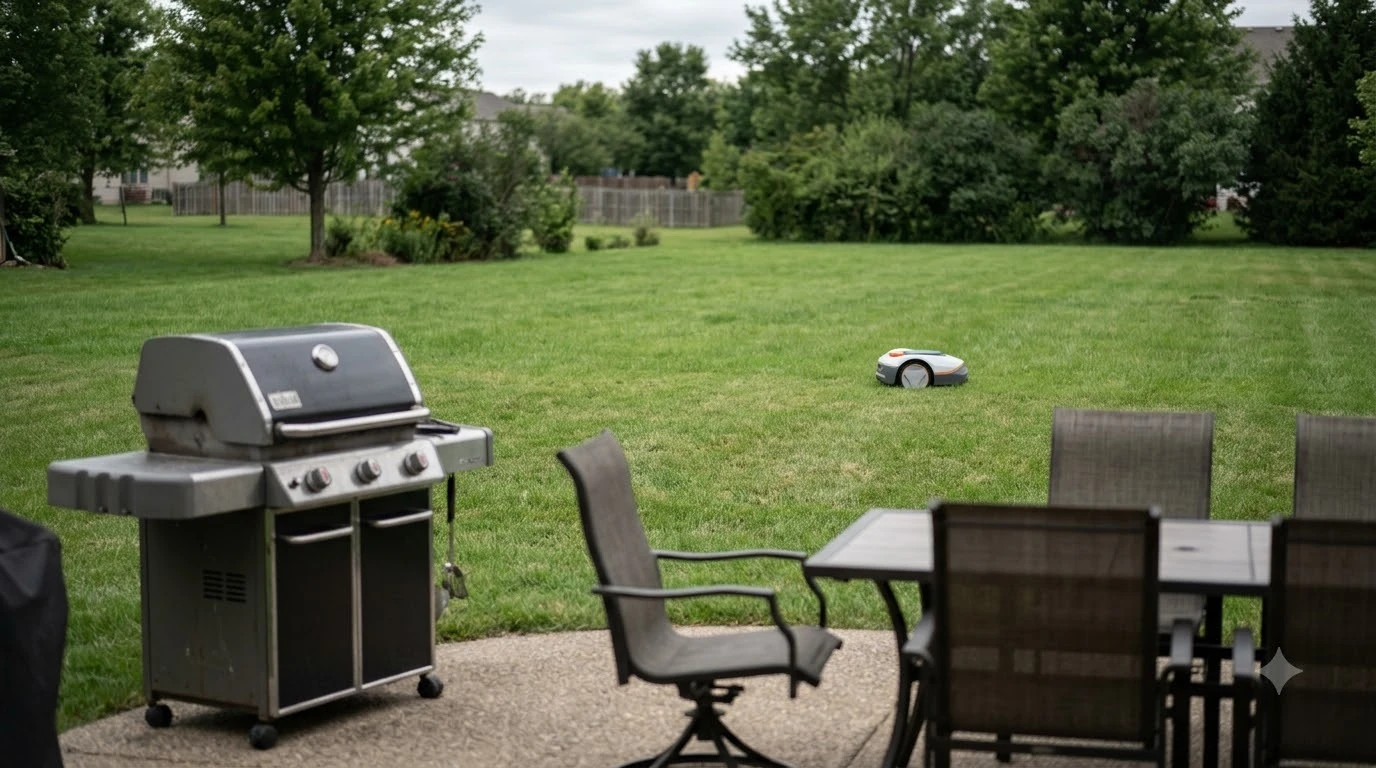

Segway Navimow i110N vs Segway Navimow X3 is mainly a lawn-size decision. The i110N is rated for lawns up to about 1/4 acre, while the X3 series is rated from 1,500 m² on the X315 up to 10,000 m² on the X390. The sources we read also differ on some specs, so check the exact model you plan to buy as of November 2026.
In the Segway Navimow i110N vs Segway Navimow X3 choice, the X3 line is built for bigger lawns, with larger batteries and a wider cutting deck. The i110N is a single model aimed at smaller, gentler yards, and PCWorld’s review praises its GPS-and-camera navigation. If you are also weighing the smaller model, see the Navimow i105N vs i110N comparison.
The short answer
- Lawn size comes first. The i110N is rated for up to about 1/4 acre (about 1,000 m²). The smallest X3, the X315, is rated for 1,500 m².
- The X3 has the wider deck and the higher rated slope. Its cutting width is 23.7 cm against 18 cm for the i110N, and Segway rates the X3 at 50% (26.5°) against 16° in one review of the i110N.
- Navigation is built differently. The i110N review describes GPS with a camera and no boundary wire, while Segway lists dual RTK and a three-camera system for the X3.
- Runtime is close. The i110N runs about 120 minutes on a charge and the X315 about two hours in normal mode, but charging takes about three hours on the i110N and about one hour on the X315.
- Prices are not used here. The sources conflict and change often, so check current listings before you decide.
Segway Navimow i110N vs Segway Navimow X3: which lawn size fits each
The i110N suits lawns up to about 1/4 acre, and the smallest X3, the X315, is rated for 1,500 m², roughly 0.37 acre. Those are the two ratings to compare first. The table uses the rated areas from the i110N review and Segway’s Australian X3 product page, so the comparison starts from the same numbers.
| Model | Rated lawn size | Source |
|---|---|---|
| Navimow i110N | Up to about 1/4 acre (about 1,000 m²) | PCWorld review |
| Navimow X315 | 1,500 m² | Segway X3 page |
| Navimow X330 | 3,000 m² | Segway X3 page |
| Navimow X350 | 5,000 m² | Segway X3 page |
| Navimow X390 | 10,000 m² | Segway X3 page |
Take an 800 m² lawn as an example. It sits inside the i110N’s rating and leaves the X315 with plenty of headroom. A 1,400 m² lawn is above the i110N’s rating, so the X315 is the smallest X3 that fits it. Rated areas are manufacturer or reviewer figures, not a promise, and our reading is that beds, tight corners and slopes use more battery per square meter than an open rectangle. Measure your lawn and leave margin under the rating before you settle on a model.
Specs side by side: cutting width, height and speed
The X3 cuts a wider path, 23.7 cm against 18 cm, and its cutting height range runs from 20 to 70 mm, while the i110N is listed at 2 to 3.6 inches. The table compares the two data sets, and the i110N figures come from PCWorld’s review. In the Navimow i110N vs X3 comparison, these rows matter more than the headline rating.
| Spec | Navimow i110N | Navimow X3 (X315 unless noted) |
|---|---|---|
| Cutting width | 7.1 in (18 cm) | 23.7 cm, all models |
| Cutting height | 2 to 3.6 in (about 51 to 91 mm) | 20 to 70 mm, adjustable in 5 mm steps |
| Max slope | 16° (about 29%) | 50% / 26.5° (manufacturer rating) |
| Battery | 5.1 Ah | 6 Ah (X315); 8, 10 and 12.8 Ah on larger models |
| Run time | 120 minutes | About 2 hours, normal mode, 400+ m² |
| Charge time | 180 minutes | About 1 hour |
| Noise | 58 dB | Around 55 dB, depending on activity |
| IP rating | IP66 | IP66 |
| Max speed | Not in the review we read | 0.8 m/s (X315, X330); 1.0 m/s (X350, X390) |
The two reviews report noise and run time under different conditions, so treat the gap in noise as small. Cutting heights are also not directly comparable, because one source gives inches and the other millimeters. The useful point is range: the X3 covers a lower and a higher cut than the i110N’s listed 2 to 3.6 inches.
Slope and drive: the higher rating is on the X3
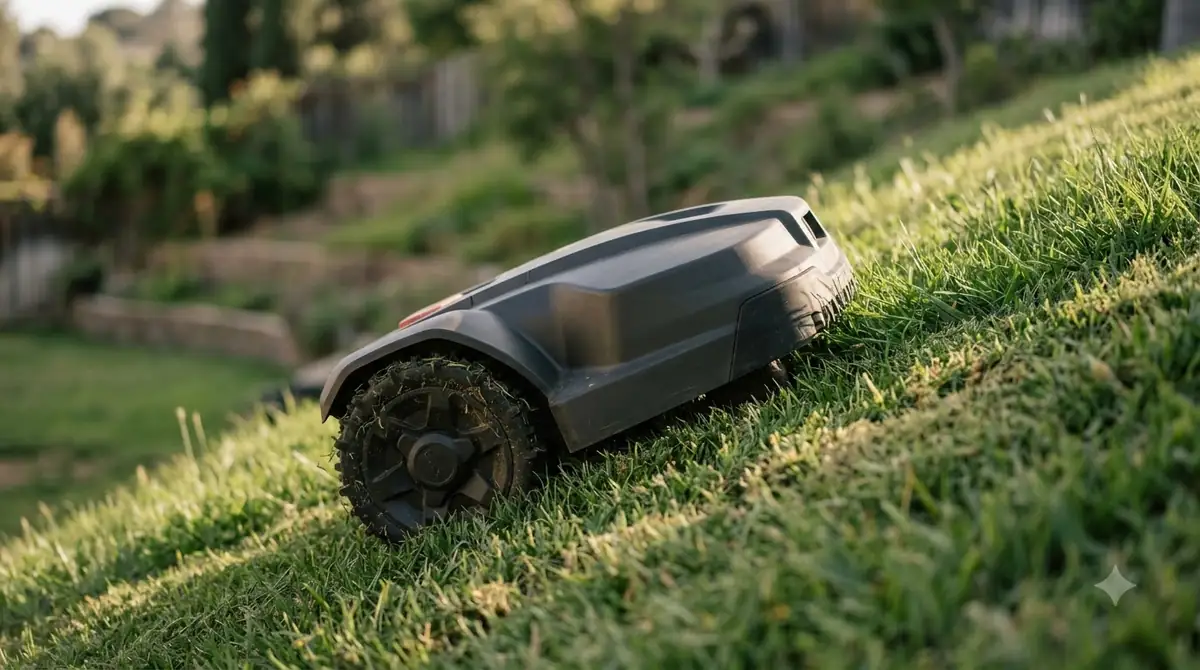
On slopes in Segway Navimow i110N vs Segway Navimow X3, Segway rates the X3 at 50% (26.5°), while the i110N review gives 16°, which is about 29%, and says its front-wheel drive struggles on steep slopes. The i110N figure is a spec listed in the reviewer’s article, and the X3 figure is a manufacturer rating, so the two are not a like-for-like test.
PCWorld also lists inadequate cliff detection as a con and says the mower can be unpredictable on uneven terrain or cliffs. The X3 data sheet we read does not describe its drive layout, so do not assume it shares the same limits. Slope ratings are conditions, not guarantees for your yard, as how robot mower slope ratings work explains. Follow a guide on how to measure yard slope for the steepest section of your lawn and compare that number, not the headline rating, with the spec.
Navigation and obstacle detection
The i110N relies on GPS with a second antenna and an onboard camera, and PCWorld says it does not need a boundary wire. The X3 combines dual RTK with a three-camera VisionFence. The two systems solve the same problem in different ways, as RTK versus vision robot mowers shows, so compare how each one handles your yard’s trees, fences and sky view. The navigation question is often the deciding factor in Segway Navimow i110N vs Segway Navimow X3.
PCWorld says the i110N has the best navigation of any low-cost robot mower and praises its dual GPS antennas, but the review does not mention RTK, so do not assume the i110N uses it. Segway’s Australian X3 page lists dual RTK signals with triple-frequency observation and a ToF sensor with a 0.1 to 2 m range, plus three cameras covering a 300° field. Those are manufacturer descriptions, not independent test results.
In Notebookcheck’s X315 test, obstacle detection was strong, and our Segway Navimow X3 review covers that model on its own. The mower reliably detected a garden hose and a hedgehog dummy, but it failed to detect a small tennis ball on one of three attempts. The reviewer also could not switch off obstacle avoidance at the edges, which can matter where plants overhang the lawn.
Battery, charging and noise
The i110N runs about 120 minutes on its 5.1 Ah battery and takes about 180 minutes to charge, while the X315 is rated at about two hours in normal mode and charges in about one hour. The charging gap is the clearest difference between the two, and it matters if you want the mower back on the lawn sooner.
Notebookcheck measured X315 charging at up to 158 W, with about 140 Wh flowing into the battery over roughly an hour. Its noise figure is around 55 dB, which the reviewer describes as pleasantly quiet and says varies with mowing activity. The i110N review gives 58 dB. The larger X3 models carry 8, 10 and 12.8 Ah batteries, but the review text we read only gives run time for the X315, so check run time for the model you plan to buy.
Edge cutting and ongoing costs
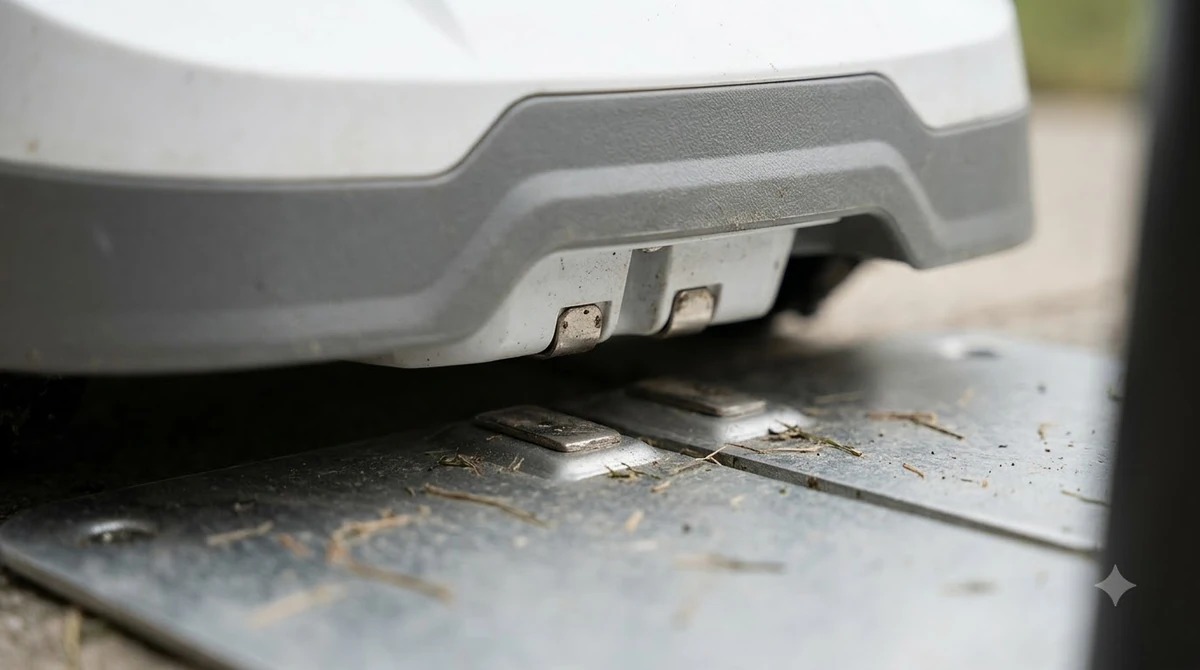
On the X315 test, the cutting disc sat about 9 cm inside the machine’s edge, so at least 10 cm of lawn stays uncut unless you prepare the edge. The reviewer also says the side trimmer was not available for the test, so this is one reviewer’s result, not a full edge assessment for every X3 model.
The X3 has a 4G connection that is free for the first year and costs about $30 per year after that, according to the review updated in October 2026. The i110N sources we read do not confirm a fee, so check the current Segway listing before you budget for either model.
Who each option suits (our reading)
In Segway Navimow i110N vs Segway Navimow X3, the i110N suits a flat or gently sloped lawn up to about 1/4 acre, where you want wire-free navigation and a smaller machine. The X3 suits bigger lawns and steeper yards, and the X315 is the entry point if you want more rated margin than the i110N gives on the same lawn.
- Choose the i110N if your lawn is under about 1/4 acre, gentle, with few steep sections, and you accept the cliff-detection criticism.
- Choose an X3 if your lawn is larger than about 1/4 acre, has slopes near the 26° range, or needs a wider cut.
- Choose the X315 over the i110N if you want margin on a lawn near 1,000 m².
Before you buy, confirm your lawn’s area and steepest slope, check the current price and warranty on the official listing, and read the GPS or RTK setup requirements for the model you pick. If you are still weighing the Segway Navimow i110N vs Segway Navimow X3 options, the lawn measurement is the step that narrows it fastest.
Frequently asked questions
Which model is better for a 1/4 acre lawn, Segway Navimow i110N vs Segway Navimow X3?
The i110N is rated for up to about 1/4 acre, so it is the direct fit. The X315 is rated for 1,500 m², about 0.37 acre, which gives more margin on the same lawn and is a larger machine.
Does either model in the Segway Navimow i110N vs Segway Navimow X3 comparison need a boundary wire?
The PCWorld review describes i110N navigation that needs no boundary wire. Segway’s X3 page describes dual RTK signals and a camera-based VisionFence and does not mention a boundary wire in the part we read. Check the setup guide for your yard before you buy either model.
Which handles slopes better on paper, the i110N or the X3?
The X3’s 50% (26.5°) rating is higher than the 16° in the PCWorld review of the i110N. Both are ratings rather than guarantees, so measure the steepest part of your lawn before you choose.
Are there ongoing fees for the i110N or the X3?
Notebookcheck reports that the X3’s 4G connection is free for the first year and then costs about $30 per year. The sources we read do not confirm an i110N fee, so check Segway’s current listing.
Sources
- PCWorld review of the Navimow i110N (independent publisher): rated lawn size, cutting height and width, slope, battery, noise and reviewer cons.
- Notebookcheck review of the Navimow X3 (independent publisher, updated October 2026): X3 data sheet, edge and obstacle test notes, and the 4G fee.
- Segway Navimow X3 product page (manufacturer, Australia): rated area by model, dual RTK and VisionFence descriptions.
 Up next7 min readReviews & CompareMammotion YUKA vs Segway Navimow i110N: Specs ComparedUpdated Nov 11, 2026
 8 min readReviews & CompareSegway Navimow X3 Review: Complete Specs, Limits and What to CheckUpdated Nov 11, 2026
 9 min readReviews & CompareSegway Navimow X3 Problems and Complaints: What the Support Pages ShowUpdated Nov 11, 2026
 10 min readReviews & CompareSegway Navimow i105N vs Worx Landroid Vision: Which Fits Your LawnUpdated Nov 11, 2026
 9 min readReviews & CompareSegway Navimow i105N vs eufy E15: Which Robot Mower Fits Your LawnUpdated Nov 11, 2026
 8 min readReviews & Compareeufy vs Segway Navimow Robot Mower: Which Brand Fits Your LawnUpdated Nov 11, 2026