
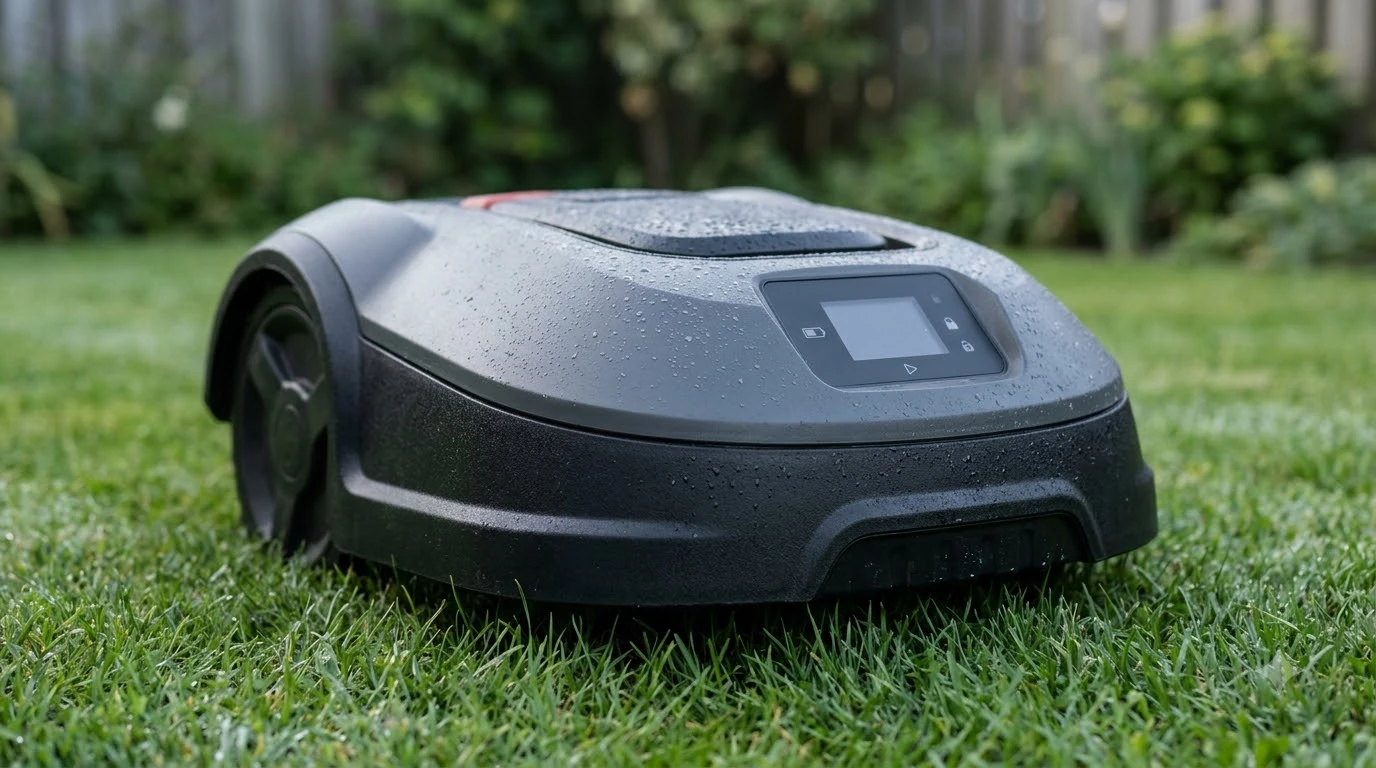

The best robot mower for a coastal yard with salty air is one you can keep dry, inspect often, and protect at the dock. Salt residue speeds corrosion on wheels, fasteners, and charging contacts, and none of the sources checked proves that a model resists salt on its own.
This guide uses only facts from sources we read, so you can judge the best robot mower for a coastal yard with salty air on documented risks. It covers grass that handles salt spray, what an IP rating does not cover, and the dock and cleaning steps manufacturers describe.
The short answer
- Grass: St. Augustinegrass and zoysia are the homeowner picks in UF/IFAS guidance, and both handle some salt spray.
- Water: neither grass can be irrigated with saltwater, so check your irrigation source too.
- Rating: an IP rating comes from a fresh water test, so it does not prove salt water resistance.
- Contacts: repeated wet-dry cycles and pooling water corrode charging contacts, according to Mammotion.
- Care: wipe gently, keep water out of vents and ports, dry fully, and inspect metal parts for rust.
The best robot mower for a coastal yard with salty air: how salt reaches it
Salt residue on the body, wheels, and dock is the main corrosion route, according to Mammotion’s Canadian winter guide. That guide is written about road salt, so the mechanism is clear but the coastal setting is our reading. It says salt residue on the wheels, underside, or casing “accelerates corrosion throughout the winter.”
The same guide lists the parts most exposed to salt: “Salt residue accelerates corrosion on wheels, bearings, charging contacts, and metal fasteners.” In our reading, a coastal yard deserves the same attention even without road salt, because the residue acts the same way on exposed metal. The same guide lists rust caused by wet grass and salt as a blade problem, so blades belong on the same check list.
Husqvarna’s winter storage guide also says that fitting new blades and screws before storage “prevents rust.” That makes the hardware part of the corrosion picture, not only the housing.
Pick grass that tolerates salt spray in a coastal yard
UF/IFAS Gardening Solutions names St. Augustinegrass and zoysia as the best homeowner choices in salt-exposed yards. The page says both grasses “can handle some salt spray,” but they “can’t be irrigated with saltwater.” Spray and irrigation are two separate risks, so check both. Check the grass type and your water source together before you decide how much salt exposure the yard can handle.
| Grass | What UF/IFAS says | Homeowner use |
|---|---|---|
| St. Augustinegrass | Handles some salt spray; cannot be irrigated with saltwater | Named as a best choice |
| Zoysia | Handles some salt spray; cannot be irrigated with saltwater | Named as a best choice |
| Seashore paspalum | Excellent salt tolerance | Not recommended for home lawns because of high maintenance |
A common mistake is to choose grass for its salt rating alone and forget the water source. The UF/IFAS page treats saltwater irrigation as a separate limit, so a lawn that takes salt spray can still be a problem if its water comes from a salty source. The page gives no salinity levels and no distances from the coast, so it cannot tell you how close to the water is too close. Its scope is Florida, so check your regional extension office for grass suited to your area. The full list is in the UF/IFAS salt-tolerant lawngrass guide.
What an IP rating does not cover
An IP rating comes from a fresh water test, so it does not show that a mower can handle salt water, oils, or solvents (our robot mower IP rating explainer covers the codes). The Wikipedia overview of the IP Code says that standard testing uses fresh water, and that protection against salt water is not guaranteed by the rating. Those fluids need separate chemical resistance testing.
Heads up
A model labelled weather-resistant may still need its dock and contacts kept dry. Ask the manufacturer in writing whether the model has been tested for salt exposure before you choose the best robot mower for a coastal yard with salty air.
A rating on a spec sheet is useful for rain and dust, but it is not evidence for salt air. In our reading, when a spec sheet is silent on salt, treat the model’s salt tolerance as unknown rather than good. That does not mean a mower will fail in salt air. It means the published spec does not show that it will survive, so the manual’s storage and cleaning sections become the next place to look, along with robot mower winter storage tips.
Protect the charging contacts and dock in a coastal yard
Repeated wet-dry cycles can corrode charging contacts, according to Mammotion’s garage guide, and salt spray adds to that risk in our reading. The same guide says rain alone is usually not a problem, but water pooling around the contacts is. It also says heavy rain increases wear on charging contacts through repeated wet conditions.
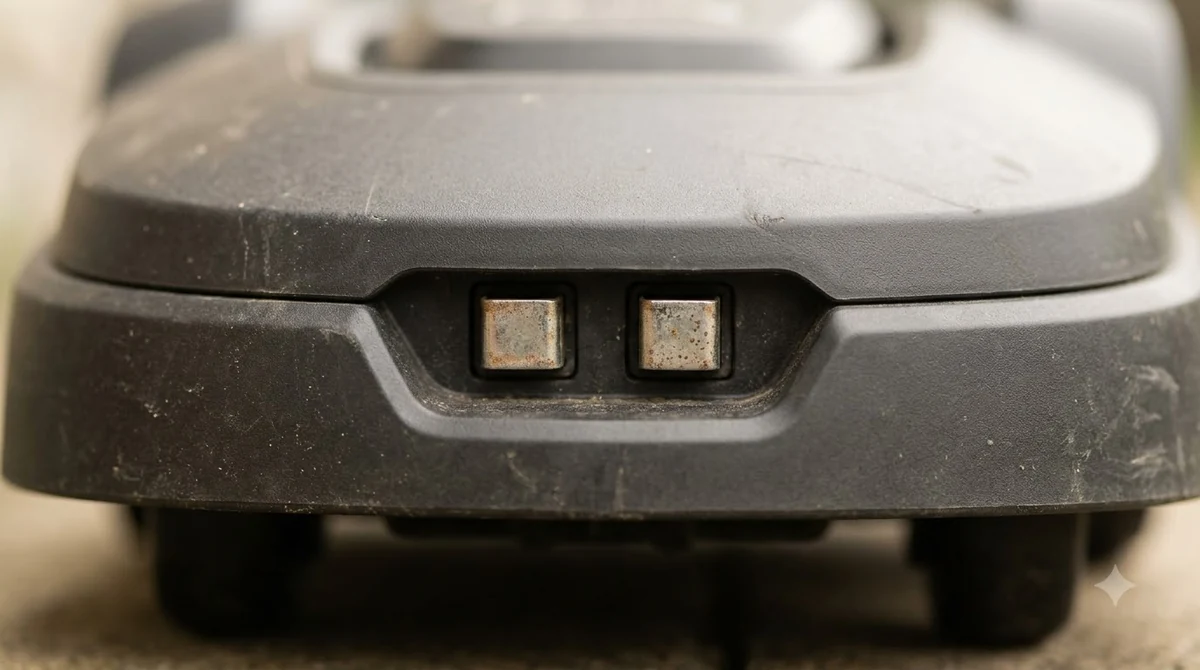
Mammotion’s garage guide advises against placing a dock in a low spot, and suggests elevating the base slightly with gravel or pavers (more on where to put the charging station). Husqvarna’s winter guide tells owners to check the charging contacts on both the mower and the station for corrosion or debris, and to contact the dealer for spare parts if they find problems.
The same Mammotion guide says most robot mowers do not need a garage, but a garage is more useful in hot, high-UV, or humid regions. Its regional list also names coastal areas such as California and the East Coast, gives the main issue as salt air with mild weather, advises corrosion-resistant materials and calls a garage optional but helpful for long-term wear. The same guide adds that UV exposure and temperature swings cause more long-term damage than rain does.
A dock that stays dry also gives the contacts a better chance to stay clean between sessions, which is the simplest protection the sources describe. In our reading, a dock that takes heavy salt spray is a good case for a charging station cover, which keeps spray off the contacts and also slows sun wear on the housing.
Rinse, dry, and inspect on a set schedule
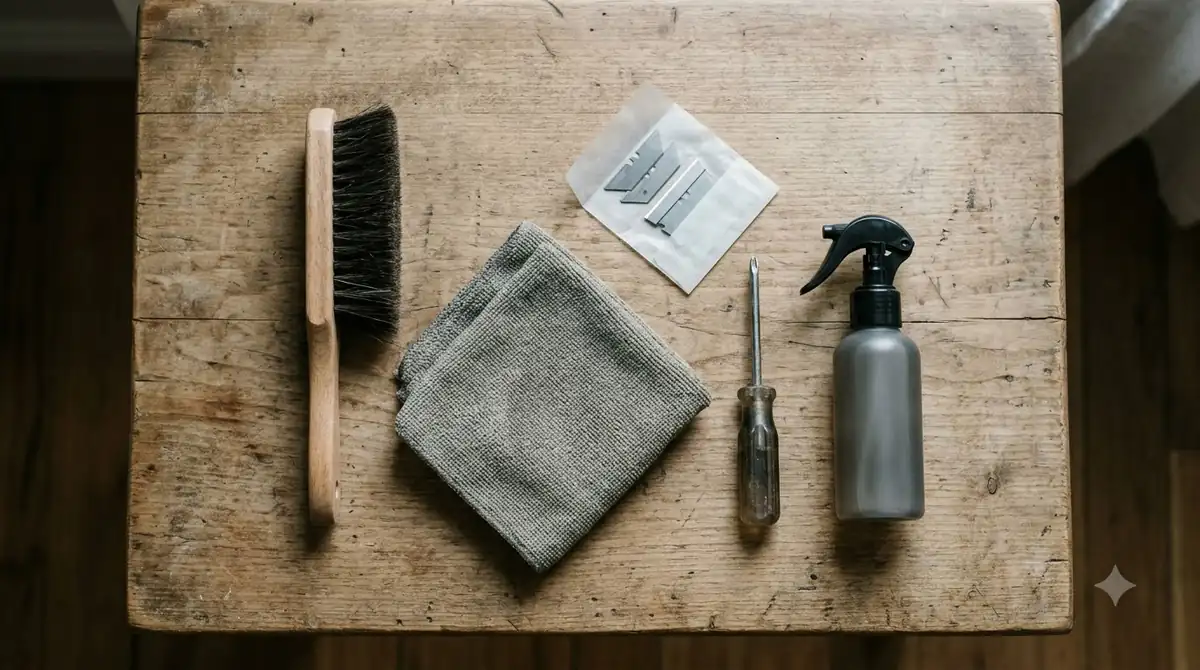
For the best robot mower for a coastal yard with salty air, the routine matters as much as the model. Wipe the mower with a damp microfibre cloth, keep water out of vents and ports, and dry it fully, according to Mammotion’s Canadian guide. In our reading, the same wipe makes sense after any visible salt build-up, not only at the end of the season (see how to clean a robot mower). The guide says never to use high-pressure water and not to let water enter vents or charging ports.
The guide gives an ideal storage temperature of 5 to 20°C and says anything below 0°C is generally unsafe for long-term storage.
The guide also says to avoid cleaning in freezing outdoor conditions, and that the mower must be completely dry before it goes into storage. Husqvarna’s winter guide asks owners to store the mower in a dry environment above freezing, above 0°C (32°F), which sets a practical floor for coastal homes that still get cold nights. Its winter routine asks owners to inspect the mower and battery every 6 to 8 weeks and to look for “early surface rust on metal parts or connectors.” In our reading, a coastal yard may need that check more often, because the interval is written for storage, not for daily salt exposure.
The guide also lists an anti-corrosion spray for salt-prone areas, but it does not say how or where to apply it. Ask the manufacturer before you put any product on the motor or electronics.
Frequently asked questions
Can a robot mower stay outdoors in a coastal yard?
The sources checked do not give a yes or no for salt air. Mammotion’s winter guide treats salt residue as a corrosion risk, so keeping the mower clean, dry, and under cover when it is off is a sensible step for the best robot mower for a coastal yard with salty air. Check the owner’s manual for outdoor storage limits.
Does an IP rating mean my mower is safe in salt air?
No. Standard IP testing uses fresh water, and the rating does not guarantee protection against salt water, oils, or solvents. Those need separate chemical resistance testing, so ask the manufacturer for salt exposure data before you rely on the rating.
Which grass handles salt spray best for a home lawn?
UF/IFAS Gardening Solutions names St. Augustinegrass and zoysia as the best homeowner choices. Both can handle some salt spray, but neither can be irrigated with saltwater. The page is Florida-focused, so check your regional extension office for your area.
Should I rinse my robot mower with a hose after mowing near the coast?
Mammotion’s guide does not describe a hose rinse. It advises against high-pressure water and against water entering vents or charging ports, and it recommends wiping the shell with a damp microfibre cloth. Dry the mower fully before you store it.
Sources
- UF/IFAS Gardening Solutions, salt-tolerant lawngrasses (UF/IFAS): grass names, salt spray limits, saltwater irrigation limit.
- Mammotion robot lawn mower winter maintenance guide (Mammotion): road salt corrosion, cleaning, high-pressure water, drying, inspection interval.
- Mammotion robot lawn mower garage guide (Mammotion): wet-dry cycles, charging contacts, pooling water, garage advice.
- Husqvarna complete winter storage guide for Automower (Husqvarna): contact checks, new blades and screws, dry storage.
- IP Code (Wikipedia): fresh water IP test and the salt water exclusion.
 Up next8 min readBy YardBest Robot Mower for a Duplex Yard: What to Check Before You BuyUpdated Nov 11, 2026
 8 min readBy YardRobot Mower for Yard With Retaining Walls: What to CheckUpdated Nov 11, 2026
 9 min readBy YardRobot Mower for Terraced Yard: What to Check FirstUpdated Nov 11, 2026
 8 min readBy YardRobot Mower for Yard With Heavy Tree Canopy: What to CheckUpdated Nov 11, 2026
 8 min readBy YardRobot Mower for a Hot Humid Climate: What to CheckUpdated Nov 11, 2026
 9 min readBy YardBest Robot Mower for a Cottage Garden Lawn: What to CheckUpdated Nov 11, 2026