
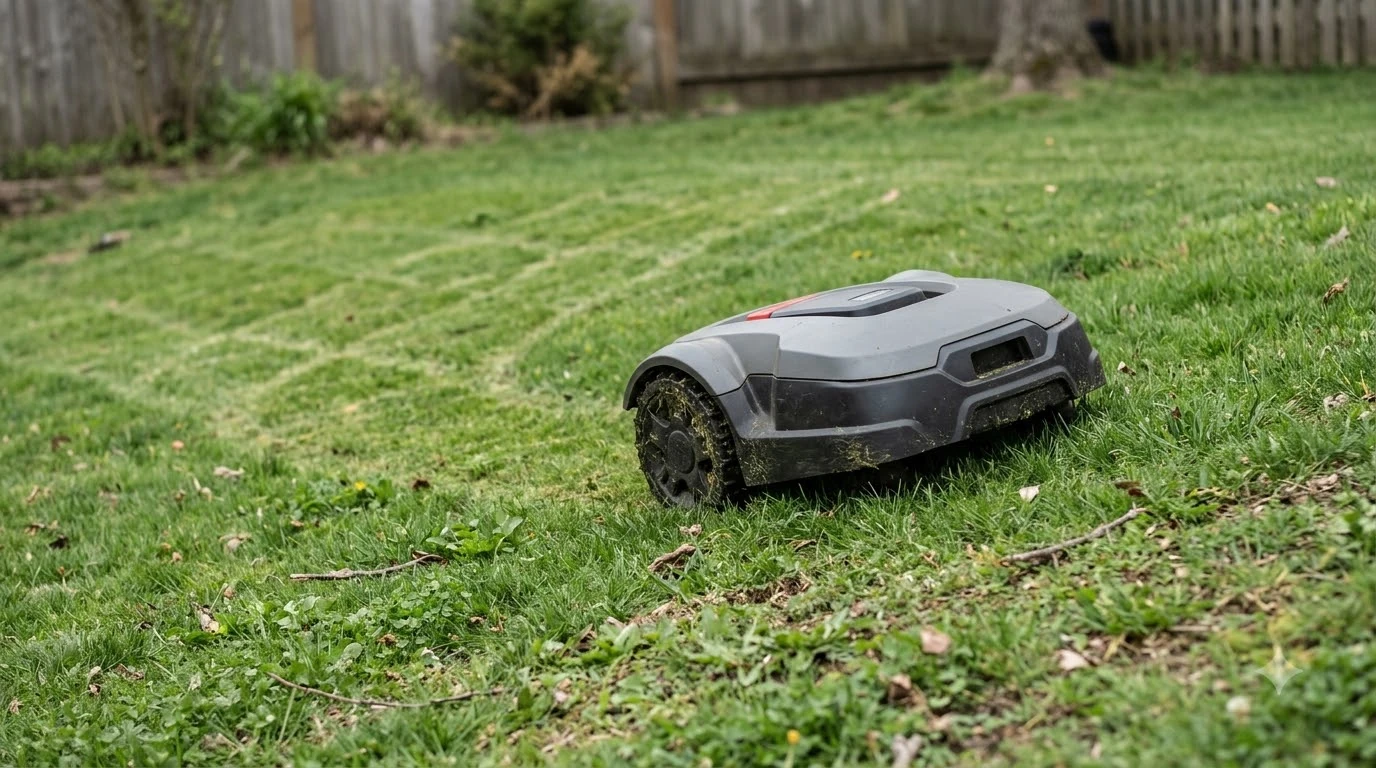

No robot mower is the best robot mower for a yard with a pond by default, because the deciding factor is how it keeps a margin from the water. The pond edge combines a boundary, often a slope and soft ground, so the mower’s setup matters more than its brand. The points below come from manufacturer guides and extension sources, as of November 2026.
The short answer
- Keep a margin. Robomow’s wire guide gives approximately 35 cm between the wire and a pond, with extra obstacles to stop the robot falling in.
- Lay the wire correctly. Robomow describes a laying depth of 4 to 5 cm as optimal, and says its mower receives the signal at up to 7 cm.
- Check camera claims. Segway says its Navimow camera spots water and goes around a puddle, but this is a manufacturer example.
- Watch the bank. Eufy warns that a mower slipping on a slope could slide into a pond, and it advises against cutting wet grass.
Best robot mower for a yard with a pond starts at the edge
A pond is not an area the mower can simply slow down in. Eufy’s wet grass guidance states the risk plainly: “A mower that slips on a slope could potentially slide into a garden bed, a pond, or against the edge of a verandah.” The danger is the combination of a bank, grip and water, not the water alone.
Our reading is that a pond needs a hard stop, such as a wire setback, a physical barrier or a restricted zone, while a flower bed can often be handled with a shorter margin. Read the manual for the model you are considering before you assume it can handle the edge. That is why the best robot mower for a yard with a pond is the one you can set up with a hard stop, not the one with the longest feature list.
Boundary wire: keep about 35 cm and lay it at the right depth
Wire-based models rely on the boundary wire to keep the mower away from water (see our guide to laying boundary wire around obstacles). Robomow’s guide to laying the wire says the signal helps prevent the robot from driving over the cable, mowing unwanted areas, or “accidentally landing in a garden pond.” For a pond, the same guide gives a distance of approximately 35 cm between the wire and the water, with additional obstacles to prevent the robot from falling in.
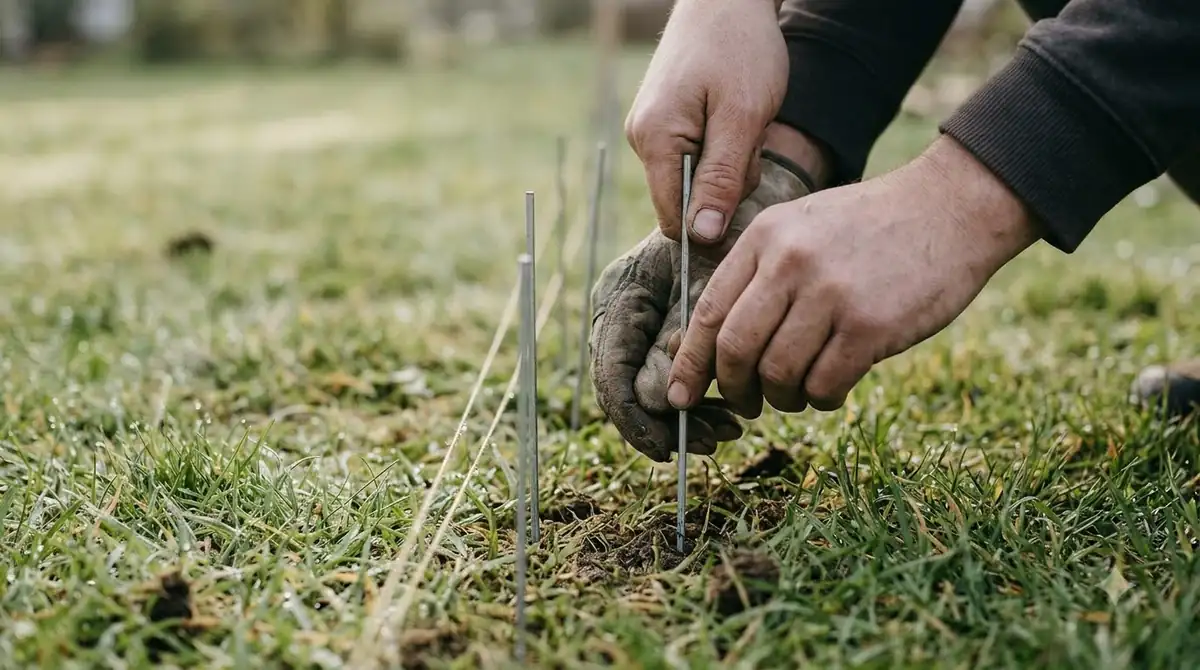
The wire’s depth also matters. Robomow says a laying depth of 4 to 5 cm is optimal, and that the mower can receive the signal from the wire at a depth of up to 7 cm. Those figures describe the wire in general, not a rule for water, so they show how the signal is meant to be laid rather than how far to stay from a pond.
Our reading is that 35 cm is a useful minimum to plan around, not a distance to stretch. Manufacturers differ, so use the figure in your own model’s manual, and treat a wire with no physical barrier at the edge as the weaker option.
Camera models can spot water, but this is a manufacturer example
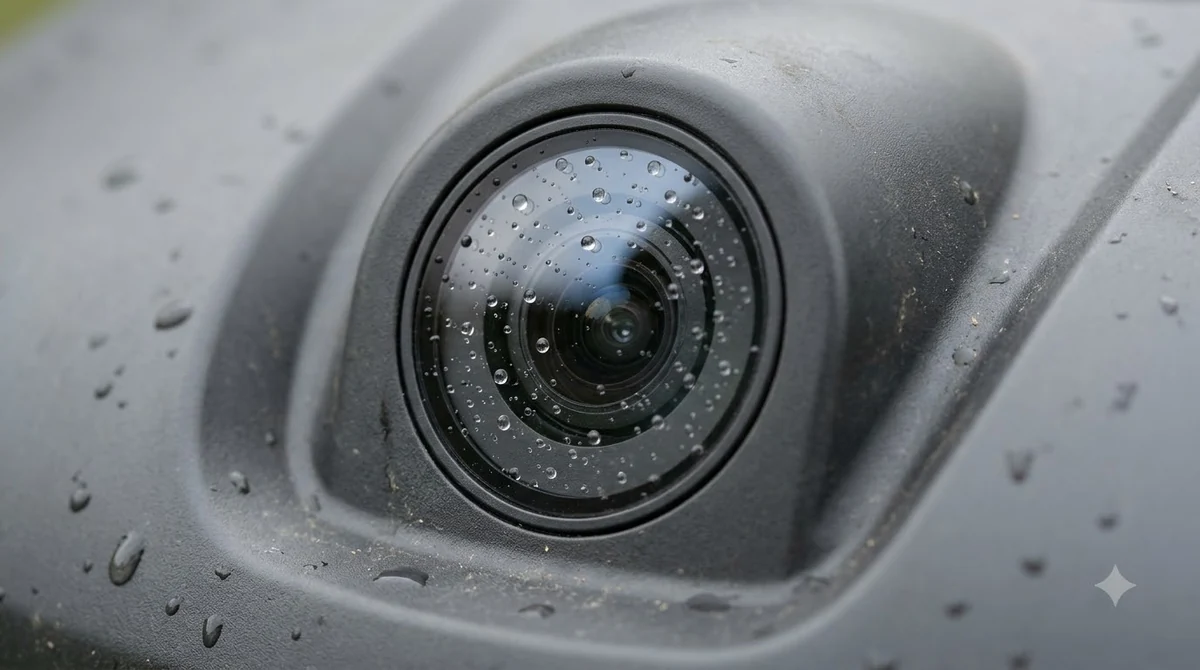
Camera-based models use vision instead of a boundary wire, so they can react to a puddle that has no wire around it. Our explainer on how robot mowers avoid obstacles covers the sensors behind this. Segway’s account says its Navimow “spots the water and avoids the puddle, and mows around it instead of right through it.” The same page says the i-series “can recognise 150 types of obstacles,” and that the mower returns to grass that was under water once the puddle has drained.
Both points are manufacturer claims. The example describes a puddle, which is much smaller than a pond with a steep bank. Our reading is that camera detection helps with water on the lawn, but it does not replace a physical margin at a pond edge. Ask the seller or check the spec sheet for how the model handles water near an edge.
Wet banks, slopes and cut height near the water
Wet grass is a second risk. Eufy states that “cutting wet grass is generally discouraged,” and notes that on damp grass the blades can tear it unevenly instead of giving a clean cut. A wet bank is also where a wheel is most likely to lose grip, so the slope and the weather both matter. If the bank is steep, measure it first with the steps in our guide on how to measure yard slope, and read about mowing wet grass with a robot mower before you schedule a run.
For cut height, Purdue Extension’s turf guide advises mowing “so as not to remove more than 1/3 of the leaf blade at a single mowing.” Mow often enough to follow that rule (our one third rule for mowing grass guide explains it), and avoid a sudden drop in height along the bank, where the mower’s margin is already tight.
Best robot mower for a yard with a pond: what to check before you buy
Use this list to narrow down the best robot mower for a yard with a pond. Each item comes from a source above or from our reading of how the systems work.
- Margin figure. Find the minimum distance from water in the manual, not only in the marketing pages.
- Detection method. Decide whether a wire, a camera or both will guard the edge, and what each one misses.
- Slope rating. Measure the bank and compare it to the rating in the manual before you assume the mower can climb it.
- Barrier options. Plan a fence or edging where the manual calls for one.
- Wet-weather rule. Schedule mowing for dry days, since the bank is most likely to slip when it is wet.
Frequently asked questions
What is the best robot mower for a yard with a pond?
No single model wins by default. The best robot mower for a yard with a pond is the one whose wire or camera setup keeps a margin from the water, and whose manual covers the edge. Robomow’s guide gives approximately 35 cm as one reference point.
Can a robot mower safely run next to a pond?
It can, if the boundary wire or camera system keeps a margin from the water. Robomow’s guide gives approximately 35 cm plus extra obstacles, and the manual for your model decides the final setup.
Does a boundary wire alone stop a robot mower from falling in?
Not by itself. Robomow says additional obstacles are needed to prevent the robot from falling in, so a wire setback should be paired with a physical barrier where the manual calls for one.
Do camera-based mowers see water?
Segway says its Navimow camera spots water and avoids a puddle in one of its examples. This is a manufacturer claim rather than an independent test, so check the spec sheet and manual for edge behaviour.
Should I mow wet grass near a pond?
Eufy says cutting wet grass is generally discouraged, because the blades can tear the grass unevenly. Wait for the bank to dry, since wet ground near water is also where a mower is most likely to slip.
Sources
- Laying the lawn boundary wire (Robomow): approximately 35 cm to a pond, 4 to 5 cm laying depth, signal up to 7 cm.
- Navimow: a practical example of the benefit of VisionFence (Segway Navimow): the puddle example and the 150 obstacle types claim.
- Robot lawn mower wet grass (Eufy): the slope warning and the wet-grass guidance.
- AY-8: Mowing, Dethatching, Aerifying and Rolling Turf (Purdue Extension): the one-third rule.
 Up next7 min readBy YardRobot Mower for a Lawn With a Koi Pond: Edge Margin GuideUpdated Nov 14, 2026
 8 min readBy YardRobot Lawn Mower for a 35 Percent Slope: What to Check Before You BuyUpdated Nov 11, 2026
 8 min readBy YardHow Does a Robot Mower Handle a Pond?Updated Nov 11, 2026
 9 min readBy YardBest Robot Mower for a Yard With Sprinkler Heads: 5 ChecksUpdated Nov 13, 2026
 8 min readBy YardBest Robot Mower for a Yard With Tree Roots: What to CheckUpdated Nov 13, 2026
 6 min readBy YardRobot Mower for a High Altitude Yard: What Changes and What to CheckUpdated Nov 11, 2026