
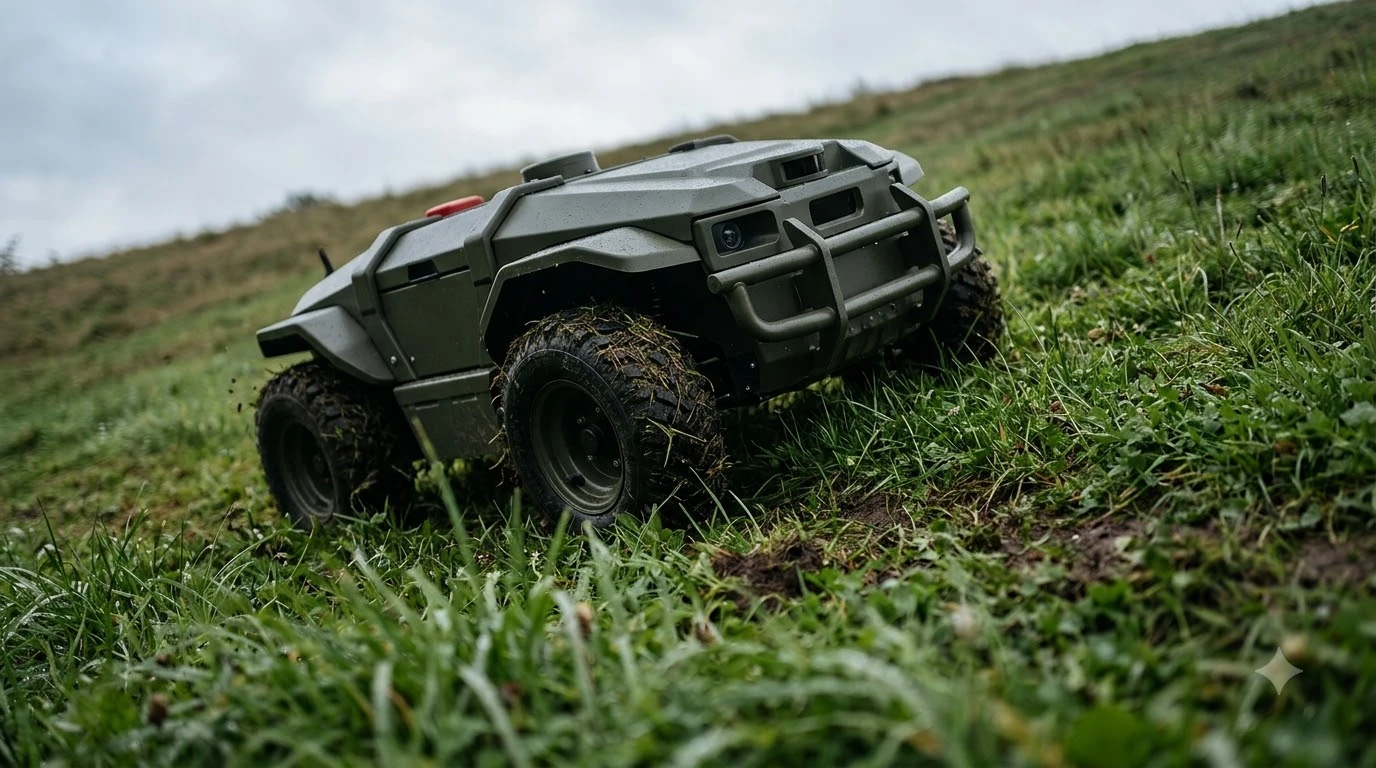

The best robot mower for slopes under $1000 is the one whose rated slope, boundary limit and drive layout all clear your steepest zone with margin. Budget listings often quote one slope figure, and some of those figures conflict, so you need to read the spec sheet yourself. Facts below are as of November 2026.
The short answer
- Treat the rated slope as a ceiling. Husqvarna’s support page lists standard Automower models at 25% to 50% (14° to 26°), and its AWD 435X at up to 70% (35°).
- Expect conflicting numbers on cheap listings. One budget listing we read gives 45% on its spec card but 31° (about 60%) in its description, so ask which figure is right before you buy.
- Check the boundary figure separately. Husqvarna’s 430XH page lists 45% inside the installation and 15% at the boundary.
- Plan for wet grass. Eufy says wet grass reduces tire grip even when the slope sits inside the rated limit.
What the $1000 band lists in November 2026
Before you pick the best robot mower for slopes under $1000, look at what the listings actually say. Six budget robot mowers on one category page were listed between $599 and $999 as of November 2026, and five of the six are wire-free. The listed maximum slopes run from 35% to 45%, with one at 42%. The table below shows the figures as the listings state them, not as we would rank them.
| Listing (as read, Nov 2026) | Max slope as listed | Boundary wire | What the listing leaves out or conflicts on |
|---|---|---|---|
| Gardena SILENO flex | 35% | Required | Lawn size and battery details conflict or are blank |
| ANTHBOT M9 | 45% | Wire-free | Several fields blank, including battery and cutting width |
| ANTHBOT M5 LiDAR | 45% | Wire-free | Several fields blank, including battery and cutting width |
| Sunseeker V3 | 42% | Wire-free | Several fields blank, including battery and cutting width |
| Navimow i2 AWD | 45% | Wire-free | Several fields blank, including battery and cutting width |
| Greenworks AiMowbot C20 | 45% on the spec card, 31° in the text | Wire-free | The two slope figures disagree |
Most of the blanks sit in the same fields. Battery capacity, cutting width and cutting height are often missing, so the slope figure is one of the few numbers you can compare across these listings. That is also why it deserves a careful read.
How to decode a slope figure on a cheap listing
A listed slope figure can be a percentage or an angle, and the two look similar at a glance. As a rough guide, 45% is about 24°, and 31° is about 60%; our guide to robot mower slope ratings covers the conversions. Iowa State University Extension gives the ratio 1:12 as 8.33%, which is the same kind of rise-over-run figure that most listings use.
Mammotion’s YUKA Mini 600 page shows the problem clearly. It gives 45% (24°) on a separate card, while the page text describes a limited coverage area and says the mower “may not perform well on very uneven terrains.” Read the card as the mower’s rating and the text as the limit of what the brand expects from it.
Our reading is that a listing with one figure and no note on where it applies tells you less than a spec sheet with two. If the figures disagree, as the Greenworks listing does, treat the lower number as the working limit until the manufacturer confirms otherwise.
Why the boundary limit can matter more
The boundary limit is the slope the mower can handle at its edge, and it is often much lower than the figure for the work area. Husqvarna’s 430XH page lists 45% inside the installation and 15% at the boundary, and it says a physical boundary wire is required for that model.
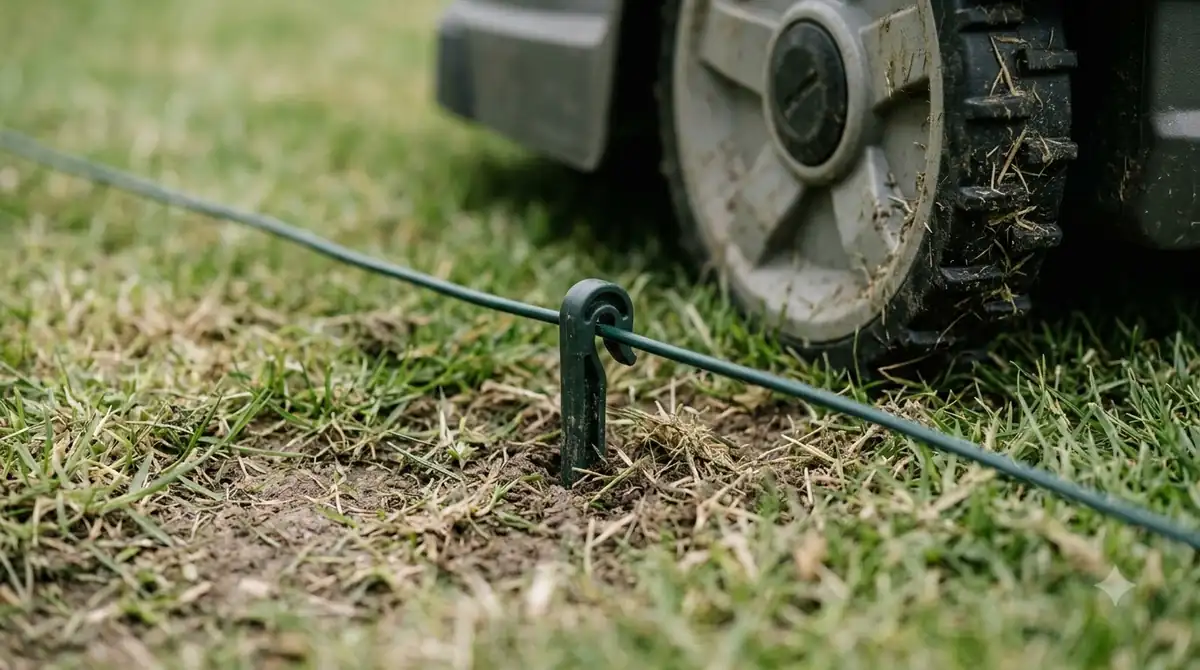
Robomow notes that many robot mowers need a run-out zone with a maximum slope of 15% in order to turn. A short steep strip beside a fence or a path can therefore cause trouble even when the average slope of the yard looks mild. This gap is easy to miss when a yard looks gentle.
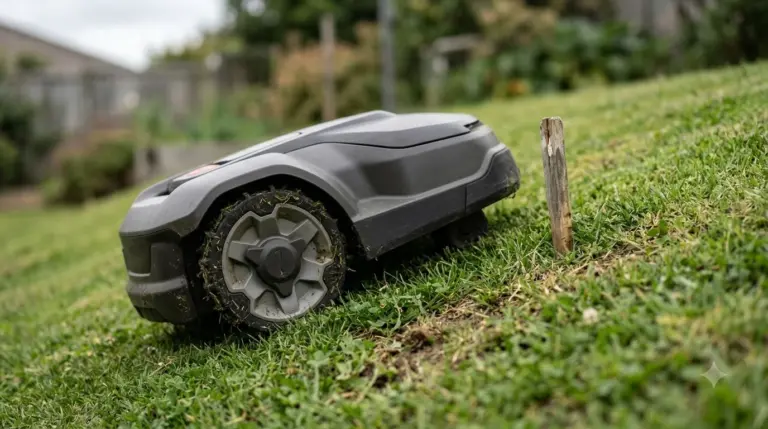
Two rules follow from this. First, measure the edges of the lawn as carefully as the middle, using our walkthrough on how to measure yard slope. Second, if a steep edge sits inside the mowing area, a stay-out zone is usually the fix in our reading, not a higher rating on the box.
What a budget drive layout and coverage tell you
Drive layout decides which wheels pull the mower up a slope. Sunseeker’s guide explains that all-wheel drive powers all four wheels and gives better grip on steep, wet or loose ground than front or rear drive alone. Many budget listings do not say which layout they use, so check the product page before you assume it. Our AWD vs 2WD comparison for hills goes deeper.
Coverage is the other limit. Mammotion’s page for the YUKA Mini 600 gives up to 0.15 acres, and it describes the model as best for smaller lawns. A mower sized for a small lawn may have a usable slope figure yet still be the wrong machine for a larger yard with more grades.
The Navimow i2 AWD appears in the same budget band with a 45% listed figure, but the listing we read does not give its boundary limit. Compare that gap against a manufacturer page before you read the headline number as the whole story.
How wet grass changes the answer
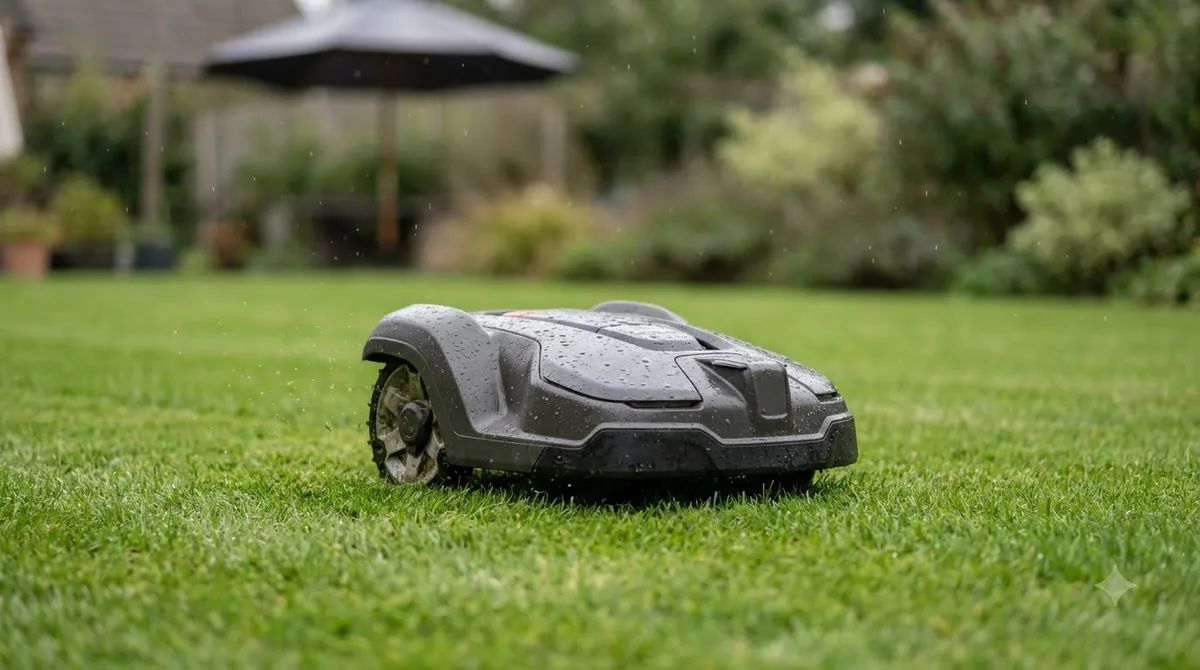
Wet grass lowers grip, so a rating earned on dry turf overstates what you get after rain. Eufy’s guidance says wet grass reduces tire grip even when the slope is within the rated limit. Husqvarna warns that steep slopes raise the slip risk in wet conditions, and we cover that case in do robot mowers slide on wet slopes.
Robomow says some suppliers sell extra spikes or traction wheels as optional accessories. Confirm whether the model you want accepts them before you count on them for grip, and see our notes on robot mower traction spikes for slopes. If the listing does not mention them, assume they are not included.
A zone-by-zone check for the best robot mower for slopes under $1000
Start by measuring the steepest zone you actually mow, not the average slope of the whole lawn. The steps below turn the listing figures into a yes or no decision for your yard.
- Measure the steepest strip. Use a phone inclinometer or rise over run, and note the highest reading. Iowa State’s 1:12 example shows how to convert a ratio into a percentage.
- Put the listing and your yard in one unit. Convert 31° to about 60%, or 45% to about 24°, before you compare.
- Compare the work-area figure with margin. Eufy describes the rating as an absolute limit, so a zone close to the listed number is a poor fit.
- Check the boundary figure. If the listing gives none, look for the manufacturer’s spec sheet before you buy.
- Confirm the wire requirement. The Gardena listing needs boundary wire, while most others in this band are listed as wire-free. Check the install plan for your yard.
- Mark stay-out zones. Fence off any slope beyond the mower’s limit or leave it out of the mowing area.
Our reading is that the best robot mower for slopes under $1000 suits a yard whose steepest zone sits well below the listed figure on both the work area and the boundary. If your steepest strip is close to the rating, a stay-out zone is the safer plan than a tighter fit.
Frequently asked questions
What is the best robot mower for slopes under $1000?
There is no single best model at this budget. The right choice is the mower whose listed slope, boundary limit and drive layout all clear your steepest zone with margin. Check each figure against the manufacturer page, not only the listing.
Why do two slope numbers on the same listing disagree?
Listings sometimes mix a percentage on the spec card with an angle in the description. One budget listing we read shows 45% on the card and 31° in the text. Ask the seller or manufacturer which figure applies before you rely on either one.
Is a 45% rating enough for a sloped lawn?
For the best robot mower for slopes under $1000, a 45% rating is enough only if your steepest zone sits well below 45%, and the boundary limit also clears it. Husqvarna’s 430XH page lists 45% inside the work area but 15% at the boundary, so the work-area figure alone is not enough.
Do budget mowers need boundary wire?
Not always. In one six-model budget category we read in November 2026, five were listed as wire-free and one needed a boundary wire. Confirm the requirement on the product page, because listings often leave it out.
Sources
- Husqvarna Automower 430XH product page (manufacturer): work-area and boundary slope, boundary wire requirement.
- Husqvarna support: optimising an Automower installation for steep slopes (manufacturer): standard and AWD slope limits, wet-grass slip warning.
- Freshlycharged: budget robotic lawn mowers under $1000 (retail listing page): listed prices, slope figures and wire status, as of November 2026.
- Mammotion: budget robot lawn mower guide (manufacturer): YUKA Mini 600 slope card, coverage and terrain limits.
- Iowa State University Extension: gardening on slopes and hillsides (university): rise-over-run conversion and steep-ground guidance.
- Eufy: robot lawn mower slope limits (manufacturer blog): rating as an absolute limit, wet-grass grip.
- Robomow: robotic mowers for slopes, buying tips (manufacturer): run-out zone slope and traction accessories.
- Sunseeker: FWD vs RWD vs AWD robot mowers (manufacturer): drive layouts and grip on steep, wet ground.
 Up next8 min readBy YardBest Robot Mower for Slopes Under $1500: What to CheckUpdated Nov 12, 2026
 8 min readBy YardRobot Lawn Mower for a 35 Percent Slope: What to Check Before You BuyUpdated Nov 11, 2026
 7 min readBy YardRobot Lawn Mower for a 25 Percent Slope: What to Check Before You BuyUpdated Nov 11, 2026
 9 min readBy YardRobot Lawn Mower for a 30 Percent Slope: What to Check Before You BuyUpdated Nov 11, 2026
 10 min readBy YardRobot Lawn Mower for 45 Percent Slope: What to Check Before You BuyUpdated Nov 11, 2026
 9 min readBy YardCan a Robot Mower Stay Under a Carport? Summer Yes, Winter NoUpdated Nov 12, 2026