
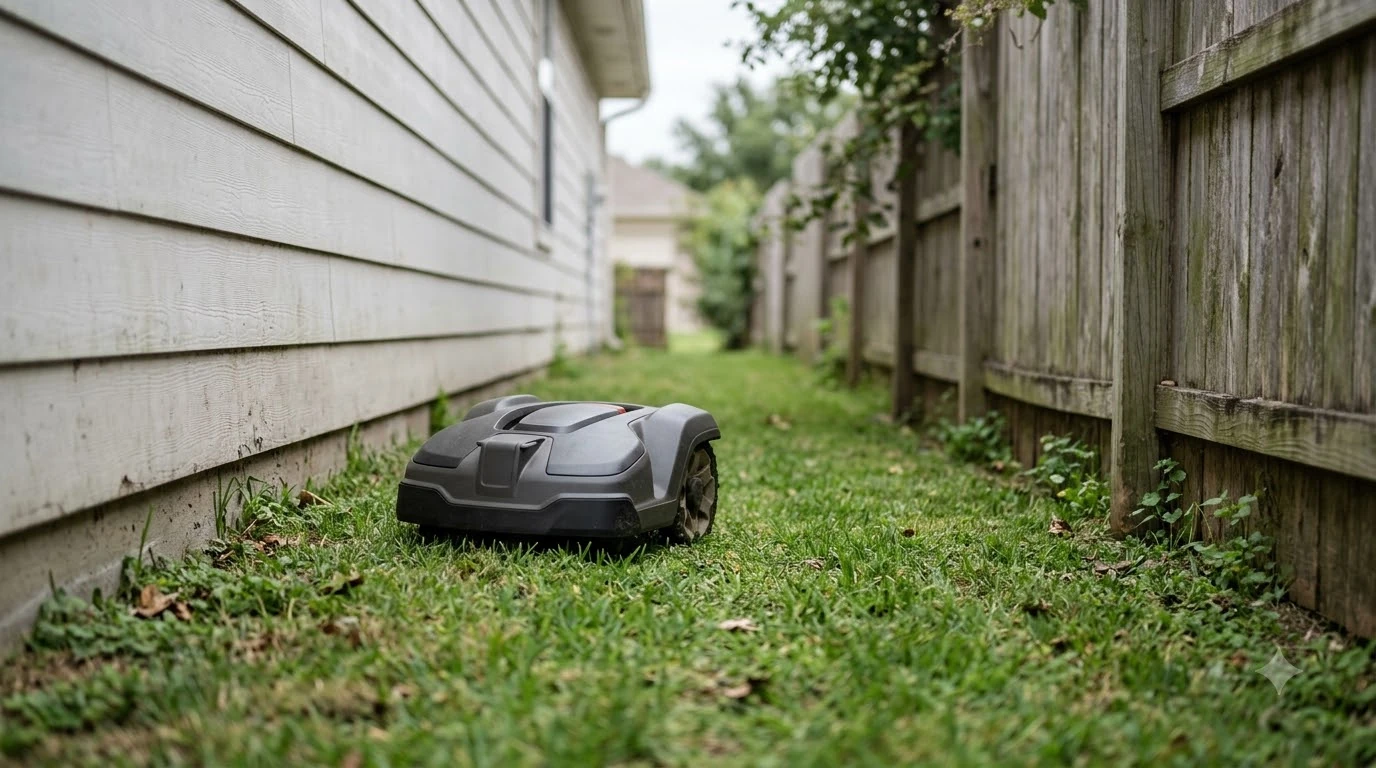

A robot mower for a lawn under solar panels can work well, but the panels cause two problems: they can block or reflect the satellite signal the mower uses to find its position, and they shade the grass underneath. Choose a model that does not depend only on a clear sky, keep the base station away from the panel edges, and plan for thinner grass in the shaded strip. Points below are as of Nov 2026.
The short answer
- Signal: RTK mowers need a clear view of the sky. Overhead structures and reflective surfaces can weaken or bounce the signal.
- Base station: for a robot mower for a lawn under solar panels, keep it well away from the panel edges, not just out of the shade.
- Shaded grass: expect thinner turf under the panels. Let the mower use a higher cutting height there, or keep that strip as a no-go zone.
- Paths: leave a clear lane between panel rows so the mower never has to pass under a low edge.
- Before you buy: ask whether the model keeps working when satellite fix drops, such as a vision or wire-based fallback.
Why solar panels can confuse a robot mower’s positioning
Most robot mowers that do not use boundary wire rely on satellite positioning. RTK systems compare the mower’s signal with a fixed base station to reach centimeter accuracy. That method needs a clear view of the sky at both ends. Mowrator explains that trees, and by extension any dense overhead cover, can block, weaken and reflect the satellite signals a mower depends on to stay accurate. Its guide adds that reflections can come from trunks, fences, walls, sheds or the house, and that the mower may receive a delayed reflected signal alongside the direct one. Panels are one of several fixed structures that affect a lawn, and the mower guidance for yards with garden structures covers the others. Roofs and arrays can block the sky, so positioning with poor GPS signal explains what the mower falls back on.
A robot mower for a lawn under solar panels faces the same issue, because solar panels are a flat, reflective surface, so our reading is that they belong in the same group as those reflective structures. A lawn that runs right up to a panel row, or a base station placed in the shadow of a rack, is the setup most likely to show fix problems. We have not found published field data that measures signal quality under a solar array, so treat this as a risk to check on your own lawn, not a confirmed failure rate.
Place the base station away from the panels
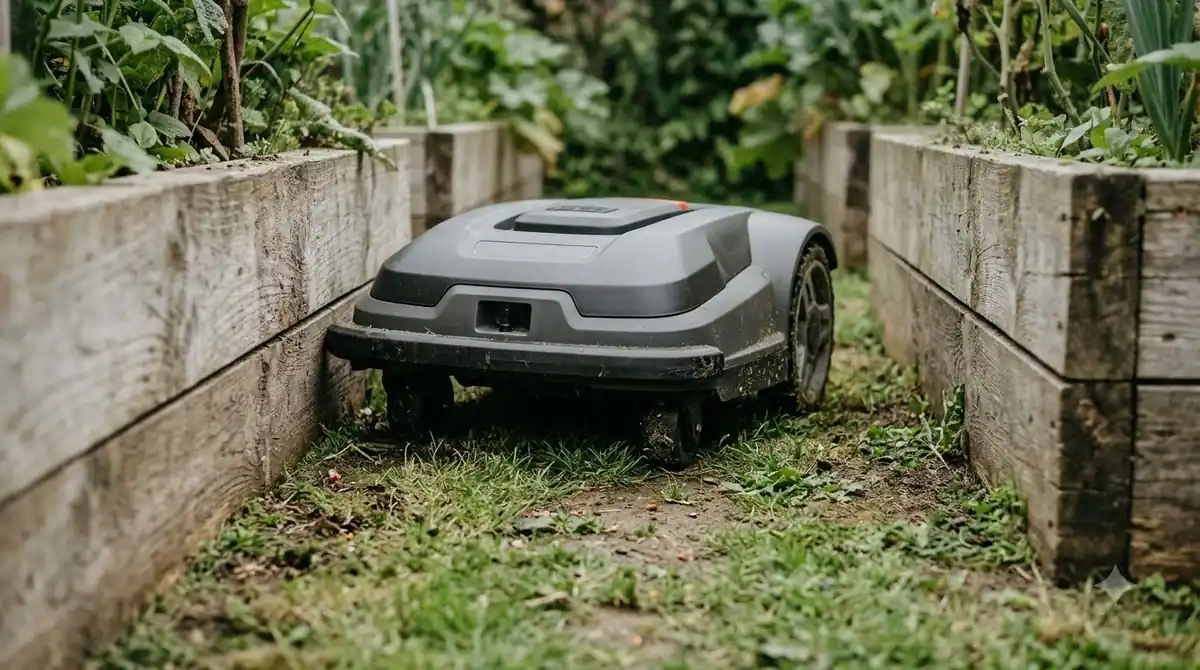
The base station is the part most worth moving. Mowrator’s advice is to give the base station a clear, stable view of the sky and to keep it away from overhead branches and tall structures. Under a panel array, that means the station should sit outside the footprint of the racks and clear of their edges, even if that puts it on the open lawn at the far side. If the station cannot be moved, check the mower’s map for drops in fix quality, then update the software and adjust the zone shape before you blame the hardware. Another covered spot raises similar signal issues, as mower docking under a carport roof shows.
Heads up
If the mower shows a fix warning only near the panel rows, the signal is probably being shaded or reflected there. Mark that strip as a slower or excluded zone rather than forcing the mower through it.
Shade under panels changes the grass and the cut
Shade is the second problem, and it has nothing to do with the mower’s electronics. Grass under a panel row gets less light, so it grows thinner and can go patchy. Cut the shaded strip higher than the open lawn. A higher cut leaves more leaf to make food, and it keeps the blades from scalping soft turf. The mower can usually handle a higher setting, but check the height range in your model’s manual, since some units cap the setting lower than others. Grass beneath panels grows differently, and the shaded lawn mower picks list what suits low light.
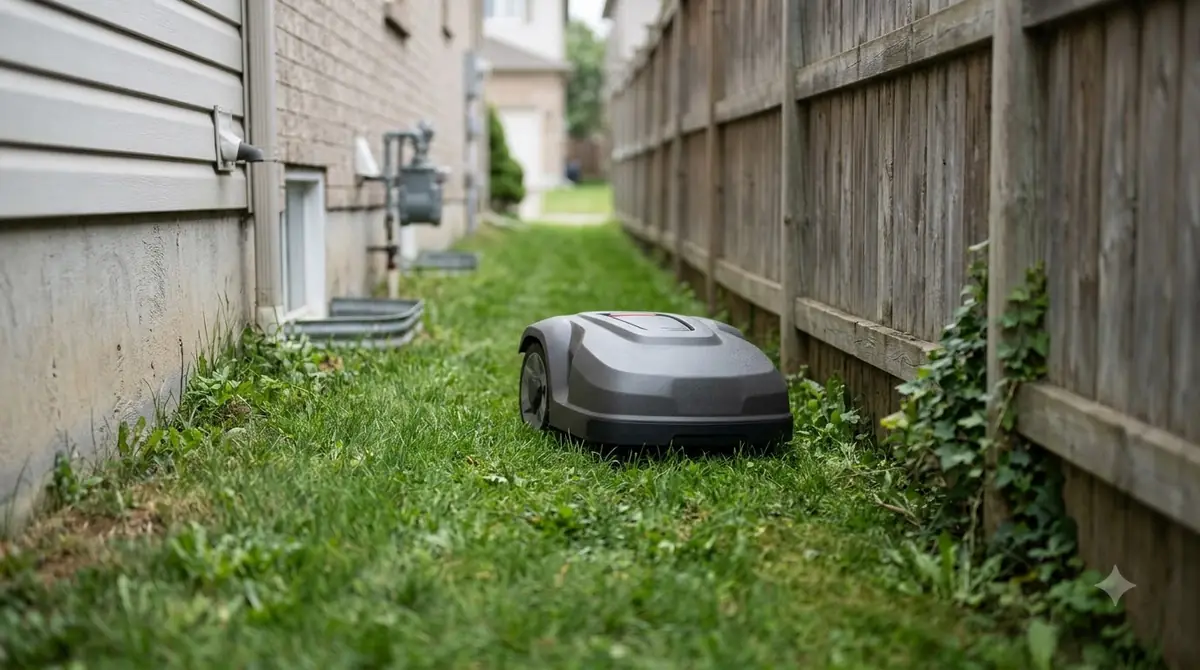
- Use a higher setting for the shaded strip, or run that area on a separate schedule.
- Mark the strip as a no-go zone if it is mostly bare soil. A mower running over bare ground only churns it up.
- Watch moisture. Shaded soil stays wet longer, so the mower may leave ruts or clumps if it runs too often there.
Robot mower for a lawn under solar panels: map the zones
Draw the boundary on the open lawn first, which is the first step for any robot mower for a lawn under solar panels, then add the shaded strip as a separate zone. Leave a lane wide enough for the mower to turn between the panel edge and the fence or path. A low panel edge is a collision risk, so avoid any route that requires the mower to pass under the rack. Keep the charging path clear as well, since a narrow lane can make docking less reliable. A raised cover over part of the lawn is similar, and pergola zone mapping shows how to separate it.
If your lawn has a slope, combine these rules with the grade limit in the manual. A mower that climbs well on open ground can still struggle on a wet, shaded bank under the panels.
What to check before you buy a mower for a solar-paneled lawn
Ask three questions before you buy a robot mower for a lawn under solar panels. First, does the mower’s positioning keep working when satellite fix is lost, through a vision or other fallback? Second, can you see the fix status on the map, so you know where the weak spots are? Third, can the base station or reference antenna be moved or raised? A model that only works with a perfect sky view will be harder to live with under a solar array. Support posts can be handled with islands, as gazebo posts and footings explain.
Also check the cutting height range and whether the app lets you save different heights for different zones. Those two settings solve most of the shade problem without buying extra hardware.
Related reads: Another structure with a solid edge is covered in the greenhouse wire edge guide. A single large object in the grass is handled with an island, as shed island setup shows.
Frequently asked questions
Can a robot mower mow directly under solar panels?
Usually yes, if the panels sit high enough for the mower to pass under them and the ground is level. Check the clearance in the manual and whether the mower’s body fits under the lowest edge. Keep a lane open so the mower never tries to drive beneath a low edge.
Will solar panels stop a robot mower’s GPS on a lawn under solar panels?
They can weaken positioning if they block the sky or reflect the satellite signal near the base station or lawn edges. Mowrator notes that reflections from nearby structures can add delayed signals that make position harder to judge. The effect varies by site, so test the fix status on your own lawn.
Why does the grass under solar panels look thin?
Shade from the panel rows reduces the light grass receives, which weakens turf over time. Cutting higher in the shaded strip gives the grass more leaf area, and keeping heavy traffic off it helps too.
Should I move the base station away from the panels?
If the mower shows fix drops near the panel rows, moving the base station to a spot with a clear sky view is the first fix to try. Keep it clear of overhead structures and reflective surfaces, then update the mower’s software and re-map the zone.
Sources
- Mowrator, RTK robot mower signal loss under trees (product guide): used for how canopy and nearby structures block, weaken and reflect satellite signals, and for the base station sky-view advice.
- Navimow Academy, how wire-free mowers work under tree canopies (manufacturer): cited for the general point that dense overhead cover affects wire-free positioning.
 Up next7 min readBy YardBest Mowing Height for Shade Grass: What Extension Sources RecommendUpdated Nov 11, 2026
 8 min readBy YardWhy Does My Robot Mower Stop on a Slope? Causes and FixesUpdated Nov 14, 2026
 9 min readBy YardBest Robot Mower for a Yard With Solar LightsUpdated Nov 12, 2026
 9 min readBy YardHow Does a Robot Mower Handle Solar Lights?Updated Nov 11, 2026
 9 min readBy YardRobot Mower Wheel Ruts and Brown Patches: Causes and FixesUpdated Nov 11, 2026
 8 min readBy YardVision Robot Mower for Yard with Poor Satellite Signal: What the Specs ShowUpdated Nov 11, 2026