
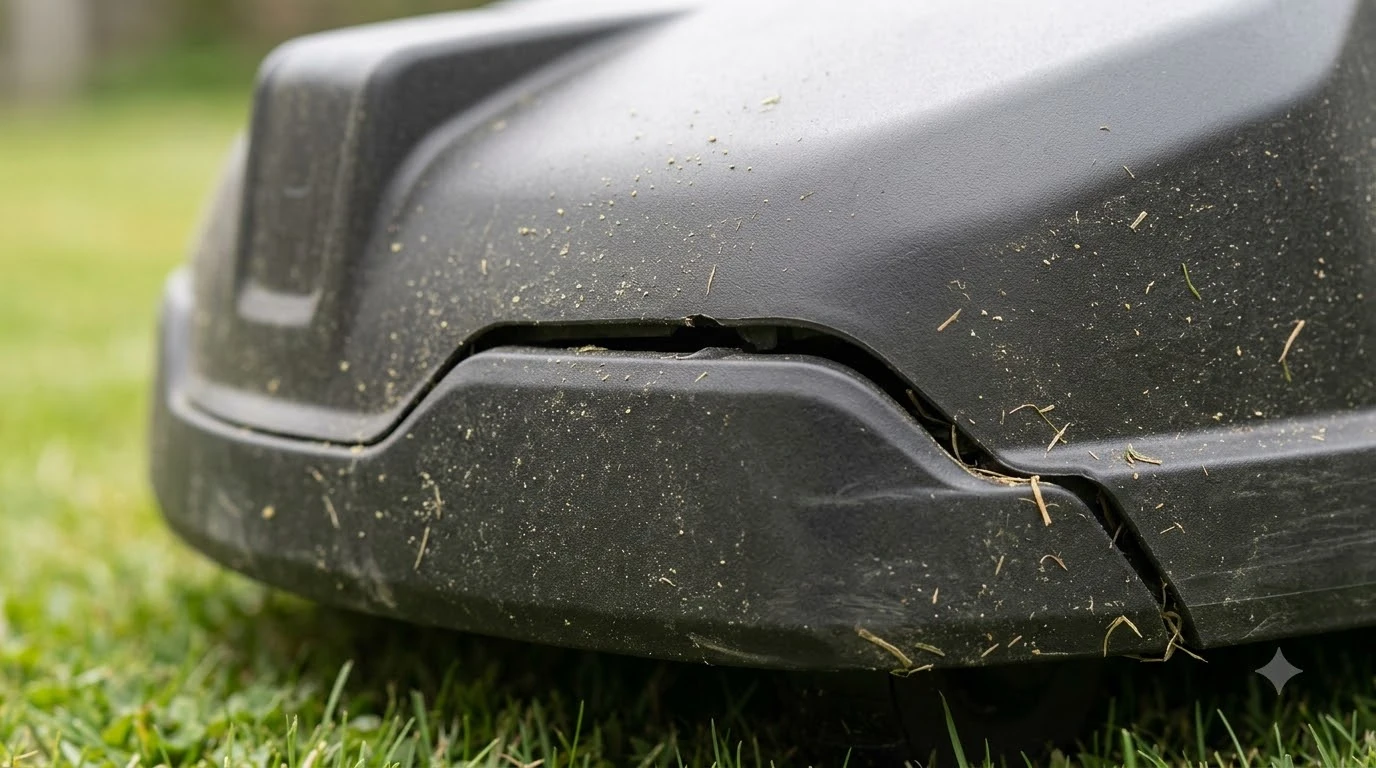

In short, how does a robot mower handle solar lights depends on its sensors and on how low the light sits. Camera, ultrasonic and infrared sensors detect objects before contact, while bump-only models find them by touching them. Brand guidance also treats small items such as flowerpots as low-risk, which means the mower may pass close to them. As of 2026-11-10, the only source we read that names solar lights is an Eufy guide on stuck mowers, which says solar-light bases may sit below obstacle-detection height, so marking each light with a stay-out zone is the safer setup.
The short answer
- Detection: camera, ultrasonic and infrared models detect objects before contact, but no source we read confirms they see a thin solar light; bump-only models find objects by contact.
- Low fixtures: Eufy says solar-light bases may sit below the normal obstacle-detection height, and Husqvarna treats small items as low-risk, so the mower may approach them closely.
- Night and rain: camera-based mowers can lose vision in the dark or in heavy rain.
- Best protection: a marked stay-out zone around each light, plus a check of the mower’s obstacle settings.
How does a robot mower handle solar lights? The sensor types
Each sensor type sees a light in a different way, and that decides how close the mower gets. Bump sensors are the simplest design: the mower taps an obstruction and changes direction. Ultrasonic and infrared sensors detect the obstruction before the mower reaches it, so contact can be avoided entirely. Lift and tilt sensors add a second layer by alerting the mower when it is caught on something or tilted at an unsafe angle, according to a PCWorld feature by Ed Oswald published in June 2024.
| Sensor type | How it finds an object | Main limit for a small light |
|---|---|---|
| Bump sensor | Touches the object, then turns | Contact can move or tip a light |
| Ultrasonic or infrared | Senses the object before contact | Depends on the sensor’s detection height and range |
| Camera (AI vision) | Identifies and avoids objects in real time | Reduced in heavy rain, a dirty lens, or darkness |
For most owners, the answer to how does a robot mower handle solar lights comes down to one check: which sensor the model carries.
Wire-free models also differ. PCWorld’s author says boundary-wire-free models “perform better overall, especially in terms of obstacle avoidance.” The sensor on a given model is in its spec sheet, so check it before you assume a light will be seen.
Why low, fragile objects are the hard case
Low items are where robot mowers are weakest, because the mower may treat them as something to cut around rather than stop for. Husqvarna’s support page lists “toys, garden furniture or flowerpots” as low-risk objects on its NERA models, and says the mower “approaches these objects more closely before changing direction.” That means a light near the lawn may be approached closely before the mower turns.
Anker’s brand guidance makes a similar point, saying obstacle avoidance means the mower is “less likely to run into garden furniture, toys, tree roots, or awkward corners.” The word “less likely” matters. No brand guide we read promises that a small fixture will always be avoided, so the risk stays with the owner.
Eufy’s stuck guide goes further and lists solar-light bases among low objects hidden by grass, along with sprinkler heads, hose fittings, wire pegs and trampoline feet, which may sit below the mower’s normal obstacle-detection height. It advises clearing movable items and marking fixed low hazards on the map where the model supports exclusion zones. Sprinkler heads have their own guide in low sprinkler heads hidden in grass.
PCWorld also warns that a mower running out of control can damage “hoses, sprinklers, toys” and other things left on the grass. Our reading is that a solar light is a small fixed object with a thin stake, which puts it in the same risk group as a toy or a flowerpot. That is why the answer is partly a matter of placement, not software alone.
Stay-out zones and how to protect your lights
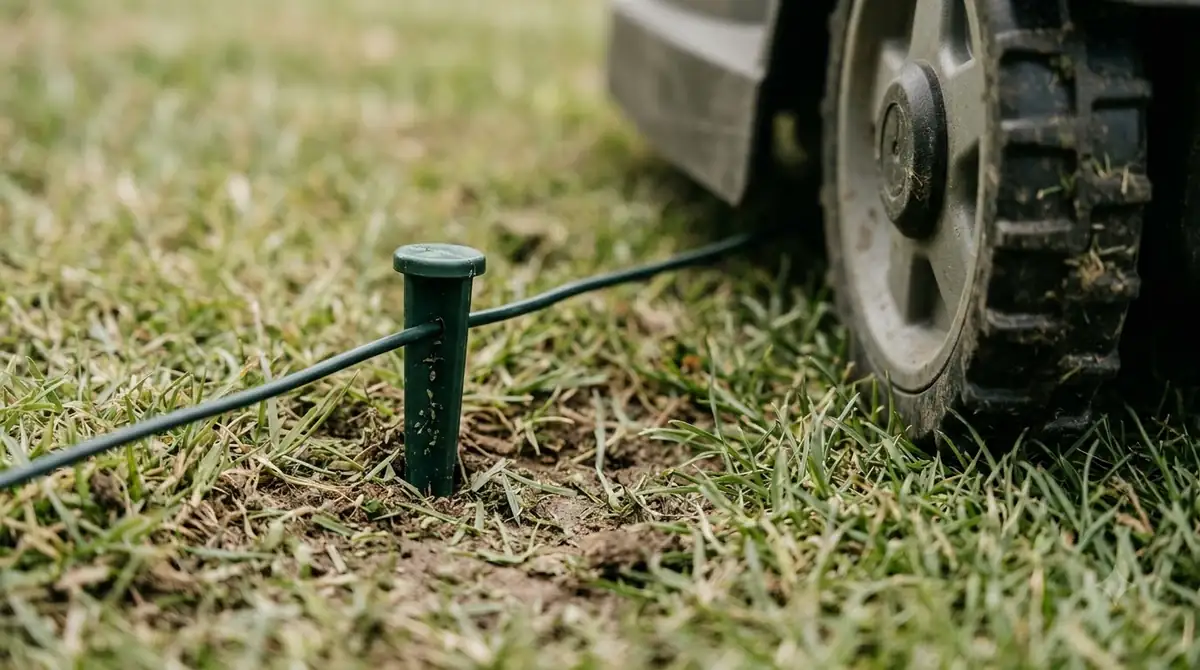
A stay-out zone is the most reliable way to keep a robot mower away from a known object. Husqvarna advises creating stay-out zones for permanent objects, such as garden furniture or children’s trampolines, so the mower can plan its route. Our guide on stay-out zone setup covers the general steps.
- Map every light. Walk the lawn and note each solar light, including the ones near the edge or under a bush.
- Draw a zone around each one. Set a stay-out zone in the mower’s app, wide enough to cover the stake and a little grass around it.
- Protect hidden fixtures in tall grass. Husqvarna says objects hidden in high grass can be handled by trimming the edges, burying the legs, fitting a protective barrier, or creating a stay-out zone.
- Update the zones when things move. A light that is moved or added needs a new or corrected zone before the next run.
Our reading is that a light near the edge of the mowing area is a good place to start, because a mower that exits the boundary is a bigger problem than a light that gets bumped. The practical answer is a zone, not a sensor upgrade.
Night, rain and dirty lenses
How does a robot mower handle solar lights after dark? Camera-based mowers have limits in the dark and in bad weather. Husqvarna says the Aspire R6V, 308V and 312V have no vision support at night, and “at night, the lawn mower operates without vision support, and may collide with objects on the lawn.” Heavy rain or a dirty lens can also limit vision, and the app lets you pause mowing until visibility improves.
- Night runs: on Aspire models without vision, a lit or unlit light is not seen in the dark.
- Rain: heavy rain can limit the camera, and the app lets you pause mowing.
- Settings: Husqvarna’s US page says object avoidance can be switched on or off in the app under More, then Settings, then Operation.
Husqvarna’s NERA models use infrared to detect objects at night, so the model’s sensor type matters more than its brand. Kids’ toys left on the grass raise the same question; see kids toys left on the lawn.
Debris, blades and traction
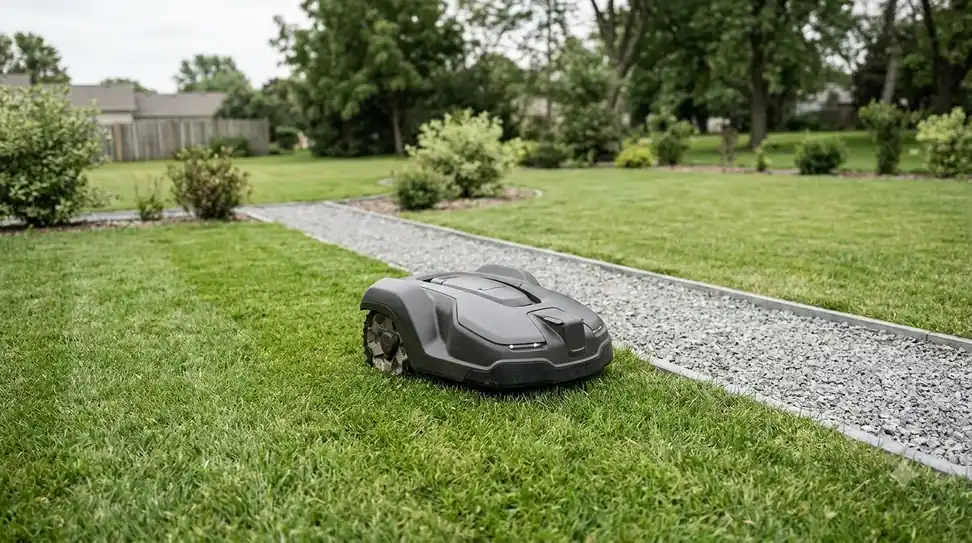
Loose debris is a separate risk from a light that stays in place. Anker advises checking blades more often if a mower regularly hits twigs or stones, and notes that “grass, mud, and small stones can become trapped around the wheels and affect traction.” A light that has been knocked loose could add a stone-like hazard to the lawn, but we found no source that confirms solar light parts have damaged blades.
Whether a solar light ever leads to blade damage depends on whether it comes loose, and that gap is worth stating plainly. Check the blades after a run that hit anything, and remove any loose light part before the next mow.
Setting up a yard with solar lights
A simple setup protects the lights and the mower at the same time. The steps below are our reading of the manufacturer guidance above, not a rule from one brand. Work through them once and you will know how a robot mower handles the solar lights in your own yard.
- Stake lights at the edge of a bed. A light set in mulch or behind a flower border is less likely to sit in the mowing path.
- Confirm the mower’s detection method. Use the spec sheet to check for a camera, ultrasonic, infrared, or bump-only design.
- Mark every light with a zone. Keep the zone tight so the mower still cuts the rest of the grass. Bulky items need the same step, as in how a robot mower deals with garden furniture.
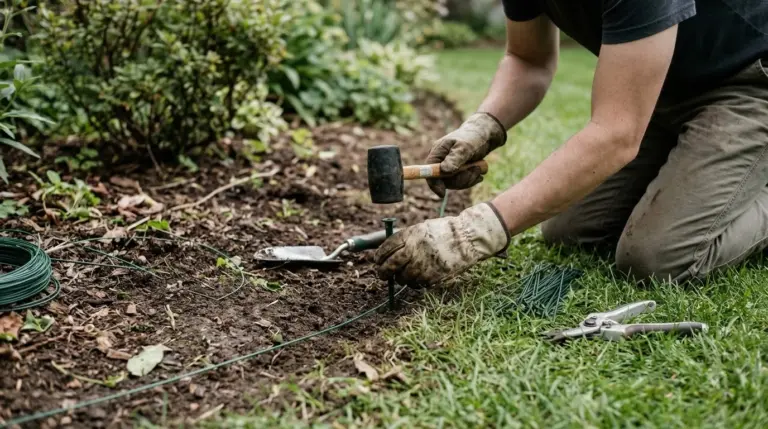
- Walk the lawn after each storm. Look for leaning lights, loose stakes, and debris before the next scheduled run. Marker flags are a cheap visual aid, as in lawn flags to mark fragile fixtures.
Frequently asked questions
Will a robot mower run over a solar light?
It may. Many models avoid objects they detect, but Husqvarna lists small items such as flowerpots as low-risk, so the mower can pass close to them, and Eufy says solar-light bases may sit below the detection height. Treat each light as a risk and mark it with a stay-out zone.
Should I fence off solar lights?
Husqvarna advises stay-out zones for permanent objects and for anything a mower could get stuck under. Marking each light with a zone is a reasonable step. That is our reading, not a manufacturer rule written for solar lights.
How does a robot mower handle solar lights and other small objects at night?
Some do not. Husqvarna says its Aspire R6V, 308V and 312V have no vision support at night and “may collide with objects on the lawn.” Models with infrared sensors can detect objects in the dark, so check the spec sheet for your model.
Can a solar light damage the blades?
We found no source that confirms solar light parts have damaged blades. Brand guidance does warn that stones and twigs can wear blades, so a loose light part is a plausible hazard. Check blades after any run that hits an object.
Sources
- Object detection and avoidance with AI vision technology (Husqvarna): camera detection, low-risk objects, stay-out zones, and barrier advice.
- Husqvarna object detection support (US) (Husqvarna): night limits for Aspire models, rain and lens limits, and app settings.
- How robot lawn mowers cut grass without whacking off your toes (PCWorld, Ed Oswald, June 2024): bump, ultrasonic, infrared, and lift and tilt sensors.
- Eufy blog: robot lawn mower stuck causes and fixes (Eufy): low objects hidden by grass, including solar-light bases, and exclusion zones.
- Robotic lawn mower maintenance guide (Anker): obstacle avoidance and blade checks after stones or twigs.
 Up next8 min readBy YardHow Does a Robot Mower Handle a Fire Pit?Updated Nov 11, 2026
 8 min readBy YardHow Does a Robot Mower Handle Raised Garden Beds?Updated Nov 11, 2026
 8 min readBy YardHow Does a Robot Mower Handle Kids Toys?Updated Nov 11, 2026
 9 min readBy YardHow Does a Robot Mower Handle Lawn Ornaments?Updated Nov 11, 2026
 7 min readBy YardHow Does a Robot Mower Handle Fallen Branches?Updated Nov 11, 2026
 9 min readBy YardHow Does a Robot Mower Handle Garden Furniture?Updated Nov 11, 2026