
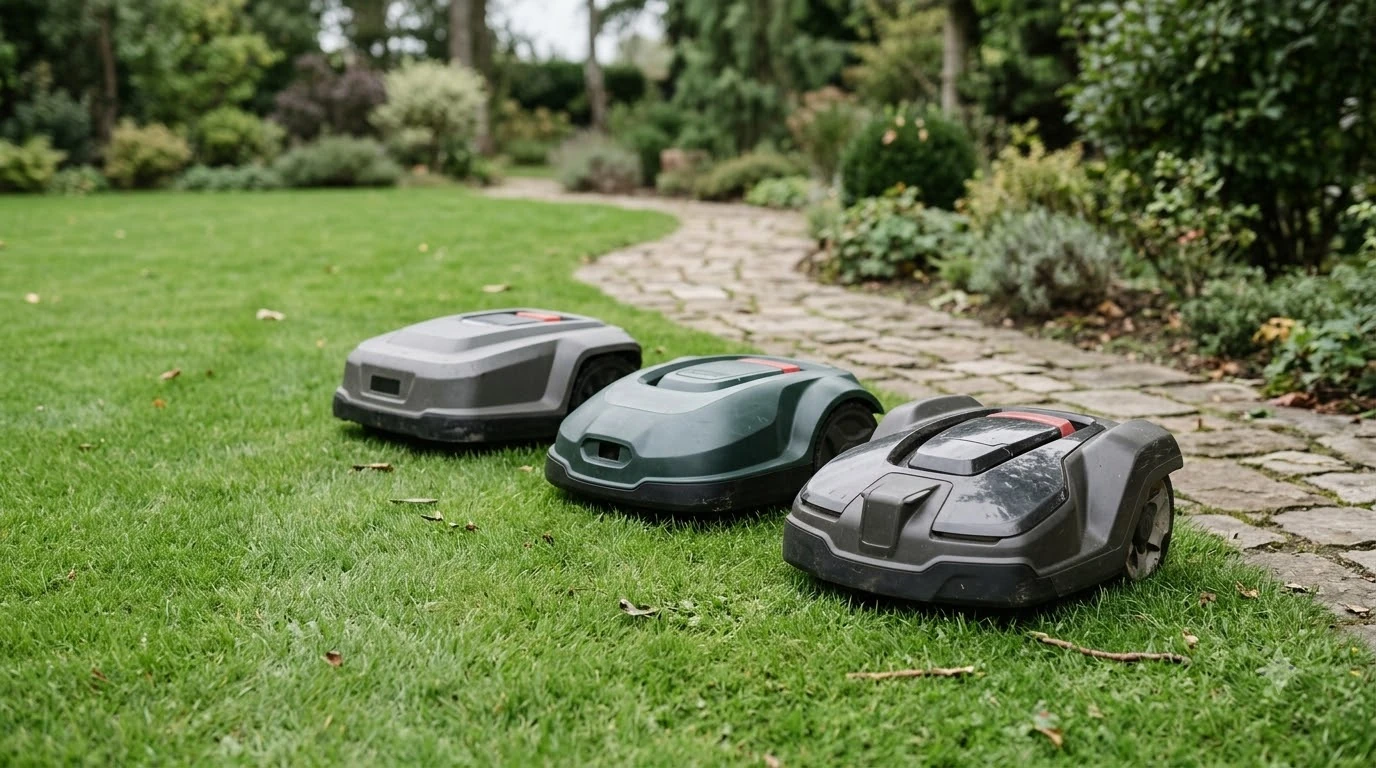

The question how does a robot mower handle raised garden beds has a direct answer: the mower treats the bed as an obstacle inside its area, so you must protect it with boundary wire or a stay-out zone. Manufacturer guides describe both methods, and the right one depends on whether your mower uses a boundary wire or a wire-free satellite system. The distance you need from the bed is not the same across sources, so check your model’s manual before you set the wire.
The short answer
- Wired mower: fence the bed with a boundary wire island, or draw an AIM stay-out zone where the bed sits.
- Wire-free mower: draw an EPOS stay-out zone, and add boundary wire where the satellite signal is weak.
- Distance: one guide gives about 10 cm from beds and hedges, another gives 30 to 35 cm from raised beds, so start with the larger figure until your manual says otherwise.
Why a raised garden bed needs a rule
How does a robot mower handle raised garden beds without a rule? It treats them as part of the lawn, because a robot mower only works inside the area its boundary defines. Robomow’s boundary wire guide says that obstacles in the middle of an area must also be demarcated with the boundary wire. A raised bed sits inside the lawn as a solid obstacle, so the mower will not avoid it unless you set up a rule that keeps it out.
Our reading is that you should set the rule before the first mow, while the layout is still easy to change. Moving a wire loop after the mower has been running takes more time than laying it correctly the first time. If you are still installing, our guide on how to install a robot mower boundary wire covers the basics.
How does a robot mower handle raised garden beds with a wire island?
A wire island is a loop of boundary wire that runs around the bed, so the mower’s working area goes around the bed instead of through it. Husqvarna’s Australian support guide describes the route as running the wire from the border to the obstacle and around it. Our guide to laying boundary wire around obstacles covers the same method for other objects in the lawn.
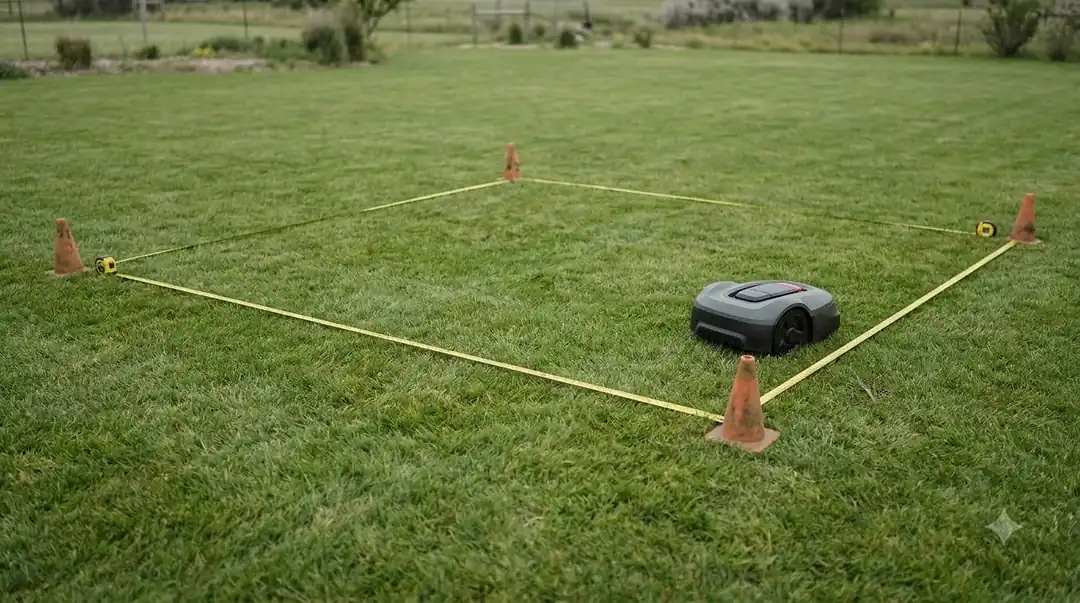
- Run the wire out to the bed. Lay the wire from the boundary to the obstacle, then around it.
- Do not cross the wire. The guide says to ensure you do not cross the wire on the way round the bed.
- Close the loop with the two runs together. On the way back, lay the wires close together. The guide says this cancels the signal, which lets the mower pass over the two wires.
- Check for crossed wires. The guide warns that if the wires cross, the mower will not recognise the island and will stop.
The same route appears in Anker’s (Eufy) UK guide, which says to run the wire from the outer boundary to the obstacle, loop it completely around the area, and then return along the exact same path. Our reading is that the return path matters more than the exact shape of the loop, because Husqvarna says crossed wires stop the mower.
How close can the wire run to a raised bed?
The sources do not agree on one clearance figure, and that matters for a raised bed. Robomow’s guide gives about 10 cm for beds and hedges and about 35 cm for walls and tall stones. Anker’s guide gives 30 to 35 cm for walls, fences, raised beds and other solid obstacles.
| Source | Obstacle named | Figure in the source |
|---|---|---|
| Robomow boundary wire guide | Beds or hedges | About 10 cm |
| Robomow boundary wire guide | Walls and tall stones | About 35 cm |
| Anker (Eufy) perimeter wire guide | Walls, fences, raised beds and other solid obstacles | 30 to 35 cm |
| Husqvarna island guide | Obstacles in general (raised beds not mentioned) | No distance given |
Our reading is that a raised bed is a solid obstacle, so the 30 to 35 cm figure is the safer starting point. The Robomow page does not say whether a raised bed is included in its 10 cm figure for beds and hedges. Read the distance in your model’s manual before you lay the wire, because the manual is the source that matches your mower.
Can a stay-out zone protect a raised bed on a wired mower?
On a wired Husqvarna mower, an AIM stay-out zone can be drawn almost anywhere on the lawn, except over the charging station or the guide wire. Husqvarna’s UK support article says zones can be turned on or off, but they cannot be scheduled.
- Include long sections of the boundary wire inside the zone, as the guide advises.
- Zones work only on installations with a physical boundary wire and on models that support AIM.
- Never use a zone to keep the mower away from a pool or the street. Fence those areas with boundary wire and a barrier at least 15 cm (6 in.) high.
Our reading is that a zone suits a raised bed in the open lawn, where the bed is far from the charging station and the guide wire. Draw the zone, then watch the mower’s route on the first few runs before you rely on it. The general steps are in our guide to no-go zone setup steps.
How does a wire-free mower handle a raised bed?
A wire-free Husqvarna mower uses an EPOS stay-out zone to stop it entering sections where it is not allowed to mow. Husqvarna’s US EPOS guide says that where the satellite signal is weak, zone accuracy may be reduced, and it recommends boundary wire around the zones in those areas. If your bed sits where the sky is partly blocked, see how a robot mower works in a yard with poor GPS signal.
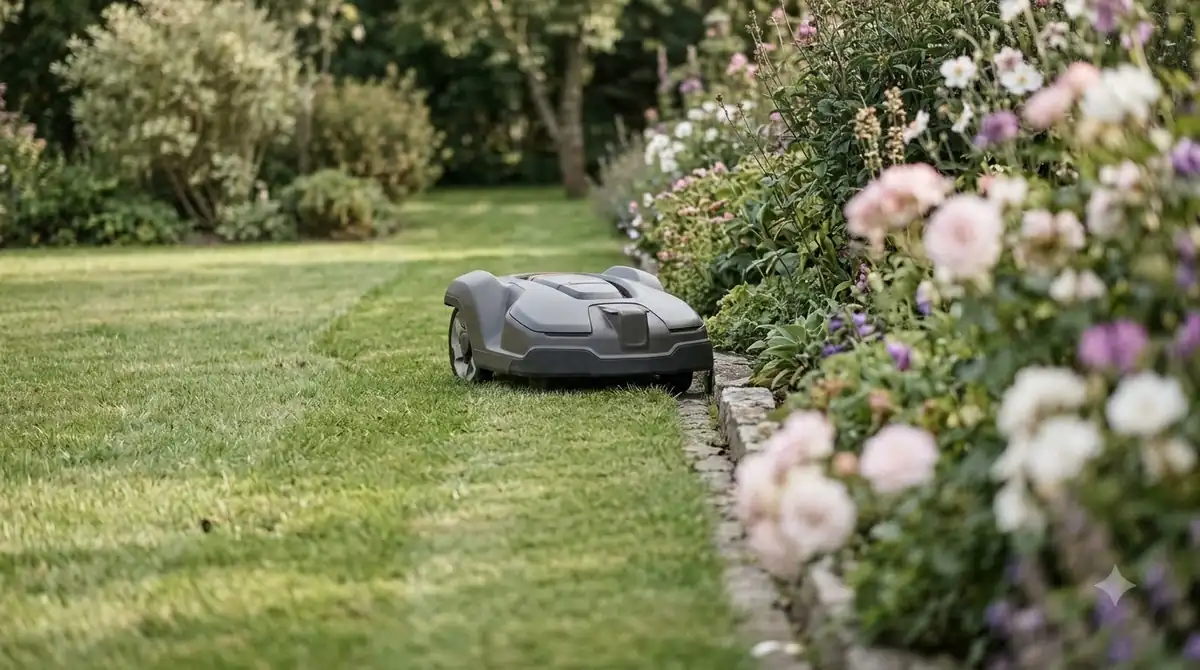
The same guide says a wire island alone does not stop the mower from entering an area, so an EPOS stay-out zone is the method for that purpose. Our reading is that a wire-free owner with a raised bed in a shaded corner should check the signal there first, because that is where the zone is least reliable.
When the obstacle sensors are enough
Robomow’s guide says a low border a few centimeters high needs no additional perimeter wire, because the mower’s obstacle sensors handle it. The guide does not give a height limit for this rule.
Heads up
The sensor rule covers low edges only. Do not assume a raised bed falls under it, because the guide does not say how the mower behaves against a tall bed, and a collision is not a safe way to protect one.
Mistakes that stop the bed rule from working
Most failures come from a few setup errors that the guides name directly. Each one can undermine the answer to how does a robot mower handle raised garden beds on your lawn.
- Crossed island wires: Husqvarna says the mower will not recognise the island and will stop.
- A stay-out zone drawn over the charging station or the guide wire: the AIM guide says zones cannot be placed there.
- Relying on the sensor rule for a tall bed, which the Robomow guide does not cover. Marking the bed with lawn flags for marking the boundary while you lay the wire helps you see where the loop must run.
Frequently asked questions
Will a robot mower drive over a raised garden bed?
It can, if the bed is not protected. A raised bed is a solid obstacle inside the lawn, so the mower needs a boundary wire island, a stay-out zone, or a wire-free zone to stay out of it. The manufacturer guides read for this page all describe one of these methods.
How far should the boundary wire run from a raised bed?
The sources differ. Robomow gives about 10 cm for beds and hedges, and Anker gives 30 to 35 cm for raised beds and other solid obstacles. Our reading is to start with the larger figure and confirm it in your model’s manual.
How does a robot mower handle raised garden beds when it has no wire?
It can avoid them when it has an EPOS stay-out zone drawn around the bed. Husqvarna’s US guide says a wire island alone does not stop entry, so the zone is what keeps the mower out. Where the satellite signal is weak, the guide recommends boundary wire around the zone.
Does a stay-out zone keep the mower away from a raised bed?
On a wired Husqvarna mower with AIM, a zone can be drawn almost anywhere except over the charging station or guide wire. Zones can be switched on and off but not scheduled. Check the drawn route after setup, because the guide does not give a placement distance for a bed.
Sources
- How to create an island in an Automower installation (Husqvarna): steps for routing, closing and checking the island wire.
- Laying the lawn boundary wire (Robomow): demarcating obstacles, 10 cm for beds and hedges, 35 cm for walls, and the low-border sensor rule.
- Robot lawn mower perimeter wire (Anker, formerly Eufy): 30 to 35 cm from raised beds and the island steps.
- Creating stay-out zones with AIM technology (Husqvarna): placement limits, scheduling, and the 15 cm barrier for pools and streets.
- EPOS support guide (Husqvarna): wire-free stay-out zones and the weak-signal recommendation.
 Up next9 min readBy YardHow Does a Robot Mower Handle Garden Furniture?Updated Nov 11, 2026
 9 min readBy YardHow Does a Robot Mower Handle Solar Lights?Updated Nov 11, 2026
 8 min readBy YardHow Does a Robot Mower Handle a Fire Pit?Updated Nov 11, 2026
 9 min readBy YardHow Does a Robot Mower Handle Lawn Ornaments?Updated Nov 11, 2026
 8 min readBy YardHow Does a Robot Mower Handle Kids Toys?Updated Nov 11, 2026
 7 min readBy YardHow Does a Robot Mower Handle Fallen Branches?Updated Nov 11, 2026