
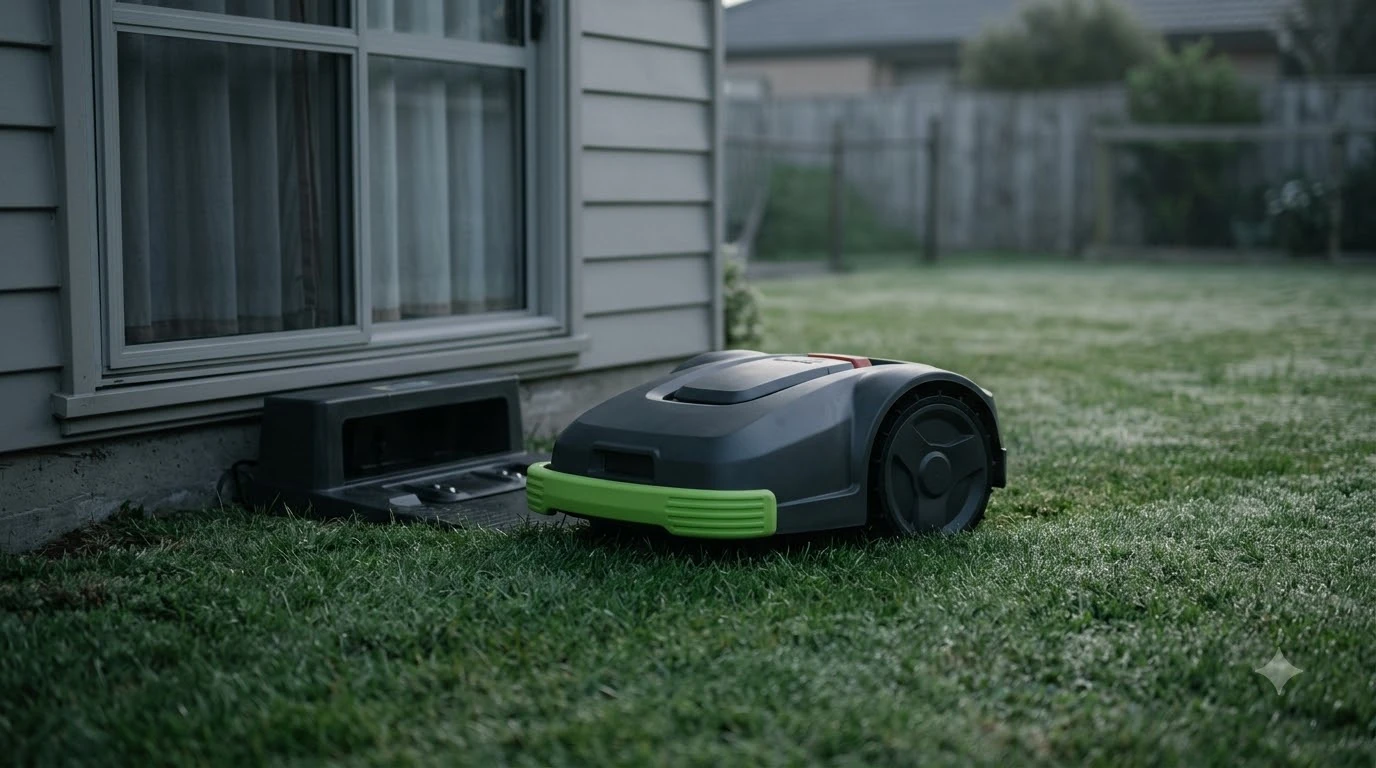

A robot mower for a lawn with creeping thyme between pavers works well as long as the pavers sit flush with the soil and the thyme stays below your deck height. Because standard robotic mowers use lightweight, low-clearance razor blades rather than high-suction rotary decks, they glide across flat stone paths without tearing out shallow groundcover roots. However, raised flagstone edges, deep joint gaps, or a blade set too low will quickly chip steel blades and shred flowering thyme mats.
The short answer
- Flush pavers are non-negotiable: Stepping stones must sit level with the surrounding soil so the chassis does not high-center or strike stone edges with its spinning disc.
- Thyme height naturally clears most decks: According to Penn State Extension, common creeping thyme (Thymus praecox) grows only 2 to 3 inches tall, sitting safely beneath typical 2.5-to-4-inch turf cutting heights.
- Use stay-out zones for dense thyme beds: If creeping thyme fills a wide patio or a non-turf courtyard rather than narrow lawn gaps, map it out of the mowing zone entirely so pollinators can bloom undisturbed.
- Floating decks prevent scalping: Models with articulated bodies or floating cutting discs ride over minor stone-to-soil transitions without gouging the woody stems of established thyme.
- No-wire navigation beats buried loops: RTK-GPS, LiDAR, or vision-based mowers let you redraw borders around expanding thyme joints without digging up perimeter cable between pavers.
How creeping thyme and pavers interact with a robot mower
Creeping thyme forms a low, woody, horizontal mat between stepping stones that behaves very differently from upright turfgrass under a robotic cutting disc.
Per NC State Extension, Thymus praecox spreads horizontally to form a dense mat that generally reaches 3 to 6 inches tall depending on cultivar and pruning, while Penn State Extension notes standard creeping varieties hold around 2 to 3 inches. Unlike a traditional walk-behind rotary mower that creates strong upward vacuum lift, a robotic mower relies on small, pivoting razor blades mounted to a spinning disc. That lack of vacuum suction is an advantage for groundcovers: the mower passes over low thyme cushions without sucking loose stems or sandy joint grit into the housing.
Problems arise when hardscape geometry interferes with the mower chassis. Most robotic mowers have low underbody clearance and small front caster wheels. If pavers sit proud of the soil line by even half an inch, a front caster can catch on the stone lip, tilting the deck and driving a spinning blade straight into granite, concrete, or flagstone. Over several passes, stone strikes dull or snap razor blades and leave ragged brown tears across the thyme foliage.
Key hardware features to look for on paver-and-thyme yards
Choosing a robot mower for a yard mixed with stone walkways and creeping thyme comes down to deck suspension, wheel traction, and boundary flexibility.
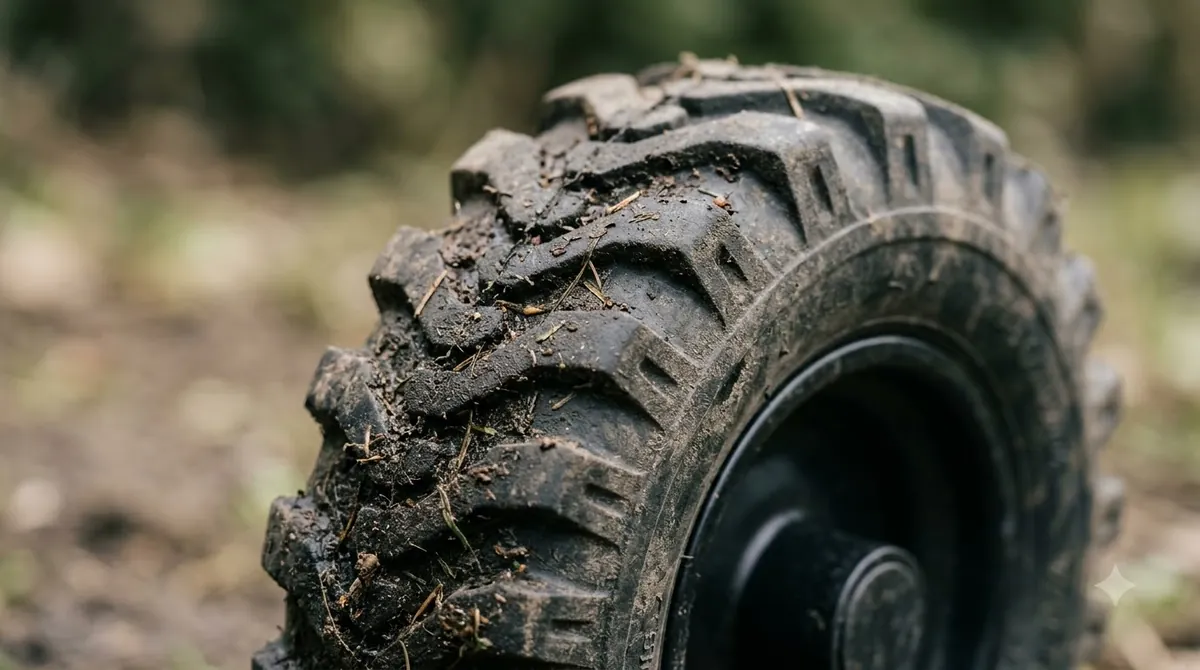
As detailed in Segway Navimow’s terrain engineering guide, a floating cutting deck or articulated body allows the blade disc to rise and fall independently when one side of the mower rolls onto a hard paver while the opposite wheel stays on softer soil. Larger drive wheels with deep off-road tread patterns also prevent rear wheels from spinning and tearing up damp thyme runners when transitioning from smooth wet stone back onto turf.
| Mower Feature | Why It Matters Around Pavers and Thyme | What to Look For |
|---|---|---|
| Cutting height range | Keeps blades above low thyme mats while trimming surrounding grass cleanly | App-adjustable upper range reaching 3 to 4 inches (75 to 100 mm) |
| Deck suspension | Stops blades from dipping into uneven paver joints when wheels tilt | Floating blade disc or articulated chassis frame |
| Navigation system | Allows seasonal border tweaks as thyme spreads outward | Wire-free RTK, LiDAR, or camera vision with app no-go zones |
| Front wheel design | Prevents casters from dropping into wide gaps between stepping stones | Wide-tread front wheels or all-wheel-drive hub motors without tiny casters |
| Blade guard or skid plate | Protects pivoting razors if a stone edge sits slightly higher than turf | Under-deck skid plate around the cutting disc |
Boundary-wire mowers can still work on paver lawns, provided the wire runs outside the stone path or is tucked cleanly into a deep joint below blade reach. However, wire-free units using RTK-GPS, 3D LiDAR, or AI vision make life far easier because creeping thyme spreads every spring. When a thyme patch widens, you can drag a virtual boundary line in the companion app in seconds rather than splicing buried copper wire.
Setting up mowing zones and cutting height for thyme
Proper height calibration and zone mapping let your robot trim surrounding grass daily while leaving creeping thyme healthy and intact.
Start by deciding whether your pavers sit inside an active turf lawn or form a standalone thyme-and-stone garden path. If the stepping stones cut across a grass lawn that the mower must cross to reach another section, keep the pavers inside the main work area and raise the cutting height. If the thyme-and-paver layout sits along one side of the yard as a dedicated border or patio, exclude it completely with a virtual stay-out zone or boundary island so the thyme can flower freely for bees.
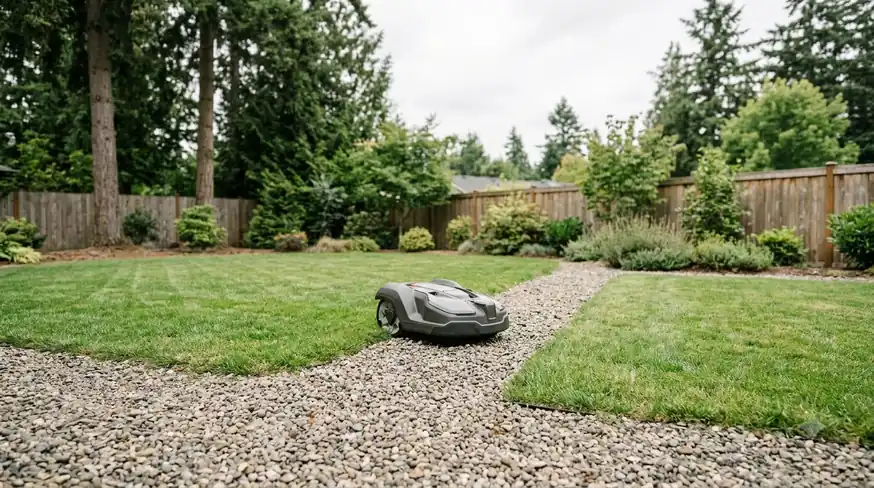
- Level sunken or raised pavers first. Walk the path and lift any stone whose top edge sits higher than the adjacent soil or turf crown. Tamp sand or gritty soil underneath so wheels roll smoothly from grass onto stone.
- Set the cutting height near the top of the deck range. Program the mower to cut at 3 inches or higher on its first pass. Verify visually that the spinning disc clears the tallest thyme cushions without clipping woody stems.
- Map transport paths across wide stone walkways. If your mower crosses a flagstone patio where creeping thyme grows in the joints, set a narrow transport corridor in the app so the mower travels straight across with its blades disengaged rather than mowing randomly over the stones.
- Schedule dry-weather runs only. Wet pavers offer minimal tire grip, and damp thyme stems bruise easily under spinning wheels. Enable the rain sensor or restrict mowing to dry afternoon windows.
- Shear thyme manually once a year after bloom. NC State Extension notes that light pruning maintains the appearance of creeping thyme and limits woody buildup. A quick annual trim with hand shears after summer flowering keeps the mat low enough that your robot mower never snags it.
Heads up
Avoid routing a robot mower across pavers with wide, sunken joints deeper than 1 inch. Small front caster wheels can drop into deep crevices, causing the mower to register a lift or tilt error and halt mid-path.
When a robot mower is the wrong tool for paver joints
Certain hardscape layouts and thyme growth habits will frustrate even the most capable all-wheel-drive robotic mower.
If your yard features irregular natural flagstones with stepped height differences of an inch or more, heavy wheel traffic from a daily robot mower will repeatedly scrape the undercarriage and snap blades. Similarly, if you planted taller upright culinary thyme (Thymus vulgaris) rather than true low-growing creeping varieties, or if you want an uninterrupted carpet of purple summer blooms between stepping stones, keep the robot mower off the pavers entirely. Routing the mower around the perimeter and letting the thyme grow unmowed preserves both your blade life and the floral display.
Frequently asked questions
Will a robot mower kill creeping thyme planted between pavers?
No, established creeping thyme tolerates light-to-moderate traffic and occasional trimming well as long as the mower blades stay above the woody crown. Setting your cutting height to around 3 inches lets the mower skim over low mats without uprooting the shallow stems.
Can a robot mower drive over stepping stones without damaging its blades?
Yes, provided the stepping stones sit flush with the surrounding soil and grass. When stone edges sit level with the ground, the mower wheels roll flat across the surface and the recessed cutting disc stays safely above the stone.
Should I put a boundary wire around pavers with creeping thyme?
If the pavers form a dedicated patio or walkway at the edge of your lawn, excluding them with a boundary wire or virtual stay-out zone is the cleanest option. If the stones sit in the middle of a grass lawn, leave them inside the mowing zone and use a transport path so the mower crosses with its blades turned off.
What is the best cutting height for a lawn with creeping thyme?
Set your robot mower between 3 and 4 inches (75 to 100 mm) when operating near creeping thyme. Because common creeping thyme varieties typically stay around 2 to 3 inches tall, a higher turf setting trims surrounding grass while clearing the groundcover.
Sources
- Herb Garden Plants: Thyme (Penn State Extension): Used for mature height ranges (2 to 3 inches) of Thymus praecox and general pruning guidance for creeping thyme varieties.
- Thymus praecox (Creeping Thyme, Early Thyme) (NC State Extension): Used for mat-forming growth habit, foot traffic tolerance, and pruning recommendations.
- How Do Robotic Mowers Handle Uneven Terrain? (Segway Navimow): Used for floating deck behavior, ground clearance, wheel traction, and stay-out zone features on uneven surfaces.
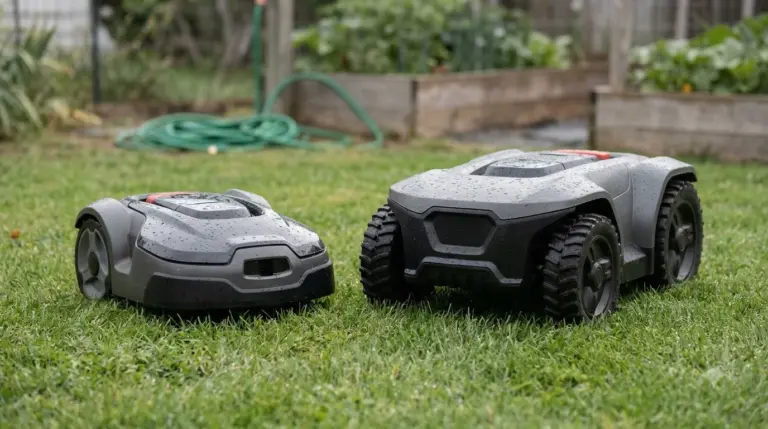 Up next8 min readBy YardChoosing and Setting Up a Robot Mower for a Yard With Decorative River Rock BordersUpdated Nov 19, 2026
 9 min readBy YardChoosing and Setting Up a Robot Mower for a Yard With an Outdoor AC Condenser UnitUpdated Nov 19, 2026
 9 min readBy YardChoosing and Setting Up a Robot Mower for a Yard With Flagstone Walkways Set in GrassUpdated Nov 19, 2026
 9 min readBy YardChoosing and Setting Up a Robot Mower for a Yard With a Wooden Boardwalk PathUpdated Nov 19, 2026
 8 min readBy YardChoosing and Setting Up a Robot Mower for a Lawn with Steep Culvert Ditch BanksUpdated Nov 19, 2026
 8 min readBy YardChoosing and Setting Up a Robot Mower for a Lawn with Underground Invisible Pet FencingUpdated Nov 19, 2026